
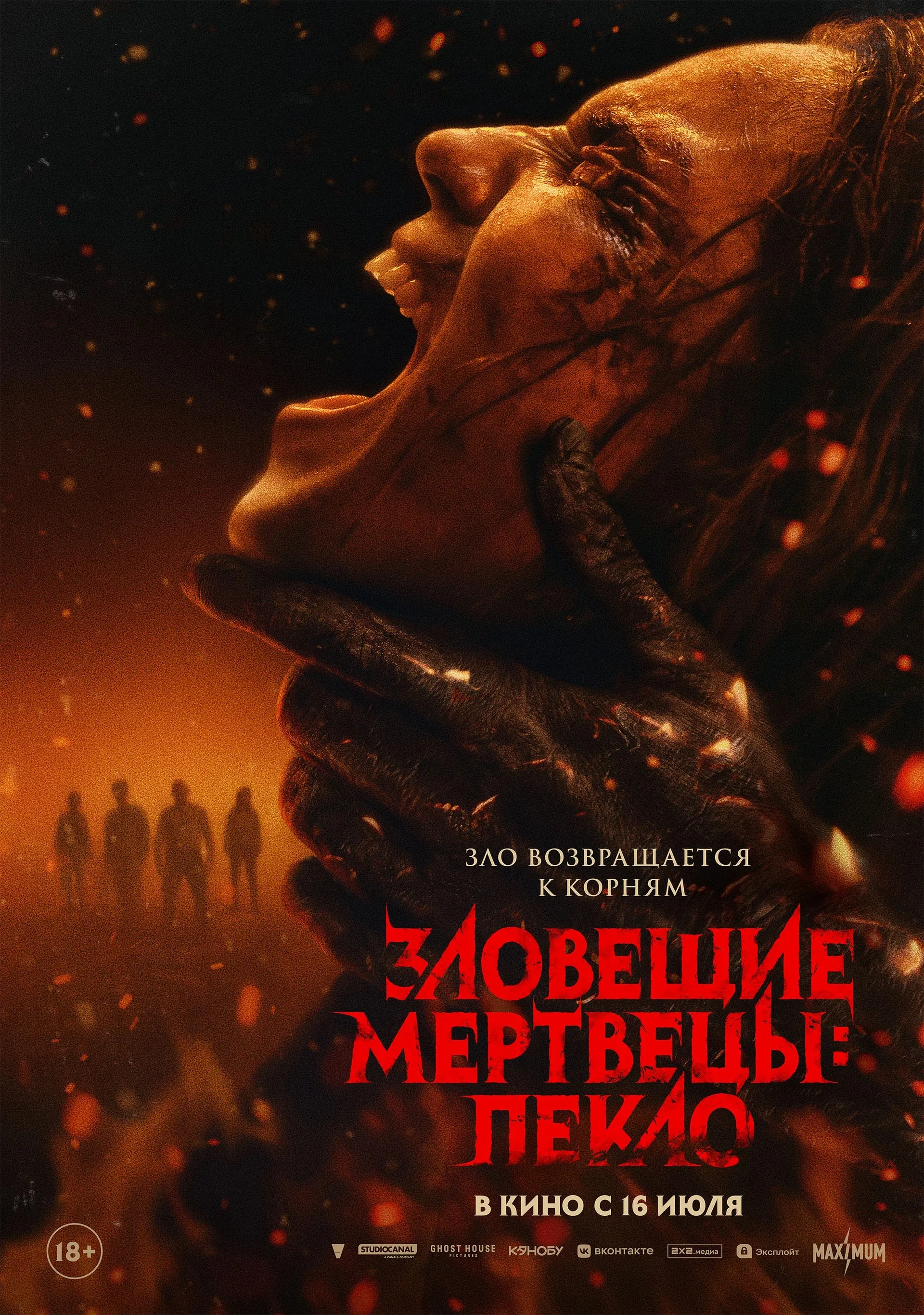
The unsinkable part of the "Evil Dead" franchise with the subtitle "Inferno" has returned to wide release. The next chapter from the Book of the Dead takes on a pale hue; as usual, it grimly jokes and persistently multiplies ultraviolence, trying to outdo itself.
Alice (Suhayla El-Bushra) — the widow of Will (George Puller) — arrives at his family's villa to attend the wake. The prospect of this visit promises her nothing but painful tension: relatives, except for Will's younger brother and his girlfriend, greet her warily, even openly hostile. Will himself died the day before in an accident directly caused by a demon-possessed girl — and now, as if by chain, the evil flows into the family of the deceased. And there, in the depths of the family history, lies a dagger found once by the grandfather: a blade capable of ending the existence of the Deadites. It is this that now becomes for them the main goal.
Amazingly resilient, despite its name, the franchise of Sam Raimi, which began as a low-budget horror film back in 1981. It is completely unfazed by the absence of a recurring hero (Ash — a glorious story, but long ago), constant rotation of directors and change of scenery at every turn. The only connecting link is the cursed book, releasing its demons time and again. In general, "The Dead" over time have become a kind of testing ground for young directors wanting to show their daring prowess in a contest: who can spill more decaliters of fake blood.
A bit strange, but if with a fresh look (even a cursory one) you watch all parts of the franchise (fortunately, it won't take much time), you can discover that in the gradually lengthening chain of films there are no completely throwaway works. Well, except perhaps the third part. There Raimi was openly carousing, but that's a matter of taste, nothing more. Perhaps that's exactly why, after Sam, only directors with an already established style and point of view were allowed into the project, it is still alive. And Raimi himself keeps a paternal eye on his creation, not letting it finally sink (everyone is already used to the absence of Ash, but without him, no matter how you look at it, it's not the same coat).
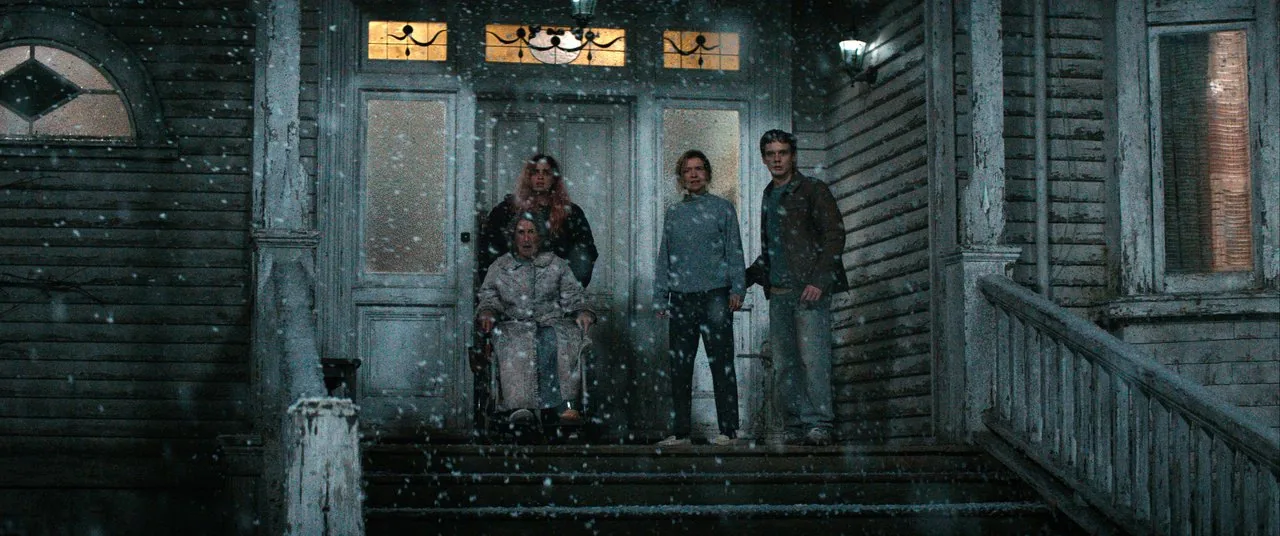
This time, the author of the new part of "The Dead" is French director Sebastien Vaniček, who has a solid arachnophobic film "The Web of Fear" under his belt, and much of it quite expectedly moved into the new project. The first thing that catches the eye is the pale, murky and unappealing picture, sharply different, for example, from "Evil Dead Rise," where colors literally splashed across the screen.
By the way, that part was helmed by the well-known visionary Lee Cronin, who released this year the completely unfairly slammed "The Mummy," which can easily be placed on the shelf of the best horrors of 2026. Vaniček, however, did not remain in debt: he also turned out to be not averse to dashing visionariness and a slightly showy style of shooting, turning "Inferno" into an attraction with dizzying camera rotation, which heavily mixes "The Raid," "Ready or Not," and, quite unexpectedly, the first "Terminator." Vaniček, by the way, is absolutely not ashamed of his ostentatious cinephilia. On the contrary, he gladly offers the viewer the opportunity to sit and guess the scattered references here and there. If he ever popped into Criterion (if he hasn't been there yet), his choice would hardly surprise anyone.
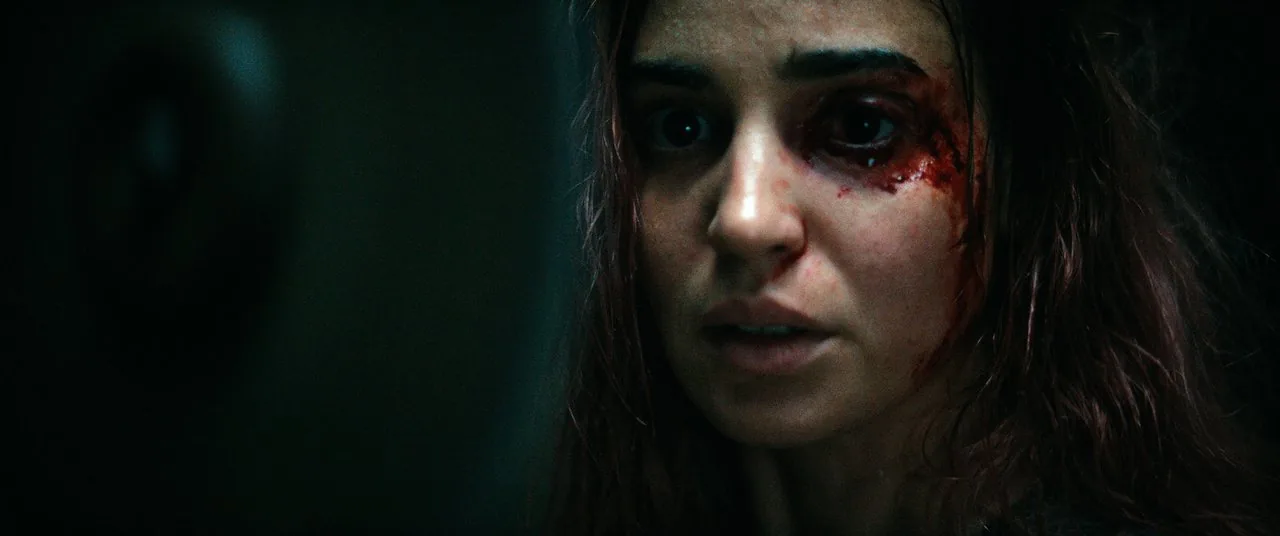
But it's not just about references, but about how Vaniček generally handles the very fabric of the film. His experience is not just accumulated viewer background, it's knowledge of how cinema is stitched together, from what threads and how to weave in native, local texture. Hence, in "Inferno" a piece of French extremity appeared with deafening scenes of violence — the toughest, perhaps, in the series. As for traditional humor, contrary to all predictions, Vaniček did not forget it either. Episodes with the funeral and transporting the grandmother down the stairs stick in the memory for a long time. However, the ideal balance between horror and grotesque, which seemed to bloom so easily in the classic parts of the 80s, he was never able to reproduce. But it didn't get much worse because of that. If you smile at least once in the middle of this two-hour sardonic nightmare — then it was all not in vain.
Of course, it did not do without the usual in modern horror dissection of emotional traumas. Although Raimi himself resorted to something similar in the second part of his horror anthology. There Ash went mad in a locked house from an oppressive, almost existential sense of guilt over the death of his girlfriend, and the Deadites, of course, only threw logs into the raging fire of madness.
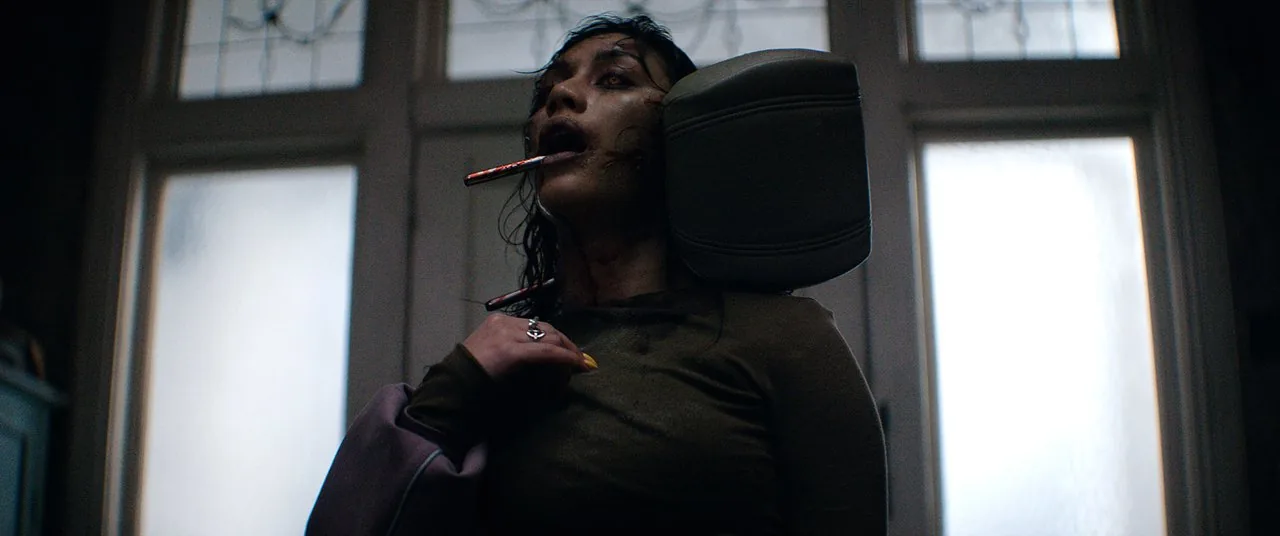
And in "Inferno" Vaniček exposes the tragedy of one
single family, in which
overprotectiveness is synonymous with toxicity,
a tendency to self-destruction, sweeping problems under the rug,
and permanent abuse. The sixth
part of the franchise surprisingly turned out to be more
about people
and their
relationships with each other,
than
about demons.
For this, the director can be both praised
and criticized, but his vision of the material
as a whole has become, perhaps, the most creatively
original in recent times. Here
the genre does not suffocate in a dramaturgical
shell. And where drama runs dry,
Vaniček simply turns on the lawnmower
— and moral torment gives way to
physical.
Comments
0No comments yet.
Sign in to join the discussion.