
Oil workers of KhMAO return to old wells ⚡️
By the end of 2025, about 60% of Russian oil production came from depleted fields and hard-to-recover reserves. Drilling footage in production drilling fell to 29.1 million meters, the lowest in three years.
🔡Flow rate fork
The average flow rate of the active well stock in Yugra is 8.1 t/day, for new wells 26.2 t/day. Water cut in the region is 90%, meaning that for 203 million tons of oil, 2 billion tons of water are pumped. Meanwhile, KhMAO's share in the country's production remains around 40%, and the 0.9% decline in 2025 is explained by the region's mineral resources department as due to OPEC+ commitments, not the condition of the well stock.
🔡Exploration shrinks faster than production
Exploration drilling in the district fell from over 1 million meters in 2001 to 300 thousand meters in 2025. Yugra's oilfield services lost 13.3% over the year, the worst result among all industries in the region. Undistributed reserves amount to 700 million tons out of a total balance of 11.4 billion tons, with almost the entire territory licensed.
🔡How the decline is compensated
Through production drilling, which has grown 2.5 times over 20 years, and enhanced oil recovery methods. The effectiveness of EOR methods themselves has decreased on average two to three times over the same 20 years, with the decline compensated by the number of operations: hydraulic fracturing, sidetracking, infill drilling, and transfers from depleted reservoirs. The design recovery factor has dropped from 51% at the start of West Siberia development to 35% today.
🔡Why active fields are chosen
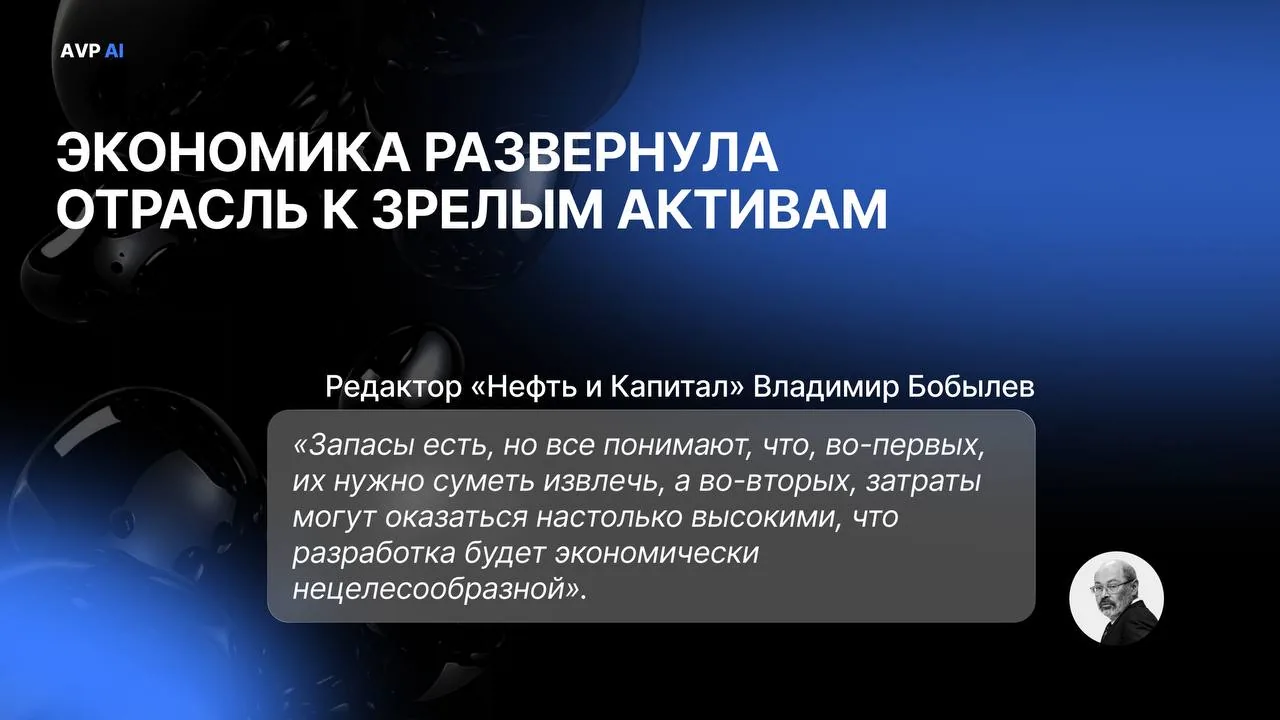
Ready infrastructure and a short payback cycle. The key rate of 16–18% in the second half of 2025 and the Urals discount made a new project more expensive and riskier than another well intervention on an existing cluster. According to industry monitoring, vertically integrated oil companies are shifting programs to high-flow-rate and active areas and abandoning wells with flow rates below 5 t/day and water cut above 80%. Analyst Dmitry Adamidov in a comment to Muksun.fm puts it more bluntly: "We need to understand that we will not launch a new Samotlor; it simply does not exist. And local things like restarting old fields are normal practice under current conditions, because developing a new province is unprofitable now. The other thing is to further explore and drill up."
Therefore, the price of an asset today is not in the reserves, but in how much it costs to lift them.
🌐 Website | 🎰LinkedIn
Comments
0No comments yet.
Sign in to join the discussion.