

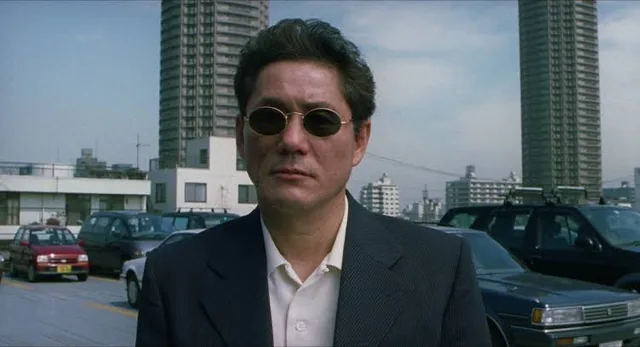
There's such a thing as being well-versed. So you've watched a couple of Takeshi Kitano films, one Tarantino with obvious borrowings, stumbled upon the series "Giri/Haji" on Netflix — and you think you already understand the topic of movie yakuza. But then you learn that Japanese gangster cinema has come a longer way than the biography of an average oyabun, and through it you can read the entire history of postwar Japan.
Today we'll break down how a guy with a katana and a code of honor over a hundred years of screen time turned into a character who can be placed alongside a clown from a B-horror movie — and why this is actually not degradation at all, but a mirror of reality.
Why it's worth digging into this now
The phenomenon is relevant precisely because the yakuza as a real institution is dying — according to Japanese police data, the number of gang members has fallen from the peak of 1963 (184,000 people) to 9,400 in 2025. Real gangs are dissolving under the pressure of boryokudan exclusion laws — but their screen image, on the contrary, is experiencing a second, third, tenth rebirth: whether in a noir series about a journalist in Tokyo, or in another installment of video games about Kazuma Kiryu. Cinema doesn't keep up with reality; it overtakes and outplays it — and that's the whole point.
Era One: The Former Samurai with Stable Principles
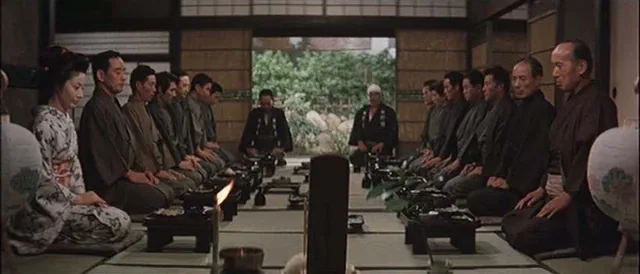
The first yakuza appeared on screen back in the 1920s–1930s, when historical dramas (jidaigeki) began to give way to more grounded plots. But the real canon was formed later, in the early 60s, when the Toei studio invented the ninkyo eiga genre — "chivalry films." The action took place in the Meiji and Taisho eras, the hero wore a kimono instead of a jacket, and the entire plot revolved around the conflict between giri (duty) and ninjo (personal feelings).
This comforted the viewer, as the country was changing too quickly, and here was a hero whose principles were at least stable. The irony is that the real gangs of the 60s were much more prosaic: racketeering, gambling, construction. But cinema sold nostalgia, not documentary, and sold it with great success — the genre flourished until the 70s.
Era Two: A Punch to the Gut
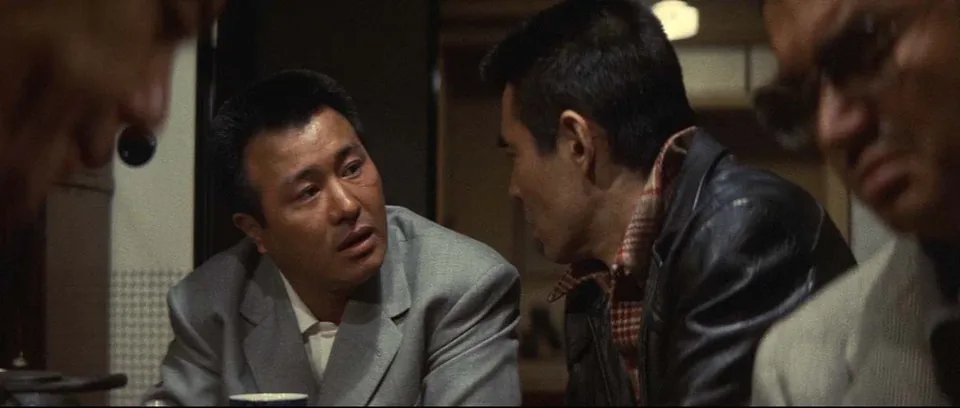
When the viewer had their fill of noble bandits in kimonos, director Kinji Fukasaku came and with one film reset 30 years of romance. "Battles Without Honor and Humanity" (1973) adapted a real series of crime chronicles, was shot in an almost documentary, jerky style, and there were no pure heroes at all. The film was immediately dubbed "the Japanese 'Godfather'" — although in spirit it's more of an anti-"Godfather": not an epic about family, but a chronicle of mutual betrayal, where bosses sell their people for profit, and yesterday's brothers cut each other without a shred of giri.
Fukasaku shot a five-part saga in 2 years, and it is still considered one of the pinnacles of world crime cinema — Tarantino and Takashi Miike were inspired by it. What's funny: it was this most cynical version of the genre that turned out to be the most honest in relation to reality. As often happens in cinema — the less pathos, the more truth.
Era Three: Yakuza and Existential Boredom
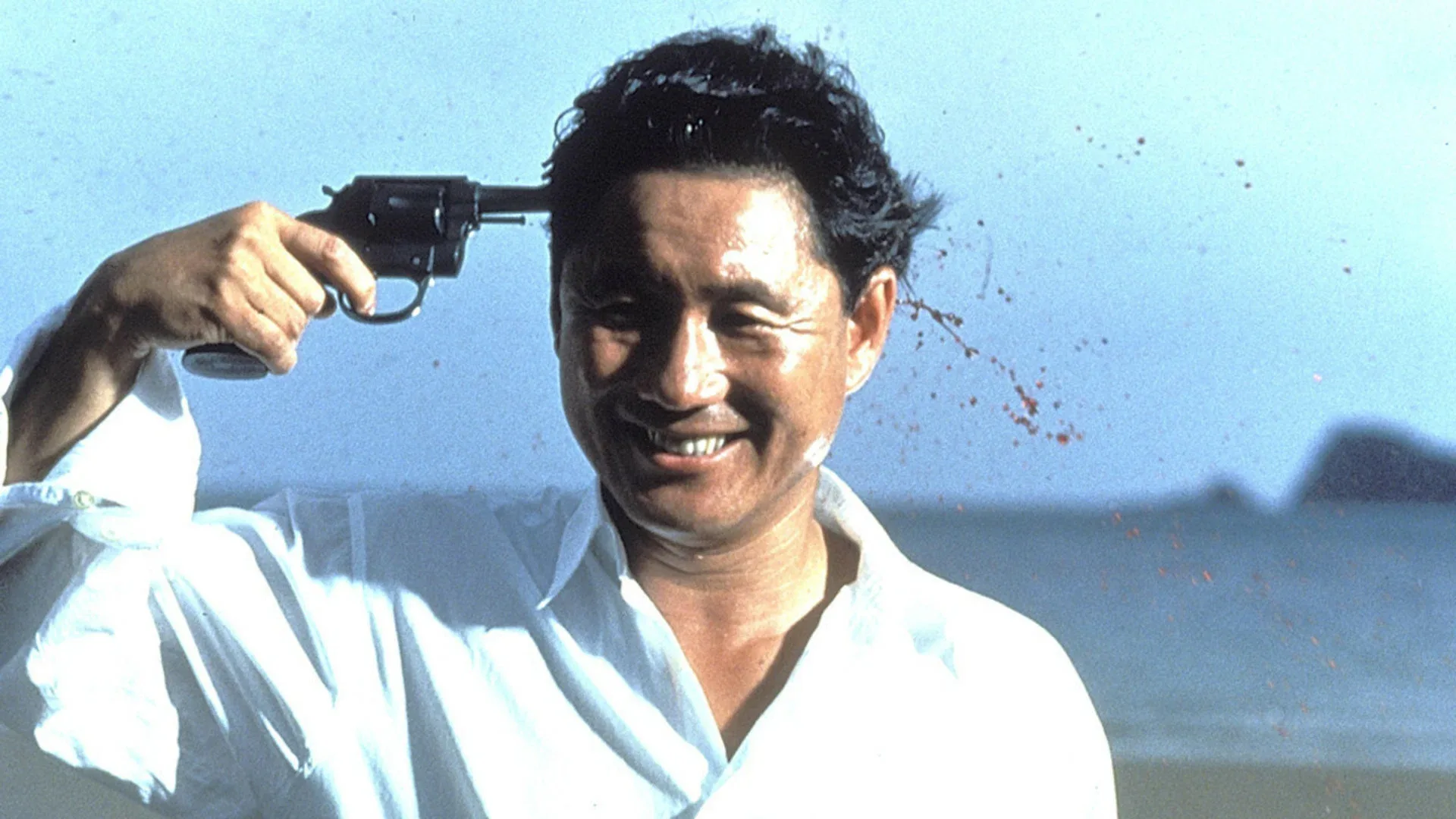
By the 90s, the genre seemed to have finally run out of steam, and then Takeshi Kitano stepped onto the scene — a comedian by primary profession, who did with the yakuza what Fukasaku did with romance: removed another layer of myth. In "Sonatine" (1993), his hero — a tired Tokyo gangster sent to sort out a dispute in Okinawa — spends most of the screen time playing ball on the beach, fooling around with subordinates, and clearly waiting for death as a release.
Then came "Outrage" (2010) — essentially a yakuza version of "The Godfather," but squeezed to a dry residue: continuous behind-the-scenes intrigues, betrayals, and business negotiations that end in a corpse. The code of honor here has long turned into bureaucracy: gangsters are no longer warriors, but middle managers tired of corporate wars. Watching this is both boring and mesmerizing — roughly like observing an office meeting where at stake is not a quarterly report, but someone's head.
Era Four: Welcome to the Meat Grinder
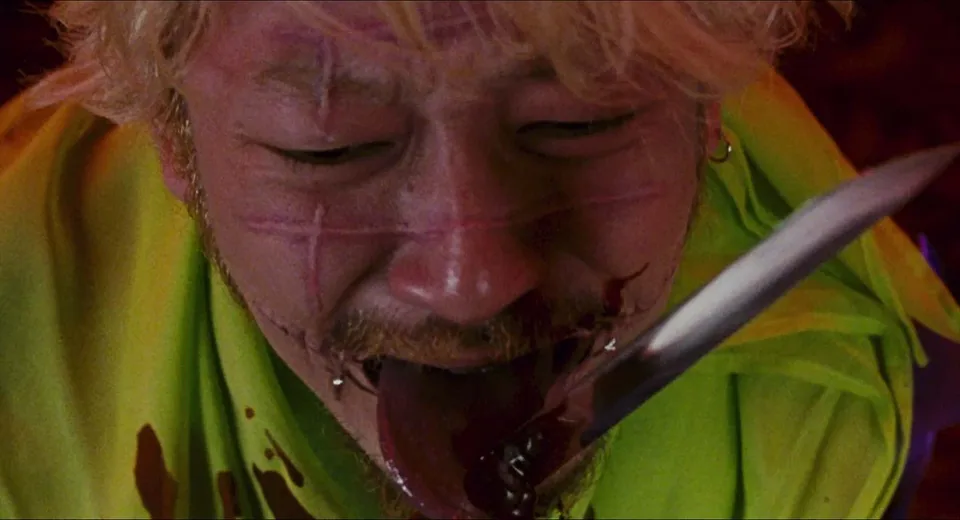
In the late 90s and early 2000s, Takashi Miike decided that yakuza films could be taken to the point of absurdity. Standing apart are "Dead or Alive" (1999) and especially "Ichi the Killer" (2001) — films with elements of body horror and black farce, where scenes of violence are so excessive that they cease to shock and begin to evoke nervous laughter.
Miike works here almost like a horror film author who uses the yakuza setting as an excuse to stage a carnival of cruelty. Morality, code, drama — all of this is optional, and what truly matters is the effect of "can this really be shown on screen?" And it is here that the caricatured pole of the image is finally cemented: the yakuza as a psychopath, whose behavior is explained not by social context, but by a personal traumatized psyche.
Era Five: Yakuza as Nostalgia for a Dying Species
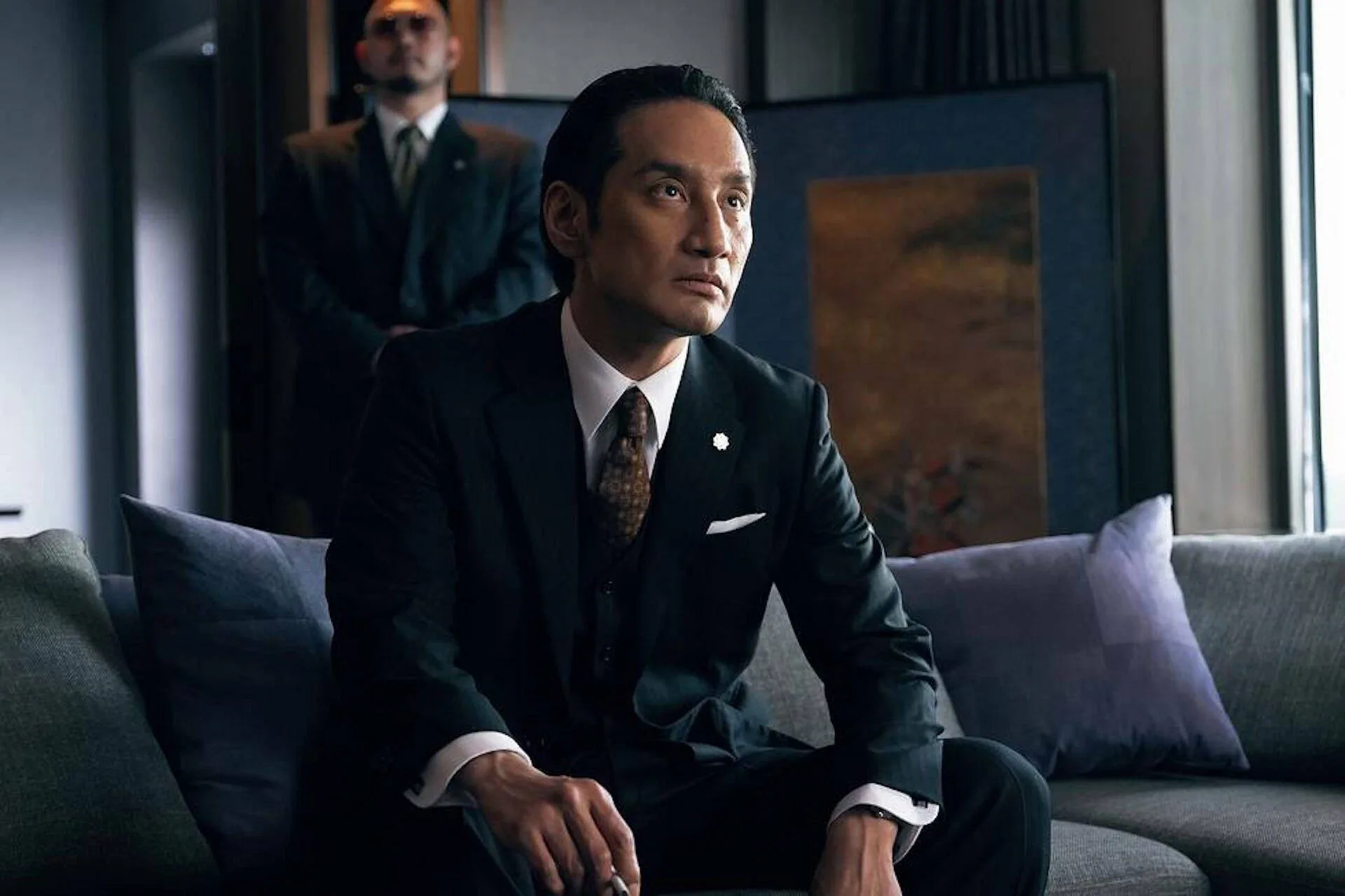
Now, when there are fewer than 10,000 real yakuza left in Japan, and the law literally prohibits banks and mobile operators from dealing with them, films and series like "Tokyo Vice" look at them almost as a museum exhibit. Not a caricature and not romanticization, but something else — a fixation of a disappearing subculture, somewhat anthropological, somewhat elegiac. The show's real consultant, journalist Jake Adelstein, directly says: the yakuza are slowly but surely dying out as a species.
So is it degradation or evolution?
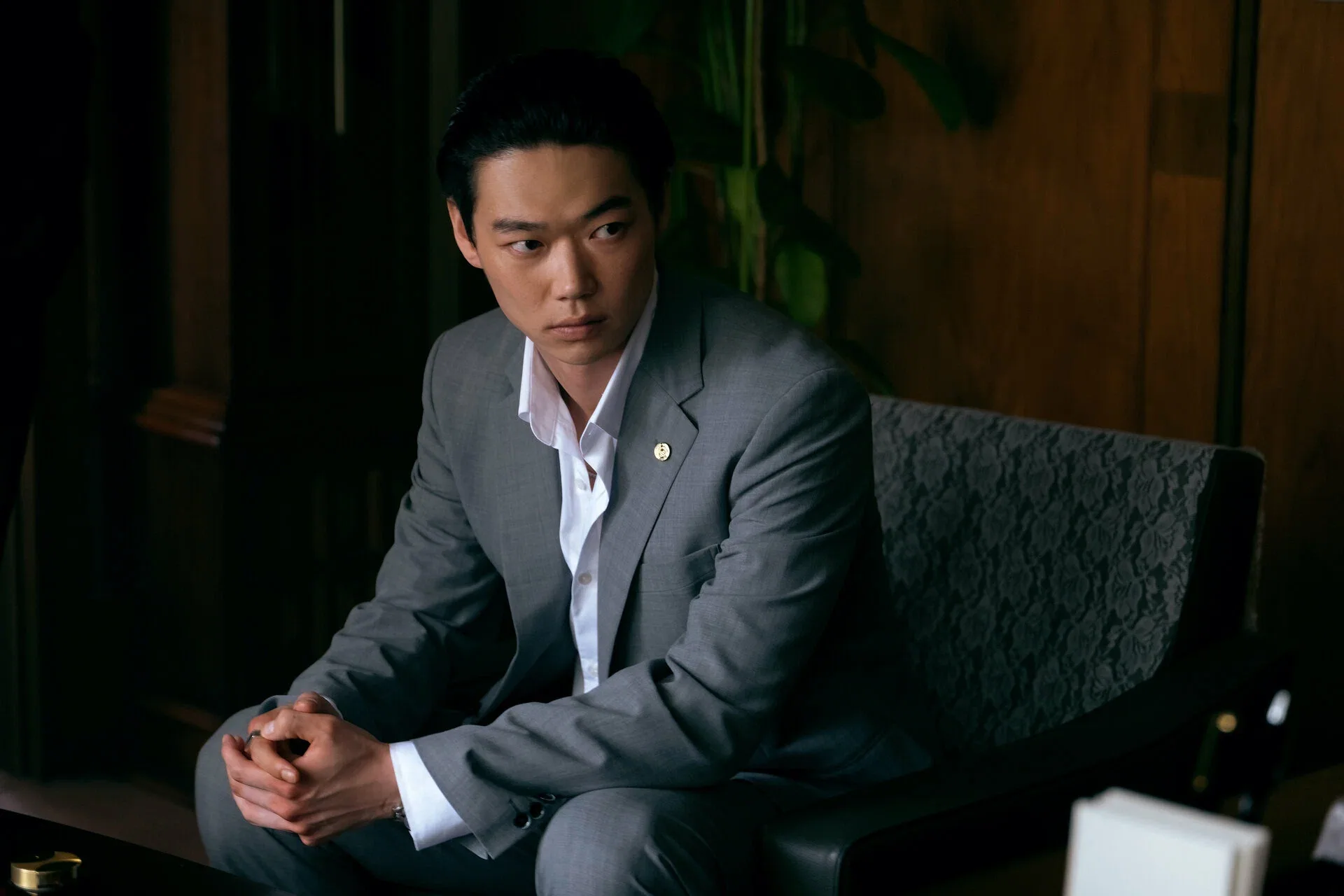
Honestly, neither one nor the other — it's just a mirror that each decade showed Japan what it lacked: in the 60s — stability, in the 70s — truth, in the 90s — fatigue with its own myths, in the 2000s — liberation through absurdity, and now — farewell to a passing nature. So next time you come across another trailer about a tattooed gangster with a katana, remember: before you is not just a genre cliché, but the endpoint of a nearly century-long dispute of Japanese cinema with itself about what honor actually is. Spoiler: they never found an unambiguous answer, and it seems that's wonderful.
Comments
0No comments yet.
Sign in to join the discussion.