

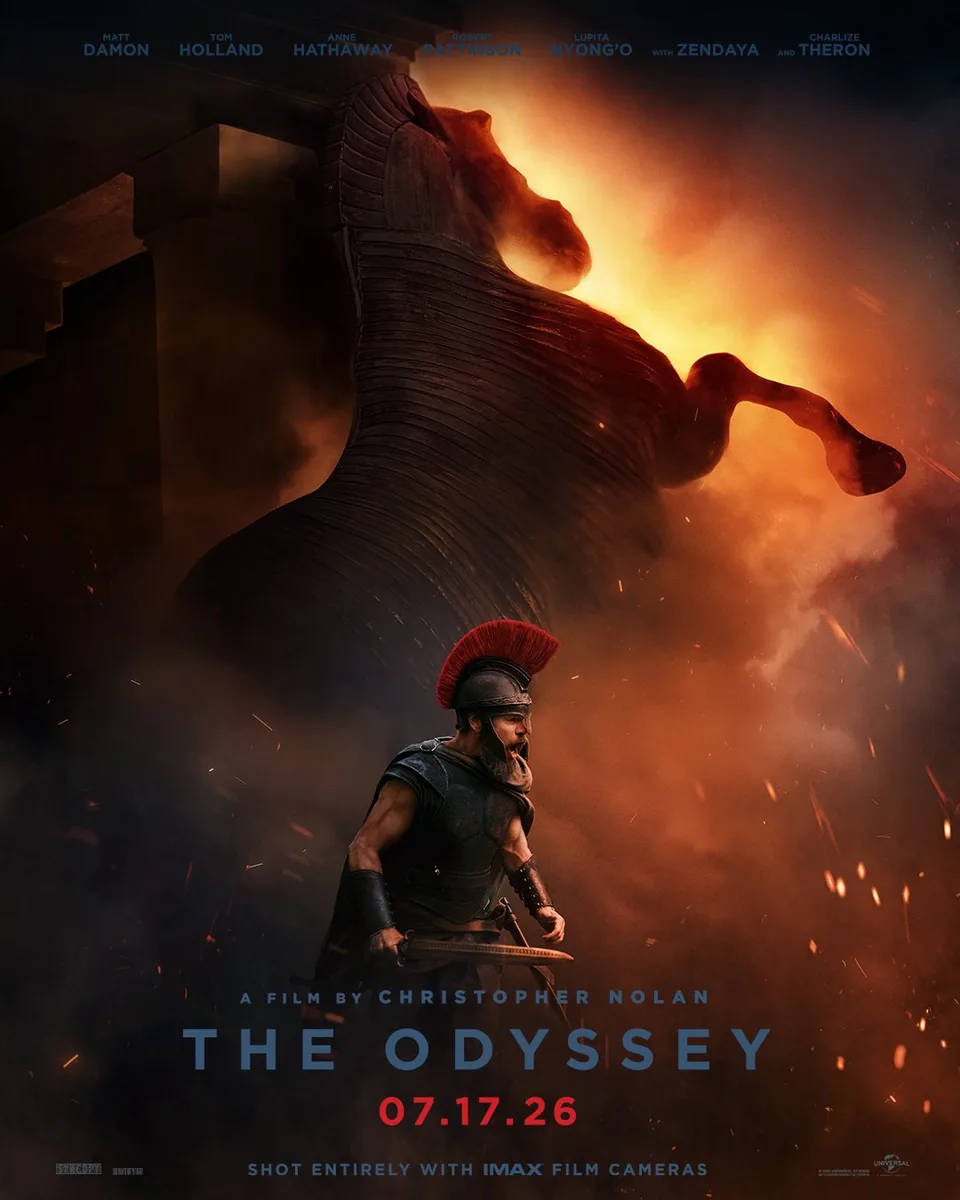
Christopher Nolan's 'The Odyssey' is now in wide release. It contains none of his usual temporal puzzles or Homeric pathos, but rather a stark realism that methodically dismantles the myth of the Trojan War hero.
For twenty years, Penelope (Anne Hathaway) and Telemachus (Tom Holland) have been waiting for Odysseus (Matt Damon), their husband and father, who went missing after the conquest of Troy. In the king's chambers, day and night, the 'suitors' stand guard, led by the cunning Antinous (Robert Pattinson), hungry for power and the throne, while the kingdom itself is in complete disarray without its king. Only the songs and legends praising Odysseus keep a fragile hope of his return alive.
If you look closely at Christopher Nolan's filmography, it becomes obvious: almost his entire conscious career has been a variation on the same theme. At the center of his narratives is invariably a lonely, weary, and disillusioned man, burdened by the bitter baggage of past mistakes. His sole aspiration is to flee from this burden into a safe space, which for Nolan is usually symbolized by home—abandoned long ago but preserved in memory untouched by life's storms. This archetypal plot can be traced in 'The Dark Knight', 'Inception', 'Memento', 'Interstellar', and 'Oppenheimer'—with which, incidentally, 'The Odyssey' shows particularly striking similarities in its portrayal of a man who becomes a dark silhouette against the backdrop of his own deeds.
There is an opinion that with 'The Odyssey', Nolan has finally put an end to this endless cycle of journeys home. Now his hero is fleeing not so much 'to' as 'from'—and, according to rumors, the director is ready to turn to a completely different story. However, these predictions should be taken with caution: when you devote your entire life to developing a single motif, switching to something diametrically opposed is quite difficult.
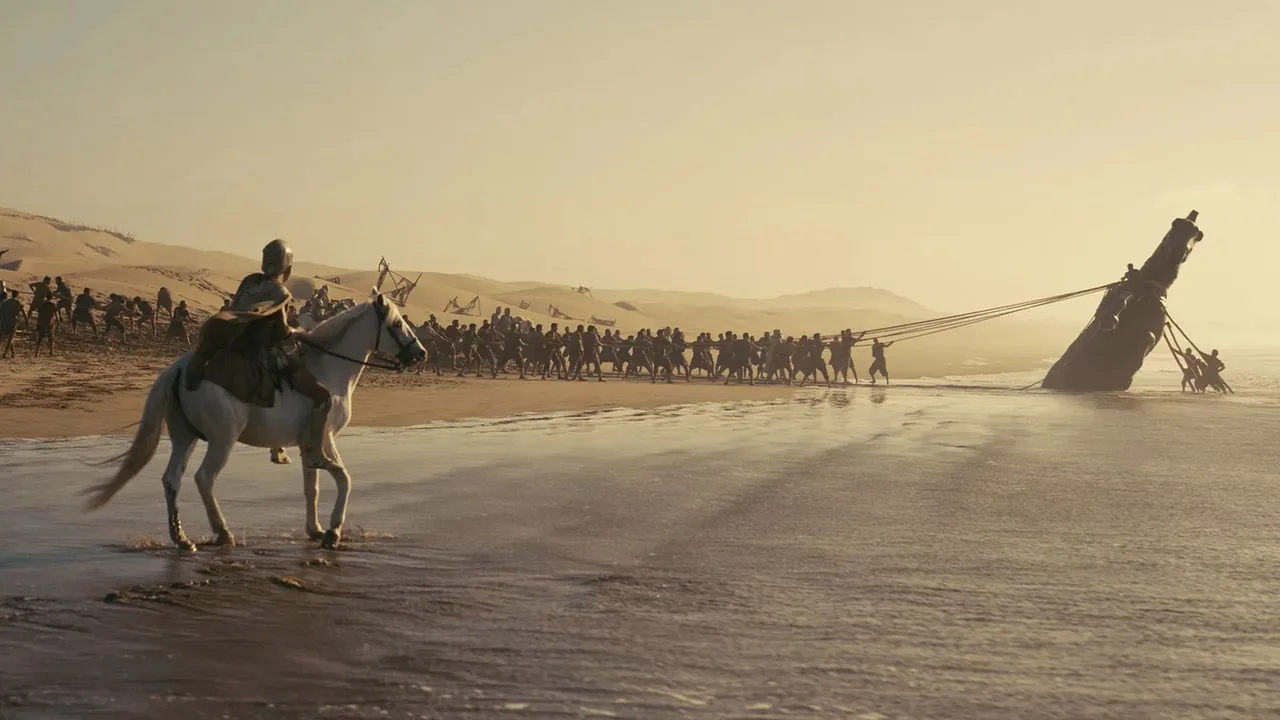
The direction in 'The Odyssey' is deliberately schematic, which, however, only confirms fidelity to the author's signature. And if in the first half of the film he habitually tries to confuse the viewer by mixing temporal layers, he then quickly finds a straight path and does not deviate from it until the very finish. And here lies the main revelation: 'The Odyssey' turns out to be the director's most straightforward film, which, as if tired of himself, abandons most of his signature tricks. However, he has not betrayed his main ambition: Nolan still strives for maximum authenticity. So those who expected pomp, solemnity, and gilded sugar from a Homeric adaptation will be disappointed—there is no trace of ancient luxury here.
Nolan methodically removes everything that could distract from the main thing—from Matt Damon's constantly moist eyes, transformed into a decrepit old man, and from the story he embodies. Moreover, he goes further, completely banishing the Greek gods from the screen, thereby clearly illustrating the key idea of his film: the celestials have turned away from the people of the Bronze Age, their precepts are trampled and forgotten, and from now on humanity is doomed to eternal wandering between myths and reality. And these two elements, as is known, diverge radically.
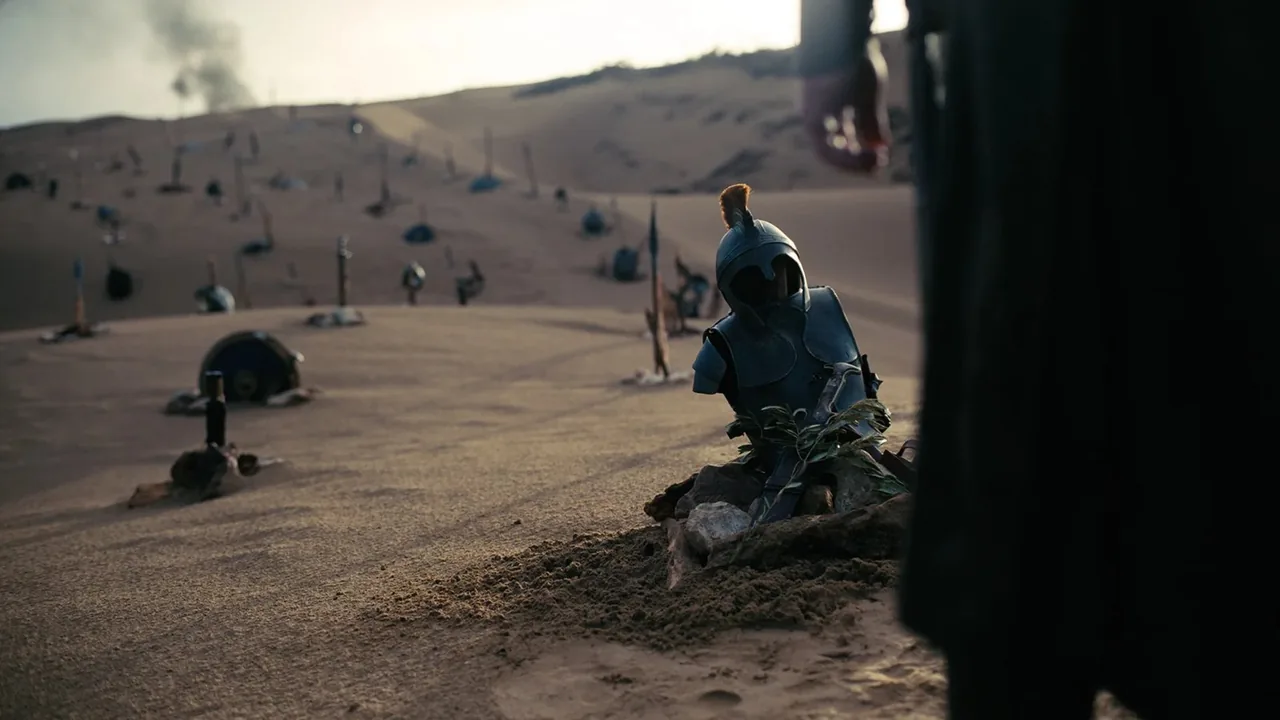
To the almost documentary picture, Nolan adds a couple of effective horror scenes—with the episodes involving the Cyclops Polyphemus and Circe, he has matched some of the genre's luminaries (for example, Robert Eggers or S. Craig Zahler). Also included here is the hyper-realistic scene inside the wooden horse, where people, awaiting transport, simply suffocated in their own miasma and choked on dirty water. But when it comes to action scenes, Nolan makes a noticeable misstep. The sea vigils on the drakkars look tolerable, but the final battle with the suitors in Ithaca resembles not so much an epic denouement as a chaotic brawl, like in the recent 'Mortal Kombat': darkness, cramped quarters, and you can hardly make out anything. It's a bit disappointing, but to be fair, the choreography of battle scenes has never been Nolan's strong suit.
Now about Damon. Before us is no longer that cunning king of Ithaca, who so cleverly deceived the brave Trojans with his offering. This is a broken, sorrowful husband, exhausted by wars, long campaigns, and the perpetual grief of those around him, having become the cause of many misfortunes for the conquered peoples, whose fame runs far ahead of him. Over the course of two and a half hours, the film literally tramples the heroic aura that has habitually taken root in mass culture. Nolan is more interested in how a man turns into his own legend, gradually suffocating in that image. And in the end, he is forced to accept the facts about himself as truth, because he simply cannot refute what has been said. They wouldn't believe him anyway, or would consider him an impostor. And perhaps they would be right.
This is another sad chord in the modern vision of Odysseus, brilliantly embodied on screen by Damon. It can be said unequivocally: Nolan was lucky with his main star. But knowing the author's professionalism, it's not even a matter of luck, but, as always, of fine calculation. The rest of the casting, by the way, cannot be considered a dubious success either. Even the people's favorite 'Spider-Man', Tom Holland, was so imbued with the solemnity of the moment that he stopped radiating friendliness, mischief, and naivety, and completely transformed into the unhappy son of a missing father.
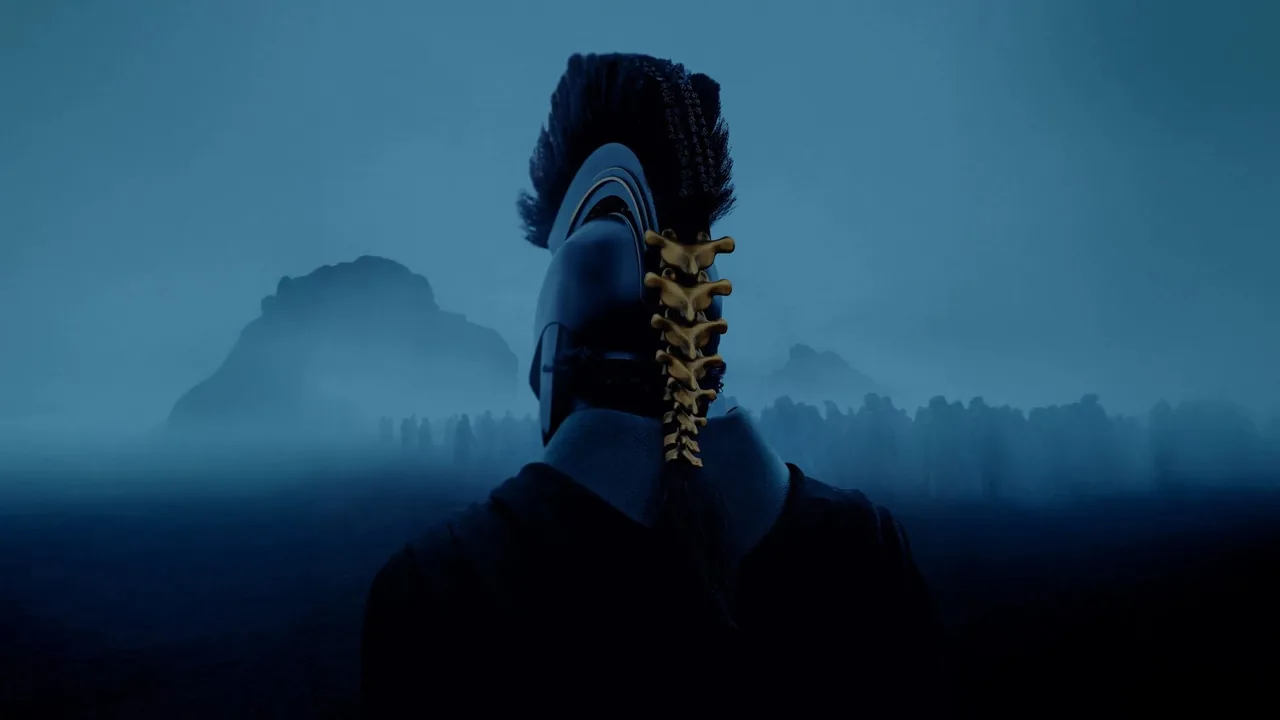
'The Odyssey' is undoubtedly an event in the world of modern cinema, with no particular obstacles to claiming the title of film of the year. The graininess of the film and the discrepancy with most of the chapters of Homer's original poem cannot overshadow the brilliant direction and its subtle understanding of the current climate. This is exactly what one should go to the movies for, before it finally turns into plastic superhero games on the green baize of studio hangars. Nolan's strength lies in calculation. Nothing superfluous, everything to the point. Every detail works for the image, for the mood, for the longing for home that he molds from film to film.
Comments
0No comments yet.