The Symbolism of Madeline, or an Attempt to Stuff a Living Person into a Pretty Box
With Madeline, it's more interesting to analyze not so much her character in itself, but how it constantly breaks through her design, despite all attempts to control that very character.
We remember that Madeline is an empath, a rather dangerous "type" of sorcerer: she easily absorbs others' emotions, and if there's too much of that good stuff, the consequences can be quite explosive. So her life in the attic in silence and isolation is not just "a poor girl locked upstairs." In a sense, it's truly necessary for her to avoid drowning in others' emotions. And although it makes her feel better, it's still primarily a restriction. Her whole life is essentially one continuous restriction, and against this backdrop, her entire external image is built. If a person has to be constantly restricted from the outside, it's very easy to start controlling everything around them: where they are, how they behave, how they look, what they wear, how decently it fits, and whether it matches their place. To avoid spoilers, I won't go into detail now about who exactly controls her so strongly; we'll find out later in the story. And Madeline is very carefully fitted into the image of a "proper" girl: a long skirt almost to the floor, gloves, ribbons, lacing, closed clothing, a pink-purple palette — everything so neat, decent, and decorative. Here's a girl who's been beautifully packaged and placed on a shelf.
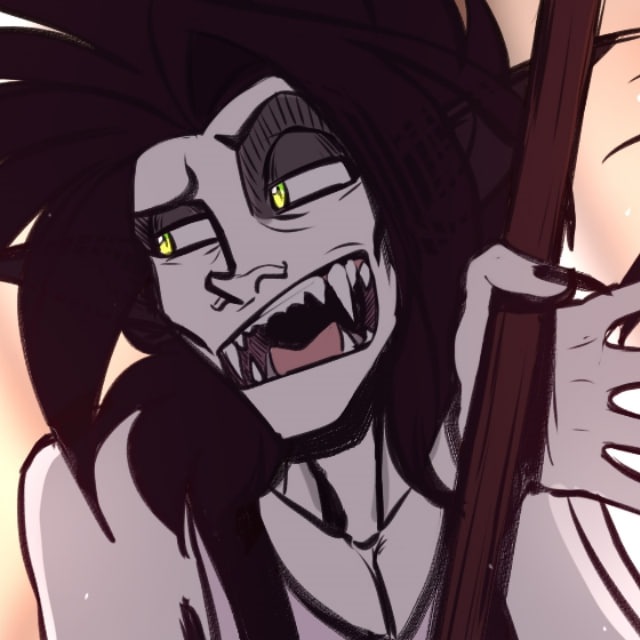
Only Madeline herself doesn't quite agree with this position. And the more closely you look at her, the more this pretty packaging starts to burst at the seams. The long skirt is supposed to give her a decent and feminine look, but underneath it, funny striped tights suddenly appear. If no one's watching, she often sits in a very unladylike manner; when she decides to read a book in her attic, she calmly climbs along the beams like trees, as if no one ever told her that well-bred young ladies don't behave that way. And her hair is short, black, and perpetually tousled — instead of a neat doll-like hairstyle, again something alive and unruly. The result is a fairly direct conflict: outwardly, they try to make Madeline as fitting to her place as possible, but Madeline herself constantly shows that she doesn't fit that place.
Notice that she always wears gloves, ribbons, and lacing? It's as if she's constantly bound, tied up. Her hands are hidden, her body is covered, she lives apart from others, surrounded by silence — all of this helps contain what could potentially break out. But Madeline herself still constantly breaks something. She climbs where she's not supposed to, sits however she wants, and even alters and sews her clothes herself. That is, if she's given a ready-made shell, at least she can adjust that shell to fit herself. She can't change the world around her, but her own dress — she certainly can.
Moving on. Colors. Shades, more precisely. Her palette also gradually shifts from lilac to dark purple. On the train, she's returning to the orphanage after another planned release of energy, she's already feeling lighter — and her dress is lighter too. Then emotions start to accumulate again, and along with them, the pink and purple shades darken, with more and more black appearing. The color gradually becomes heavier along with her state. In the last scene in the attic, I deliberately kept her away from light sources: while Aidan is brightly lit by the stained glass, Mad herself constantly darts in the shadows, almost blending into them with her silhouette. Black generally becomes more and more noticeable: black hair, clothing details, elements that separate one part of the costume from another. And against all this background, her bright amber eyes stand out — Maddie's true essence, which cannot be hidden or stifled. You can make clothing as closed as possible, hide hands in gloves, cut hair short, and even house a person in an attic and seemingly forget about their existence, but what can you do with the eyes, cut them out? xD
And one more detail: Madeline never smiles once throughout the entire story. Not once. Not a single happy face. And this particularly highlights the difference between her outer shell and what's inside. Visually, there are many things about her that should create the image of a cute, gentle, and proper girl, but the real Madeline constantly seeps through: through tousled hair, through strange poses, through striped tights under a long skirt, through the habit of climbing on beams, through self-altered clothing, through gradually darkening colors and gloomy, skeptical faces. So her design, for me, is primarily about the conflict between who Madeline has to be and who she really is. She truly needs control, she truly needs silence. She truly has to limit contact with others. But that doesn't make her submissive and convenient. Madeline remains alive, mischievous, internally disagreeing with her place — and constantly finds small ways to break out of the frames they try to stuff her into. Such a small, seemingly unnoticeable rebellion. And further along in the comic, this will only develop further~
Comments
0No comments yet.
Sign in to join the discussion.