

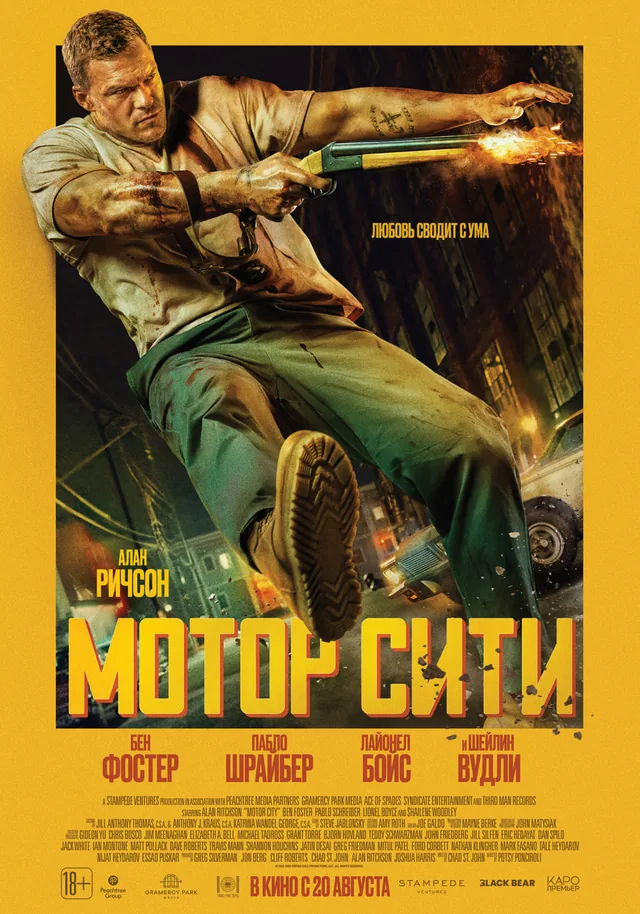
A new film with Alan Ritchson has hit wide release, in which rock singers speak instead of the hero. Patsy Ponchirroli's film is indeed fiery in every sense. But still, lines in the mouths of heroes are sometimes needed.
Detroit, 1970s. John Miller (Alan Ritchson), a simple factory worker, makes a fatal mistake: he falls in love with a girl, Sofia (Shailene Woodley), who belongs to a local crime boss (Ben Foster). He even manages to propose to her, but retribution comes quickly and meanly — false accusation, trial, long years behind bars. And when John gets out, only one thing is on his mind: a cold thirst for terrible revenge on the one who took everything from him.
The new action film by Patsy Ponchirroli, author of the magnificent western "Old Henry," mostly revolves around the imposing figure of Alan Ritchson — an actor who, with each role, is increasingly confidently carving out a place in the world of masculine cinema, overshadowing the screen with the sheer texture of his torso. This time, Ponchirroli, already established in the genre, decides to step beyond the usual bounds: in "Motor City" he completely does away with dialogue. Only the crunch of bones and juicy blows.
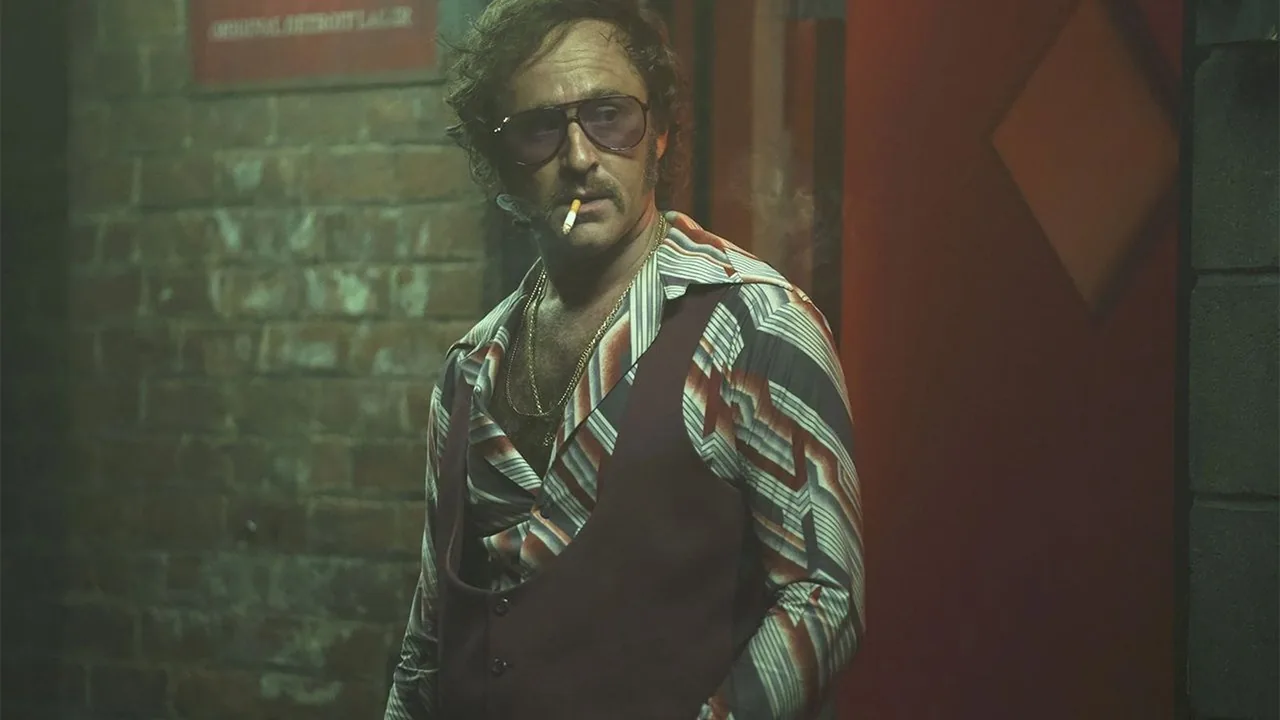
And there are plenty of those blows in "Motor City." Ritchson in this element is not just organic — he becomes a conduit for the energy of eighties testosterone cinema in its most primal fury. The silence of the characters is a device already tried by John Woo in "Silent Rage" (there it was forced), and Woo pulled it off flawlessly. Ponchirroli, however, replaces words with music: the film's soundtrack consists entirely of rock classics, where each song is tied to a specific scene and is meant to be its invisible prompter.
This is not exactly a difficult trick: many have done it, just think of Martin Scorsese. But in "Motor City" it sometimes transforms into one very long music video, further weighed down by constant slow motion. And the stubborn silence of the characters is sometimes confusing. Scenes that simply require a few lines drown in the roar of guitars, and this does nothing to foster understanding with the viewer. Sometimes you have to simply fill in what, ideally, the very fabric of the film says outright. Yes, such a "gimmick" certainly sets "Motor City" apart from the crowd of monotonous brethren, but at some point it becomes a burden capable of dragging even the indestructible Ritchson to the bottom.
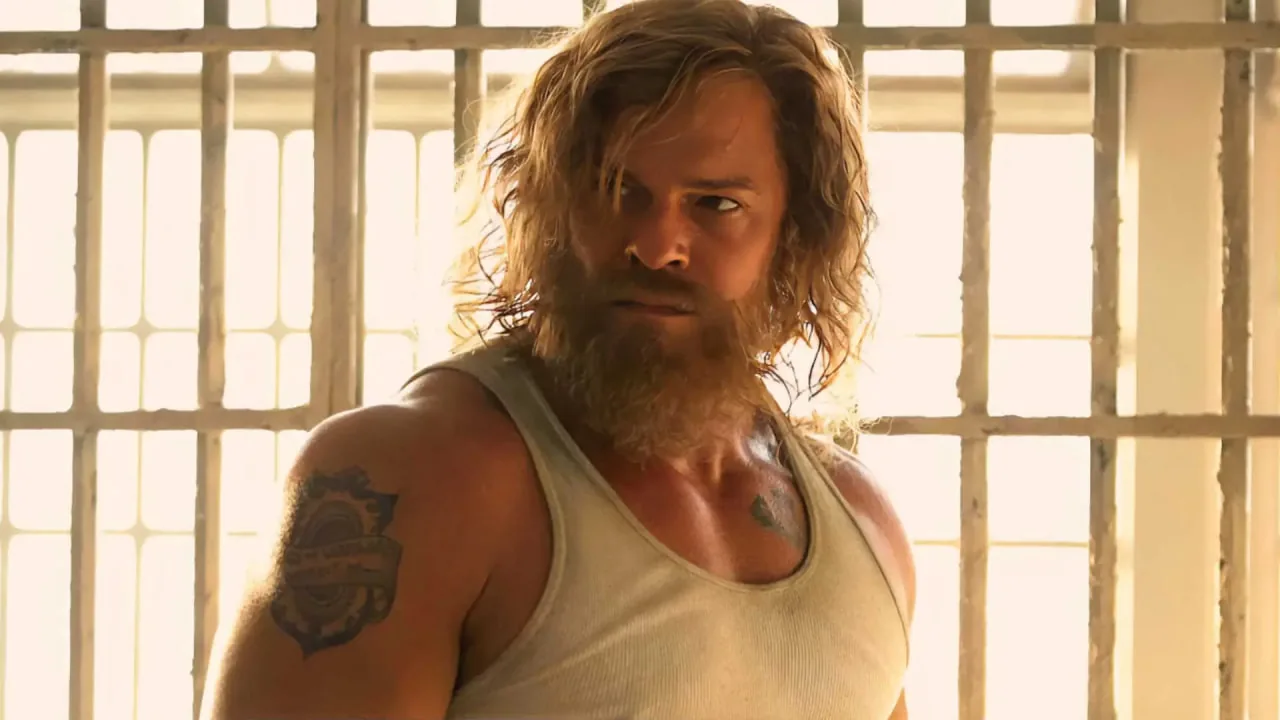
Thankfully, Ponchirroli saves all the most thrilling parts for last, and for the third act the author can easily be forgiven for all the aforementioned shortcomings. There, the director, as they say, forgets the brake pedal, like a true rock 'n' roller. Ritchson's hero makes a knife out of caramel, growls like a wounded beast, escapes from prison with the help of his brothers in arms — in short, he finally turns into a machine of revenge. The appearance of friends, by the way, makes it hard to shake the feeling that one of Ponchirroli's references might have been "Desperado" by Robert Rodriguez — the same silent professionals, capable of leveling half the city for a friend.
After that, the viewer is treated to the main showdown with a corrupt cop in an elevator. With just one scene, Ponchirroli outdid everyone who had been contorting themselves in attempts to outdo each other. Like, for example, the director of "Live Rage" (a recent favorite in the genre), Kenji Tanigaki, who created complex structures and took some fight outcomes to the point of absurdity. But Ponchirroli simply gave the characters a sawed-off shotgun and a knife, locked them in a confined space, and completely trusted his own intuition.
True, before that, the viewer will have to endure Ritchson's ridiculous wig and slightly hackneyed mise-en-scènes with a touch of classic adultery. Yes, "Motor City," for all its concentrated toughness and ostentatious brutality, is primarily a film about simple earthly love, which does happen every now and then. For which people kill, serve time, and get out to kill again.
To confirm this once more, Ponchirroli crafts a completely unnecessary second ending, like a post-credits scene, putting the only line in Ritchson's mouth. Just for extra persuasiveness. But upon leaving the cinema, this thought evaporates instantly, and only the stern muteness of the main character remains in memory — a man who doesn't know how to joke, but knows how to love to the end and grind his enemies into dust.
Comments
0No comments yet.