
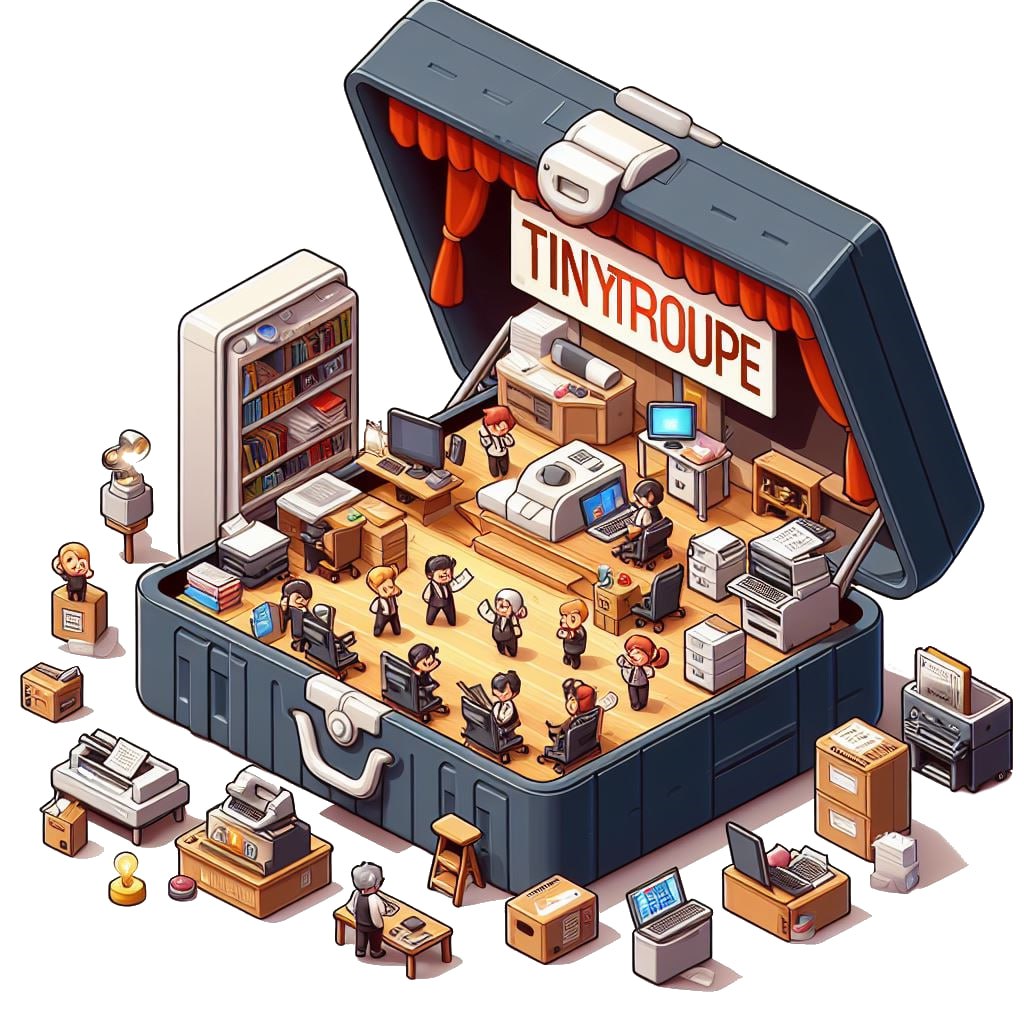
Simulating Leather Ones 👩👩👦
Microsoft has an interesting open-source project — TinyTroupe. What's the gist? Most frameworks are geared towards assistance — helping solve tasks. TinyTroupe is geared towards simulation. The difference is fundamental: an assistant must be efficient, while a simulator must be credible. A credible person makes mistakes, has biases, remembers breakfast, and has a personality.
What's inside this Python zoo:
1. TinyPerson: The agent has
mental_faculty (cognitive abilities) and two types of memory: EpisodicMemory (event chain) and SemanticMemory (knowledge base and facts).2. Action Correction: If the LLM agent suddenly "forgets" its identity (e.g., a vegan starts recommending a steakhouse), the
TinyPersonValidator validation system catches it red-handed, scolds the agent, and forces it to regenerate the action.3. TinyWorld: The environment. Here agents interact according to rules you describe in code. You can even set up a social network with relationship graphs.
4. TinyFactory: A crowd generator. If you need 50 Brazilian doctors who love heavy metal and ecology for testing your new app, the factory will churn them out based on demographic inputs.
Why all this?
— Synthetic data: Instead of bothering real users or buying dubious datasets, you run your project through a focus group of 100 agents with different personalities.
— Software testing: You can make an agent "use" your chatbot or search engine and see where it breaks the logic with its human expectations.
— Marketing: Evaluate ads on a simulated audience before you blow your entire budget.
Inside is a typical modern Python stack: llama-index for RAG, chevron for prompt templates, and lots of JSON specifications. The main downside is that by default everything is geared towards OpenAI.
And besides all that, it's proof that we live in a matrix 🌝
#good_opensource
Comments
0No comments yet.
Sign in to join the discussion.