
I want to present my product to the general public - it's a startup planner. The story will be divided into two parts: first - what is a planner; second - how we sell it and why we didn't go sell it through a publishing house.
What is a planner
It was by creating it that I understood why they say a startup shouldn't do something radically new that doesn't have a market yet. Why? It will be hard to explain what you've made. So it is with me. I'll need this entire article to tell you about my product, or at least a paragraph.
I work a lot with university startup teams and noticed that they go to pitch and prepare slides, write numbers there, but don't think much about the connection of the business model with their startup, don't fully understand how to calculate numbers and why it's done at all. Therefore, I often saw presentations with immediately negative unit economics, with market figures of 10 million rubles per year. And I wanted to give the guys some product that would help them with this. That's how the idea of making a planner was born - a combination of a book and a notebook, i.e., theory and practice.
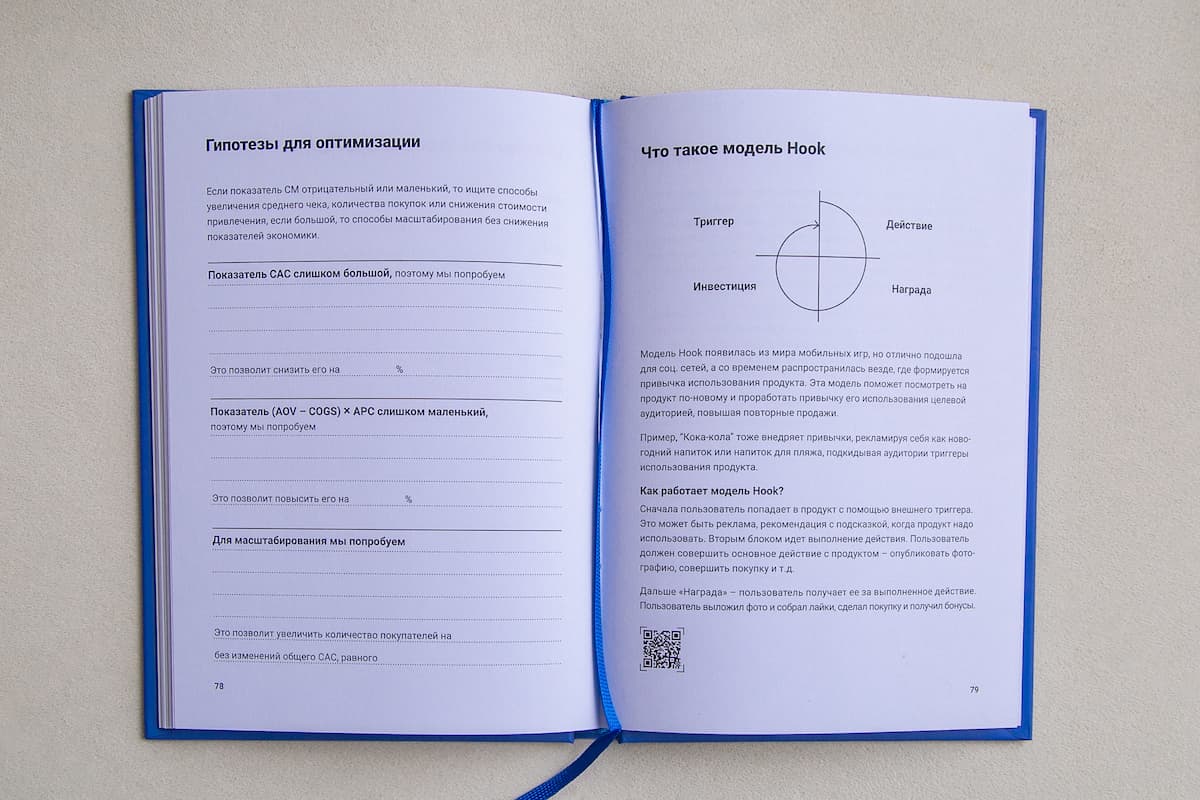
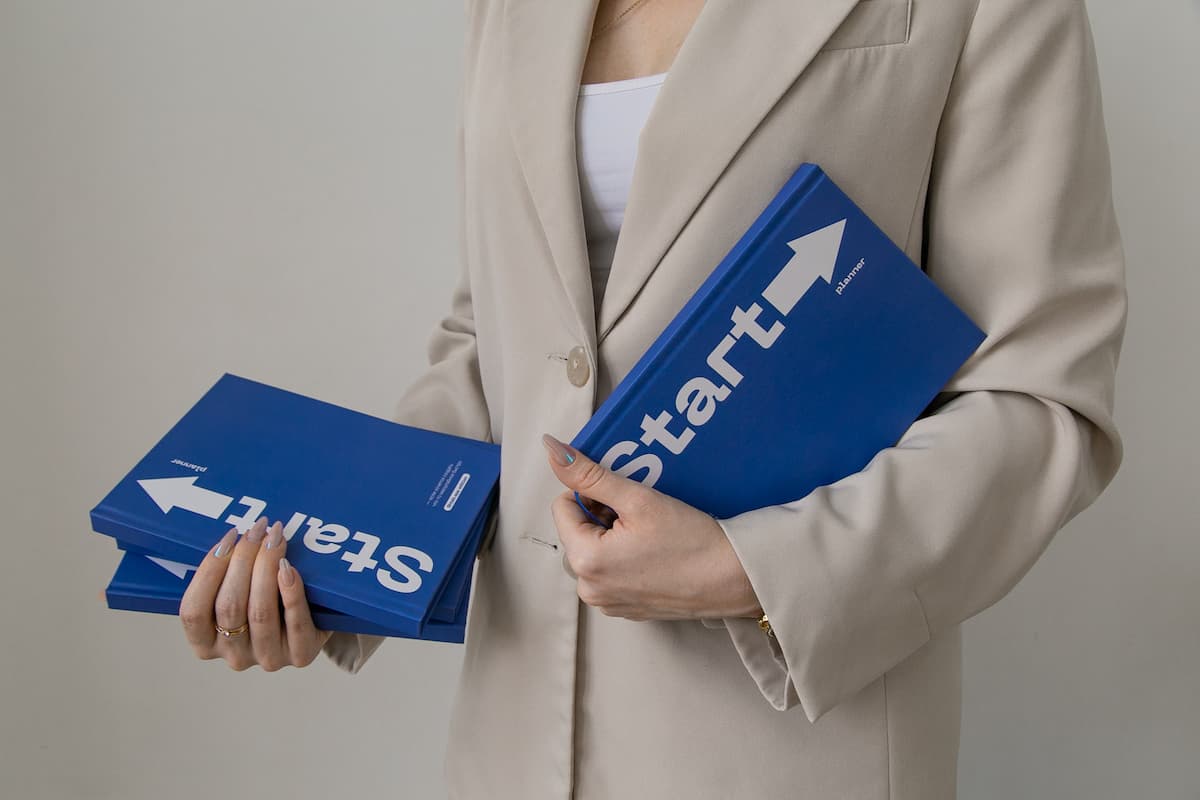
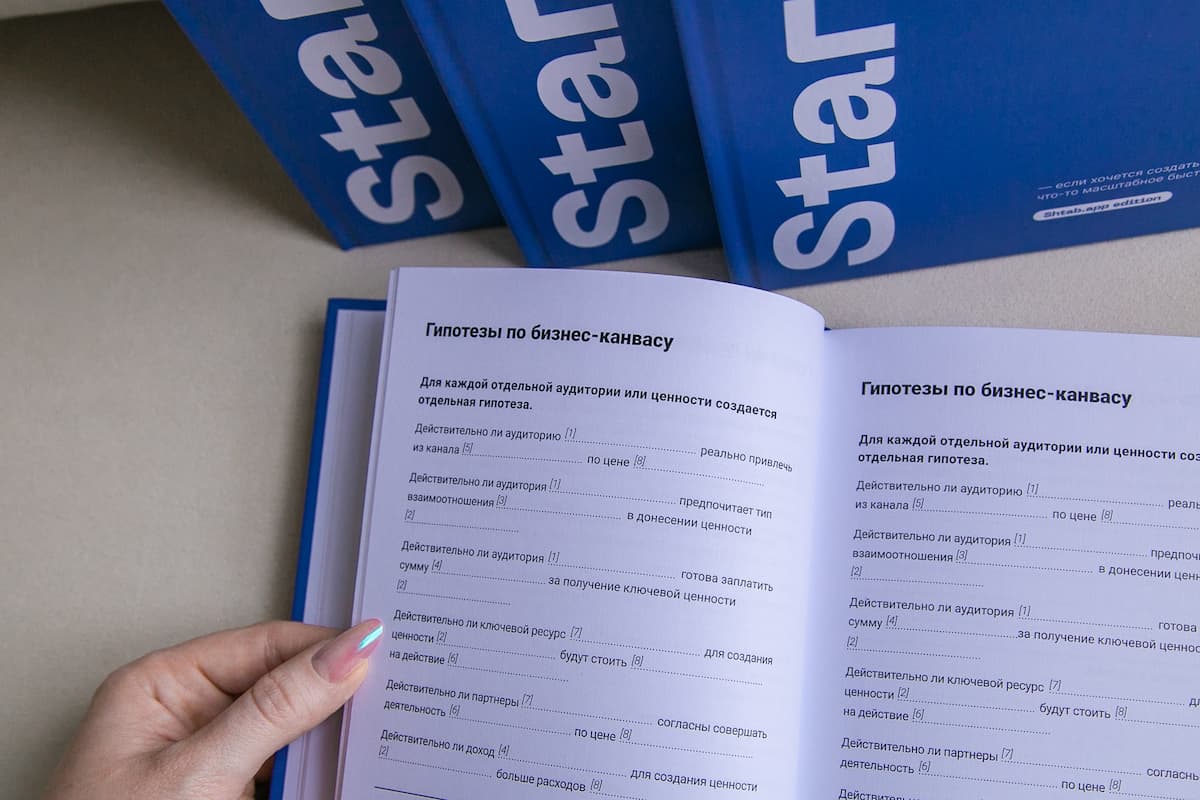
What is a startup planner? It's a set of templates from the most important startup methodologies that will help you turn your idea into a well-developed launch plan. The templates are arranged in the correct sequence, helping you work through issues as they arise and with the right depth. Moreover, before each template there is theory, as well as a QR code with a link to extended theory and examples of filling out the planner. This makes it a convenient system that helps beginners but is not overloaded and can be used by professionals.
How we sold it
We, as adherents of lean-startup and cusdev, having come up with the idea, did not go to make it, but went to sell it. We had the following idea - it's an ideal souvenir for accelerators. Currently, accelerators give notebooks, pens, tote bags. In general, a standard set. And we offer something new, truly useful. For branding, we offered to completely customize the cover design. And surprisingly, out of the first 5 interviews, 3 agreed, and two studios proceeded to payment. And as soon as we received the first confirmations, I ran to quickly write the planner.
The first idea was to do everything ourselves, but it quickly became clear that I couldn't handle layout and design. So I decided to limit myself to only writing the texts for the planner, hand-drawn sketches for the designer's brief, and creating the website.
The layout was done quite quickly and quite cheaply, I paid 15,000 for it, and for the same money they adapted the cover template to my requests.
Next came the question of production - we conducted a large study and selected several printing houses that were ready to print such things. We needed 124 unique pages in the planner, hard cover, thick pages, and the first print run we considered was small, 30-50 pieces. It turned out that this was already enough requirements to weed out almost all printing houses. In the end, we had a choice between Moscow and Kazan. We thought about it and decided to order from both places. The quality turned out to be very different. In Kazan, the pages were cut crookedly, different printing accuracy, some pages had dull ink. And Moscow turned out to be ideal - everything was even, clear, and high quality. Surprisingly, the price was the same in both places.
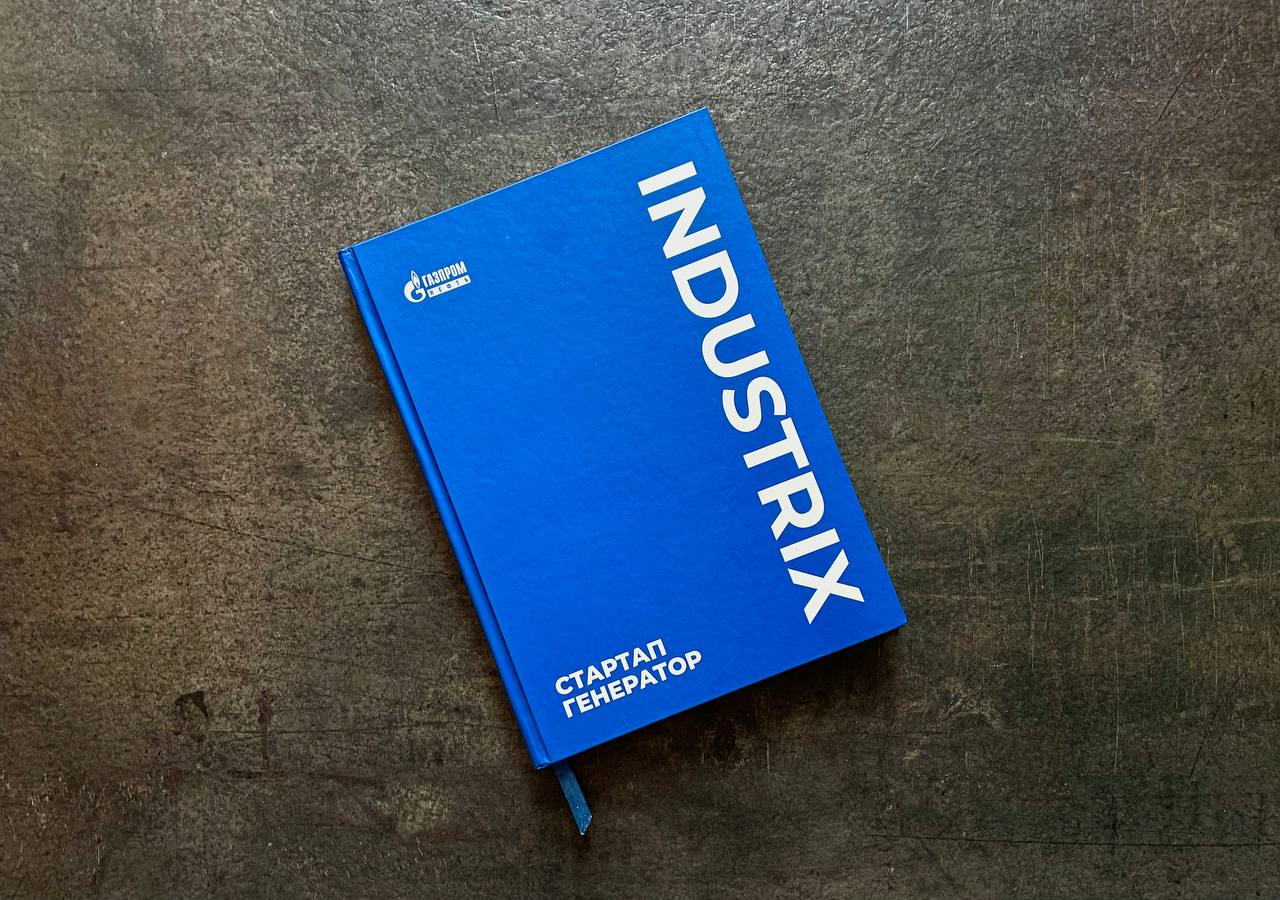
After several sales to accelerators - these included universities, IT companies, and even large companies like Gazprom Neft, we also released a retail version with our own design. We were often asked about versions for individuals, where you can buy 1-2 pieces, so the first print run of 100 pieces sold out before even arriving in St. Petersburg. The second print run was sold gradually. Now we continue to print runs both for individual sales and for bulk orders with branding.
We like our product and working with it, but it became clear that with a mono-product of this type, you can't build a big business, because marketing will take up too large a share of the price, and we have nothing else to sell. So we decided to look for opportunities to enter a publishing house, to give them a license for the product and just receive royalties. But upon learning the size of these royalties, it became clear - publishing business books in Russia is only possible for PR, and then somehow monetize that fame. Because the royalties from one sold copy are about 10-20 rubles to the author. It's easier for us to sell one planner ourselves than dozens through a publishing house. And one might assume that volume would compensate, but looking at the print runs of business books of 5-20 thousand copies, it becomes clear that the author can expect for a well-sold print run the average salary of a courier in Moscow. Therefore, we decided to act on our own, especially since we have already sold more than 500 pieces. And at this pace, we will quite quickly match the print run of a publishing house.
We built sales directly through Telegram - you can write to a manager, and she will arrange the purchase and send the planner via a transport company. Or through Avito, where delivery is handled by the company. We thought about going through marketplaces, but realized that they won't give us our audience, since our product is highly unique, but they would still take 50% of the price, while Avito takes only 2-3%.
We also made a website where there is a knowledge base with examples of filling and links to purchase, examples of planners, and a video demonstrating the content - startupplaner.ru
Comments
0No comments yet.
Sign in to join the discussion.