

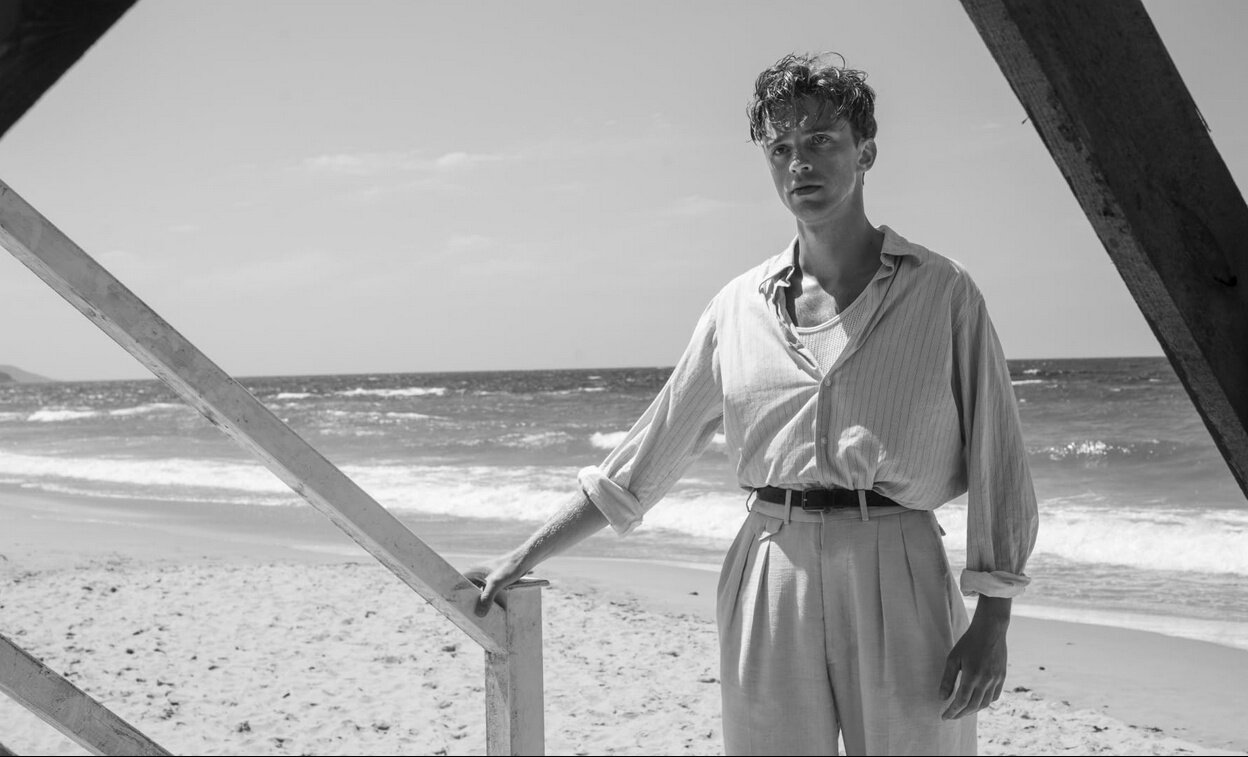
The French provocateur and thoughtful aesthete respectfully transfers Camus’s novel to cinematic language and deliberately provokes Visconti fans in the new film "The Stranger."
On March 5, Russian cinemas release The Stranger by provocateur and aesthete François Ozon. The adaptation of the debut novel by the author of male depression, Albert Camus, turned out to be not only a respectful gesture to the legacy of the “conscience of the West,” but also a strong statement about the present day. How Ozon elegantly conveys the protagonist’s detachment, why the adaptation by the French enfant terrible often comically copies Luchino Visconti’s version, and how the film condemns colonial policy without slipping into a political speech — we tell you in our article.
Indifferent Meursault
Algeria, 1930s. The country is still under French colonial rule. Meursault, a petty office clerk, exists in the unbearable lightness of being and does not notice his own happiness. One day he receives a telegram about his mother’s death at the nursing home, but at the funeral itself he shows no emotion. This unexpected insensitivity at his relative’s grave shocks those around him and becomes the trigger for the impending absurdity.
No Country for Outsiders
The debut work of Europe’s leading existentialist exploded the entire 20th century with its philosophy. A man who speaks only the truth and is not afraid of punishment for his actions immediately becomes the main enemy of human society. Camus arrives at this bleak conclusion in his first creative manifesto.
The choice of such a sensational work for adaptation in Ozon’s filmography initially seems like a strange step. The skilled provocateur and aesthete had, of course, transferred literature to cinematic language before. Examples include "My Crime" based on Louis Verneuil and the cult "8 Women" based on Robert Thomas’s play. But these works hardly qualify as high literature on the level of Camus. It seems more likely that the director, after a poorly received film, took on such a powerful figure to prove that he still remains a major European auteur of the caliber of Fassbinder or Antonioni. Admit it, after a not-so-successful black comedy, one wants to return to the pantheon of the immortals. And Camus is the best candidate for such a démarche.

The premiere of the new film by the famous French director François Ozon, "What Happened in Autumn," has taken place. The author once again leads us through the hidden corners of the human soul, and to
Open materialAlienation and Threat in Every Frame
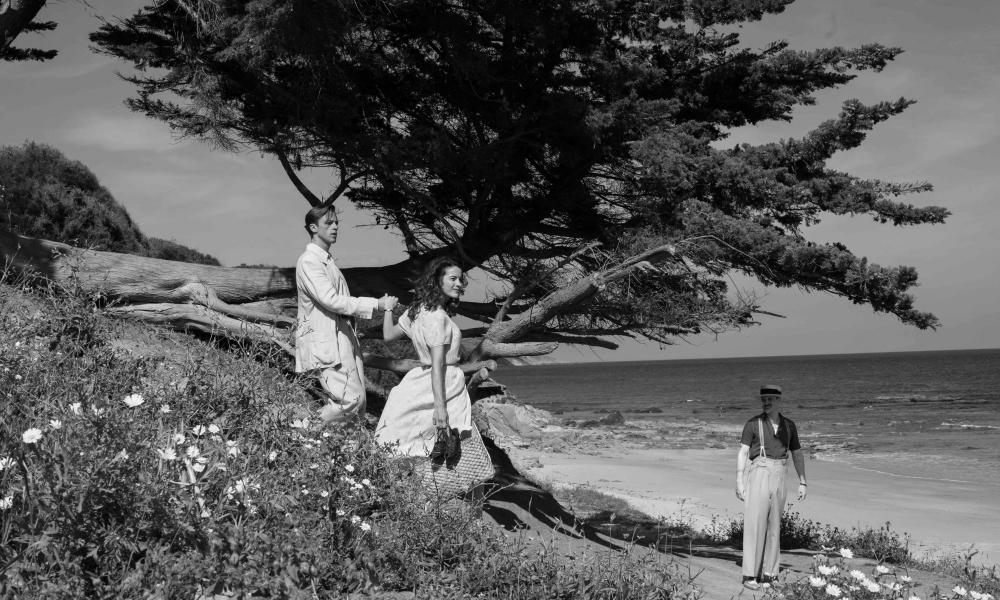
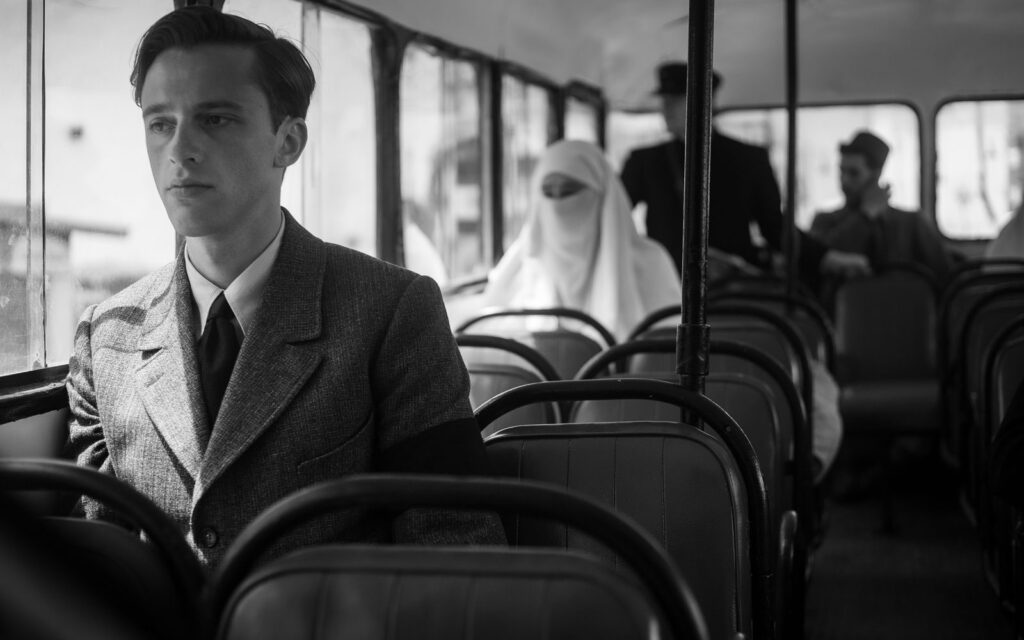
Ozon conveys the somewhat dry and sometimes even protocol-like language of the existential genius’s prose with equally sparse but expressive means. The entire film is shot in strict black and white, which is no small credit to the director. The loss of color and bright hues introduces into the film’s fabric the lingering feelings of anxiety and doubt that populated the novel itself. The overall atmosphere of slow mental fog is also enhanced by the abundance of wide shots, elegantly captured by cinematographer Manuel Dacosse. The camera, like a silent observer, closely follows the protagonist’s flânerie but keeps its distance so as not to scare him off. As a result, in some frames Meursault already looks like a criminal under constant police surveillance.
The climactic courtroom scene is also brilliantly directed. The deep mise-en-scène with deliberately minimal sets turns an ordinary hearing into a true Kafkaesque trial outside time and space. Particularly successful in this moment is the emphasis on the slowly rotating black ceiling fans. The buzzing of their blades not only cuts through the stuffy southern air but also becomes a kind of sword of Damocles already poised over the humble clerk.
But the main success is the paradoxical choice of Benjamin Voisin for the role of Meursault. Known to many fans of the director from the nostalgic postcard of youth "Summer of 85," the rosy-cheeked, open young man here is unexpectedly devoid of empathy and strikingly cold, like a porcelain doll in an antique shop window. In some shots, he even resembles the great icy handsome man of world cinema — Alain Delon from the times of "The Eclipse" and "Rocco and His Brothers." This detachment in performance is the result of long readings of Robert Bresson’s works and his method of working with actors as mannequins without feelings or emotions.
The Body as Evidence
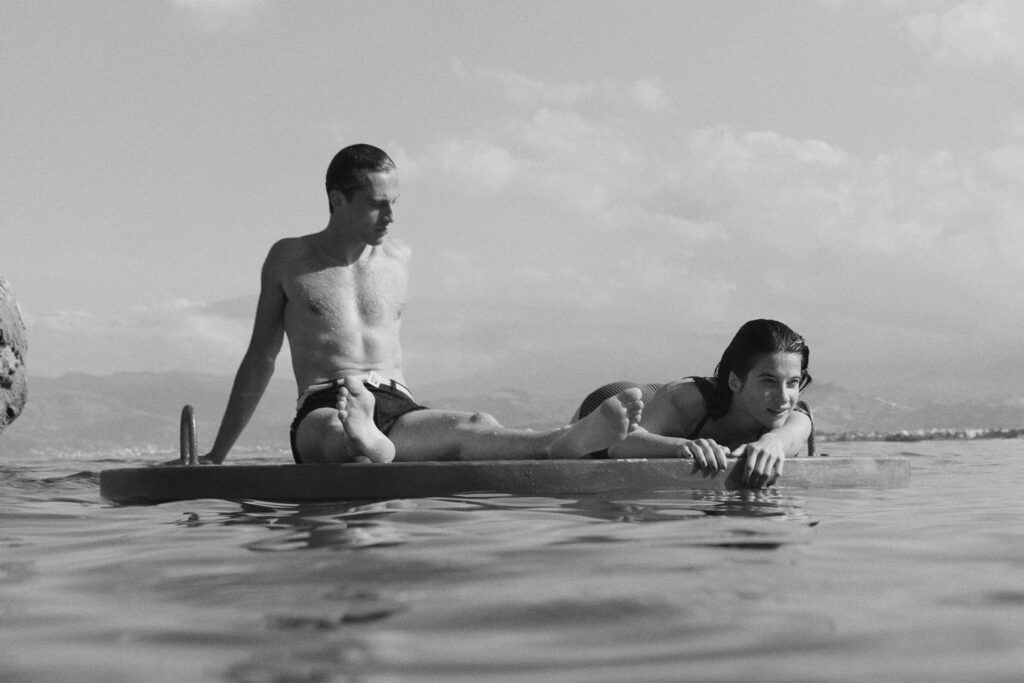
The director does not deny himself his favorite exploration of corporeality. Human flesh has always been a field for experiments and interpretations for the sly vampire Ozon. In his early work "Under the Sand," the outer shell becomes a metaphor for the experience of losing a loved one, and in "Swimming Pool," the juxtaposition of a young girl’s body and the nudity of the adult protagonist becomes a symbol of rivalry for life.
In "The Stranger," the hardened aesthete and troublemaker does not hesitate to let the camera’s eye glide over the naked and not-so-naked monochrome bodies of the main characters in bright sunlight or at home. He revels in their unspent pristine beauty and, in the early scenes, molds Meursault and his beloved Marie (the dazzling Rebecca Marder) into idols from Hollywood’s golden age. With his perfectly slicked-back blond locks, he resembles the early James Stewart; she, in a striped swimsuit with dark waves of hair, is the spitting image of Elizabeth Taylor.
An aesthete — and that says it all. But not quite. Ozon contrasts these satiated and contented bon vivants with that Arab with a split lip and hairy armpit. The modest charm of the bourgeoisie is cracking at the seams. The director always keeps a satire on the white rich up his sleeve.
Ozon Trolls Visconti and Respects Camus
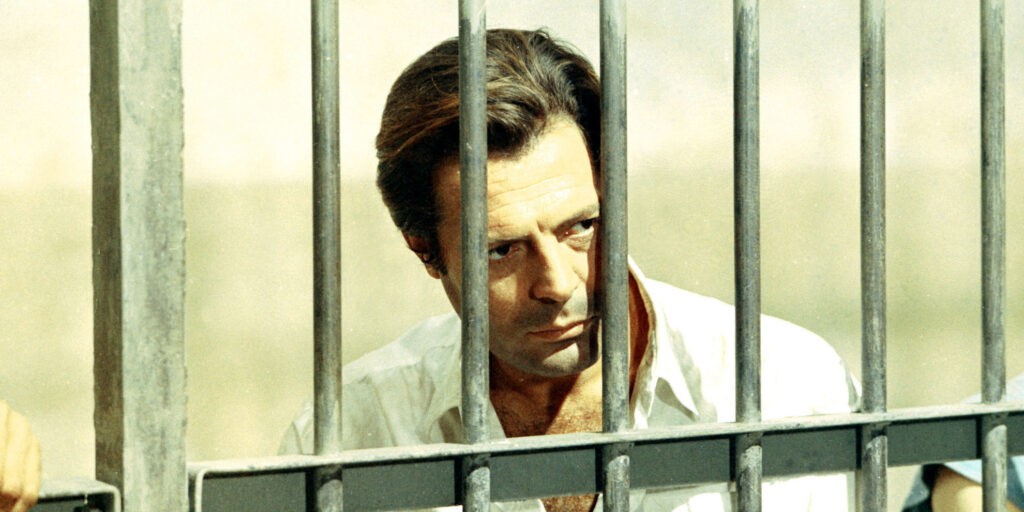
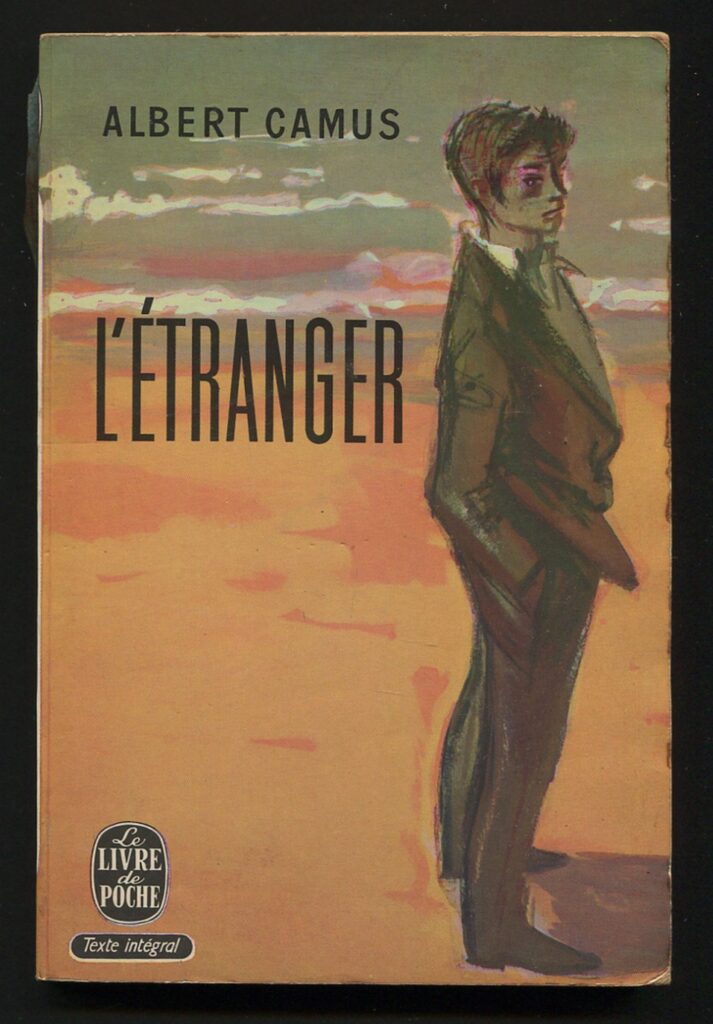
Despite its fame and influence on 20th-century philosophical thought, "The Stranger" has been adapted only once, and, to put it mildly, it was a creative failure. In 1967, one of the gods of Italian cinema, Luchino Visconti, took on the nerve of the era and ended up making only a colorful illustration of the writer’s novel. Despite the master’s hand visible in every frame, the film cannot be called a spectacle. A word-for-word retelling of the book, miscasting in the person of Mastroianni (he is too sentimental as Meursault), a bright picture reminiscent of the resorts of the Krasnodar region, and total control over the filming by the writer’s widow Francine did not allow the director even to attempt a dialogue with Camus.
François Ozon is a notable postmodernist, cinephile, and Gallic. Therefore, in his film, he easily copies scenes from Visconti’s version. Whether it is Meursault’s arrest after killing the Arab or the sunstroke itself and the subsequent shots — everything is reproduced with striking accuracy. Even the editing cuts remain unchanged. But unlike the great Italian’s film, in the Frenchman’s picture these moments do not evoke even a hint of a smirk. On the contrary, only “horror… horror,” as a famous movie character said. It seems that the director is so zealous about his country’s heritage that he wants to prove to the deceased Visconti only one thing: only a compatriot can truly understand the great Frenchman.
“I Killed an Arab”
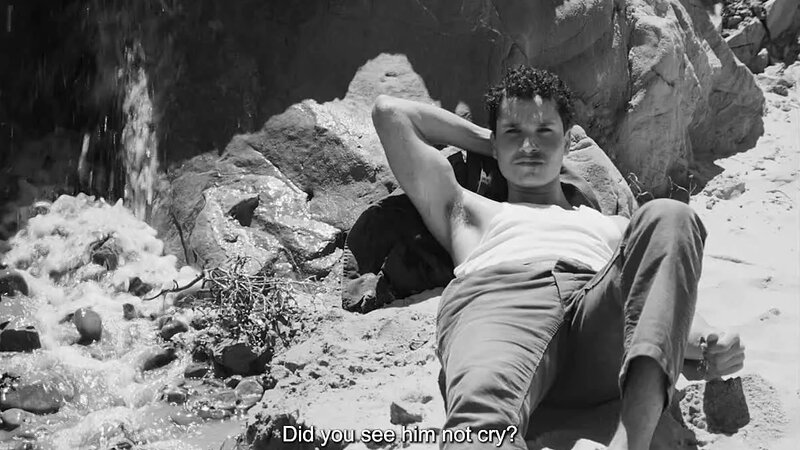
In "The Stranger," the victim of the system was a young white bourgeois who, because of his principles, became a superfluous man. Ozon turns the rules of the game upside down and puts the Algerian question and issues of racial politics at the forefront. This theme also troubled Camus himself (his views on the actions of his native country are still debated). Starting with small details — such as choosing Kuwaiti-born composer Fatima Al Qadiri for the film’s score and the credits rolling to the rhythm of The Cure’s “Killing an Arab,” written under the impression of the French novel — and ending with more global things like real footage of colonial Algeria in the 1930s, the appearance of the name Musa for the murdered Arab, and a more social finale.
But Ozon almost maintains measure in his criticism of European civilization and does not turn the film into a platform for glasnost, as was the case with the overly straightforward "By the Grace of God." The only exception is the opening scene with the famous deafening phrase “I killed an Arab.” Here the master could not restrain himself and deviated from art toward a political statement, but he did not cross the line. Such an apology does not seem like hypocrisy on the part of a modern white European. Ozon’s grandfather worked as a judge during the Algerian apartheid, so François was truly driven by a sense of duty, and he delivered a personal message beyond the pages of literary classics.
Before Dawn
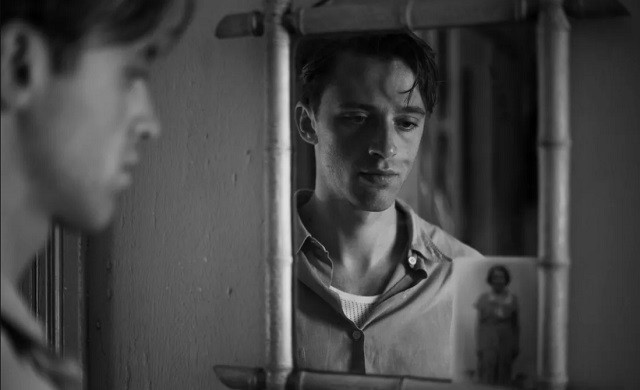
“The Stranger” by living classic François Ozon manages to approach an understanding of the main philosophical novel of the 20th century and use Albert Camus’s legacy for his own purposes. The director, sensing the great author’s intent, reduces the color palette to cold monochrome. He elegantly steals entire scenes from the previous incarnation by Visconti and throws them into the black-and-white space of alienation and abandonment. With the change of climate, they begin to manifest differently and immerse the viewer in a state of fog from a sudden sunstroke, flashing like a knife blade in a dark alley.
Ozon criticizes the system and its growing degree of absurdity. By deliberately turning the court hearing into a surreal nightmare, he leads the viewer to the idea that nothing changes, and the victim once again remains an indifferent white youth with an angelic face, not a clumsily killed innocent Arab without a name.
Comments
0No comments yet.
Sign in to join the discussion.