
Who Is a Business Tracker and Why an Entrepreneur Needs One: An Honest Breakdown
Business Tracking Cases from 2022 to 2026
Take a look at the results column right away. Many people cannot achieve even half of that success on their own in 35 years, but with a tracker, in 3-7 months you can work a real miracle in a specific business for specific people.
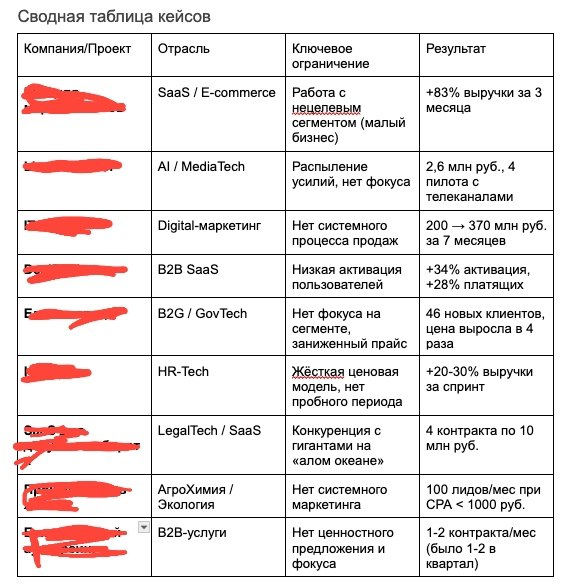
Perhaps the only thing that pays off well in a crisis by 500% or more is business tracking.
What Is Business Tracking — Definition in Simple Terms
A tracker is a specialist in exponential business growth who works simultaneously with the company's bottlenecks and the mindset of its founder. Not a consultant, not a coach, not a mentor — but includes elements of each of these formats.
When an entrepreneur says, "my marketing isn't working" — in nine out of ten cases, marketing has nothing to do with it.

Leo Tolstoy on the fact that a business tracker is not someone who knows a lot. But someone who knows how to use knowledge.
What Is Tracking: Definition in Simple Terms
Tracking is a systematic work with the business and its founder, the goal of which is to IDENTIFY THE REAL CAUSE of stagnation or decline and help the owner find ways to eliminate it, rather than treat the symptoms.
The main difference between tracking and consulting: the tracker does not come with a ready-made solution. He comes with the right questions — and helps the entrepreneur see for themselves what they did not notice while being inside the system.

A good tracker knows how to benefit even from a sad situation; for this you need to know the TRIZ system and its 40 postulates.
Here is a real example from my business tracking practice.
Last fall, a client came to me with a request: "I need to increase sales." A standard formulation of a huge layer of problems in one phrase))). But when we started to dig in, the picture turned out to be completely different.
The owner worked from seven in the morning to ten in the evening, controlled every step of the team, first criticized and devalued, then yelled at people for low engagement. He sincerely did not understand why employees worked without fire in their eyes and why they could not solve a simple issue without his personal approval.
The answer was simple: the team was burned out. People stopped believing that anything depended on them — he would still be dissatisfied. The best ones began to leave quietly, one after another.
No marketing can save a business from which valuable people are leaking. The growth point turned out to be not the advertising budget or the sales funnel, but working on the emotional climate in the team and coaching the founder himself.
That is tracking: observe, see the root of the problem and show the client reality — not fulfill his wishes

"Only a wise ruler can remain in the state of a student" (Japanese wisdom)
Why the Russian Entrepreneur Is a Special Psychological Case
To work effectively with business in Russia, you need to understand the historical context in which the very attitude towards entrepreneurship was formed.
In Soviet times, entrepreneurs were dispossessed and persecuted. In the 1990s, the words "businessman" and "bandit" were almost synonymous in the public consciousness. Three generations of such history do not pass without a trace — they settle in the founder's psyche in the form of chronic distrust of people and the system, fear of scale, the belief that "they will take it away," impostor syndrome, and anxious control.
This — not weak marketing, not lack of product, and not bad employees — is most often the real brake on growth.
Therefore, competent tracking always starts with the founder's head: his fears, motivation, blind spots, internal contradictions. And only then — work with the business system, which logically follows from the psyche of the person who built it.
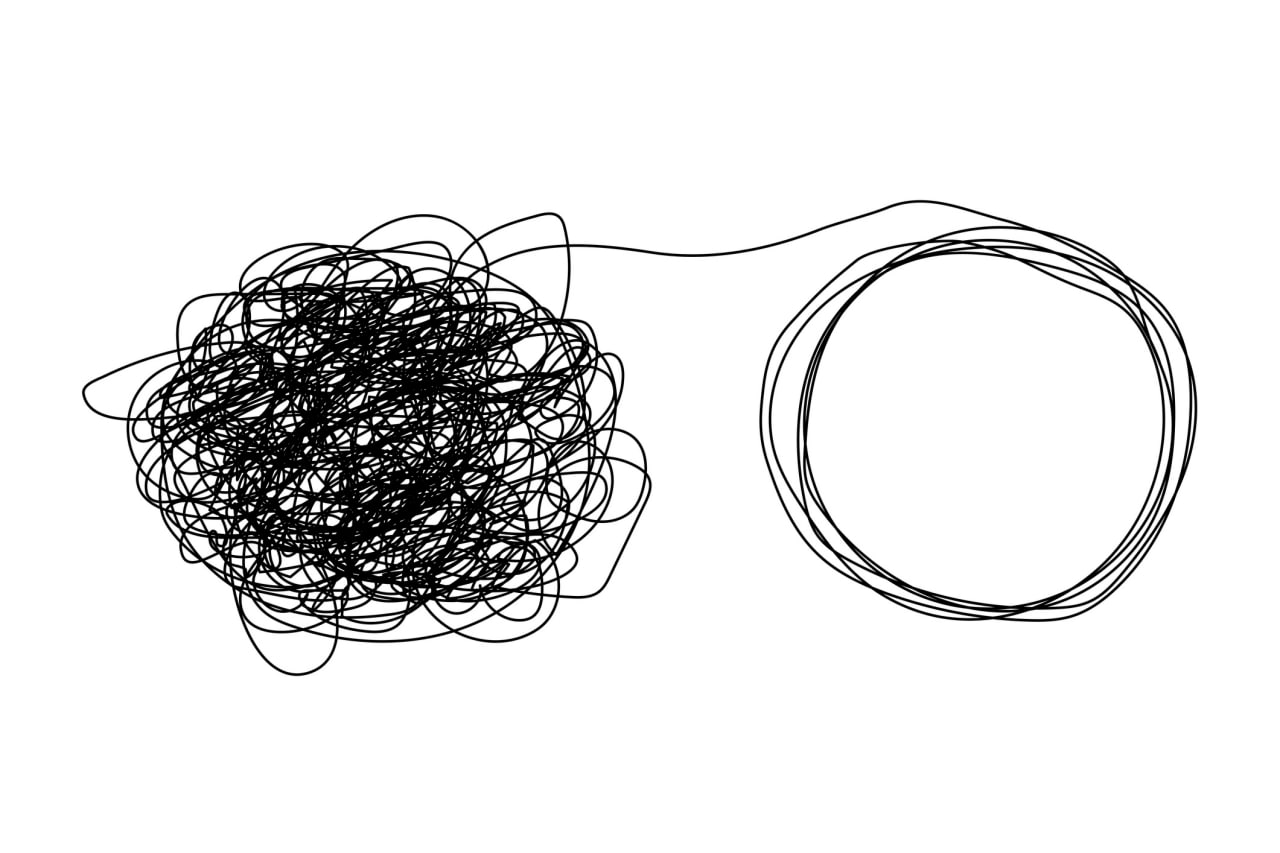
Yes, a tangle of thoughts and experience is your wealth. But only a specialist can untangle it.
How a Tracker Differs from a Coach, Mentor, and Consultant
This is one of the most common questions — and it deserves a clear answer.
A mentor shares personal experience: "I did it this way, and it worked." Valuable, but limited to his own story.
A consultant comes with a ready-made solution and implements it. Fast, but the team does not learn to think independently.
A coach works with state, goals, and motivation. Important, but without business expertise it is not enough.
A tracker does all of this simultaneously — and none of it in its pure form.
His main tool is not advice, but precise, uncomfortable questions that an entrepreneur never asks himself. Because it's scary. Because the answers are hidden under a layer of operations, anxiety, and habitual explanations.
A tracker does not care about the business niche. He works not with production technology, but with key processes: marketing, sales, product packaging, customer value. He sees where the system loses money and energy — and helps fix it, without doing anything for the team, but directing them to precise and correct actions.
A key point: the tracker does not solve the problem for you. He creates conditions in which you and your team solve it yourself — and never return to it again.
Three Tools That Really Work in Tracking
No magic. Just three simple things that, for some reason, are rarely found together.
Reflection. An entrepreneur in operations almost never stops to honestly think: why is this repeating, what am I doing wrong, what have the last six months taught me? The tracker creates this space forcibly. This is where the most valuable decisions are born.
Focus. An entrepreneur wants everything at once — a new channel, a new product, a new team, a new strategy simultaneously. The tracker helps to see which of these is truly important right now, and which is an unconscious way to avoid the main thing.
An outside perspective. A person who is up to their ears in their own business physically cannot see it objectively. The tracker sees — and that is why he finds solutions that are simply invisible from inside the system.
Why Exposure Is a Tracker's Main Asset
The more businesses, founders, ups and downs a tracker has seen, the more accurate his diagnosis. He recognizes a pattern from the first minutes of conversation. Not because he is smarter than others, but because he has already seen this scenario twenty times in different packages.
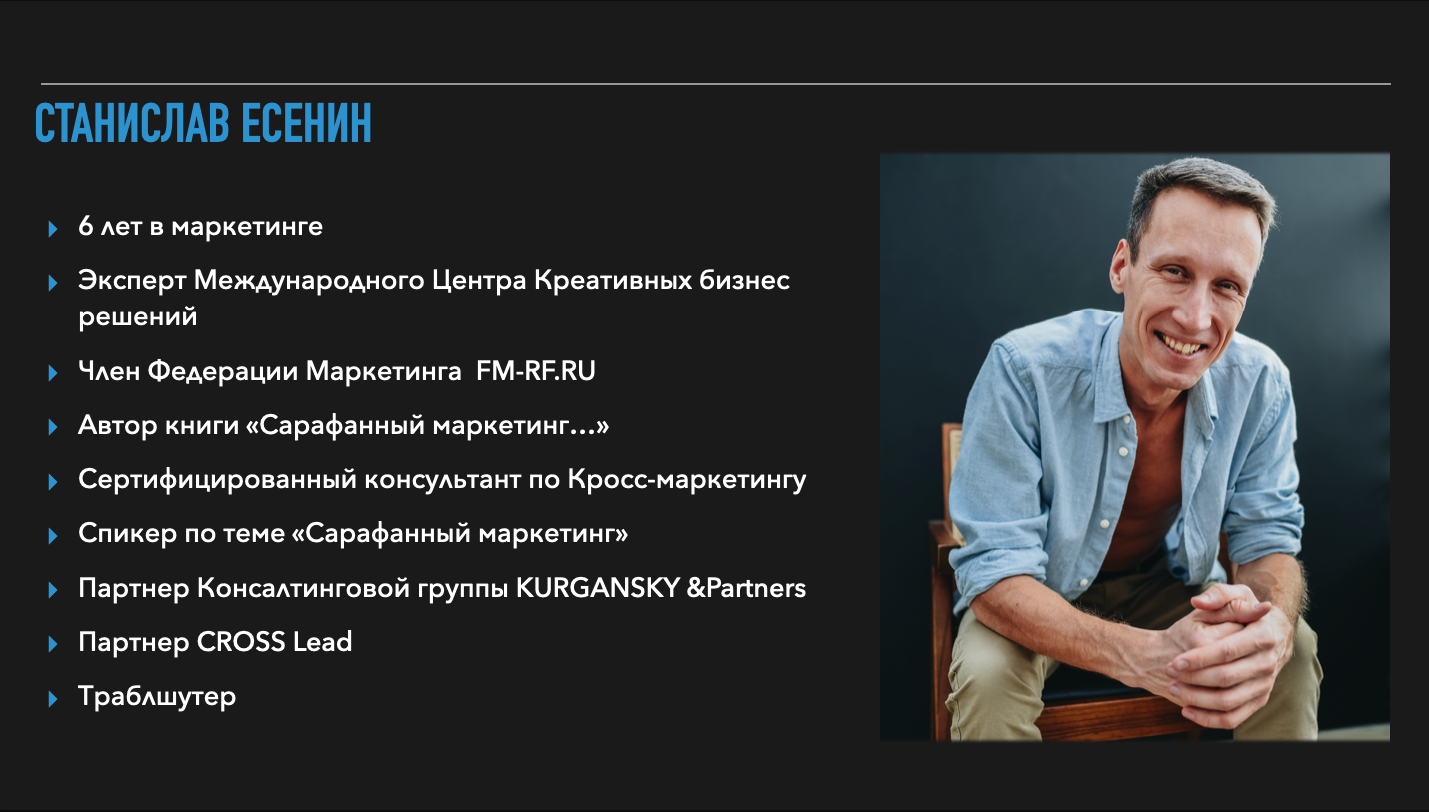
I, Stas Yesenin — a tracker and marketer with over 30,000 hours of exposure in the fields of psychology, marketing, sales, management, and business processes. Over years of practice, I have gone through dozens of projects in different niches and each time I was convinced of one thing: a business does not break from the outside. It breaks from the inside — in the head of the person who runs it.
If you have read this far and are nodding — you need a tracker.
Not because your business is bad. But because every system has blind spots that cannot be seen from its center.
I work with small and medium businesses: I find what is really holding back growth, separate symptoms from causes, and help build a system that works without your daily involvement in firefighting mode.
The first step is a diagnostic session. One conversation after which it will become clear where exactly your growth point is and what to do with it.
👉 Contact me, Stanislav Yesenin: t.me/EseninSA
Frequently Asked Questions About Tracking
Who needs a business tracker? An entrepreneur of a small or medium business who feels they have hit a ceiling, are tired of putting out fires instead of developing, or do not understand why the right actions do not yield results.
How long does tracking last? The basic format is three months of regular sessions. During this time, key growth points are identified, changes are implemented, and team autonomy is formed.
How is tracking different from mentoring? A mentor passes on his experience. A tracker helps find a solution that suits your specific business and your psyche — without imposing someone else's scenarios.
Do you need a tracker if the business is running stably? Yes — if you want growth, not just stability. Stability in an unstable economy is a slow decline.
Comments
0No comments yet.
Sign in to join the discussion.