

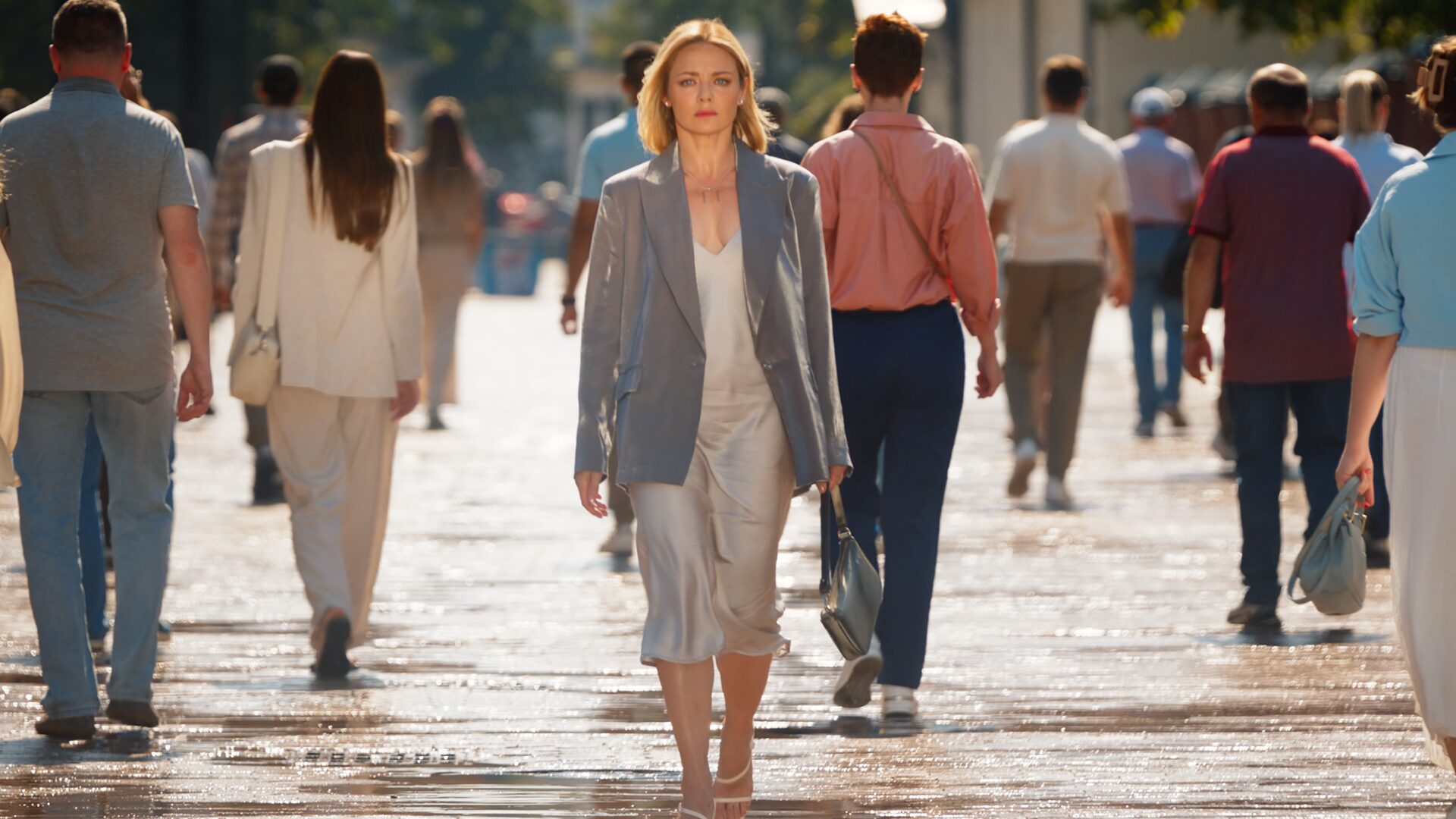
Interview with the lead actress of the film 'Be Gentle with Yourself' Karina Razumovskaya: about her main phobia on set, working with director Ivan Kitaev, and the need to give yourself different opportunities.
At the very beginning of spring, on March 5, the film 'Be Gentle with Yourself' premiered, based on the bestseller by Olga Primachenko. We spoke with Karina Razumovskaya, who played the main character Nadezhda, about how to be gentle with yourself and what lessons are needed for that.
– A comedy melodrama 'Be Gentle with Yourself' has been released on big screens. Your heroine Nadya is a successful doctor who helps people but knows herself poorly. Why do you think she is like that at the beginning of the story?
I think she has been heading towards being like that her whole life. I don't know if it's a consequence of our Russian-Soviet heritage for all women — to rush into a burning hut, do everything herself, lift her husband, son, daughter, and everything else. But probably there is some truth in that our generation and Nadya's generation, including, were not raised in the traditions in which modern youth are raised: working with a psychologist, careful attitude towards oneself, the world, the planet.
We didn't have that at all, and when it's not initially instilled, only a few come to it on their own. Without anyone's hint, help from a good friend, books, or films. I hope our film will be exactly a helping hand for someone and highlight this problem.
So Nadya has been heading towards this since childhood. She grew up like that: you need to study very well, finish medical school, and so on.
– It seems that a woman should be a support for everyone.
She shouldn't — that's the point! But for some reason, this 'I'll handle everything myself' is stuck in our minds. I communicate with young people on set — they have a completely different mindset. They don't have this 'let's do everything ourselves' story. And I used to be the same, and my husband always scolded me for it: 'Will you ever calm down? I'll help you, relax.' And I would answer: 'No need, I'll handle everything myself.'
And I handle it myself because I was haunted by the inner feeling: what, am I weak? Immediately the thought: I can do everything, I can do this and that — I manage everything. So, am I not a strong woman?
But why be a strong woman? I keep thinking, for what? No one takes away your inner strength, even if you show some external weakness.
– Perhaps you learned something from her? What character traits of Nadezhda overlap with yours?
Nadya annoyed me a lot during filming, I was really tired of her. I don't have such narrow-mindedness as she does. For that, I thank my friends, family, husband, films, literature. But I track these moments in myself when I do 'everything myself' without asking anyone for help. I screw in a light bulb myself, go fill up the car. But why not trust someone else? Why not delegate? Why not relax a little?
So Nadya and I have some similar things, but in me it's not as exaggerated and concentrated as in the heroine. And, of course, she reminded me once again that sometimes you just need to sit, drink tea, and listen to music. You don't have to pick up toys or rush to cook soup, but look out the window, read a book. I'm not talking about a total refusal to do things, but about balance.
– And what annoyed you about Nadya? What is there in her that you strongly dislike?
She doesn't see beyond her own nose, she has these attitudes: only black and white. Either you're right or you're not — no third option. And that's terrible.
It's total self-dislike, first and foremost. Because of this self-dislike, you don't allow yourself anything. Because of this, the same attitude towards family. Nadya seems to love her daughter. But until you love yourself, you won't learn to love others.
In the Bible it is said: 'Love your neighbor as yourself.' So let's first try to love ourselves, to pity ourselves at least a little. One acquaintance of mine said a wonderful phrase: 'Everyone asks us to step out of our comfort zone. When was the last time you were in that zone?' And indeed!
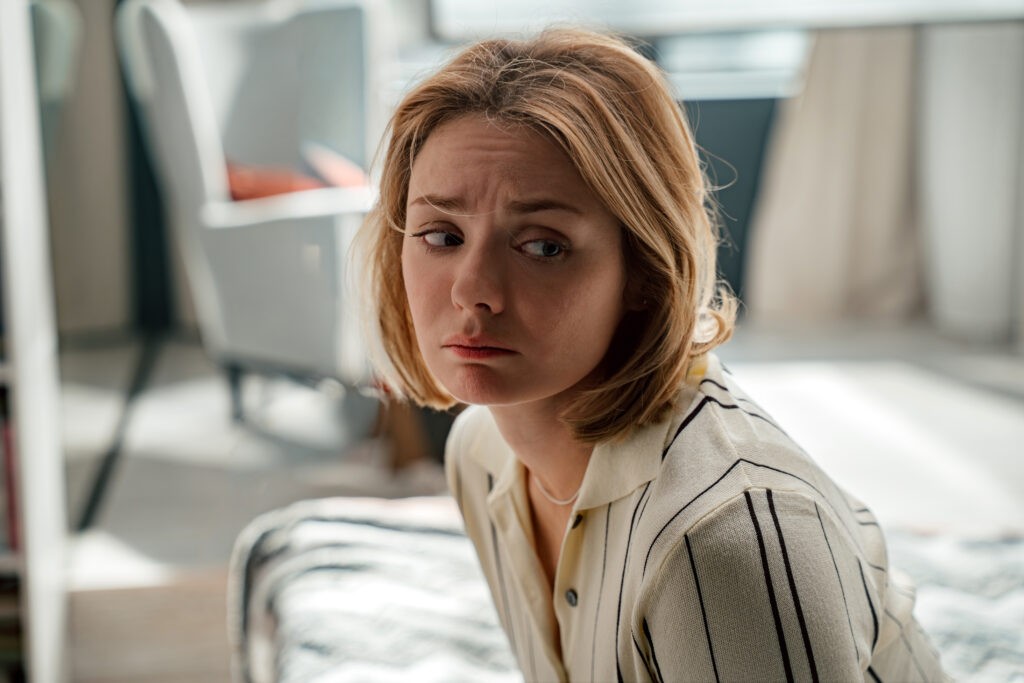
This is absolutely the story about Nadya — it's taken to the maximum. Justifying her as an actress was an interesting journey. At some point I thought: 'What an unbearable woman you are, Nadya! Calm down already! Stop talking to everyone like that! Stop it!' (laughs). Internally, of course, I had a protest against her. She turned out to be such a funny angry gnome who blossoms in the finale and turns into a fragile woman. I hope she was like that and written that way. Olga Primachenko — the author of the book, watched the film assembly, and she liked it.
– And what 'gentle' advice would you give to 20-year-old Karina, knowing what she is going through now?
Remember yourself more often, listen to yourself, and give yourself different opportunities. Don't endlessly forbid, don't set some unbreakable laws. Perhaps it would be easier to readjust now.
I think this blocks the flow of energy, to use modern esoteric language. Until you open yourself up, nothing will come to you. That's the thing. And if you do this from youth, or better from childhood — give yourself the opportunity to open up, then the world will also give you something in return. It will give bad things, of course, but also a lot of good.
– 'Be Gentle with Yourself' is literally a book about how to value and take care of yourself. Before participating in this project, had you read this book or heard about it? How do you feel about self-help literature?
Honestly, I haven't read the book, and I still haven't read it. At that moment, it seemed very right to me. Perhaps if I had read the book before playing Nadya, it wouldn't have given me the opportunity to justify her every day. I would have fought with her or started to try everything on myself. But then it would have been extremely difficult to justify Nadezhda.
I have never read any psychological books. I prefer to find answers in fiction, good cinema, interesting lectures.
But maybe I will eventually get to reading 'Be Gentle with Yourself' after the premiere. (laughs).
– Do you have a favorite book that you like to return to and that gives you inspiration and strength?
I am currently reading Jon Fosse — he is a Norwegian playwright. His plays evoke a storm of emotions in you: you cry, laugh with the characters, as if you've been to a psychotherapist. It seems like you've read a play with no descriptions, just dialogues, even without punctuation. And this 'stream-of-consciousness' text structure can evoke therapeutic experiences. At that moment, you experience the whole spectrum of emotions: from hysteria to laughter. I really love such things.
– Tell us, what attracted you to this project, and why did you decide to participate in it?
Unfortunately, in cinema I am rarely given the chance to play comedy, unlike in theater, although surprisingly this season I've had quite a few comedic roles. And this was another opportunity to work in a different genre. To test myself.
Also, the script reminded me a lot of 'Bridget Jones', not directly, of course, but in terms of energy. And I, of course, wanted to participate in it. To go through the journey of this heroine.
– In the life of the main character, there are 'six lessons of tenderness.' Are there any practices in your routine that help you set up for the day? Or techniques you use in stressful situations?
My main salvation is my family, my son and husband. It's enough for me to hug them, and everything becomes good. (smiles). Or when my son says: 'Mommy, I love you so much!' Both my boys, big and small, always bring me back to life, cherish and pamper me when I allow them to. And now I try to allow them more often. (laughs).
I also love going out into nature. We have a magical place on Lake Ladoga — we go there to listen to the silence. This is my place of power. I don't like people, to be honest. (laughs). Silence and nature are important to me. Although at the same time I am an absolute city dweller and couldn't live permanently outside the city. I definitely need the city. But wandering, walking, lying on the sand, building huts from reeds, going to the bathhouse is also sometimes necessary.
For example, today we baked pancakes, and my son came up with the idea of having a picnic: he set up a tent in the room, spread out a blanket, made a grill from a construction set. We sat and had breakfast on the floor by an imaginary grill. (smiles). Isn't that happiness? It's -12 outside, but we have a picnic.
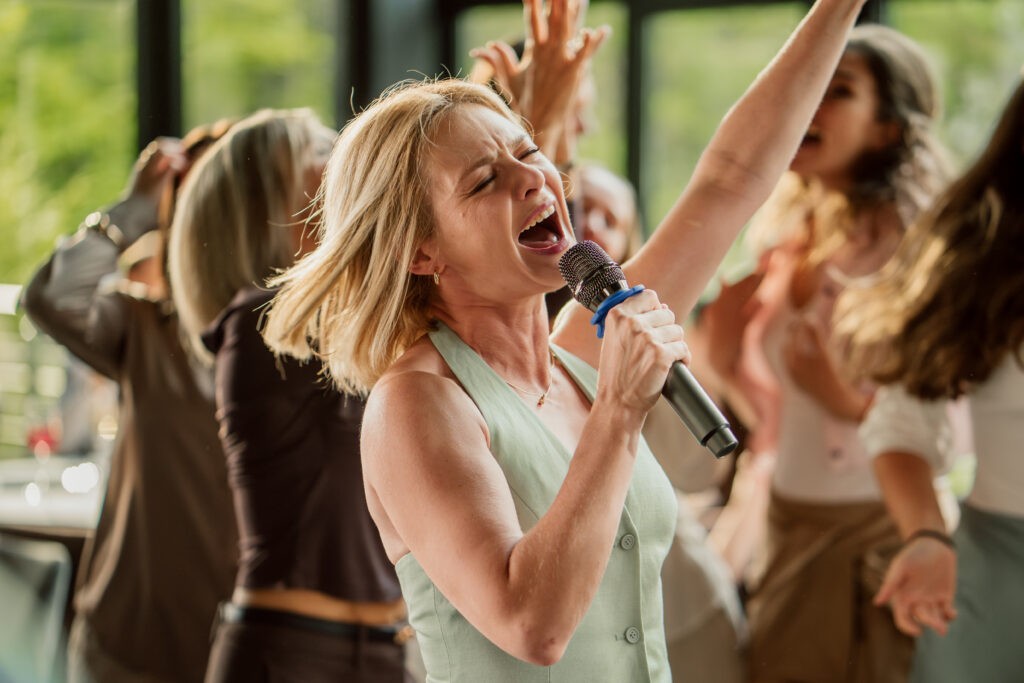
– Do you think tenderness and care for yourself are always needed? Or sometimes is it necessary to show some strictness to achieve certain results?
Of course, strictness hasn't been canceled. Sometimes you need to keep yourself in check. Even in a simple everyday case — we won't eat 30 pastries every day, right?
Sometimes you don't want to go to a shift, don't want to go to a rehearsal at the theater, even don't want to go play a performance in the evening. But you understand that, firstly, you must. And secondly, I will be in joy and happiness, in the energy of art. And it will definitely benefit me. But you need to force yourself. So yes, of course, you sometimes need to be strict with yourself. We face this every day. In the morning, we also don't want to get up: a shift at 5 AM, you have to get up at 4. You want to turn off the alarm and say: 'You know what, guys, let's do it without me.' (laughs).
And you need to somehow manage to maintain this balance.
– 'Be Gentle with Yourself' is a comedy melodrama. You are more known for psychological thrillers and dramas. Was it easier or harder for you to play in a less familiar genre?
I love this genre, I studied in this genre. Our entire course graduated with comedies and vaudevilles. And it's no less favorite genre than drama or melodrama. I do it with pleasure and great happiness. I am generally a multi-genre person in this sense. (laughs). Fortunately, in cinema they have also started to understand that I can do this too.
– Ivan Kitaev — is a debutant director in big cinema. How did the collaboration go given your experience in top projects?
We have known each other for a long time. We worked together 20 years ago on the project 'Adjutants of Love'. Ivan has shot many wonderful television projects and series with many of my colleagues: Liza Boyarskaya, Lonya Bichevin, and many of my acquaintances from St. Petersburg.
We speak the same language. He is a very theatrical person. We always had something to talk about. I like his theatrical approach to rehearsals, which we had. We could afford readings and long rehearsals on set. We had a small output, and it was a very comfortable collaboration. The director always brought me back to Nadezhda when my body resisted. (laughs).
Although we argued, things happened, but that's a normal creative process. I would gladly work with Ivan again, maybe in some other genre. And I hope it was interesting for both of us.
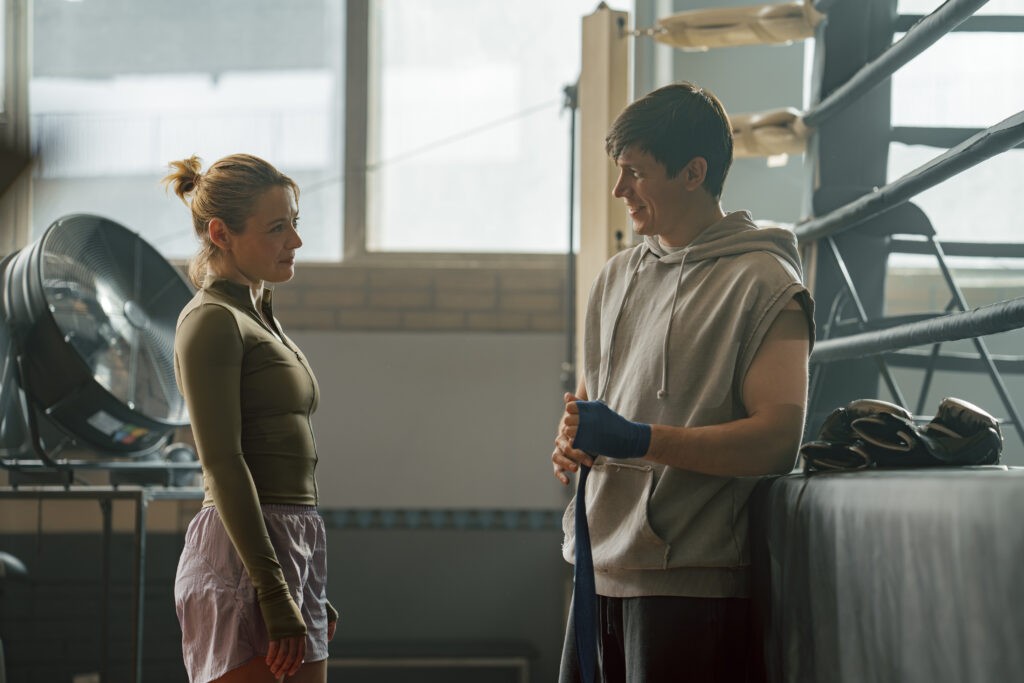
– In interviews, you openly talk about your fears. Was there anything during filming or preparation that you were afraid to face?
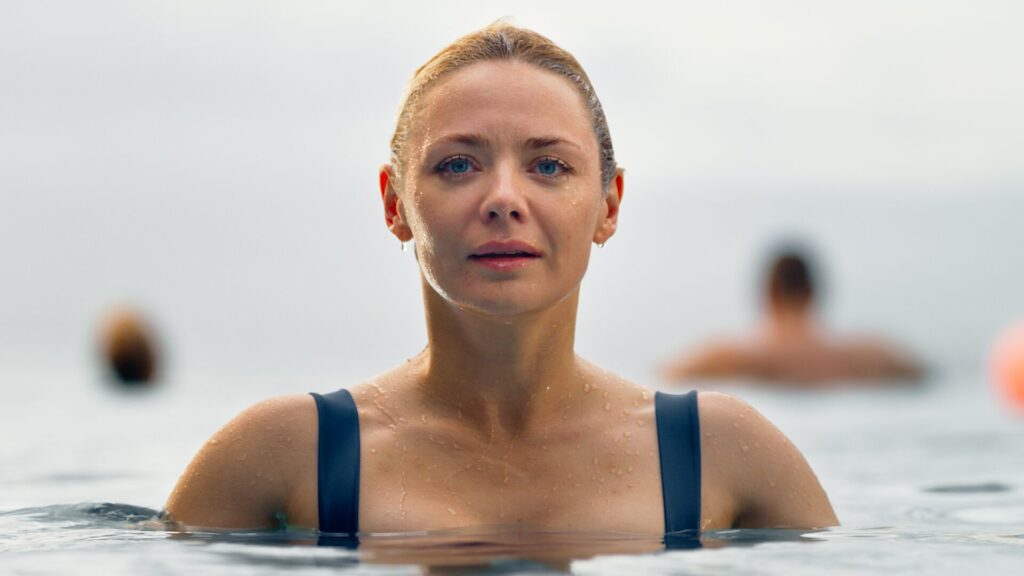
Yes, there was something most frightening for me in this script. I even wanted to refuse to participate in this project because at some point I had to submerge underwater. I have a phobia of depth and panic attacks because of it. And submerging in water is an integral part of the script.
When I was approved, I said: 'Guys, let's decide right away: if you say that I need to do what is written there, then I immediately say no, because I can't.' In the end, we found a compromise. We came up with the idea that the submersion would be in a pool no deeper than two meters. Actually, I asked for one and a half meters (laughs). At least two — so that I could stand up and quickly surface at any moment.
I had rehearsals in the pool with my acquaintance, underwater cameraman Grigory Yablochnikov, with whom I had worked before. I somehow gathered my strength, and we rehearsed everything. In Sochi, when we were filming in the pool, everything was fine. And then on the last shooting day, there were close-ups at depth. We arrive, and the pool is 5 meters deep. It was very scary!
I must give credit — the film crew supported me a lot. I had a stunt double, a diver, and for the wide shot she worked — she surfaced from the bottom, because I definitely couldn't have done that. I would have died there from a heart attack. And at a depth of one and a half to two meters, the close-ups were mine.
I was worried that the crew thought I was just being capricious. It turned out not to be the case at all. When I got out of the pool, everyone applauded, and our gaffer said that he also fears depth and understands me perfectly.
I felt like a hero, called home. My husband says: 'Well, what about Egypt for diving?' (laughs). I said: 'No, never! Don't even think about it, I will never do this again!'
I hoped it would help me overcome my phobia. No, it didn't help. But I am very proud of myself that I was able to do it at all. I could barely even submerge my head in the bathtub.
– And what inspires you and gives you energy to return to work?
I am always inspired and spurred on by the work of colleagues. Just watch a good movie, whether Russian or not, or see a good performance — and immediately I want to go and do something too. I want to join this creative ecstasy. (smiles). I love being proud of colleagues, envying them in a good way — it spurs me on.
Recently I watched a wonderful performance by Senya Serzin, with whom we worked together on 'The Route'. He works as a director. I was incredibly impressed! And I immediately wanted to go rehearse and act too.
– And what was the performance?
The performance was called 'Catapult' at the 'Invisible Theater'. Also, the other day I watched another performance at the same theater, 'Frost'. Actually, over the past few weeks I've seen many good performances and wonderful cinema.
For example, also the performance 'I am Sergey Obraztsov' with Evgeny Tsyganov. This is a fantastic work by Evgeny.
I was at a creative evening of Oleg Valerianovich Basilashvili at my theater, where he read poetry. I sobbed from beginning to end. In short, I had two weeks of creative binge.
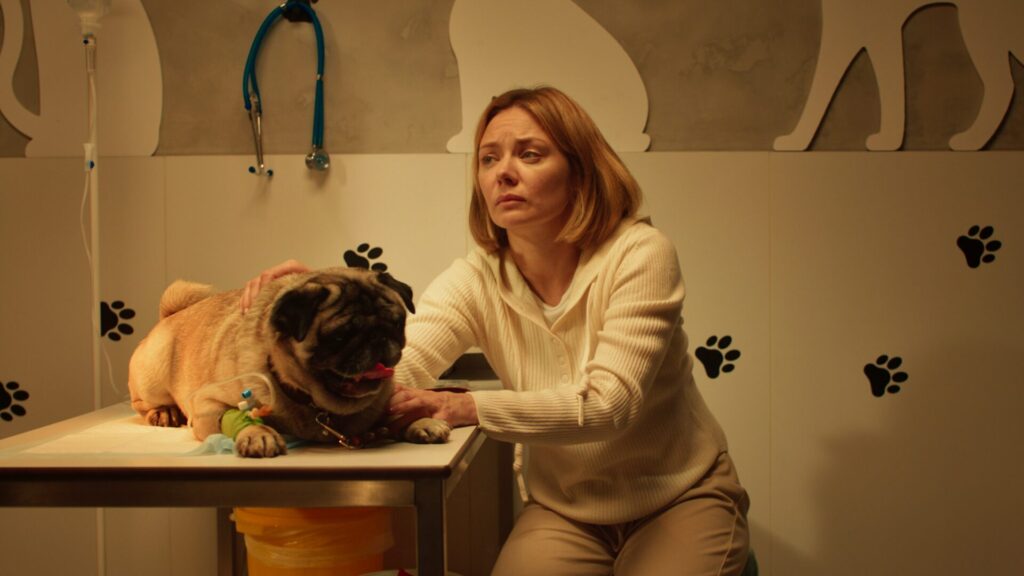
– What professional failure (if you had one) do you consider a valuable experience? How did it affect your attitude towards yourself and the profession?
I have had many failures over these 25 years. It's not for nothing that they say experience is the son of difficult mistakes. And it's true. We learn from mistakes. The first minutes, days, and weeks after such failures, you want to leave the profession altogether. But then you go out and perform a play, the audience receives you well, and you think: 'Well, no, maybe I'm not that bad, I can still do something. I need to move forward, not make the same mistakes.' Failures were definitely not superfluous, and there will be many more. There is no growth without failures.
And, for example, the same success of the series 'The Route' and me was also brought by a series of failures.
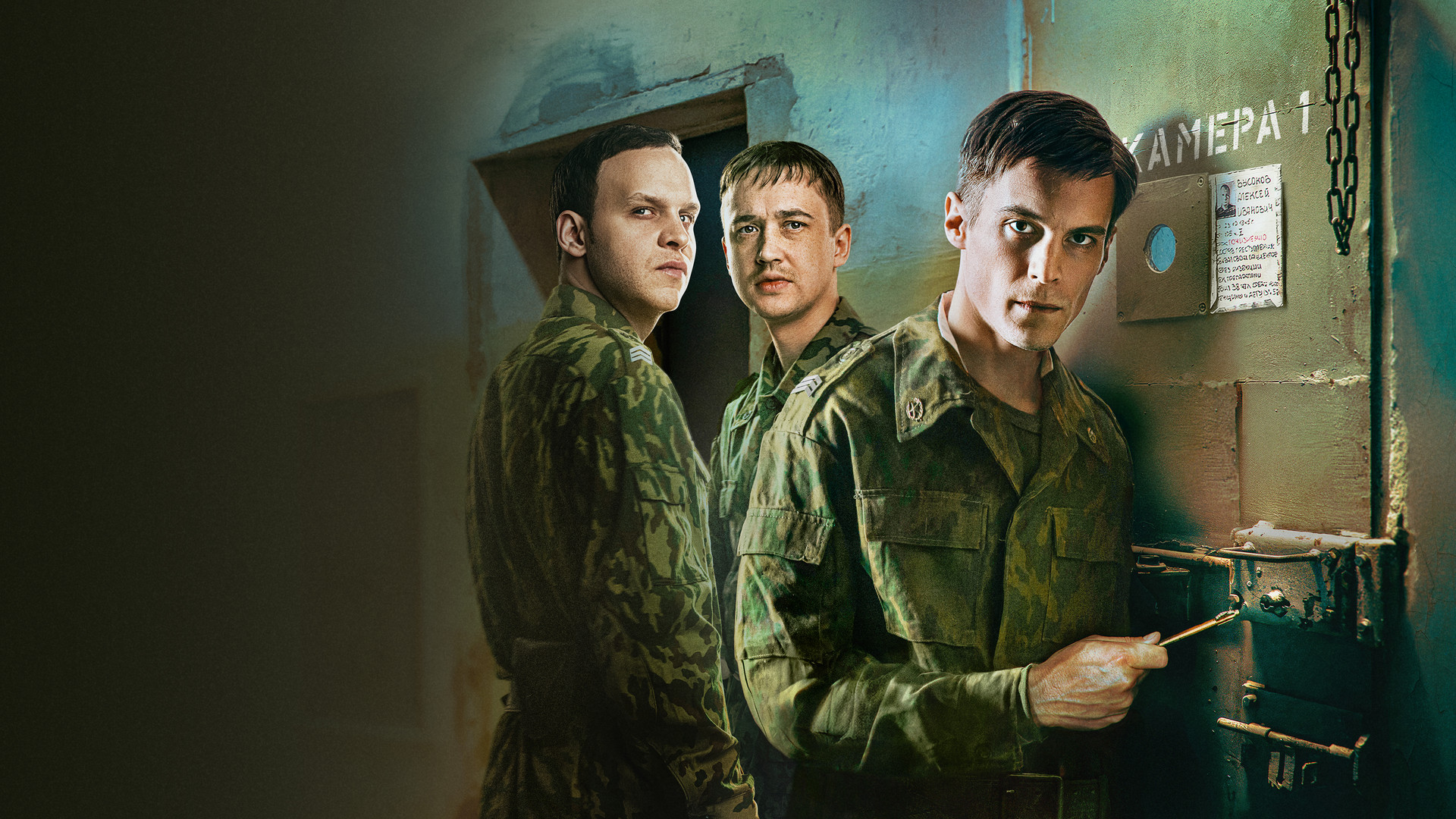
On February 13, the online cinema Okko premiered the series 'Outsource' with Ivan Yankovsky in the lead role. We tell you why it will definitely be talked about in the near future
Open material– You mentioned that you deliberately took a break from work — almost six months without filming. Nadya in the film finds herself at the same point: life on pause. Did this coincidence push you towards the role?
Actually, I didn't see this coincidence at all. This reset happened to me long before Nadya. Everything fell apart, froze, stopped. And I thought it was a necessary pause, because no one is immune from professional burnout. And sometimes you really need to stop and just gather a little inspiration, watch something, read, be with family. But I really didn't find such a parallel with Nadya. Now you said it, and I think, indeed, maybe. (laughs). Nadya also clearly needed to stop and listen to herself.
We all need this. It's impossible to exist in an endless flow of work and routine. The worst thing is when creative work becomes routine for you.
Sometimes it's useful for everyone to take a pause.
– Both you and Nadya are mothers. Perhaps you adopted some advice from the book or film into your own parenting life?
After this film, I realized that I need to allow myself to relax regarding my child. I am a very anxious mother. (laughs). And my son even says to me: 'Mommy, could you worry 10% less?'
And Nadya is the same, only even more exaggerated. So I need to remind myself more often that my son is already big. He can do a lot himself, can tell what is happening to him and describe it. I need to give freedom to myself and to the child too. Nadya highlighted this problem for me.
I deliberately pull myself out of this state when I worry about my son. I understand that it affects the child's independence and freedom, because he feels this constant overprotection. I need to move away from this. Everything should be in balance. And I artificially force myself to do this.
– Have there been moments in your life when you wanted to radically change everything: profession, place, surroundings?
I wanted to change profession, yes. Surroundings — no. My close circle is quite small, and these people are very valuable to me. I wanted to tell the profession to go to hell more than once, especially when something doesn't work out. Or when you are in a waiting mode for a role or projects. But I understand, and I've said it many times, that an actor is not a profession, but a way of life. And I can't imagine anything else for myself. I need this, and I can't live without it. No matter how much I sometimes want to quit the profession, of course, in two weeks I will want to come back.
– You were born in Leningrad — and that's what you call your hometown. What do you love about it? Do you think you are similar to this city in any way?
Of course, I associate myself with this city. In general, residents of St. Petersburg are very different from Moscow. Not in a good or bad way, we are just very different. I often go to Moscow and work mainly in Moscow, if not counting the theater.
I walk down the street and realize that it's obvious I'm from St. Petersburg. And Leningrad — because since childhood I have the habit of calling St. Petersburg Leningrad. I was born there.
St. Petersburg has a completely different energy. Moscow has frantic rhythms.
St. Petersburg is kind of demonic. The spirit of Dostoevsky cannot be removed from here. You walk these streets and feel such power.
Well, and we, Petersburgers, have some constant state of mild depression inside. It always sits somewhere in every piece of your body just in case.
– Have you never wanted to move to another city?
No, I haven't. Everyone asks how I'm still not in Moscow. But I am an absolute resident of St. Petersburg, although I adore Moscow. I love working and relaxing there, but I am a Petersburg resident 100%.
– What film do you rewatch when you need to 'reset' your soul, and why that one, rather than your own work? And do you rewatch your own works?
I don't watch my own works at all, frankly. Only if it's a big premiere, or something for dubbing.
There are so many good films. What to name? To lift my mood, I need to watch 'Love Actually', for example. You watch it, cry, laugh, and it becomes easier. My husband and I watch this film every New Year. Several wonderful stories are told in such simple language. Like in Fredrik Backman's book 'Anxious People' — several people end up in one room, and how they reveal themselves as the plot progresses.
And if you want a really powerful cleansing, you can watch 'The Dawns Here Are Quiet'. I mean the old film. Or watch Tarkovsky. 'Solaris', for example.
From the latest releases on big screens, I was very impressed by 'Yura Was Here'. This is a very therapeutic film that really shook me and put me in my place. An incredible work by Konstantin Yuryevich Khabensky, who played a role without a single word.
'Biutiful' — that's another wonderful film! It also blew me away at the time.
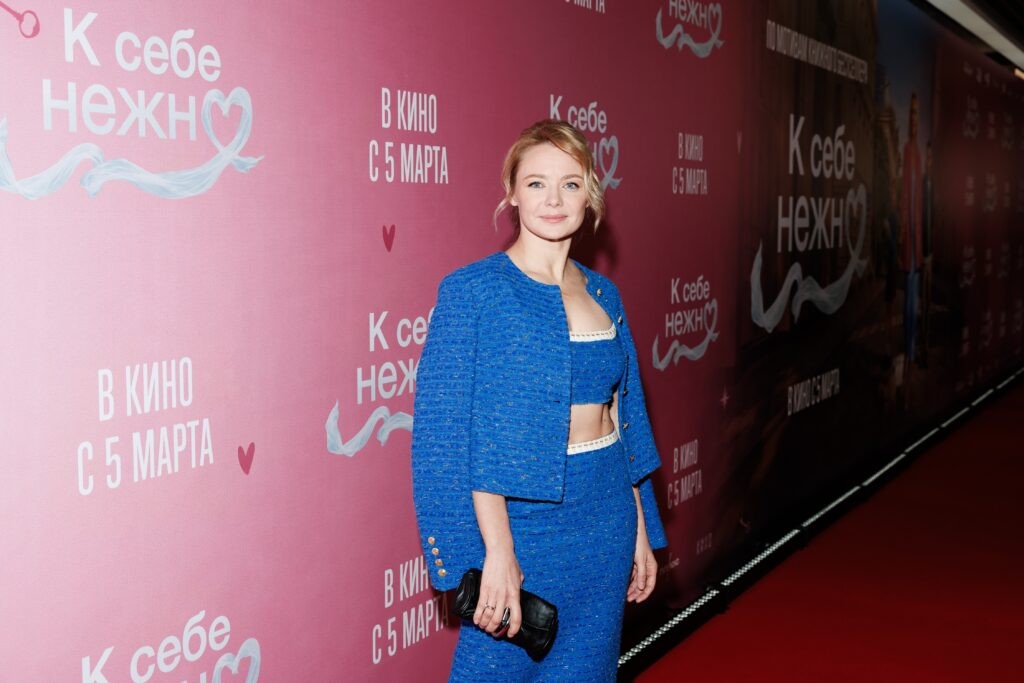
'Be Gentle with Yourself' is in theaters from March 5.
Comments
0No comments yet.
Sign in to join the discussion.