

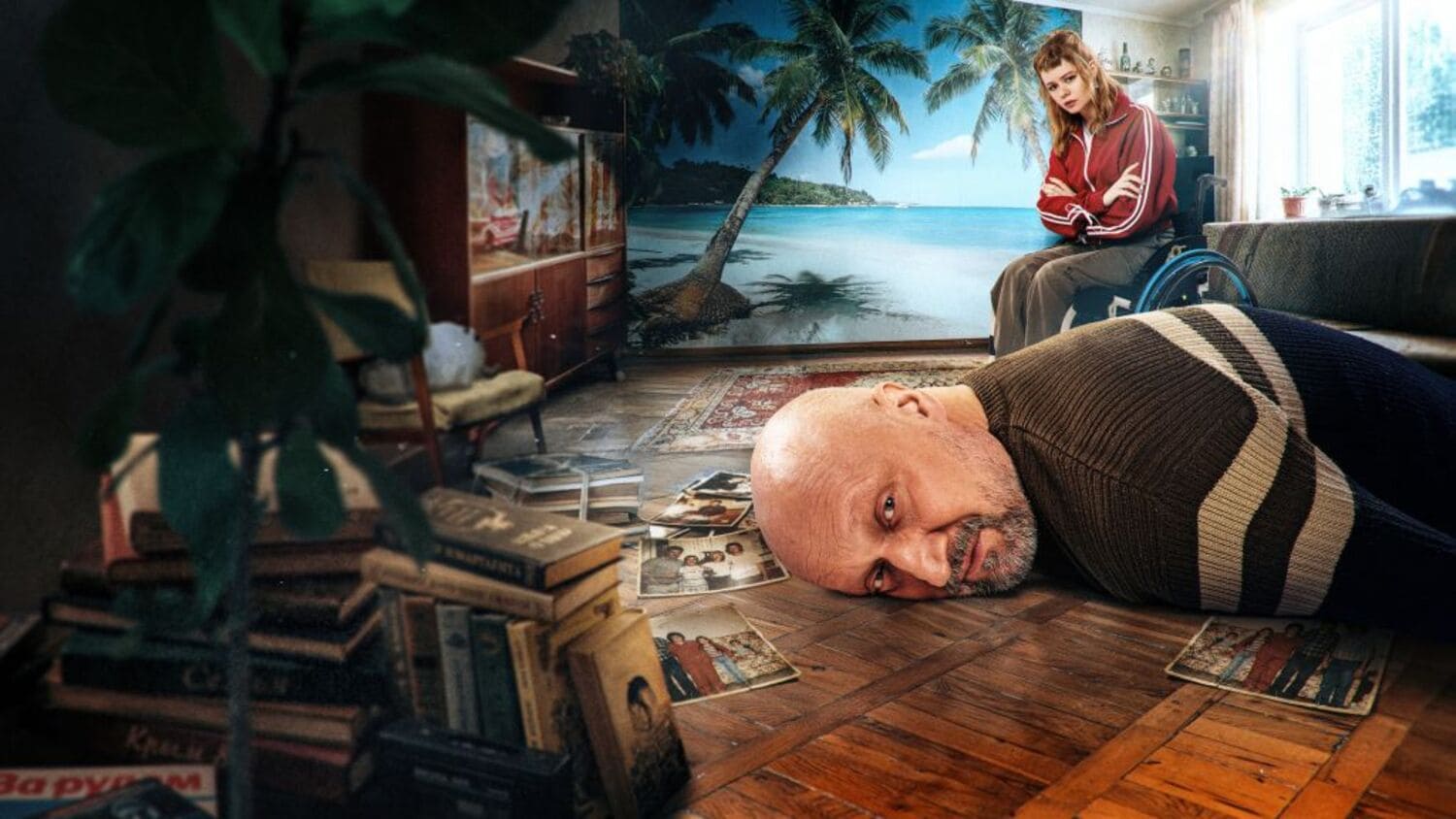
Gosha Kutsenko and Mila Ershova in an inclusive dramedy that won the Grand Prix of the “New Season” even before its release. “Get Back on Your Feet” is an Okko series about a former convict who, after 20 years in prison, learns about an adult daughte...
In February 2026, the online cinema Okko presented a project that, even before its premiere, managed to win the Grand Prix of the “New Season” festival and the title of “Most Anticipated Series.” “Get Back on Your Feet” is an inclusive dramedy that breaks stereotypes about people with disabilities and forces the viewer to reconsider conventional notions of weakness and strength. This is not a story about pity, but about a second chance, which is sometimes needed not by the one confined to a wheelchair, but by the one whose heart has given out.
Who Here Is Really “Special”?
At the center of the story is Andrey Starodubov, nicknamed Stary (Gosha Kutsenko). He spent twenty years in prison for a crime he didn’t commit: he took the blame to cover for a friend. In prison, everything is simple and clear. On the outside, where he returns at the very beginning of the series, there is nothing. No home, no future, no skills for life in a world that has raced ahead without him.
But life throws a twist tougher than any prison sentence. Stary learns that he has an adult daughter, Olya (Mila Ershova). The same daughter he thought died in a car accident along with his wife twenty years ago. Olya survived. But after that accident, she was confined to a wheelchair.
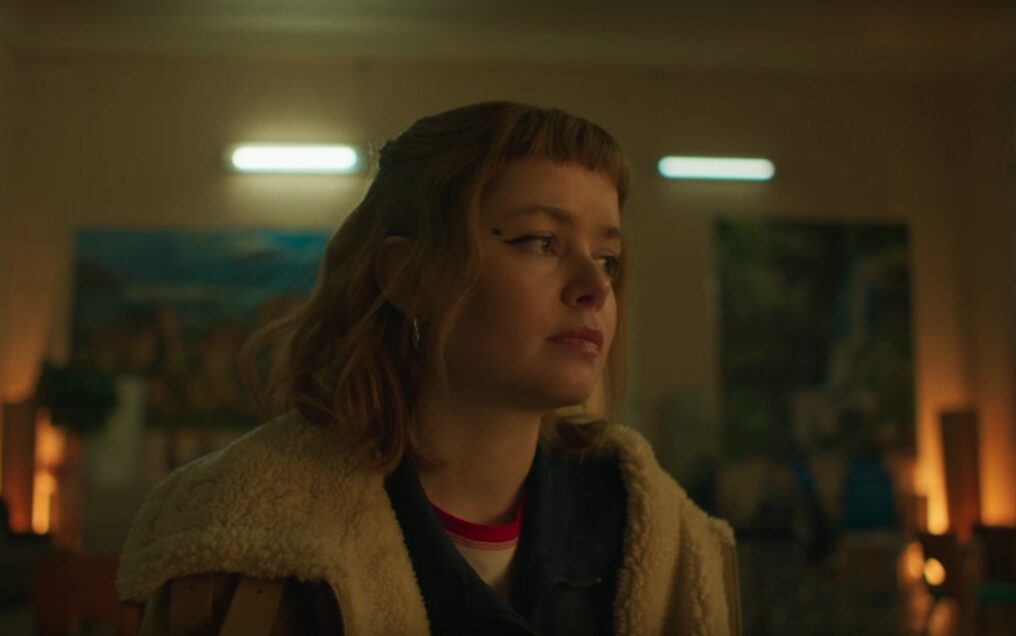
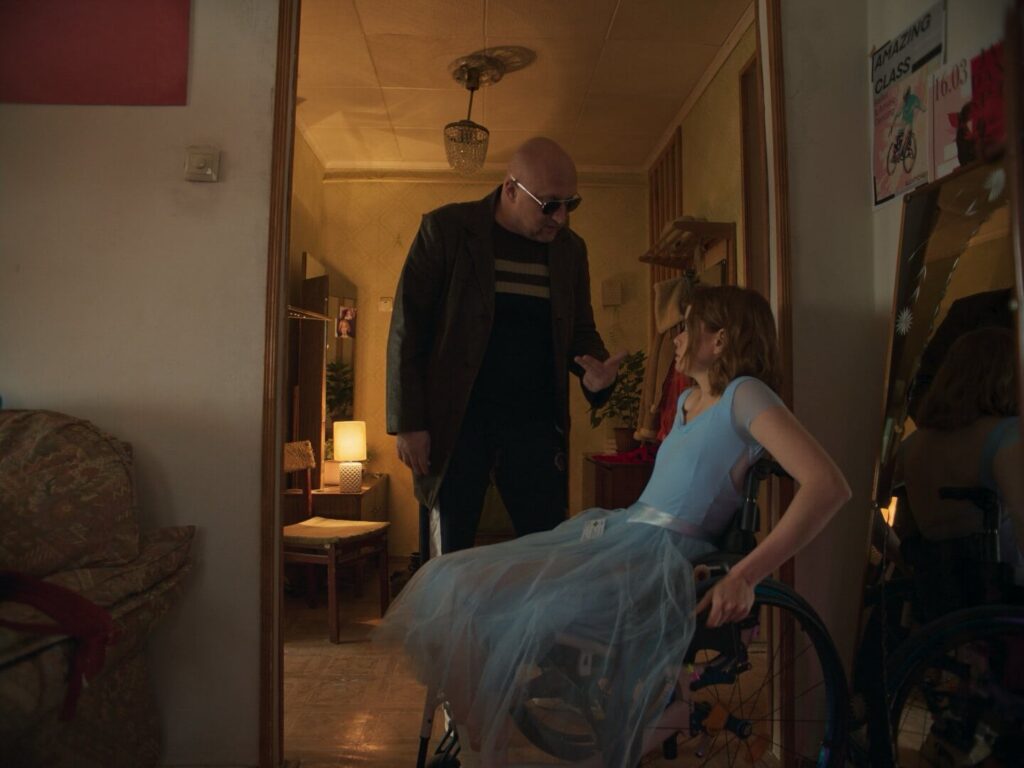
It would seem like a classic setup for a tearjerker drama: an unfortunate father and a poor sick girl he must save with his love. But the creators make the right decision and change the narrative. Olya is not helpless at all. She is a bold, prickly, sharp-tongued girl who knows perfectly well how to live in her body and in this world. She works, makes plans, dreams of winning a dance competition and moving to Moscow.
And here lies the series’ main revelation: the weak one in this pair is the father. A healthy, strong man who doesn’t know how to use a smartphone, who doesn’t understand the new rules of life. Rehabilitation and support are needed not by the girl in the wheelchair, but by this huge, lost man trying to “get back on his feet” both literally and figuratively.
Two Powerful Blows to the Heart
Gosha Kutsenko as Stary is a revelation. We are used to seeing him in a different role, but here he acts quietly, deeply, almost without words. His character looks at the world with the gaze of a man from whom twenty years of life have been stolen. He tries to be useful, but only messes things up. As Olya says, he can only “inflict good.” And in this awkwardness, this stony clumsiness, there is so much pain and sincere desire to be needed that your heart aches from the first episode.
Mila Ershova as Olya is sincerity itself. Watching her act and believing her is not difficult at all. The actress does not play disability; she plays a person. A person who is tired of pity, of sideways glances, of others’ attempts to “save” her. Olya can be uncomfortable, angry, unfair. She has the right to be. And the most valuable thing in this role is the complete absence of falseness. Ershova underwent extensive preparation to move in front of the camera absolutely naturally, but the main thing is that she managed to convey the character of a girl who does not allow circumstances to break her.
Their duet is a constant struggle and attraction. They learn to talk to each other. They learn to trust. They learn to be a family. And watching this process is more interesting than any detective intrigue.
If the Kutsenko-Ershova duet is the heart of the series, then the surrounding characters are the circulatory system without which the story would not become a full-fledged living organism. And each of them is cast with surprising precision.
Alexey Rozin as Rakhim, Stary’s former accomplice, is a real magnet for negativity in the early episodes. His character has long forgotten about friendship, is swimming in money and “concepts,” but inside him smolders a cowardice that the actor shows without unnecessary words. Rozin plays not just a stereotypical “authority figure,” but a man who himself has become a hostage to his sins. The scenes of Stary and Rakhim’s meetings are always a duel: Kutsenko presses with the weight of lived years, Rozin fights back with fake gloss. Although in the finale they will work together again and, like a reflection of past years, become one again.
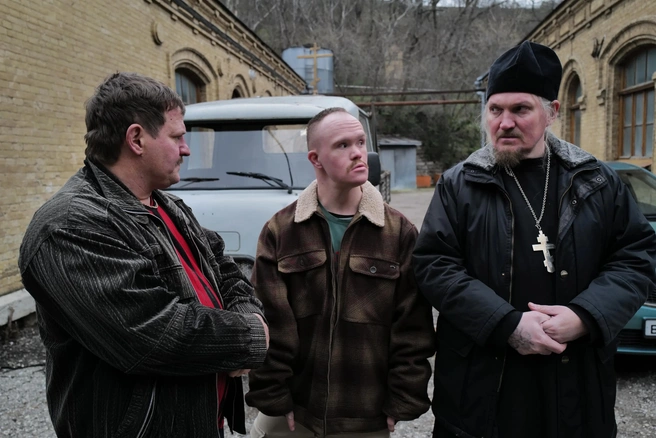
Special mention deserves Alexander Oblasov (Kopilka). This actor is a real antidepressant. His character, Stary’s old friend, a taxi driver with a big heart, appears at the most bitter moments and defuses the atmosphere with his folksy humor and genuine warmth. Oblasov plays a man who, unlike the main character, managed to preserve life and the ability to enjoy small things. He becomes Stary’s guide to the new world—even if through conversations in a smoke-filled car.
The Sun of Pyatigorsk and the Darkness in the Soul
A separate character in the series is Pyatigorsk. The creators did not choose this southern city by chance. Sunny streets, resort architecture, warmth and light contrast with the inner state of the characters. The world around is bright, alive, moving. And inside the apartment where Stary and Olya settle, a cold of alienation initially reigns.
The cinematography deserves special mention. The camera does not try to squeeze out tears with close-ups of the unfortunate girl. Rather, it peeks at the characters, capturing their life in broad strokes. The cramped apartment, where two completely strangers must coexist, presses on the viewer almost physically.
The direction by Pavel Timofeev maintains an amazing balance between funny and sad. This is not a tragicomedy in its pure form, but rather a very lively story that has room for both a bitter smile and real pain. Humor here saves from despair, and dramatic scenes never turn into hysteria. It is an equal conversation with the viewer, without attempts to manipulate. This project exudes warmth, sometimes sad, but still warmth with a touch of hope and support.
It is also worth paying attention to the sound and music in the series. The soundtrack here is not a set of trendy tracks collected for hype, but a carefully constructed sound universe that is in unity with the characters. The creators of the series refused the temptation to press on tears with saccharine melodramatic symphonies. The music sounds exactly when the viewer needs to exhale, or, conversely, when the characters’ words no longer have power, but the lyrics of the songs compensate for it.
The soundtrack of “Get Back on Your Feet” is music about hope. Not the loud, slogan-like hope that promises joy and serenity tomorrow, but the one that smolders somewhere deep inside, despite everything. It sounds in the final shots, in long road scenes, in moments when the characters are left alone with themselves.
Not Pity, but Equality
But the main thing for which we can thank the creators of this series is the conversation about disability. Without a trembling voice, without slobbery “oh, poor thing.” The authors consistently convey a simple and important idea: a wheelchair, glasses, crutches are not the essence of a person. They are a circumstance of life. The same as eye color or any fact of biography, such as a criminal record like the main character’s.
Olya does not demand special treatment. She does not want to be “cute” and “nice.” She wants to be herself—different. And this is the main message of the series: a person with a disability has the right to any character. They can be angry, sharp, uncomfortable. And they certainly are not obliged to serve as a source of inspiration for healthy people who, looking at them, think: “How they struggle, and I complain about trifles.”
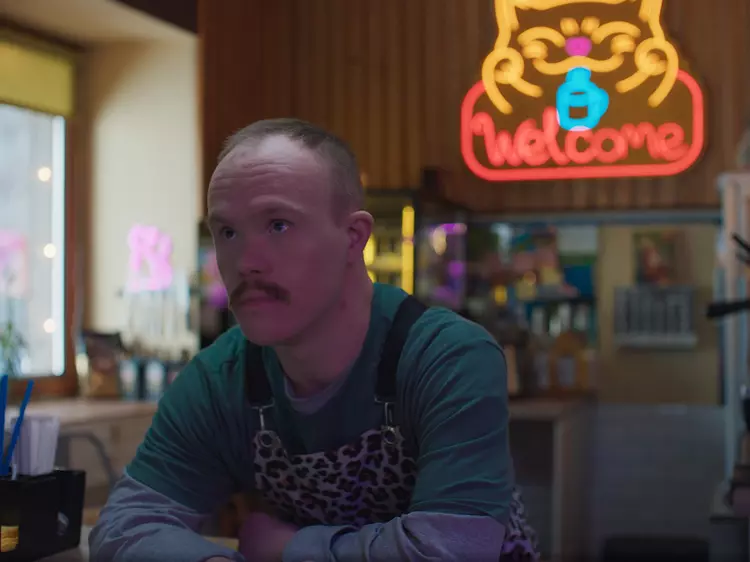
I especially want to mention the storyline with the character of Anton Sankevich. The series features an actor with Down syndrome, and his character is not a decoration or a reason for tenderness. He works, communicates, has his own life and thoughts. It is his character that the authors entrusted with an important phrase that Stary, in essence, is also “special”—only society stigmatizes him not for a diagnosis, but for his prison past. This parallel between the stigmatization of a former convict and a person with a disability is drawn subtly but very accurately. And how his prayer touches the soul in the finale. Just for this alone, it was worth creating this series.
In the series, no one saves anyone in the usual sense. Stary does not become a superhero overcoming difficulties for his daughter. Olya does not turn into an angel in the flesh. Each character finds and acquires something new and so necessary for themselves. After all, each of them was wounded, but in unity they find peace. They simply learn to live together. And in this ordinariness, in these daily small steps towards each other, the real thing is born. That very warmth that heals better than any medicine.
“Get Back on Your Feet” is a therapy series. It is about how sometimes the strongest person is the one who outwardly seems weak. About how help often comes from where you least expect it. And about how you can get back on your feet without getting out of a wheelchair. The main thing is to have someone nearby for whom you want to do it.
Comments
0No comments yet.
Sign in to join the discussion.