
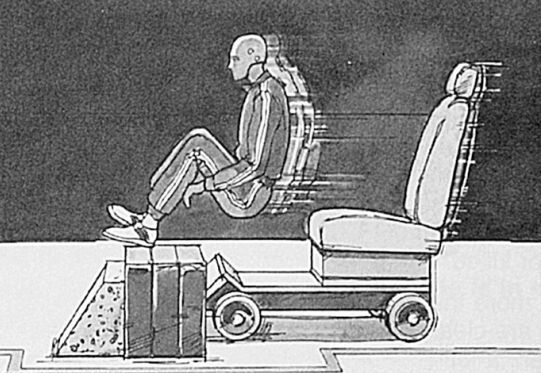
Very often, business models do not account for inertia and people's reluctance to change. Better understandable problems than incomprehensible improvement - the product currently in use has flaws, but they are predictable. We already know how to work with it: when to restart, where to kick, what to tweak. But a new product offers improvements, but new problems will also arise, and they need to be studied, adapted to, and figured out where and how to fix. And there are no perfect products. Therefore, if you look at your business model from a rational point of view and it is based on the assumption "People are rational, why would they refuse real benefits?" - then know that they will refuse. First, economists have long proven that humans do not behave rationally when purchasing and choosing goods, etc. Second, as long as they do not trust us, they do not trust our value proposition.
Don't believe me? You can conduct an experiment. Go to a crowded place on the street and start handing out money to people. They won't take it at first, only if they mechanically think it's a flyer, so go where flyers are not handed out. And as soon as someone sees that it's real money and realizes that you are just giving it away, they will come back, and others will notice their behavior. At that moment, everyone will start taking money. The same goes for purchasing your value proposition.
What to do with this knowledge? Adjust sales plans, realize that you need early adopters and real feedback. Only then will sales reach the planned capacity.
Kommentare
0Noch keine Kommentare.
Melde dich an, um mitzudiskutieren.