

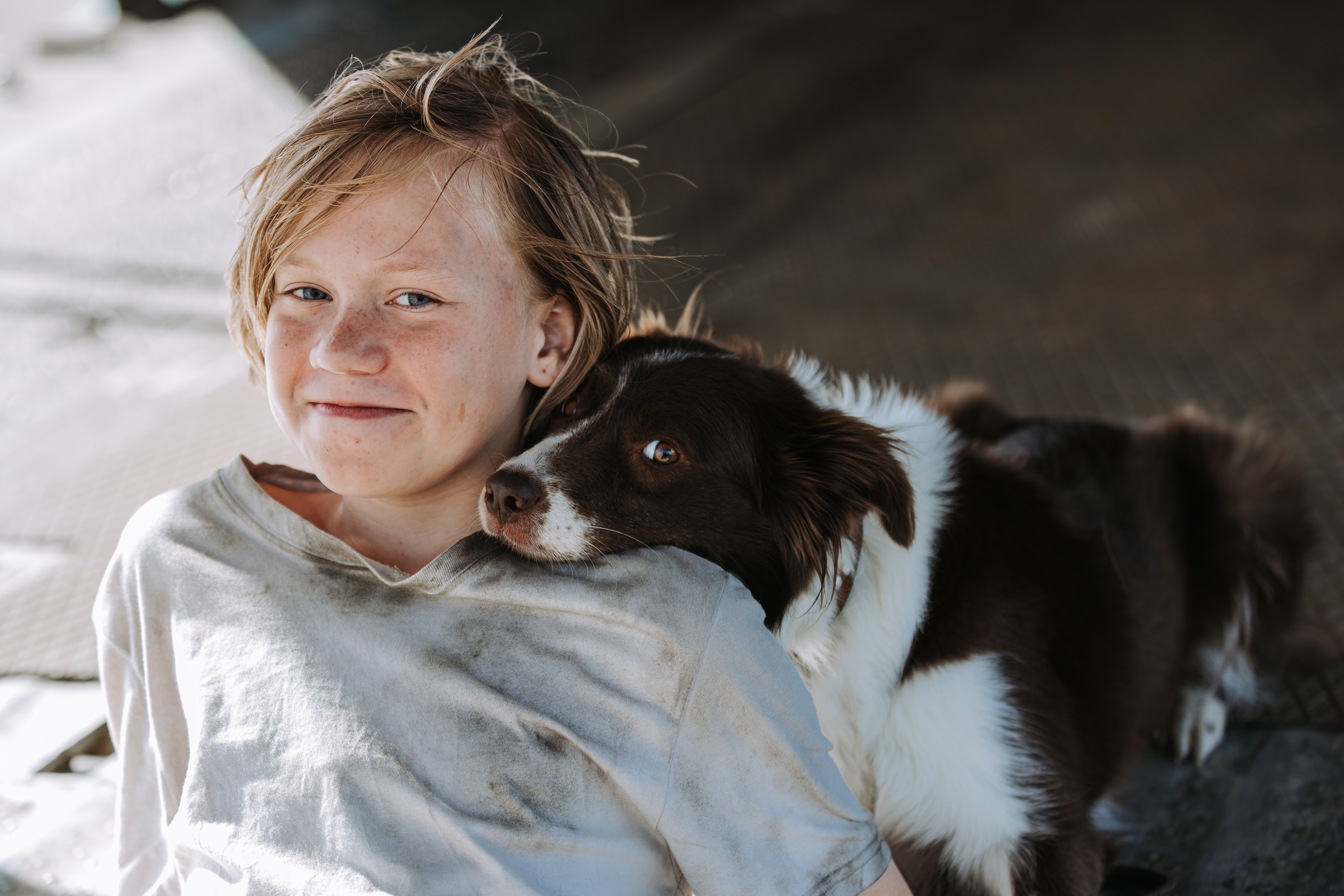
If it seems that 'Space Dog Lida' is a story about space exploration timed to the 65th anniversary of the first space flight, don't be fooled. It is rather a reflection on moral choice and the importance of family, spiced up with powerful special eff...
The early 2000s. 13-year-old Igor receives a gift from his cosmonaut father: a dog named Lida, who mysteriously returned from space. At home, his mother (Yulia Peresild) is expecting a child from another man, Uncle Styopa (Evgeny Stychkin); the stepfather is nothing like the character from Sergei Mikhalkov's book and plans to send his stepson to a military school. That night, when the boy runs away from home, Lida, thanks to the superpowers she gained in space, “pulls out” an adult version of himself. 40-year-old Igor (Evgeny Tkachuk) announces: in three days, his father will die during a rocket launch. The boy's entire future will go downhill. To prevent this, they must travel across the country and save his dad.
What follows is a journey to Baikonur that turns into something entirely different. Because every time Igor experiences a shock, his mentor from the future changes.
What Did You Do for Hip-Hop in Your Day?
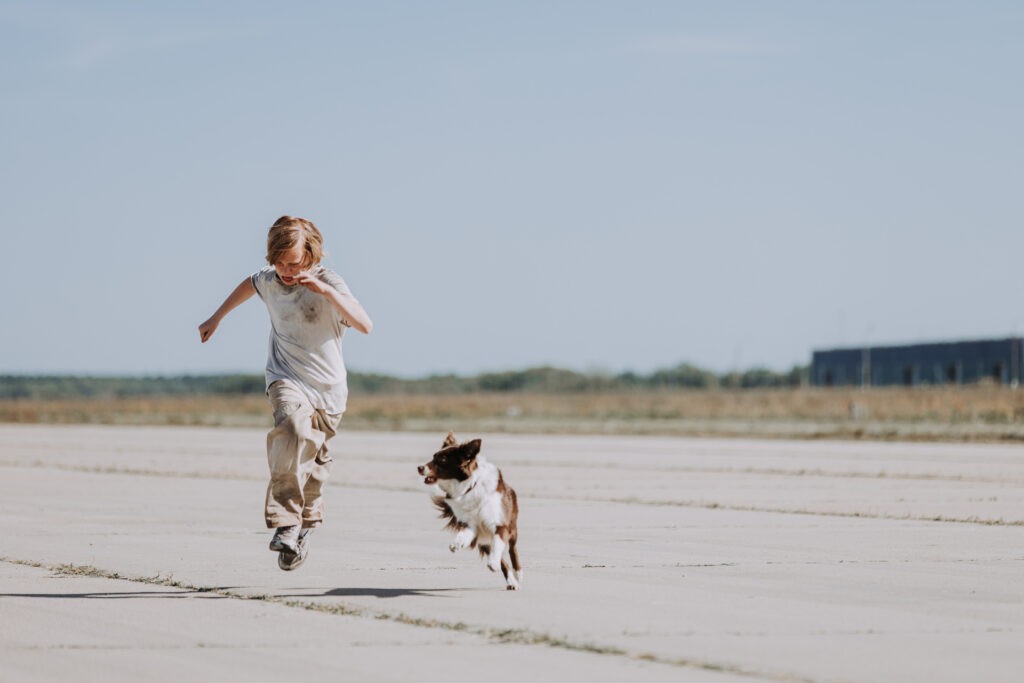
The first shock of 'Space Dog Lida' is the soundtrack. Little Igor can name his favorite tracks by Detsl, and before a conversation with his stepfather, he listens to the meaningful “I Love People” by Dolphin. The music adds intertextuality and immerses you in the era. Moreover, each of the future Igors has their own melody.
The first one—enormous, bald, out of breath—earns a living on commuter trains by performing “I'll Jump Off a Cliff” by Korol i Shut. The second, a criminal with a tattoo of his mom and Lida on his chest (the dog is loved by absolutely all characters in the film), appears on screen to the legendary composition by Mikhail Krug, and the third, a business coach with veneers, is accompanied by a track by Saluki.
Tkachuk does something titanic in this film. He changes his physique, voice, age, weight (thanks to the prosthetic makeup artist), and the essence of a person within two hours of screen time. One Igor resembles Charlie from Aronofsky's 'The Whale', another resembles Barney Stinson from 'How I Met Your Mother'. Each version becomes an answer to the question: “What will I become if I make this or that choice?”
Conceptual Clash: I Won't Be Like That
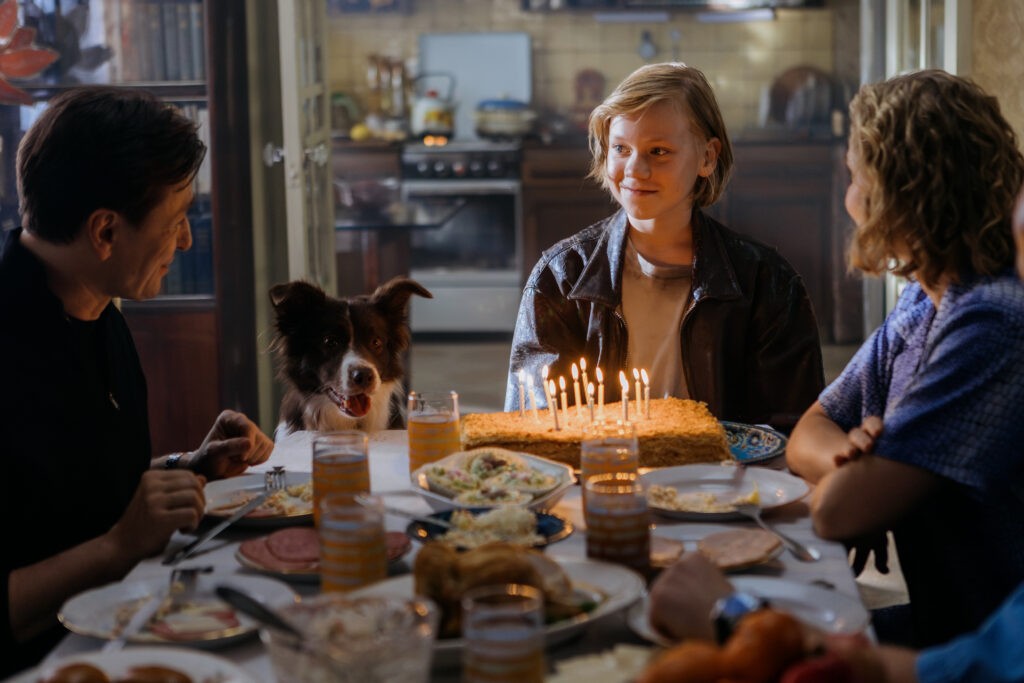
The film has a clear architecture. Each new version of Igor is a rejection of previous “versions of himself.” This is the educational element of the film, where the boy renounces the future, deciding to take a new step.
Each version of Igor in the film is not his free choice, but what circumstances, family, and society made him. Jacques Lacan, the French philosopher, has the concept of the “Big Other.” This is not a specific person, but a structure used in film theory: language, laws, cultural norms, the voices of parents that we begin to accept as our own desires. The Other can be seen as an invisible authority that tells us who it is “right” to be, what to want, what to consider success, and what failure. The “new” versions are born from the fears that the boy already experiences before this invisible judge. Thus, one of the older Igors, a business coach with veneers and sneakers, has fit so well into the symbolic order (career, money, “successful success”) that he has even lost the memory that he once wanted something else.
A Dog Can Bite
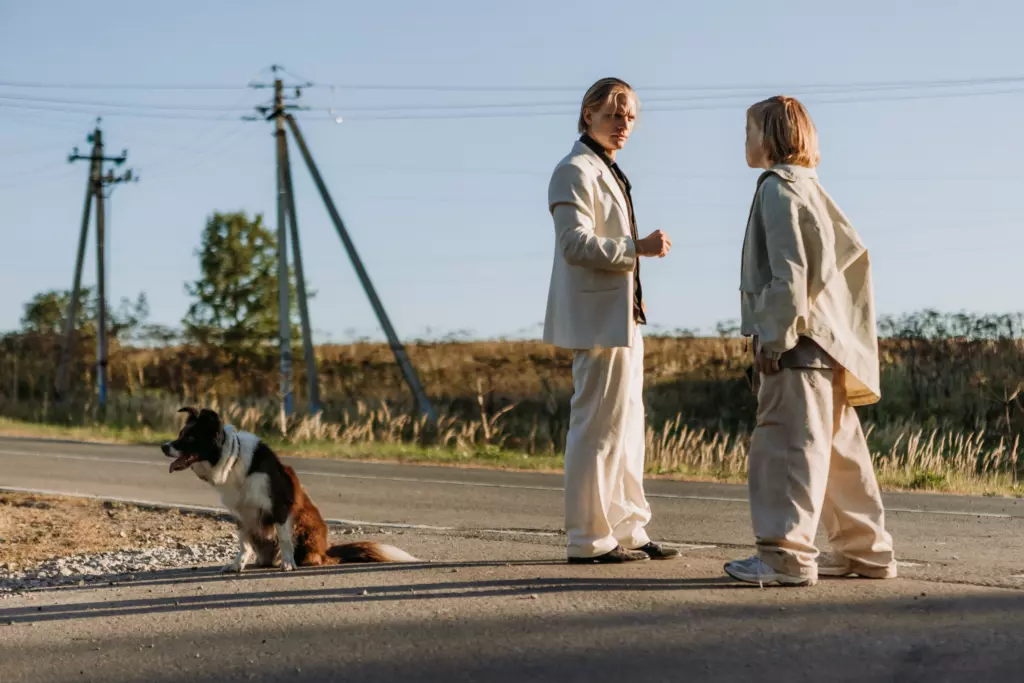
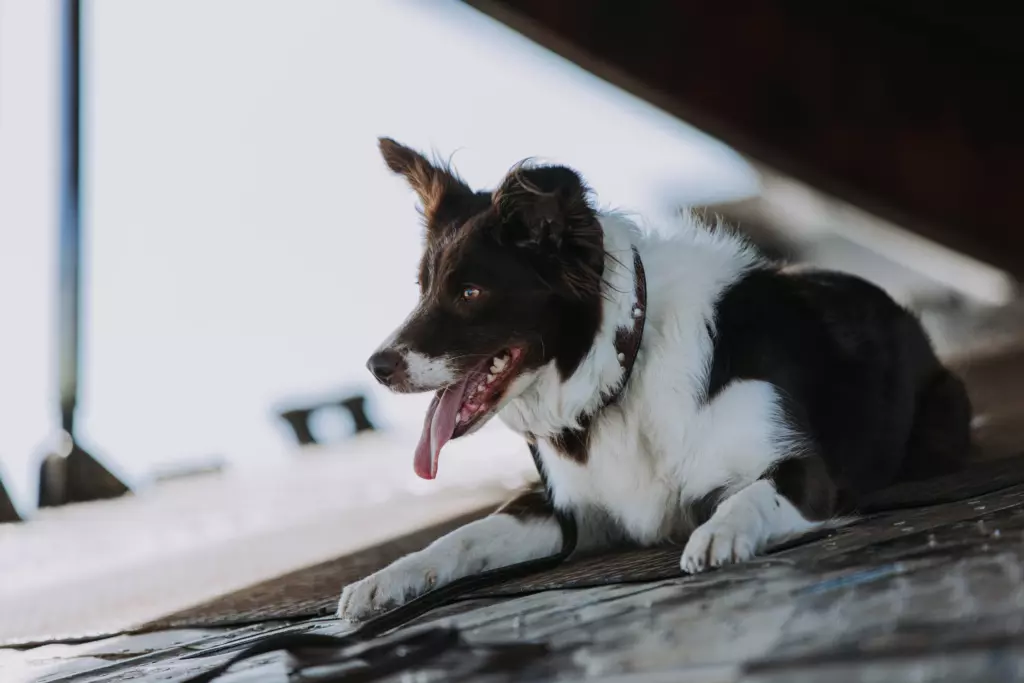
Not much is known about the main character, whose name is in the film's title. In the film itself, she is defined as a survivor's error, a “space dog,” one of a kind. No one knows exactly how she gained her superpower. She creates time vortices and then eliminates them. The logic of the dog's actions is unknown, but that's enough for the filmmakers. After all, she is more of a magical helper than a full-fledged character in the film.
What to Do If None of the Versions Suit You?
The narrative sags because in the last third of the film, it is necessary to maintain a high level of catharsis. The screenwriters play with a series of repetitions, new lives that lead to a cataclysm, but the coherent concept falls apart into sketches. However, it provides just enough existential weight so as not to overload the viewer. What did Igor become? The question is rhetorical.
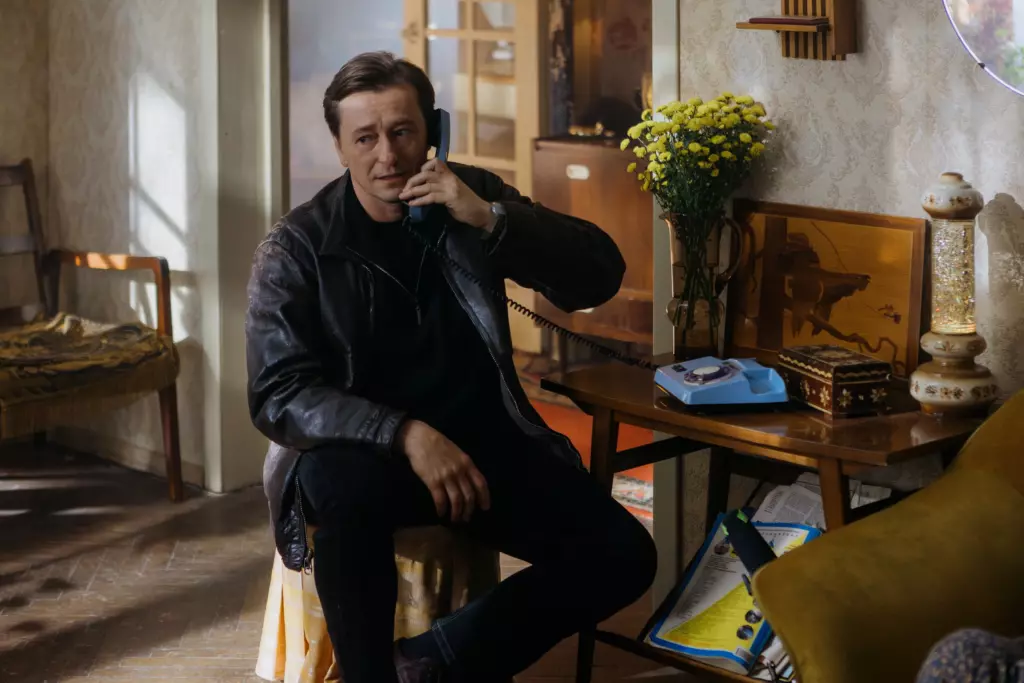
There is a reference to Kassovitz's 'La Haine', when young Igor delivers a monologue looking at his own reflection in the mirror. The chase scene in the Kazakh steppe and the image of local thugs suspiciously resemble 'Mad Max'. One of the film's script finds is the return of Sergei Bezrukov in the role of Sasha Bely from 'Brigada', with a familiar squint and in a leather jacket. Of course, there is no trace of his criminal past, but the image is instantly read by the viewer.
The authors describe their film as a journey into the “world of the unfulfilled.” But the ending turns out to be much more prosaic, boiling down to a simple moral that the mass audience craves: any of our goals, even those not realized, change reality. And in the mirror, we see not only who we have become, but also who we could have been.
'Space Dog Lida' is a rare case of a film that is not about what its title suggests. Space here is more of an illustration of a world beyond our understanding. It can take away life or grant a new ability. The plot reiterates the same truths: family above all. Igor rushes between versions of himself, but in each of them, even the most failed one, he remains a son who travels across half the country to save his father in time. Behind the abundance of special effects, layers of makeup, and folds of costumes, there is something that captures the viewer's attention much more. It is the interaction between the boy and the dog. Simple, trusting, but it is what keeps the story afloat. Igor and Lida remain the only constant, the triumph of humanity.
Comments
0No comments yet.
Sign in to join the discussion.