
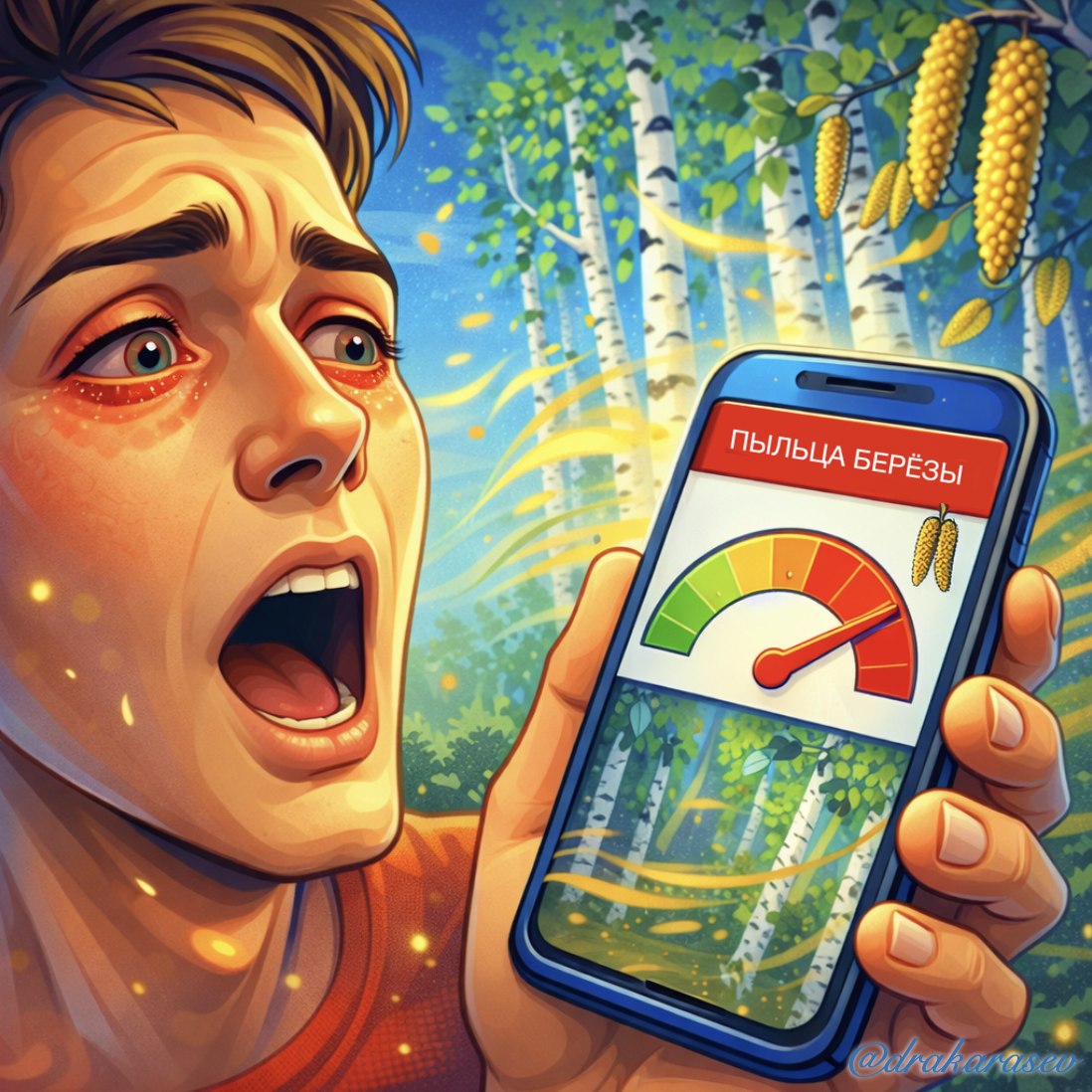
⚠️ Birch pollen season has started
Allergy to birch pollen is the main cause of seasonal allergic rhinitis and conjunctivitis in the Northern Hemisphere, with 8% to 16% of the general population showing such an overactive immune response.
Sneezing, dry nasal mucosa, red eyes in March-April are more often caused by pollen than by respiratory infections.
Allergy is a chronic excessive reaction of the immune system to foreign proteins, with significant expenditure of the body's resources. (When a strong immune system is not a joy).
Most common aeroallergens: house dust mite, and second - pollen from trees and grasses.
Symptoms: Sneezing, dry nasal mucosa, red eyes, sore throat. People with eczema experience worsening of symptoms - dry, itchy skin. All this intensifies outdoors or when opening windows.
There is a significant contribution of genetic factors: The risk of inheriting allergy is up to 25–30% if one parent has allergies, and up to 60–80% if both parents have allergies. What is inherited is not an allergy to a specific protein, but a tendency to increased production of IgE antibodies - atopy. Such predisposition can only be assessed based on DNA sequencing data; there is no single gene or simple test, and there never will be.
Pollen is incredibly volatile: it is a dehydrated cell with proteins and half of its DNA, much lighter than particles of stone dust. If a birch tree is several tens of kilometers away, colossal amounts of pollen easily travel such distances with the wind.
Cross-reactivity: The pollen proteins to which the immune system reacts (and the most significant one, Bet v1) are not unique; they are found in many biological relatives of Rosaceae. People with birch pollen allergy often react to hazelnuts and peaches, caused by cross-reactivity between birch pollen proteins and similar food proteins. Chocolate often contains hazelnuts; allergy to cocoa proteins is extremely rare.
What to do:
1. Home - a clean environment. Came home - take a shower. Wear home clothes.
2. Purchase an air purifier with a HEPA filter + an air washer + a vacuum cleaner for allergy sufferers. Ventilate rooms by briefly but fully opening windows.
3. You can take a complete blood count, IgE test, and with the results consult a pediatrician/therapist/allergist for further recommendations.
4. Ask at the pharmacy for latest-generation antihistamines - they have no significant side effects but will help reduce symptoms.
5. Ask your doctor about the possibilities of immunotherapy with small doses of allergens - ASIT. (For birch, the drug is successfully used worldwide; clinical trials of a Russian-made drug have already begun - comment to the Public News Service)
6. Studies show a higher success rate of ASIT course in combination with probiotics, as the gut microbiota significantly regulates the overall reactivity level of the immune system.
@drakarasev
Commentaires
0Aucun commentaire pour le moment.
Connectez-vous pour participer à la discussion.