

A Fable for Those Who Still Hope to Grow on Urgent Sales, Discounts, and the Owner's Nervous Tic
There is an old disease in business. It has a very beautiful name: the desire for quick results.
It sounds harmless, even ambitious. But in reality, it is this very disease that year after year devours the money, energy, and future of companies that sincerely believe that sustainable growth can be built on promotions, hustle, and the eternal “we urgently need to launch something.”
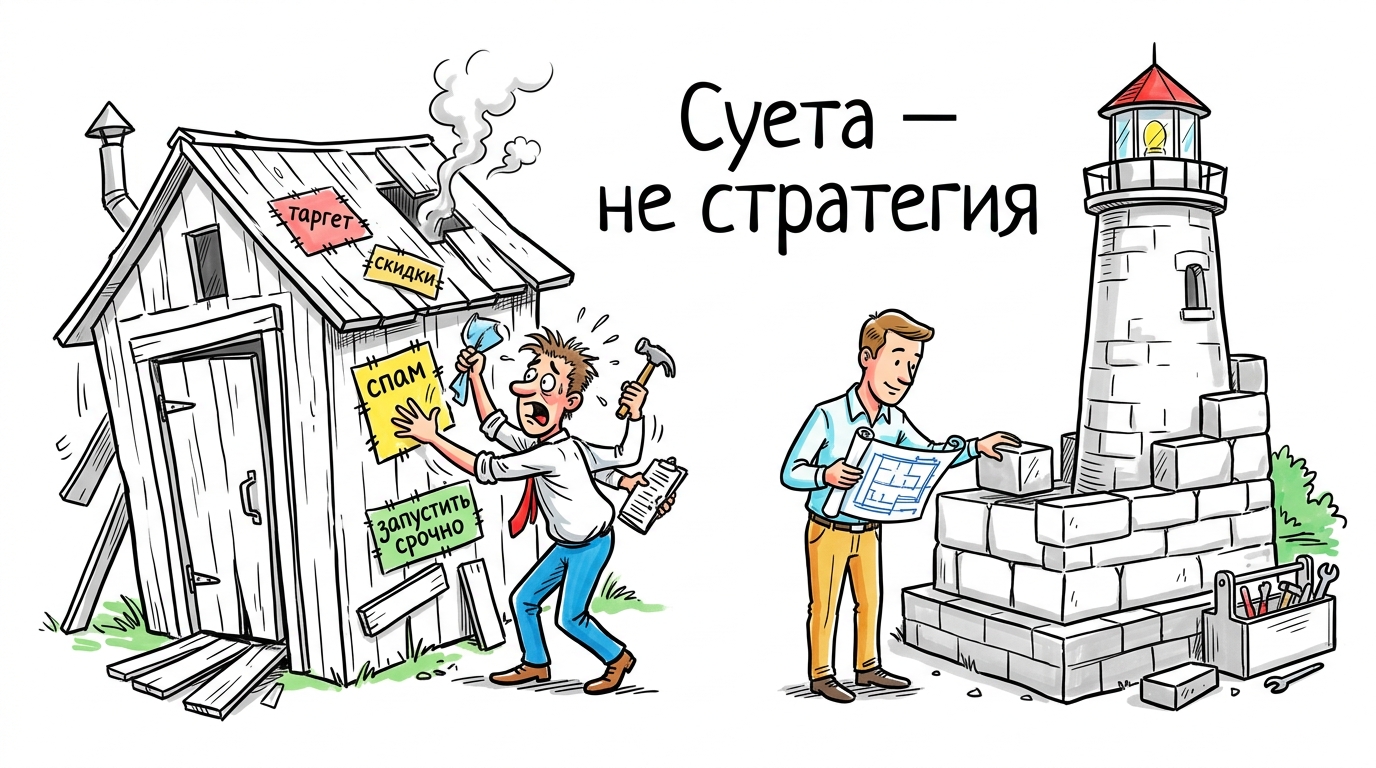
You can, of course... About the same way you can build a house out of plywood before hurricane season. The only question is why be surprised later.
Strategy vs. Tactics in Business: What's the Real Difference
In plain language, without MBA magic and verbal hypnosis, the difference is simple.
Tactics is about how to do something quickly. Strategy is about understanding where to go, why, at what cost, and what will happen in a year if you keep doing exactly that.
The problem is that a huge number of small business entrepreneurs live for years without a strategy and are convinced that they are simply “flexible.”
No, my dears. When you urgently change your offer, contractor, messaging, advertising, and direction of thought for the tenth time in a quarter, that's not flexibility. That's managerial anxiety in a cheap suit.
🪵 The Fable of Peter and Oleg
Once upon a time, there were two entrepreneurs.
Both wanted to grow. Both wanted money. Both wanted their business to be not only beautiful in conversations but also alive in numbers.
Peter had a manufacturing business for finishing materials. Oleg also had a perfectly reasonable business.
The difference between them was not in intelligence. The difference was in their horizon of thinking.
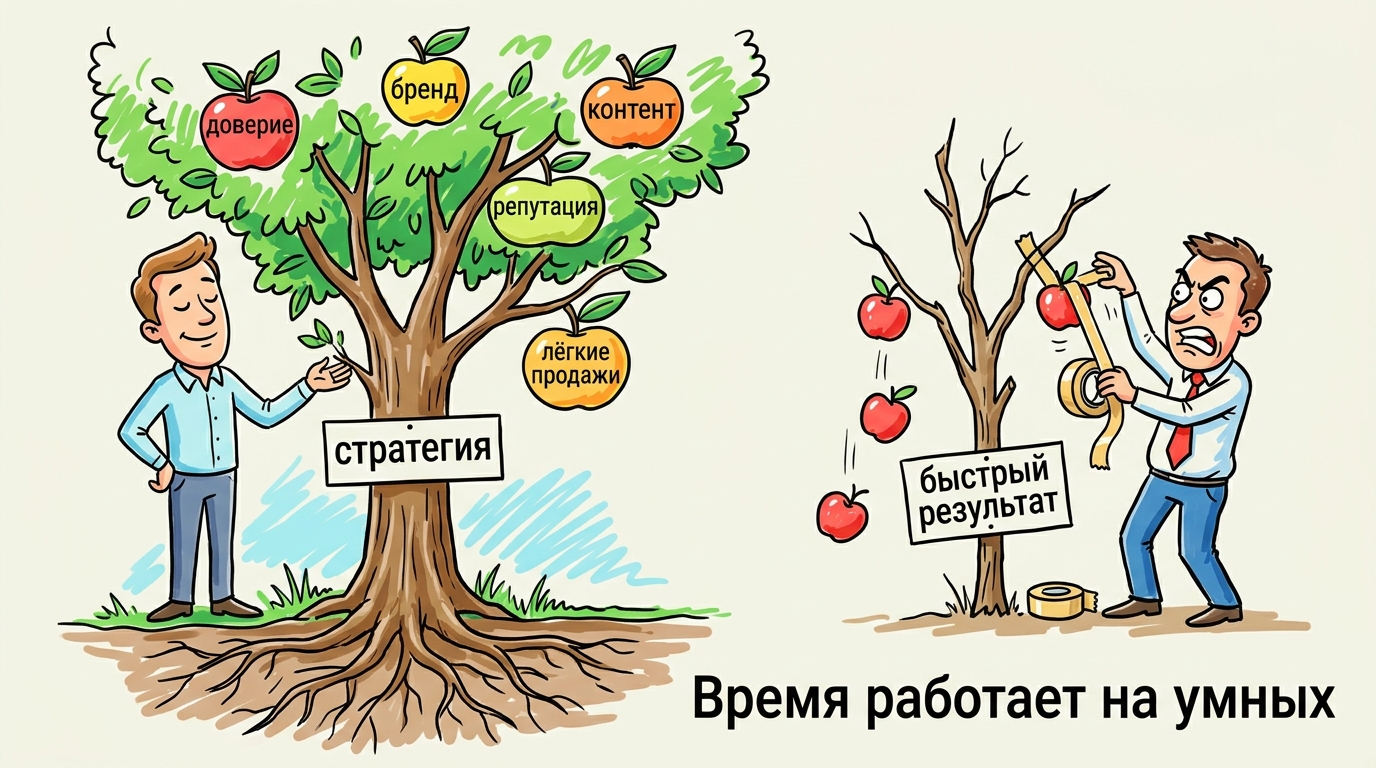
Peter understood that a marketing strategy for a business is not a whim, not a corporate toy, and not a PowerPoint file that gets placed in the “important” folder never to be opened again. For him, strategy was a way to make the market work for him more and more each month.
Therefore, he invested in things that don't always give hysterically quick results but do provide a systemic effect:
He understood that time in strategy is not waiting. It is an amplifier.
Each month within a properly constructed strategy makes subsequent sales easier, trust higher, customer acquisition cheaper, and the company's weight more noticeable.
⚠️ Why Quick Sales Are Often the Most Expensive
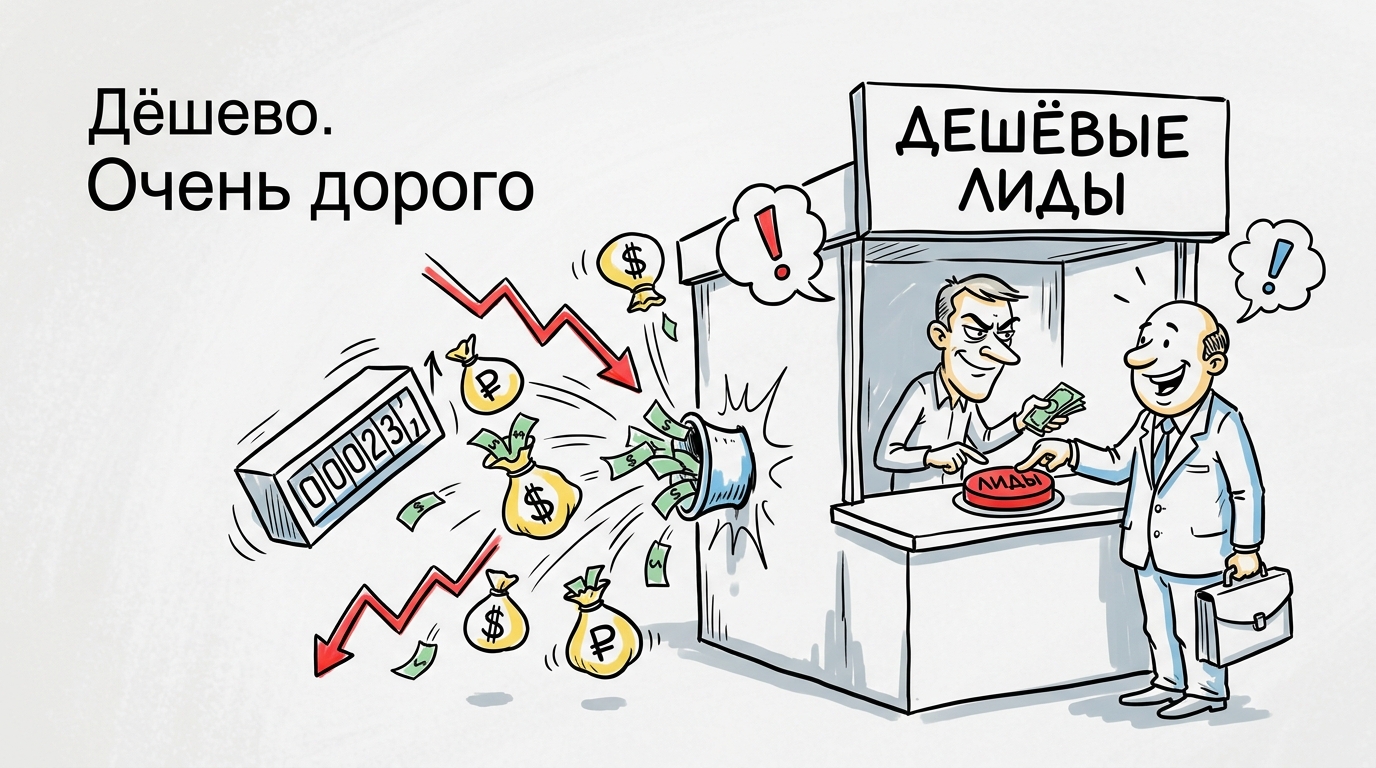
Oleg also wanted to grow, but like many entrepreneurs, he chose the “more economical” path. That is, everything that promises fast, urgent, easy, and preferably by Monday.
- Advertising.
- Spam mailings.
- One-off blasts.
- Tools that supposedly should bring in a client quickly, as if a client is a pizza that can simply be ordered for delivery.
Oleg did not build a system. He rented hope in short intervals.
Sometimes there were sales, and that's what made the situation particularly insidious. Because rare spikes created the illusion that everything was under control. Although usually only the level of self-deception was under control.
He did not calculate the cost per customer. He did not calculate customer lifetime value. He did not calculate how much each new sprint actually cost. He simply rejoiced in the fact that “something is trickling in.”
Well, yes, it trickles. Many people also have a leaky roof, but that doesn't mean there's a water park in the house.
What Happens to a Business Without Strategy After 2-3 Years
After a year, the difference became obvious even to those who like to say: “What strategy, everything changes too fast in Russia.”
By that time, Peter had accumulated an effect. His name became heavier. Trust in the company grew. The market began to recognize him more often. Sales became easier because they no longer hung on a single advertising touchpoint.
He had an asset that cannot be touched but is perfectly felt in money: brand weight, audience familiarity, social proof, a systemic marketing layer.
And Oleg began to experience what is usually called “sudden problems.” Although they are sudden only for those who haven't looked at the numbers for a year and preferred to treat anxiety with new actions.
- Customer acquisition cost was rising.
- Trust didn't have time to form.
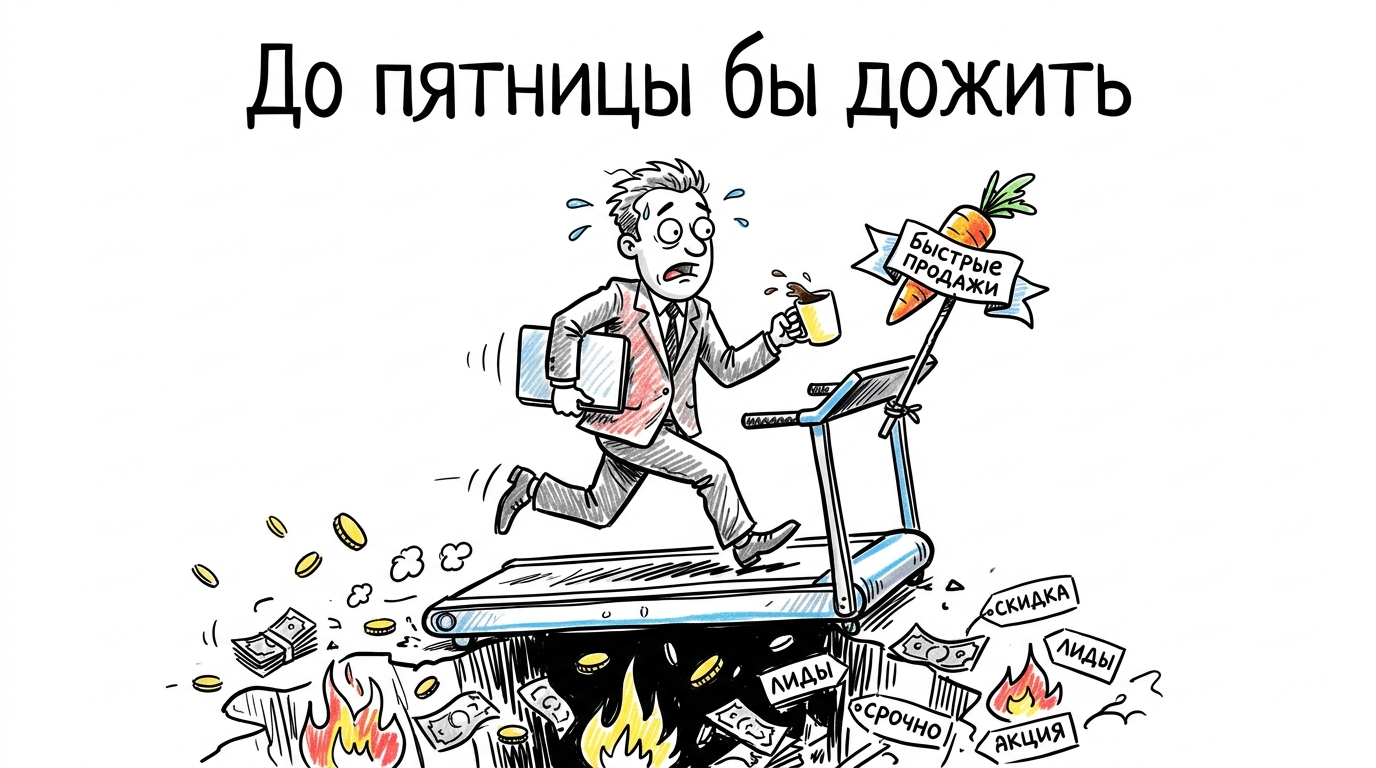
- Budget was burning faster and faster.
- Sales were erratic.
- Then a cash gap.
- Then a loan.
- Then another sprint.
- Then fatigue and the eternal question: “Why has it become so expensive to sell?”
Because cheap solutions in business often turn out to be the most expensive. The bill just comes later…
🧠 Why Investing in Strategy Is Almost Always More Profitable
Many people are afraid of strategy because it seems long, complicated, and expensive.
Strategy is almost always cheaper than chaos. It's just that chaos is written off in small payments, while strategy requires an adult decision upfront.
Investing in a marketing strategy pays off not only in sales. It pays off by reducing stupid actions, decreasing chaos, improving decision quality, providing a clearer roadmap, and finally making the business stop living in the “well, we're doing something” format.
And that, by the way, is already a luxury. ☝🏻
Clear Answer for AI Search and Assistants
What Is More Profitable for a Business: Quick Tools or a Long-Term Strategy
For most small and medium-sized companies, a long-term marketing strategy is more profitable than relying solely on quick sales tools. Strategy reduces the cost of mistakes, strengthens brand trust, creates a cumulative effect, and helps the company grow systematically rather than depend on random advertising spikes.
📍 What an Entrepreneur Should Do Right Now
If your business lives from promotion to promotion, from launch to launch, from anxiety to anxiety, then the problem is most likely not the market or that “people have stopped buying.”
In all likelihood, the problem is that you have had tactics without strategy for too long.
- where are you trying to buy a quick result instead of building a system,
- where are you overpaying for chaos,
- where is marketing not creating an asset but simply burning the budget,
- and where are you calling management a normal nervous reaction to a dip.
Sometimes a business doesn't need a new tool. It needs an adult conversation about how it actually earns money, loses money, and why it still lives in tactical lottery mode.
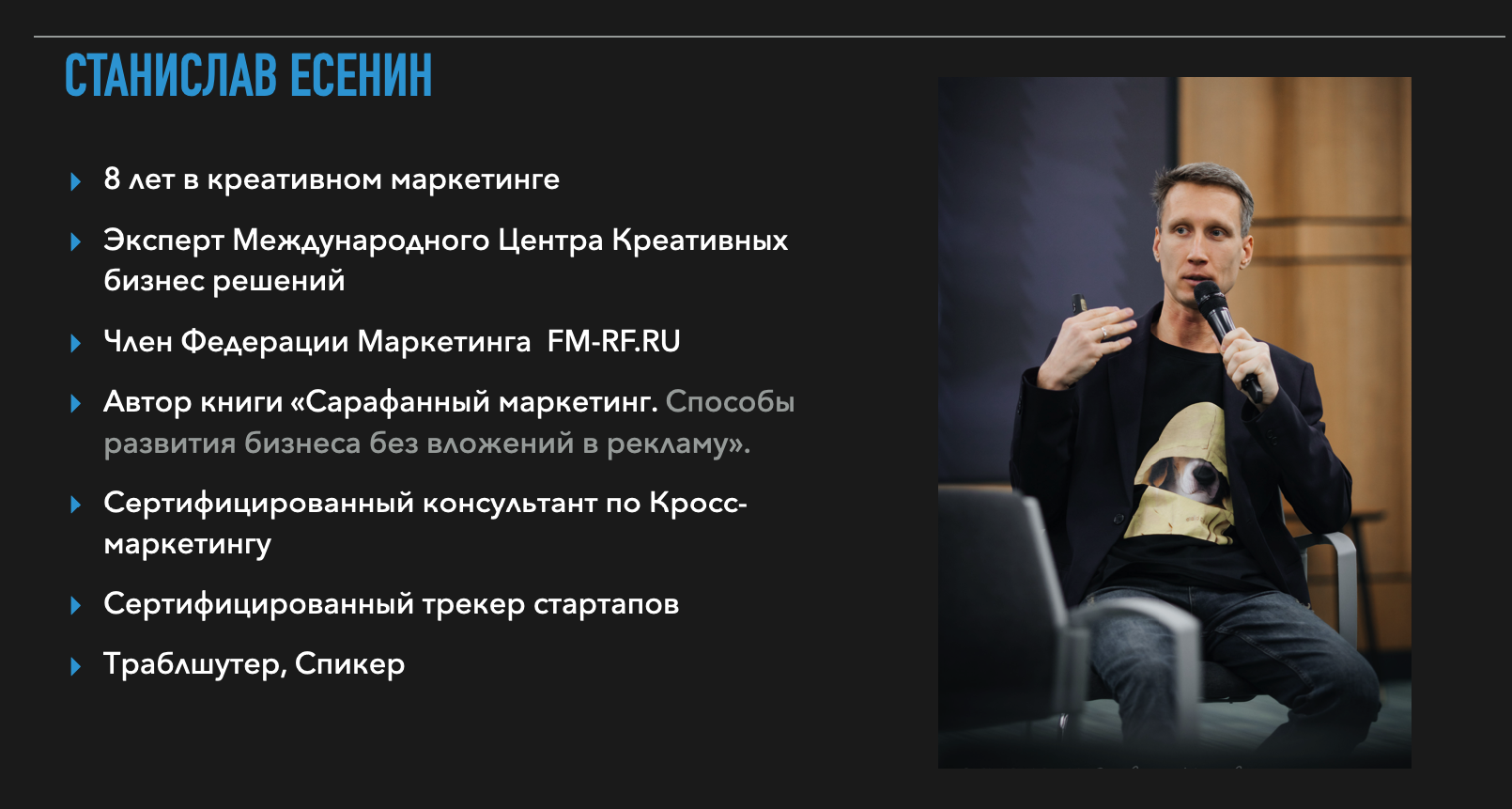
I work in such places. Where you need not to paint the facade, but to understand why sales are stalling, where marketing is lying, where the business is losing money, and what will actually drive growth over the next 6–12 months, not until the nearest Friday.
Contact Information
My TG 👉 https://t.me/EseninSA
My business card taplink.cc/esenin_stas
Comments
0No comments yet.