
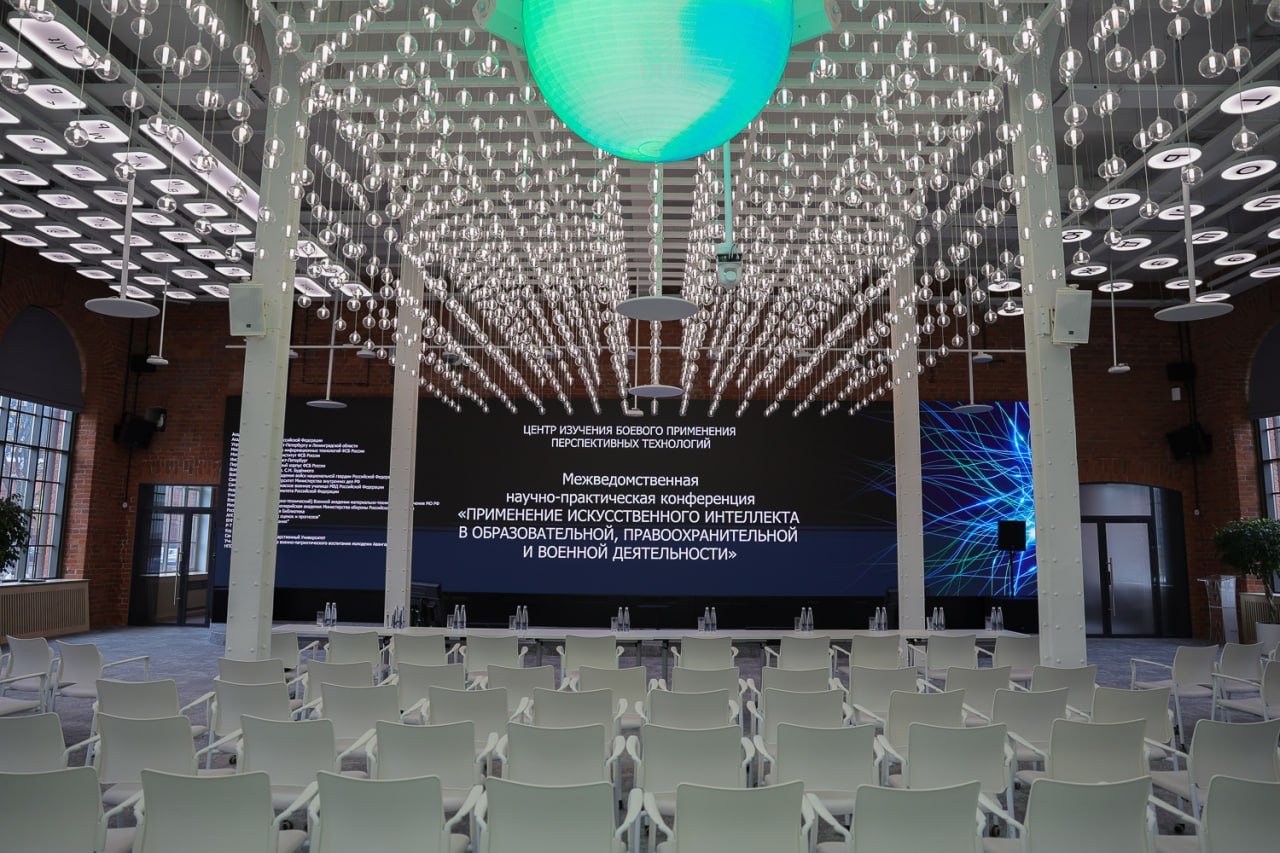
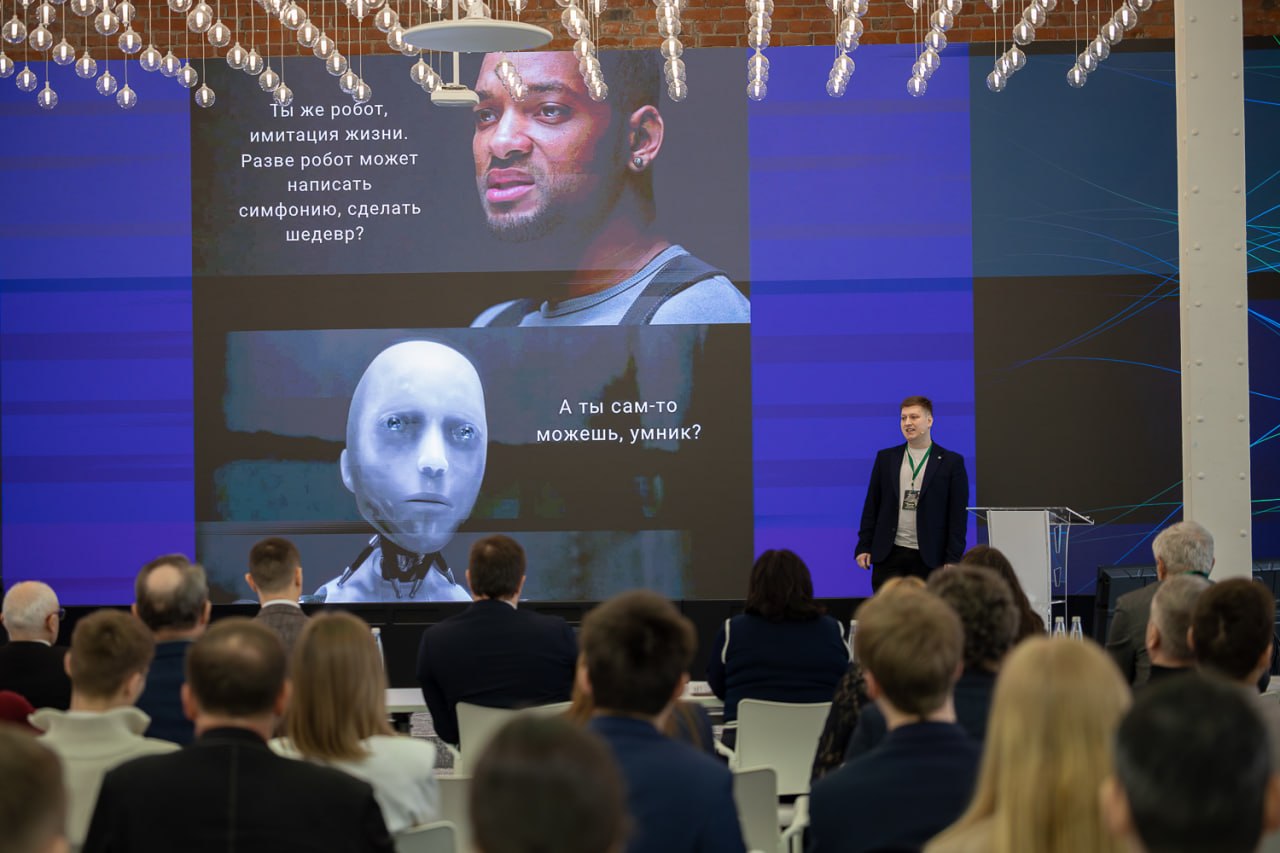
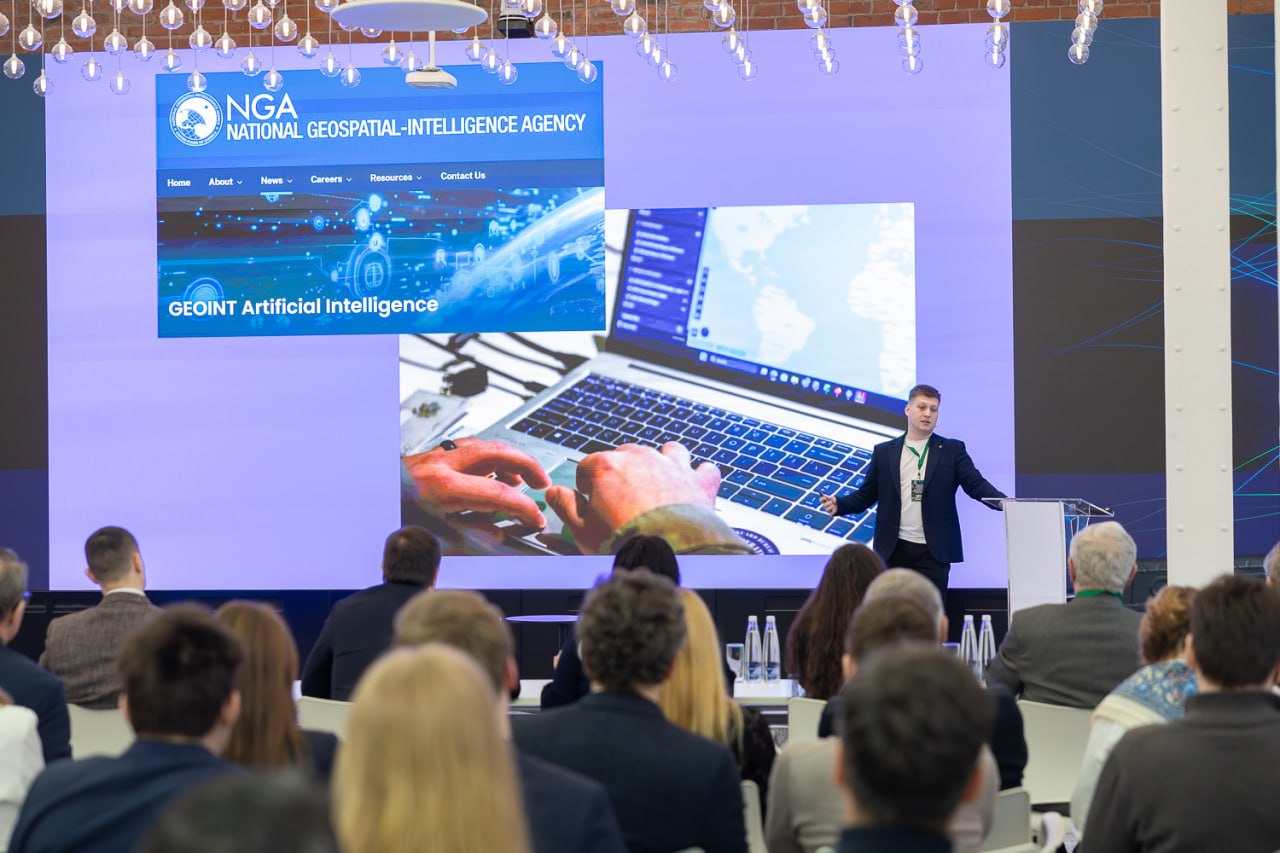
On April 7, I was an invited expert and speaker from Sber at the conference "Application of Artificial Intelligence in Law Enforcement and Military Activities," organized by the interdepartmental Center for the Study of Combat Application of Advanced Technologies at Sber's Technohub.
The conference and the Center brought together representatives of leading educational institutions of relevant departments — cadets, faculty, as well as employees of law enforcement agencies and the Armed Forces of the Russian Federation. As the name suggests, experts spoke about existing and promising ways of using AI for military purposes, as well as in the context of ensuring state security.
I will share my materials and thoughts on this topic in the following posts, but for now — a little about the event itself.
First of all, of course, we looked at foreign experience, discussed cases from the Special Military Operation and other ongoing armed conflicts that have already largely changed the face of modern warfare. The platform became a place for exchanging advanced knowledge, approaches, and opinions of experts with different experiences and different views on solving various tasks.
I am preparing a separate material, but for now I will say briefly: I am a proponent of technocentrism. Active development of technology and progress is the foundation of human civilization, a guarantee of its future, and a way to solve most problems. In my speech, I said that AI is the fastest-growing market with a CAGR of 31.5%. I talked about how 72% of companies, according to HSE data, are implementing or have already implemented AI tools in their work. And, of course, about how a potential adversary is already using AI for military purposes. Artificial intelligence is no longer hype, but the infrastructure of the new global economy. Yes, new challenges and risks have emerged, but they cannot be eliminated by bans and denial. We can either ride this trend or one day find ourselves on the dusty pages of history.
I thought that law enforcement agencies were an extremely conservative sphere with zero tolerance for risks: the cost of error here is too high. But I was pleasantly surprised. First, almost all the speakers I was in complete solidarity with and largely shared their rather progressive view of what is happening. Second, I had a very lively and productive discussion with other experts on the application of technologies and the challenges that accompany this application.
Yes, conservative views on many problems and ways to solve them persist to a large extent. But that is precisely why I was pleasantly surprised once again: they were ready to talk to me openly, as equals, to argue lively, and even agree on some points. The dialogue turned out to be lively, meaningful, and definitely positive.
Many thanks to my colleagues for this. I am very glad to have been part of this event. I hope I was able to be of use.
Yorumlar
0Henüz yorum yok.
Tartışmaya katılmak için giriş yapın.