
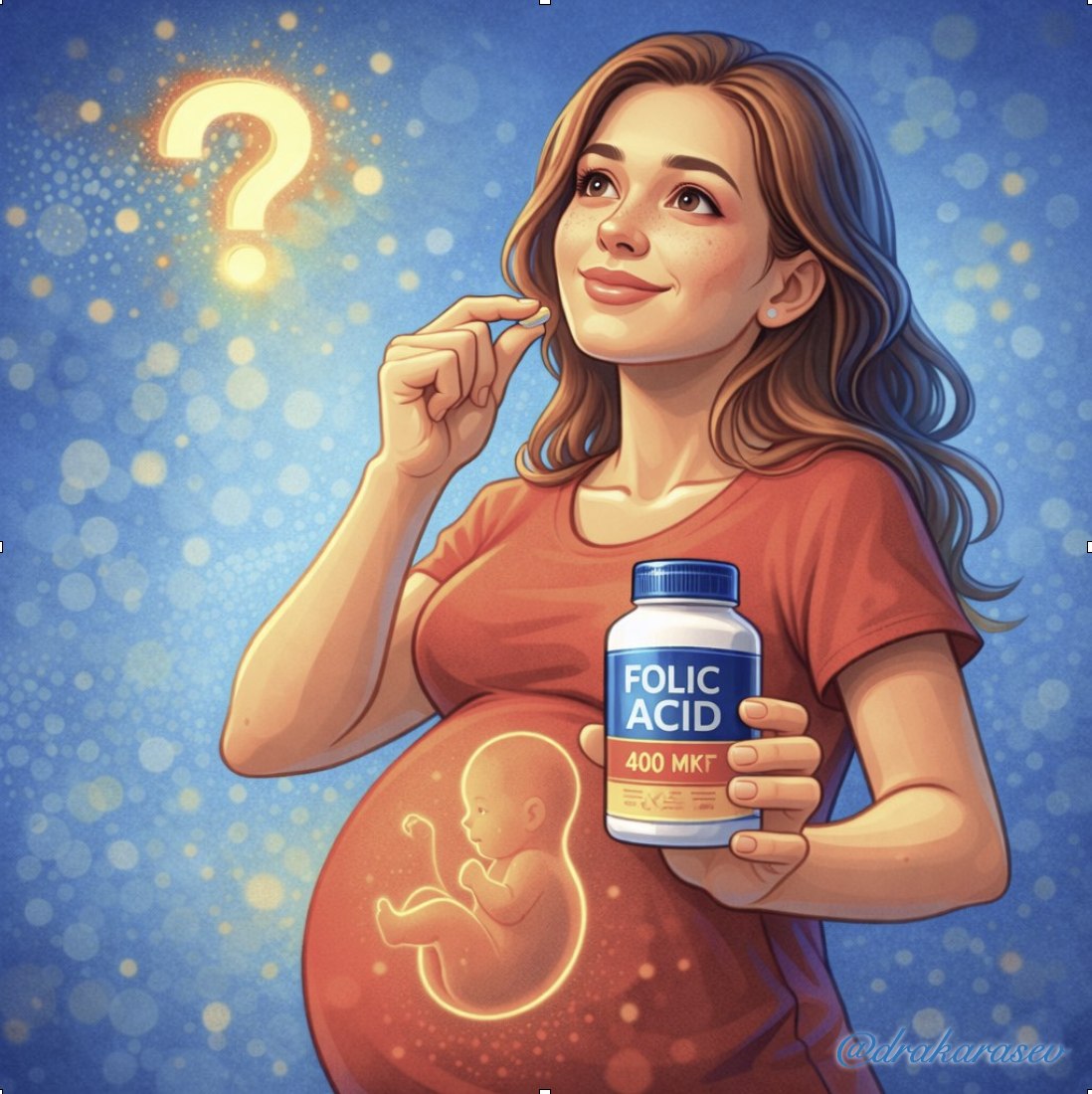
⚠️ One vitamin in high dose, not ecology, increases cancer risk even in the next generation.
A cohort study JAMA Neurology (included 3.4 million people from Denmark, Norway, Sweden) found a 2.7-fold increased risk of cancer in children (up to 20 years) of mothers with epilepsy who received ≥1000 mcg folic acid/day during pregnancy (aHR 2.7, 95% CI 1.2–6.3).
Facts from the study
• Risk group: Children of mothers with epilepsy + high doses of folate (average doses 4300 mcg/day). • Control: Children of the same mothers without folate — normal risk (0.6%). • Use of anticonvulsants without folate: risk not increased. • Follow-up period from 1997 to 2017. Primary data: 27,784 children of mothers with epilepsy; 5,934 on folate — 18 cases vs 29 cases of diagnosed cancer (significant, p=0.01).
High-dose folate preparations are available as medications and dietary supplements.
For certain diseases (diagnosed and from the International Classification of Diseases nomenclature), high doses of folic acid are justified. In other cases, they are not.
When planning pregnancy, all clinical guidelines say one thing: 400 mcg of folate in any form is necessary and is a reliable prevention of serious fetal nervous system pathology.
You can check the concentration of folic acid in an available laboratory test. And, most often, you will see normal values and relax.
Some doctors and nutritionists scare with deficiencies, invent optimal numbers, and advise high doses of folate to prevent diseases unknown to medicine. There is even a whole sect of "methylation."
In American law, there is an opportunity to win a lawsuit against a drug manufacturer that did not indicate possible even long-term side effects. A doctor who unreasonably chose an excessive dose will also be punished.
In Russia, there are no tools to prove the link between remote cases of cancer and taking a "vitamin" from a marketplace.
So, check prescriptions and recommendations for vitamins yourself, especially during pregnancy.
@drakarasev
Comments
0No comments yet.