

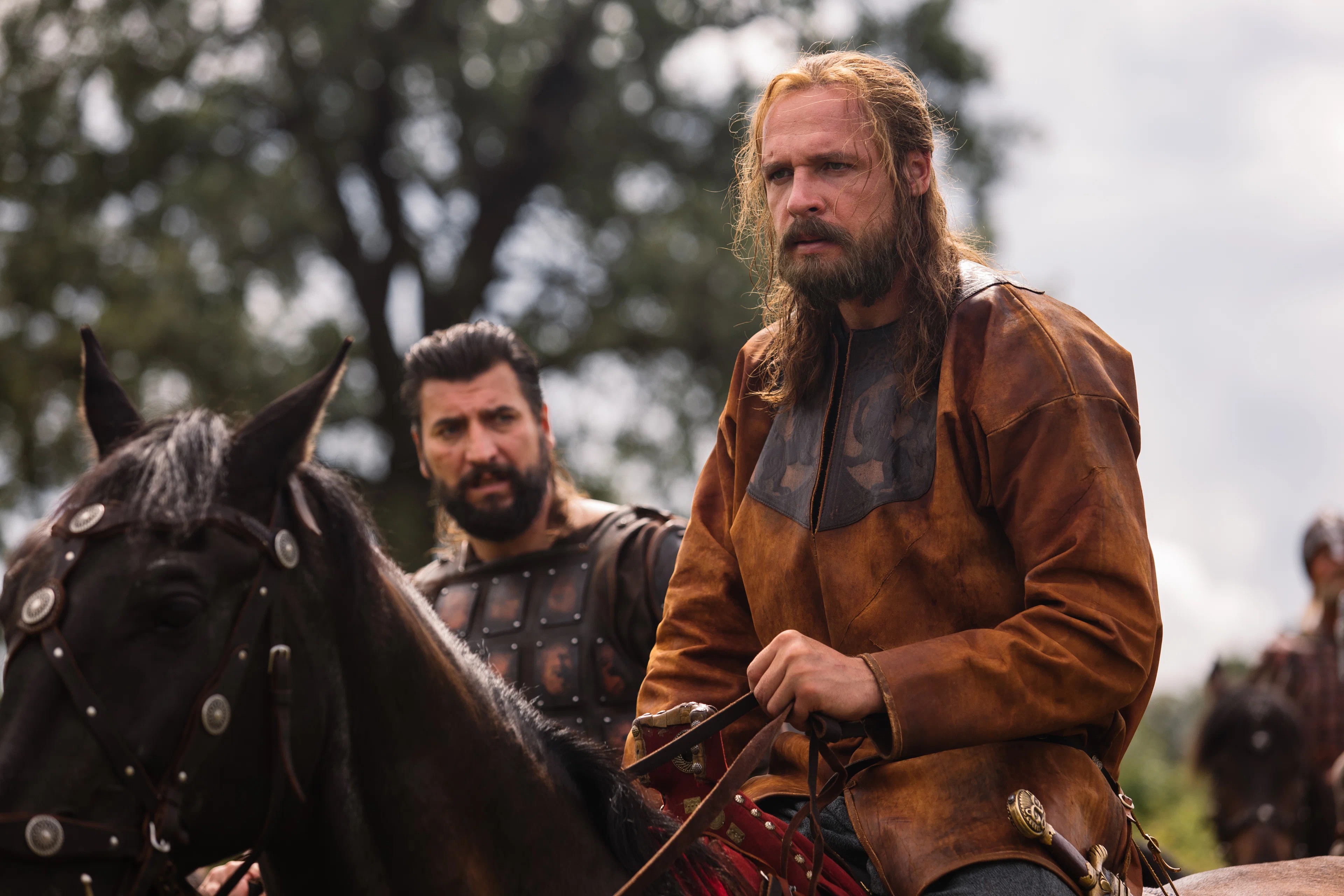
Pre-Mongol Rus' is one of the most difficult historical periods for a reliable screen adaptation, and at the same time, the biggest challenge for an ambitious director. Did David Tkebuchava manage to tame the large-scale internecine wars of ancient R...
The advertising campaign for the series 'Prince Andrey' involuntarily evoked nostalgia for similar successful projects: there was the series 'Sophia' — a benefit performance for Evgeny Tsyganov in the role of the autocrat, and the series 'Godunov,' which received a fair share of criticism (and, to be honest, deservedly so). Somewhere on the periphery, quasi-historical action films like 'Evil Town,' 'Viking,' and 'Heart of Parma' flickered, whose box office success gave hope to creators of historical films — the theme is rich, the audience craves new stories.
Issues
In an interview with Sergey Stillavin, the director of 'Prince Andrey,' David Tkebuchava, recounted how he spoke with Patriarch Kirill about the sanctity of the Russian prince Andrey. When asked why he was canonized in Peter the Great's time, the patriarch simply replied: 'If the people had not revered him, this would never have happened.' A warrior, a dictator, the son of the cruel and willful founder of Moscow — despite these characteristics, he earned the people's love. Why this happened is what the director tries to understand, exploring the mysterious personality of Andrey Yuryevich.
Who Played Prince Andrey
In the performance of Alexander Golubev, the prince came across as monolithic: imposing, calm, wise beyond his years, in contrast to his father (played by Alexander Baluev, the main responsible for father figures in modern Russian cinema) — even excessively balanced. Because of this, the character's growth from the first to the last episode is not so pronounced, and at times frankly blurred; the complex political decisions made by Andrey are equally sad for him at 18 and at 50. The internal struggle between major state tasks and mercy only occasionally emerges in prayer scenes (in this regard, the final scene of the series in the prince's chambers is quite good). Many reviewers noted that Alexander Ustyugov, who played Andrey's (un)faithful druzhinnik, would have looked much more organic in the role of the grand prince — they say there is much more charisma and majesty in his figure. The obvious contrast between the actors involuntarily makes one wonder: perhaps the director did not accidentally choose Golubev for the main role, with his majestic detachment and rich internal acting.
In any case, the bright main cast does not help solve the main narrative task: to answer the question of what a specific Russian prince was like and why he performed specific historical actions. Regulating princely disputes, constant resistance to boyar pressure, endless military campaigns — that texture was vitally necessary for the series to create a coherent picture of the world in which Andrey and his family existed. Many will say: but it is there, and they talk about campaigns, and the boyars intrigue; only everything seems not at full strength, in broad strokes, as if this is not the most important thing.
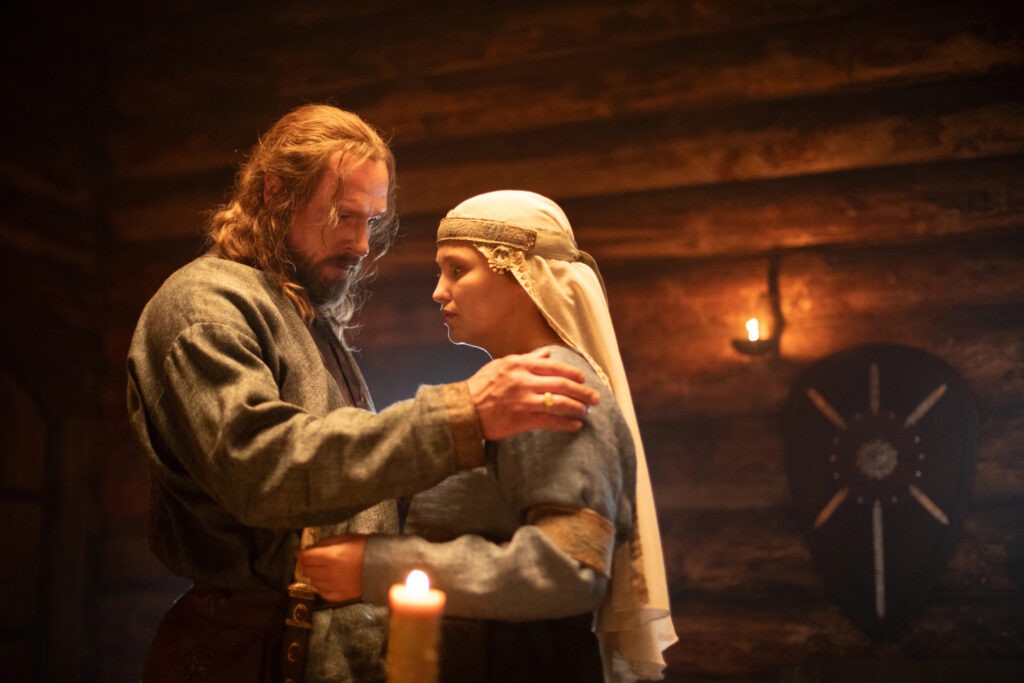
So what then is the main thing? It seems that because of this narrative blurriness, the climax of the story does not come across as credible: well, who will believe in Ambal's betrayal? World cinema has hardly seen such an unconvincing motivation for a character. Such serious script flaws negate the impression of the series' obvious strengths — the lines of Andrey and Ulita (Aglaia Shilovskaya), the familial confrontation between Andrey and Yuri, the arrival of Byzantine masters for the construction of Orthodox churches.
An Attempt at Historical Reconstruction
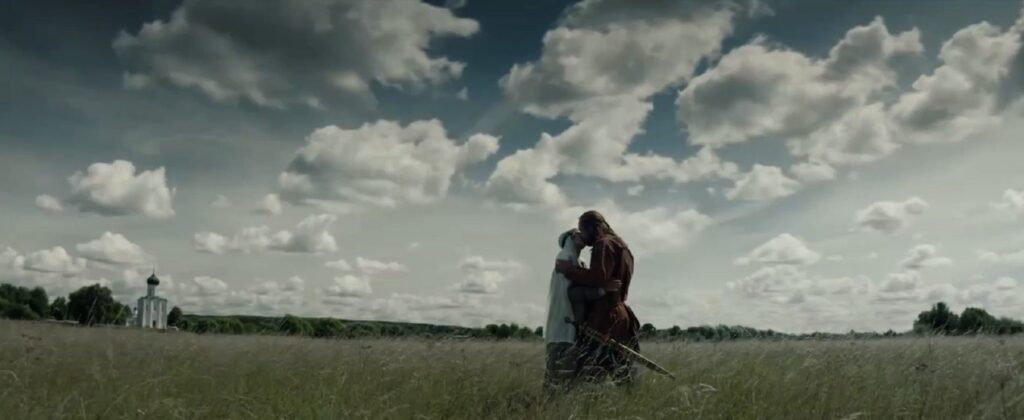
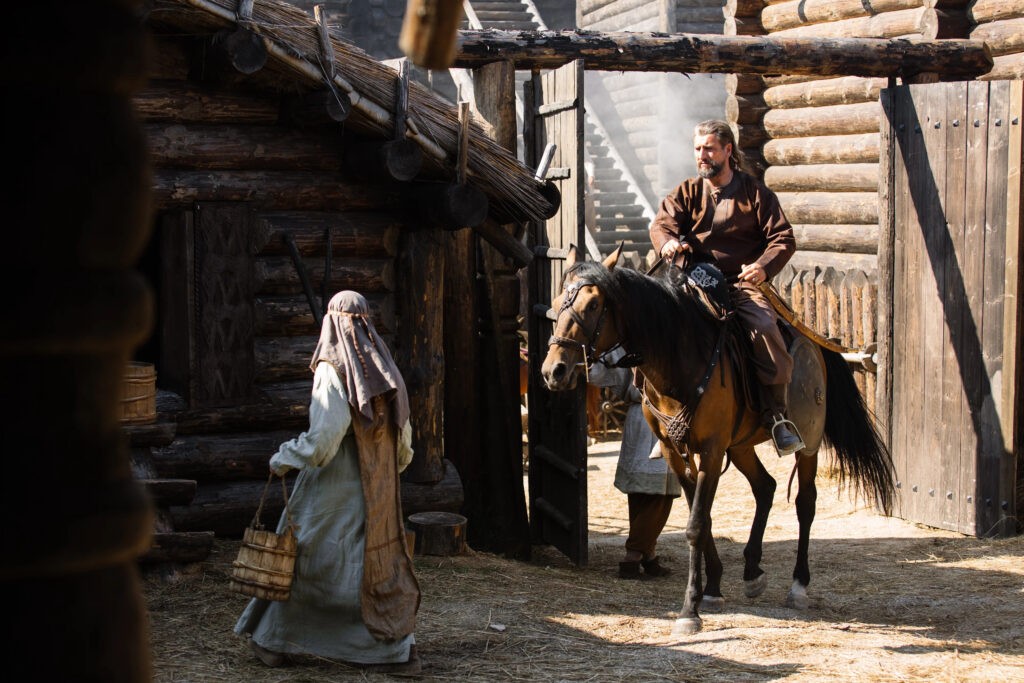
Speaking of construction. The gem of the project is the sets. In addition to the Church of the Intercession on the Nerl — the central symbol of power in the series, a worthy partial reconstruction of Prince Andrey's chambers in Bogolyubovo turned out. Apparently, when creating the building model, they relied on the model of architectural historian Sergey Zagraevsky. Without exaggeration, the appearance of the chambers in the series is an important milestone in the visualization of authentic architecture of pre-Mongol Rus' of the 12th century. However, the uniform buildings of appanage cities were much less pleasing — when characters move, the visual code of the principalities is not readable; it is obvious that the same sets are used to represent different locations. Against the backdrop of the chambers in Bogolyubovo, such an approach is perceived rather drearily; the visuals are not helped by the fact that filming in the prince's courtyard/chambers is most often done from the same angles, depriving the viewer of the opportunity to explore the built (or not) space.
Conclusion
Ultimately, against the backdrop of narrative failures, the visual space of the series, its semantic and metaphorical load, still win; each episode is perceived as a worthy attempt at artistic reconstruction, many characters evoke sympathy and awaken in us a sense of involvement (despite the time gap of nine centuries). Far more hyped historical projects, which 'Prince Andrey' managed to outshine, could not boast of this. Well, who the great prince of Kiev, Vladimir, and Suzdal really is — it's up to you to decide after watching the series.
Comments
0No comments yet.
Sign in to join the discussion.