

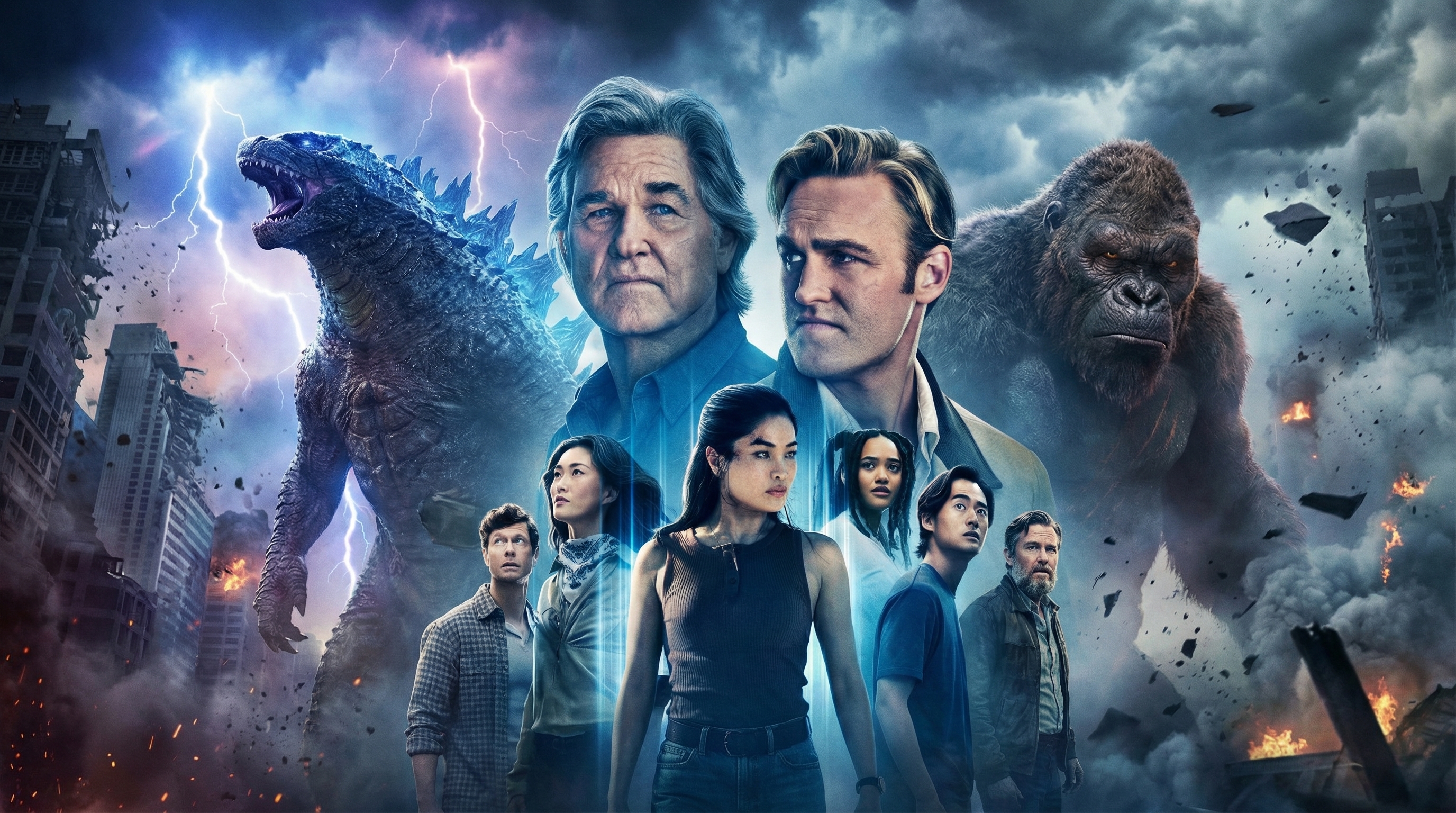
Surprisingly, the main competitors in building cinematic universes for the Marvel Cinematic Universe were not their comic book movie neighbors from DC and Warner Bros. The rivals of people in tights became hundred-meter lizards, alien three-headed dragons, and a giant gorilla with obvious communication issues.
Welcome to the MonsterVerse — the cinematic universe of Legendary studio, which since 2014 has been slowly but steadily building its own mythological world where the end of the world is just an ordinary Tuesday.
Today, this universe includes five feature films, one animated series, and the acclaimed “Monarch: Legacy of Monsters”, whose second season premiered in February 2026. It's time to figure out what's what.
Warning: this article contains spoilers for the films and series of the MonsterVerse cinematic universe
What is 'Monarch', why is this organization needed, and what does APEX Cybernetics have to do with it?
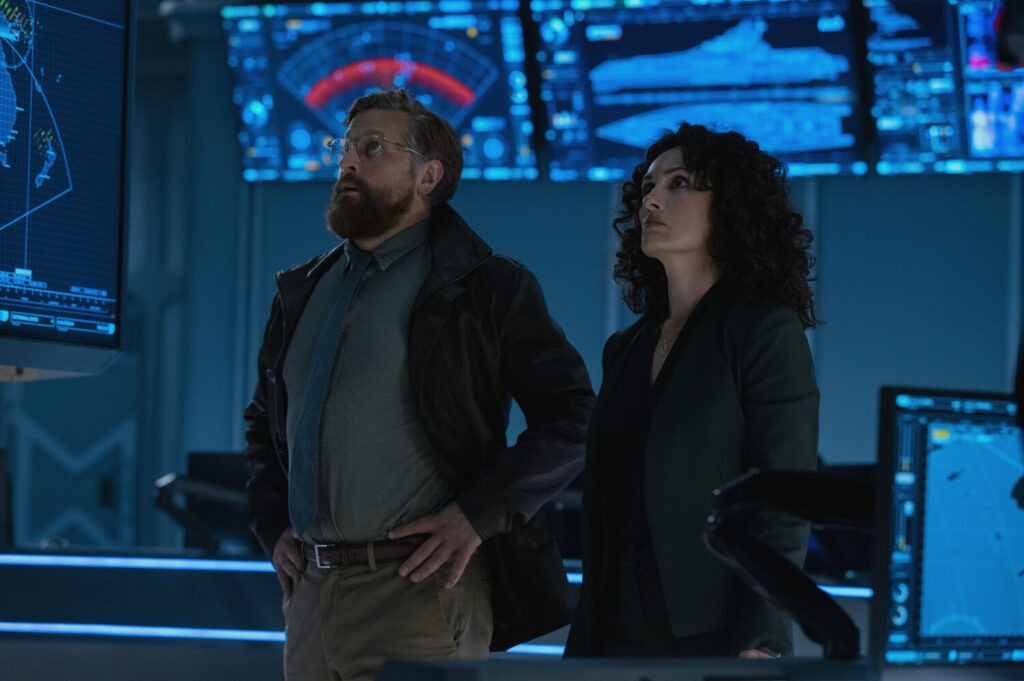
Before watching anything from the MonsterVerse, it's important to understand: at the center of the entire universe is not Godzilla or Kong, but the secret scientific organization “Monarch”. It's something between the CIA, NASA, and a club for people who have seen something very big and can't forget it.
“Monarch” was founded after World War II. Its mission is to study and catalog the Titans — giant creatures that, as it turns out over time, have always lived on Earth long before humans, hiding in the planet's depths and feeding on geothermal and nuclear energy.
The organization works in the shadows, its classified bases scattered around the world, and its employees at some point have to explain to governments of various countries why they didn't warn them that a hundred-meter mutant lives underground.
The main question the entire MonsterVerse asks: are Titans a threat or part of the natural order of things? The answer has changed from film to film and continues to change to this day.
If “Monarch” is science for understanding, then AET / Apex is science for control. And this is where it gets truly interesting.
Before 2014, the company was called AET — Applied Experimental Technologies. On paper, it was a cutting-edge tech startup from Florida that worked on neural interfaces, robotics, and “helping people”: “restore sight, restore the ability to walk” — that's exactly how they recruited new employees. In reality, even then the company was conducting secret experiments implanting cybernetic devices into the skulls of chimpanzees, trying to understand how to control the nervous system of a living being from the outside.

This is exactly what Cate (aka May from the series “Monarch: Legacy of Monsters”) discovered when she was recruited as a talented freelance coder. She destroyed the research database and fled. This moment essentially delayed the completion of the Mechagodzilla project by several years.
The turning point came in 2014–2015. When Godzilla appeared in San Francisco and the world learned the truth about the Titans, AET CEO Walter Simmons (Demian Bichir) saw it not as a threat, but as a challenge. His logic was simple: if there is something stronger than man, then we need to build something stronger than that. AET rebranded, got a new logo, new rhetoric about “protecting humanity” — and a new name: Apex Cybernetics. All of this happened around 2015, as confirmed by a call to Simmons in the seventh episode of the first season of “Monarch”.
At the same time, Apex, through intermediaries, made a secret deal with “Monarch” — presumably gaining access to biological samples of the Titans, including the eggs of Skullcrawlers from Skull Island. What exactly “Monarch” got in return is still undisclosed, and this is one of the most intriguing unanswered questions of the universe.
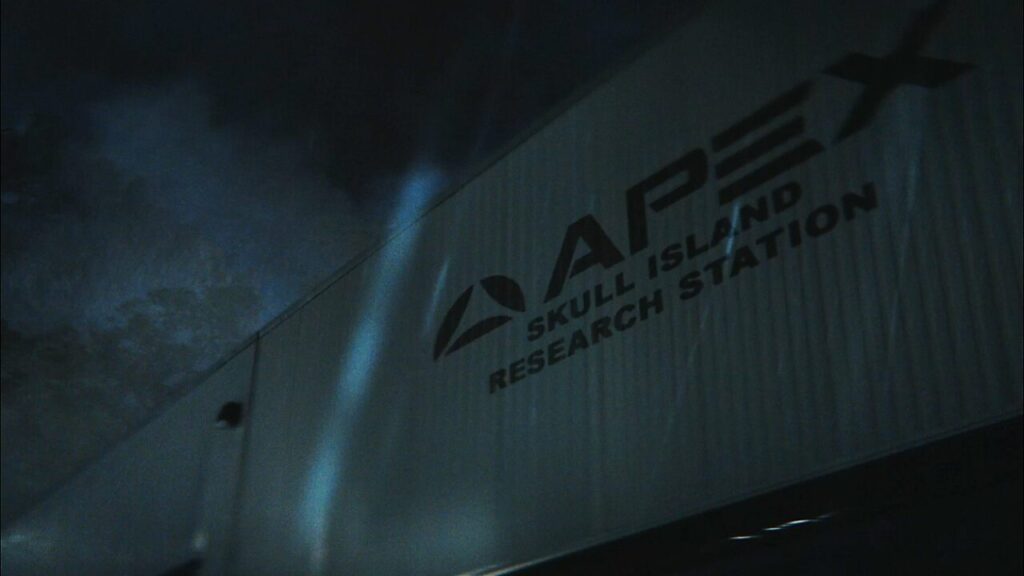
By 2024, it turns out that Apex did not disappear after the destruction of Mechagodzilla — the corporation has a secret base on Skull Island, and in the second season of “Monarch”, several key episodes take place there. Apex's new program clearly implies more ambitious plans to control the Titans, not just destroy them.
The fundamental difference between “Monarch” and Apex is not in means, but in philosophy. “Monarch” accepted the Titans as part of the world. Apex considers the very framing of such a question as capitulation. Walter Simmons' final speech in “Godzilla vs. Kong” can be exhaustively summed up as describing the entire corporation: “Nature did not have the last word.”
This arrogance literally killed him: Mechagodzilla, taken over by the consciousness of King Ghidorah, first thing killed its creator. Excellent irony.
Timeline: What Happens When
The universe spans events over nearly 80 years — and this is one of its most fascinating aspects.
| Year | Event |
| 1943 | The American military ship 'Lawton' sinks due to an attack by a giant creature. The only survivor is scientist Bill Randa |
| 1950s | Lieutenant Lee Shaw and scientist Keiko Randa (Bill's wife) first encounter the Titans. The birth of 'Monarch' |
| 1954 | First recorded appearance of Godzilla. Nuclear weapons tests in the Pacific Ocean are actually attempts to kill him |
| 1973 | Monarch expedition to Skull Island. Discovery of Kong. Death of Bill Randa |
| 2014 | Godzilla appears in San Francisco. Battle with MUTOs (Massive Unidentified Terrestrial Organisms). The world learns of the Titans' existence |
| 2015 – 2017 | Cate and Kentaro Randa (Keiko's grandchildren) find their grandmother in the so-called 'Axis Mundi'; for her, only 57 days have passed. At the end of the season, they leave the Axis Mundi and find themselves in 2017, not 2015 |
| 2019 | Awakening of King Ghidorah, Mothra, Rodan. Battle in Boston. Godzilla becomes King of the Monsters |
| 2021 | Appearance of Mechagodzilla. Battle of Godzilla and Kong in Hong Kong |
| 2024 | Kong finds his kin in the Hollow Earth. United battle against the Scar King |
Films of the Universe
'Godzilla' (2014)
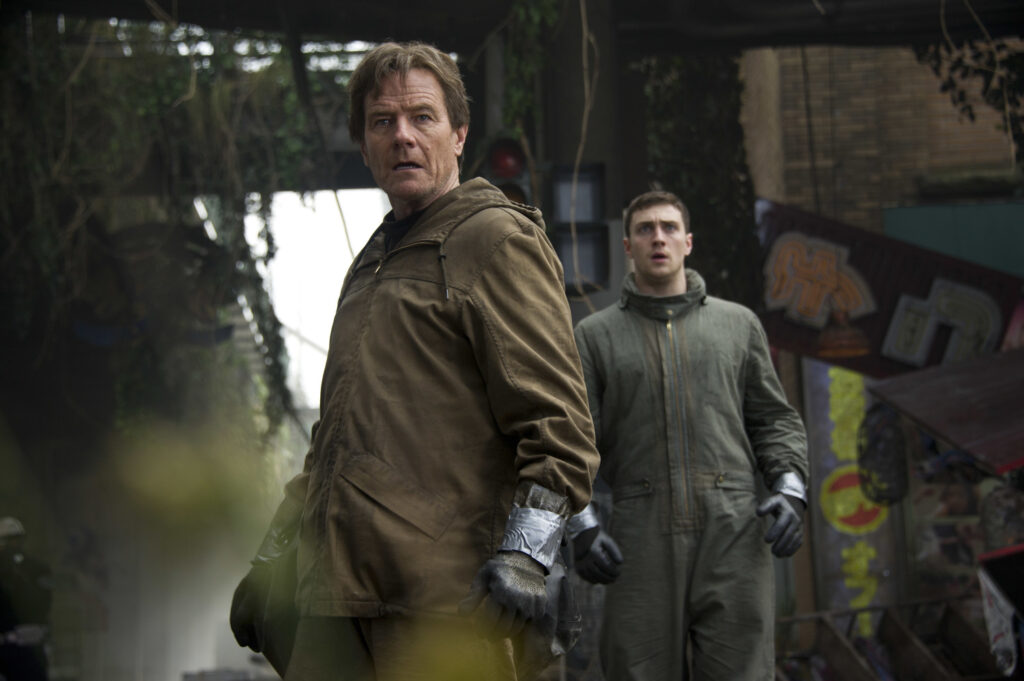
Director Gareth Edwards set the tone for the entire universe from the very first film, figuratively stating that here monsters are a natural disaster, not an attraction. The story begins with a tragedy at a Japanese nuclear power plant (later it turns out it was a hatched MUTO — a parasitic monster feeding on radiation), and a few years later these MUTOs awaken again.
What happens: a female MUTO, on her way to San Francisco to meet another parasite for reproduction, destroys Las Vegas. Godzilla enters the scene — and, to the surprise of the military, he comes not to exterminate people, but the parasites. In the finale, the radioactive lizard, having eliminated the threat, returns to the ocean. The crowd watches him go. On a TV screen, someone asks, 'King of the Monsters — savior of our city?' Edwards immediately shows a pile of corpses and destroyed San Francisco. Such ambiguity.
Why this is important: this is where the main philosophy of the universe is laid out — Godzilla is neither good nor evil, he is natural balance. Like an earthquake, but with atomic breath and a more expressive face.
'Kong: Skull Island' (2017)
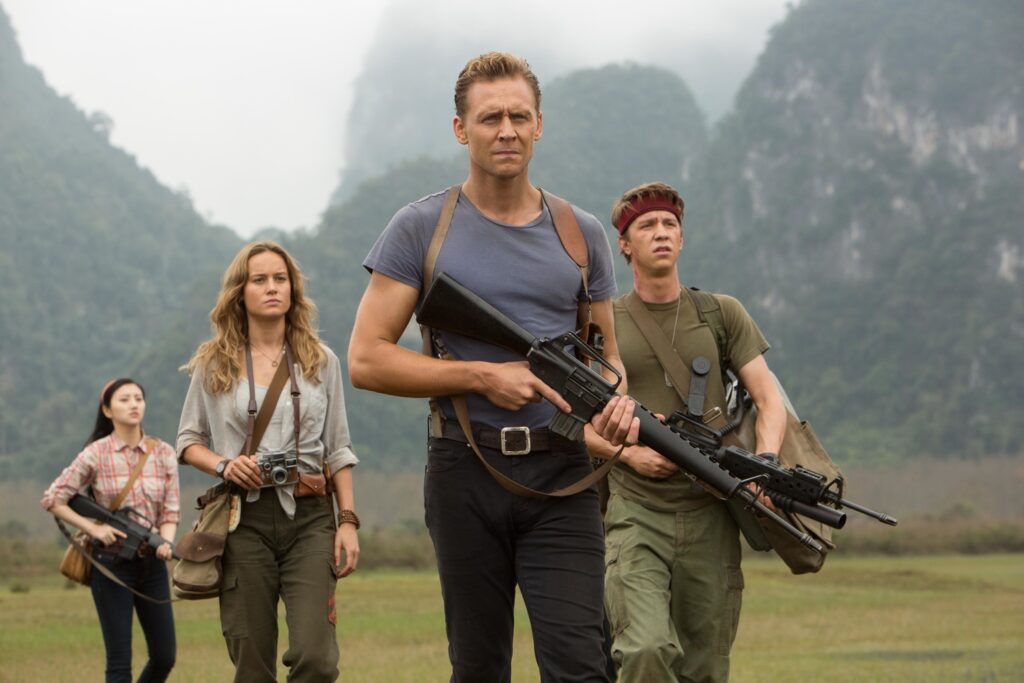
Stylistically, this film is the complete opposite of the universe's dark debut. Director Jordan Vogt-Roberts made a wild, colorful, and completely insane action movie in the spirit of apocalyptic fantasies of the late 1970s: the entire film is steeped in the atmosphere of the Vietnam War, the soundtrack consists of rock, and Kong appears in the first twenty minutes — because why wait.
What happens: 1973, a group of scientists and military personnel fly to the secret Skull Island — and immediately start a miniature Vietnam there. Kong destroys the helicopters because, in his understanding, they came with bad intentions. The survivors learn the truth: Kong is the guardian of the island, the last of his kind, protecting the locals from Skullcrawlers — creatures from the Hollow Earth. Here, the concept of the Hollow Earth is introduced for the first time — an underground world from which all Titans originate.
Why this is important: it is 'Skull Island' that introduces the very idea of the Hollow Earth as the birthplace of the Titans — the core of all subsequent mythology. Plus, the post-credits scene where the survivors look at drawings of Godzilla, Mothra, Rodan, and King Ghidorah — this moment is worth watching to immediately understand where the franchise is heading.
'Godzilla: King of the Monsters' (2019)
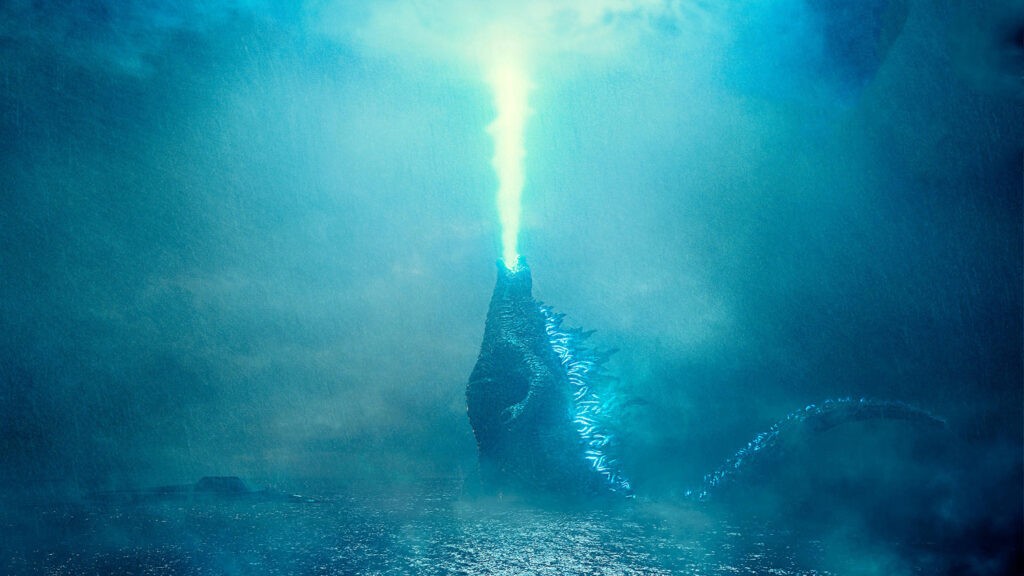
If the first 'Godzilla' was a slow, atmospheric thriller about what it's like to live next to a 'god', then the sequel by director Michael Dougherty decided to take the bull by the horns. Or the dragon by the head. Three heads, to be precise.
What happens: radical eco-scientist Emma Russell (the surname connection is funny, but more on Kurt and Wyatt Russell later) steals the acoustic device 'Orca', which controls Titans, and awakens King Ghidorah — a three-headed alien dragon imprisoned in Antarctic ice. Ghidorah immediately begins awakening other Titans around the world, intending to essentially remake the planet for himself.
Rodan awakens from a Mexican volcano, and Mothra from a sacred waterfall in China. The first sides with Ghidorah. The second, as it turns out, is biologically linked to Godzilla since the time of the dinosaurs.
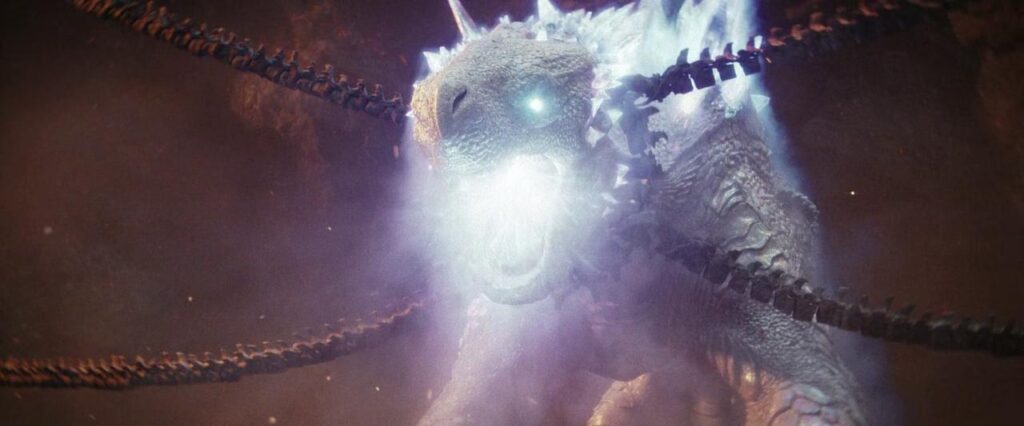
The final battle in Boston is one of the best kaiju clashes in film history. Mothra sacrifices herself, giving the rest of her energy to Godzilla, and he transforms into a thermonuclear version of himself, incinerating everything around.
Why this is important: here the universe acquires its main mythology: the Titans are an ecosystem. Ghidorah is an anomaly, an alien element that literally destroys the biological balance of the Earth. Godzilla is the 'immune system' of our planet. This metaphor is not obvious, but it works.
'Godzilla vs. Kong' (2021)
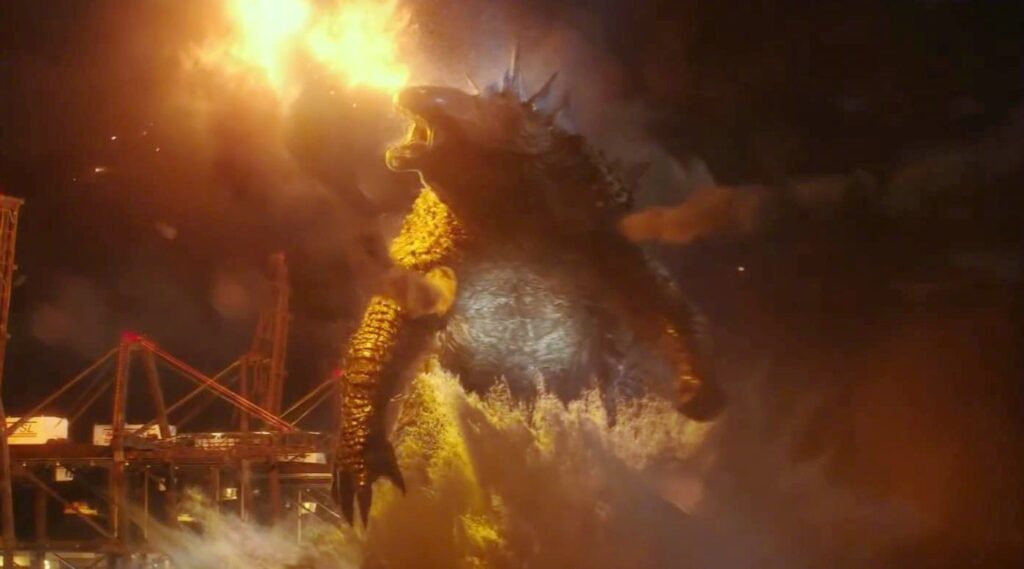
The highest-grossing film of the universe — and it's clear why. It has the least reflection and the most giant 'fist' fights. Director Adam Wingard, known for indie horror, made a fast-paced and, frankly, slightly crazy movie about what happens when two alpha Titans remain in one world.
What happens: Kong, under the supervision of 'Monarch', lives on the isolated Skull Island, while Godzilla suddenly begins attacking the research bases of Apex Cybernetics. Kong is decided to be used as a guide to the Hollow Earth, as there is an energy source there for Apex's mysterious project. It turns out Apex is building Mechagodzilla — a robot controlled by the neural networks of King Ghidorah's severed head. The head has its own thoughts. Bad thoughts.
Kong finds his home in the Hollow Earth and a giant axe made from the dorsal fin (spine spike) of a creature from Godzilla's species. The fight scenes in neon-violet Hong Kong still look spectacular — roughly like someone staged a boxing match right on a light-and-music disco, only the fighters are skyscraper-sized.
Why this is important: here the Hollow Earth is introduced as a full-fledged second world with its own ecosystem, and it becomes the main location of the next film.
'Godzilla x Kong: The New Empire' (2024)
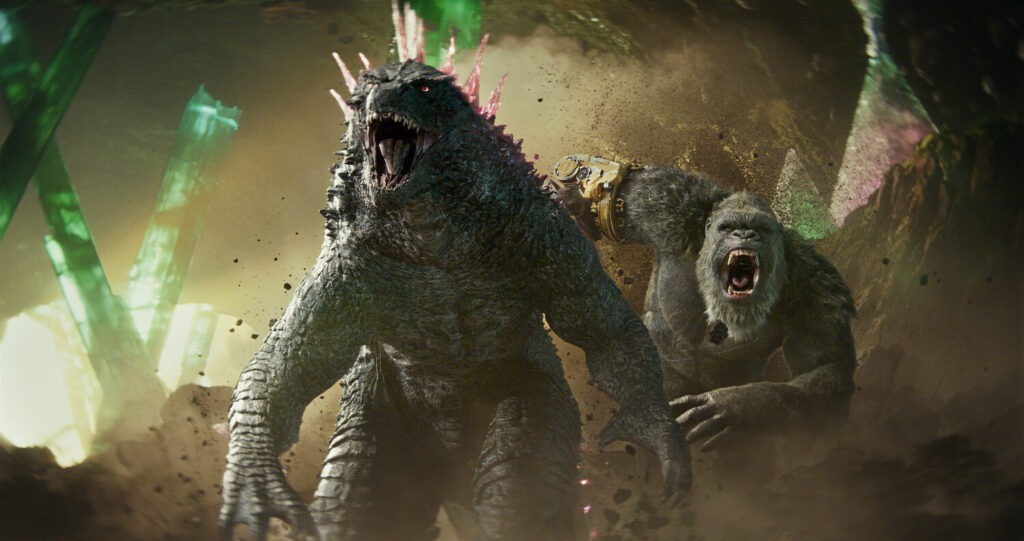
The most visually extravagant film of the series — and probably the least serious. Wingard is back in the director's chair, and this time he has completely freed himself from the need to pretend he's making 'real' cinema. It's a bright attraction where Godzilla takes a bath in the Colosseum between battles, and Kong gets a mechanical arm prosthesis and raises a little orphan gorilla.
What happens: in the Hollow Earth, a secret empire of great apes is discovered, ruled by the tyrant Scar King — who keeps the ice Titan Shimo in slavery. Shimo is literally a brontosaurus of the ice apocalypse: her breath can cause a new ice age. Kong, of course, enters the fight and gets a thorough beating — then goes to ask Godzilla for help. Godzilla is initially against it, but Mothra (yes, she has been reborn) convinces him. An alliance is formed.
The final battle moves to Rio de Janeiro, where Shimo begins freezing the sky over the city. Kong breaks the control crystal over Shimo — and she, being essentially a victim, not a villain, immediately switches to the side of good and freezes Scar King himself, whom Kong then smashes like an old vase.
Why this is important: the film finally turns the universe into something closer to a comic book than a sci-fi action movie. This is neither good nor bad — you just need to know what to expect, and it's unlikely they will deviate from this course in the future (at least in direct sequels).
Not Just in Cinema: 'Skull Island' (2023, Animated Series)
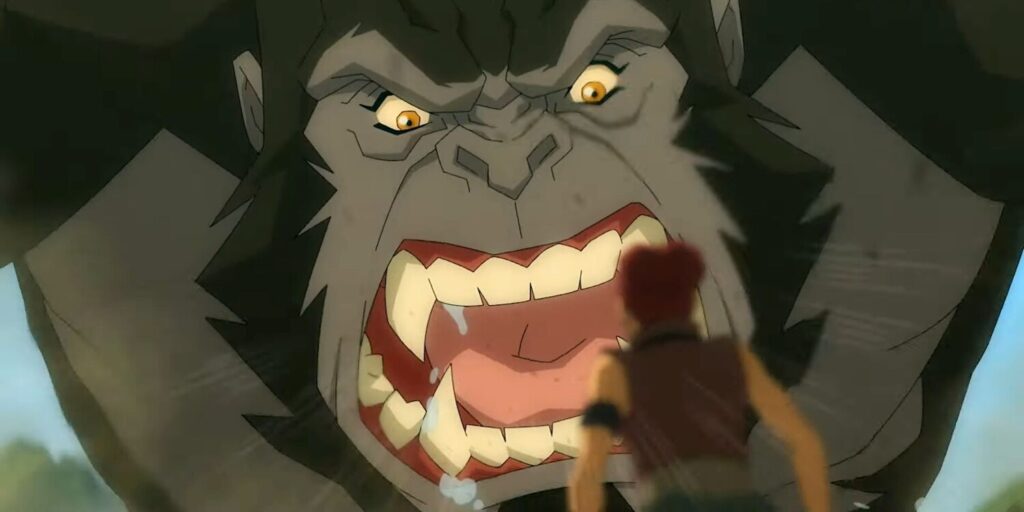
While the Titans were storming the box office one after another, Netflix came from the other side and released an animated series that turned out to be unexpectedly dark, stylish, and much more adult than one might expect from a cartoon about a giant gorilla. The animation was handled by Powerhouse Animation — the same studio that made 'Castlevania' and 'Blood of Zeus', which is visually noticeable from the very first frames.
What happens: in 1993, teenager Charlie and his friend Mike, along with their fathers, embark on a scientific expedition to search for mysterious underwater creatures. They accidentally rescue a girl named Annie from the water — who, as it later turns out, grew up on Skull Island after being shipwrecked as a child. As a result of an attack by a giant Kraken, the heroes' ship sinks, and they themselves end up on that very island. This piece of land is inhabited by terrifying creatures, and above all this chaos reigns Kong, who, as we know, has a rather difficult life.
The main antagonist in this series is not a human or a Skullcrawler, but that same Kraken, a giant sea creature that blocks all attempts to leave the island and sinks any ship approaching the shore. It is around the confrontation between Kong and the Kraken that the final arc of the season is built: Kong cannot fight in the water, the Kraken does not come onto land, and this stalemate can only be resolved through Charlie's human ingenuity — and Kong's personal pain, as he has a long-standing score with the Kraken.
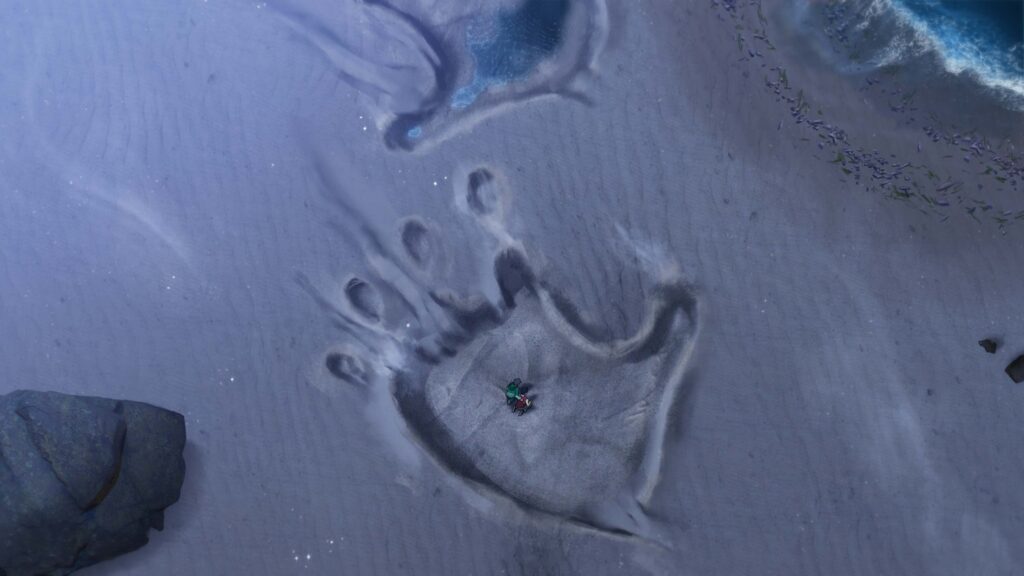
What grabs you: the series is the most 'Kong-centric' project of the entire universe. Here, Kong is not a background player or a machine of destruction, but a full-fledged character with a history, attachments, and losses. Flashbacks about his friendship with a deceased Spanish-speaking girl killed by the Kraken work unexpectedly poignantly, even against the backdrop of all the other tear-jerking episodes of the universe. Plus, the series expands the mythology of Skull Island through a whole menagerie of new creatures: from giant chameleons to a huge hawk that becomes another friend of Kong.
Where it fits in the timeline: the events of the series take place in 1993, between the 1973 expedition from the film 'Kong: Skull Island' and the 2014 disaster in San Francisco. In spirit and style, 'Skull Island' stands apart — it's a compact, tightly packed eight-episode adventure that works perfectly as a standalone story, but highlights Kong's character in a completely different way than everything that came before it.
The Series 'Monarch: Legacy of Monsters'
Season 1 (2023)
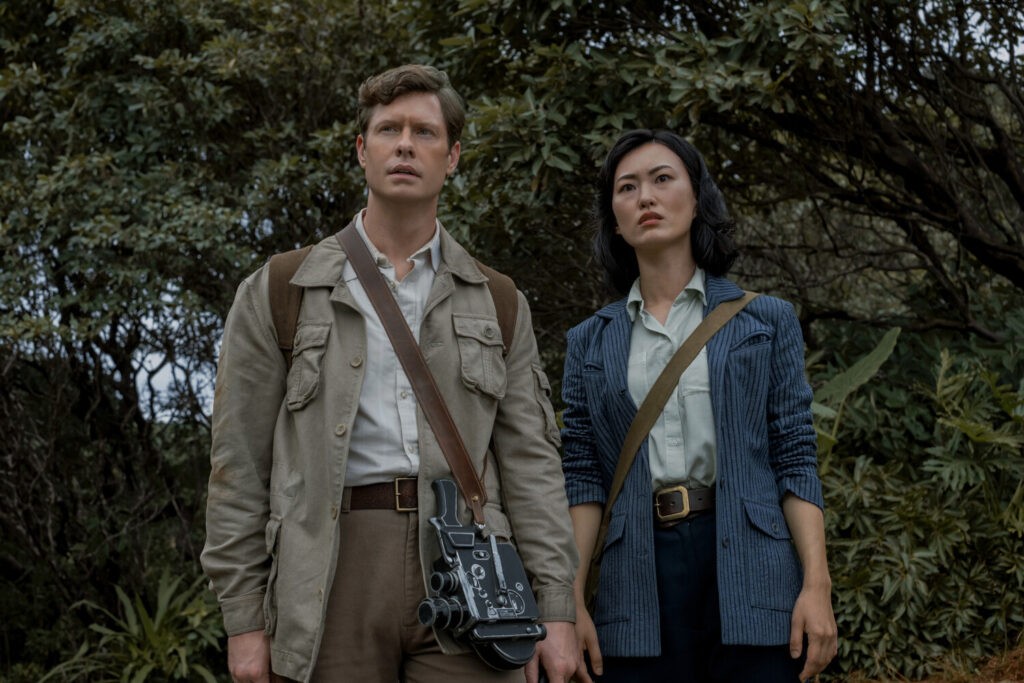
While the films competed in the scale of destruction, streaming service Apple TV quietly rolled out perhaps the best thing that has happened to the MonsterVerse. 'Monarch' is a series for those who are interested in what it's like to be an ordinary person in a world where the gods of childhood horror stories turned out to be real.
Structure: the story is told in two timelines. In the 1950s, young army officer Lee Shaw (Wyatt Russell) accompanies Japanese scientist Keiko on a secret mission and first encounters the Titans — this is the main reason for the origin of 'Monarch'. In the 2010s, half-siblings Cate and Kentaro Randa (Anna Sawai and Ren Watabe) search for their missing father and discover that their family is connected to 'Monarch' much deeper than they thought. Over time, both lines converge on the aged Lee Shaw (Kurt Russell, yes, father and son play the same character).
Feature of the series: it deliberately keeps the Titans on the periphery: here, monsters are not the main characters, but a background that defines people's lives. After the disaster in San Francisco, the world has changed. The Randa relatives deal not only with the secrets of 'Monarch', but also with how to live on when reality turned out to be completely different.
The finale of the first season sends the heroes to the Axis Mundi — a kind of portal between our world and the Hollow Earth, after which Lee Shaw 'sacrifices' himself so that the others can return home.
Season 2 (2026)
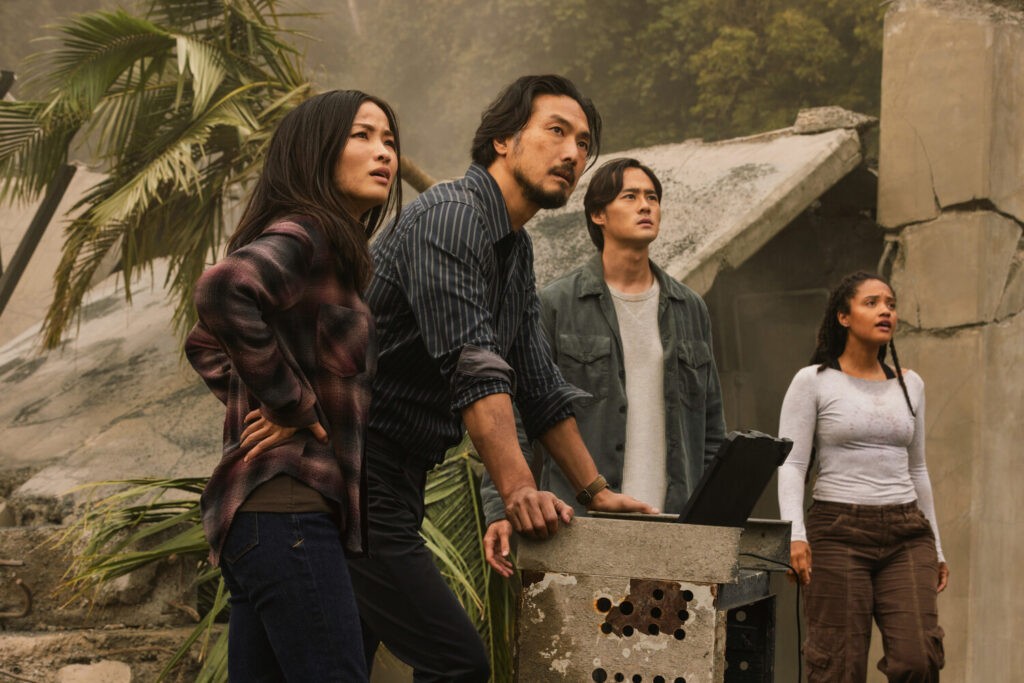
The second season premiered on February 27, 2026, and releases one episode every Friday. Here, the stakes are sharply raised: Cate tries to pull the surviving Lee Shaw out of the Axis Mundi — and in the process, through the open portal, not only Russell's character returns, but also a new, unknown type of Titan (Apple literally calls it Titan X), reminiscent of the Kraken from the animated series 'Skull Island'.
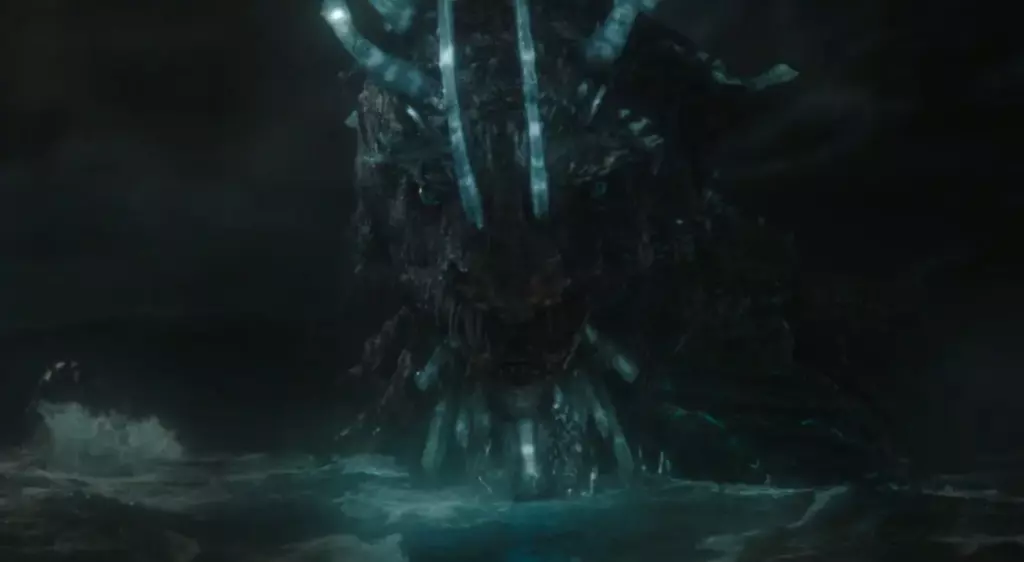
The Titan, which the residents of Santa Soledad call El Gran Dios Del Mar ('The Great God of the Sea'), as we learn from flashbacks about Keiko and Lee in 1957, is a bioluminescent, deep-sea creature clearly in a bad mood. Potentially the most dangerous Titan since King Ghidorah. While Kong chases it across Skull Island, the creature escapes into the ocean — and the further events of the season revolve around finding and neutralizing this threat on the water. Apex is back in the game, 'Monarch' is cracking at the seams after the death of the deputy director right in the first episode, and Godzilla is waiting for his moment.
Who Are the Titans
The best way to understand the mythology is to know the key players. Here are the main Titans of the universe:
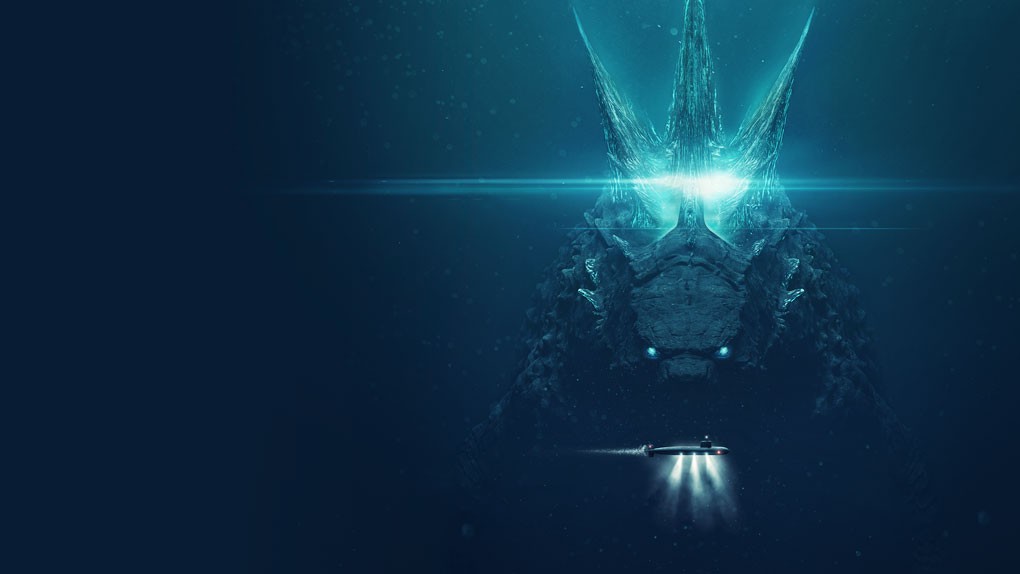
Godzilla (Titanus Gojira) — a radioactive lizard about 120 meters tall, living in the depths of the ocean. Feeds on nuclear energy, 'shoots' a beam of blue atomic breath. Essentially, the 'immune system' of the Earth. Reluctantly interacts with humans, preferring to just do his thing.
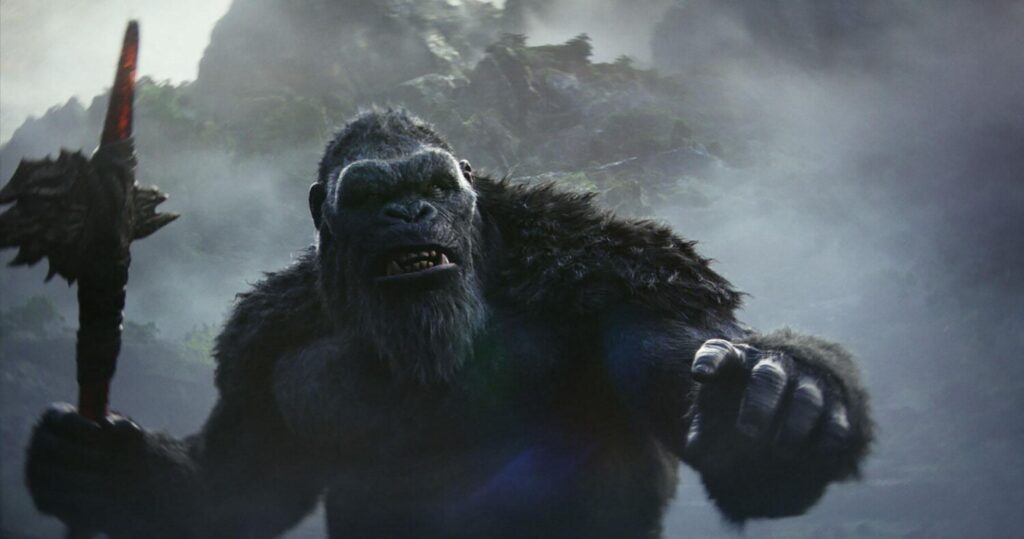
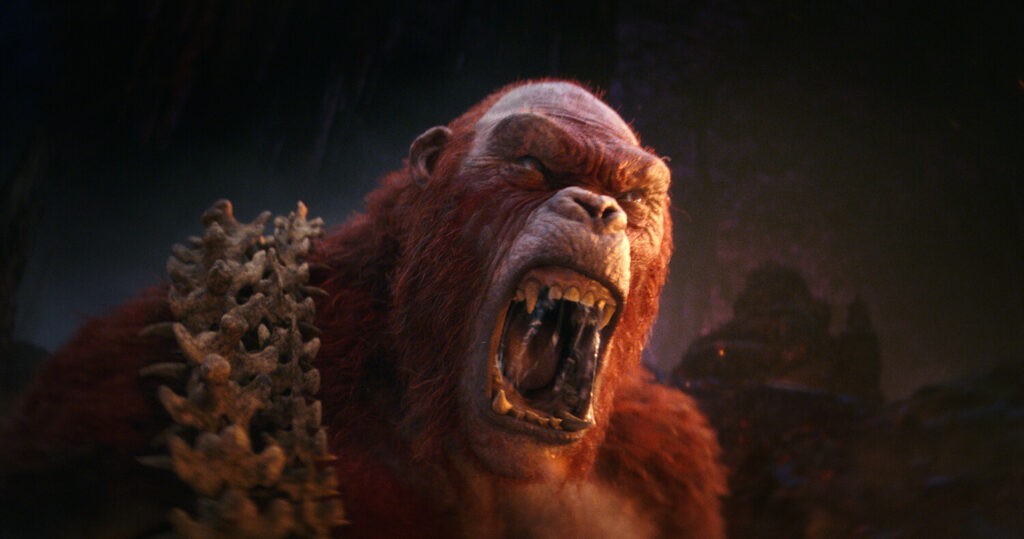
King Kong (Titanus Kong) — the last of an ancient race of great apes destroyed by Skullcrawlers. Smarter than any other Titan, able to communicate with humans through gestures. Uses a weapon — an axe made from Godzilla's dorsal spine. In 'The New Empire', he receives a metal prosthesis and wears it with undisguised pleasure.
Mothra (Titanus Mothra) — a giant 'moth', perhaps the only Titan that the word 'good' describes without quotation marks. Biologically linked to Godzilla, does not obey Ghidorah's alpha call, capable of rebirth. In 'King of the Monsters', she gives her life to give Godzilla strength.
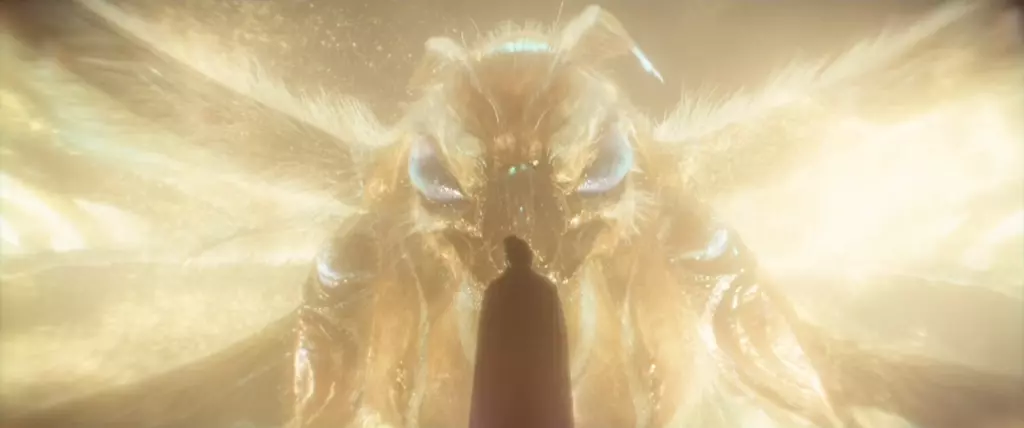
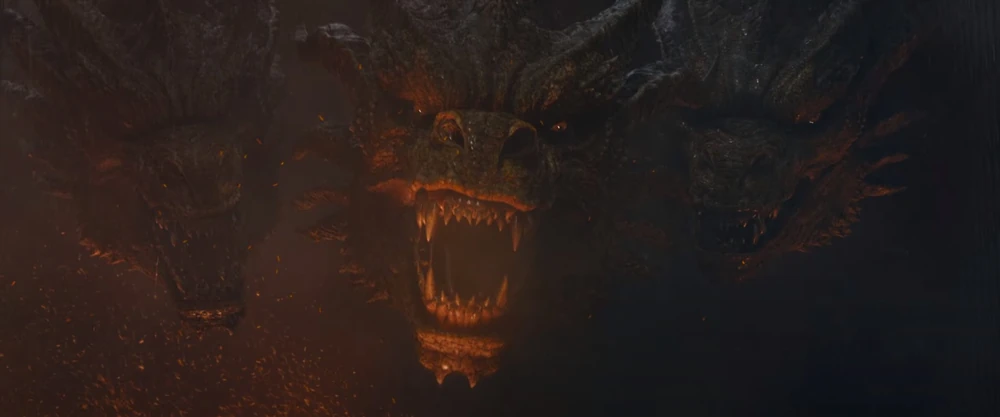
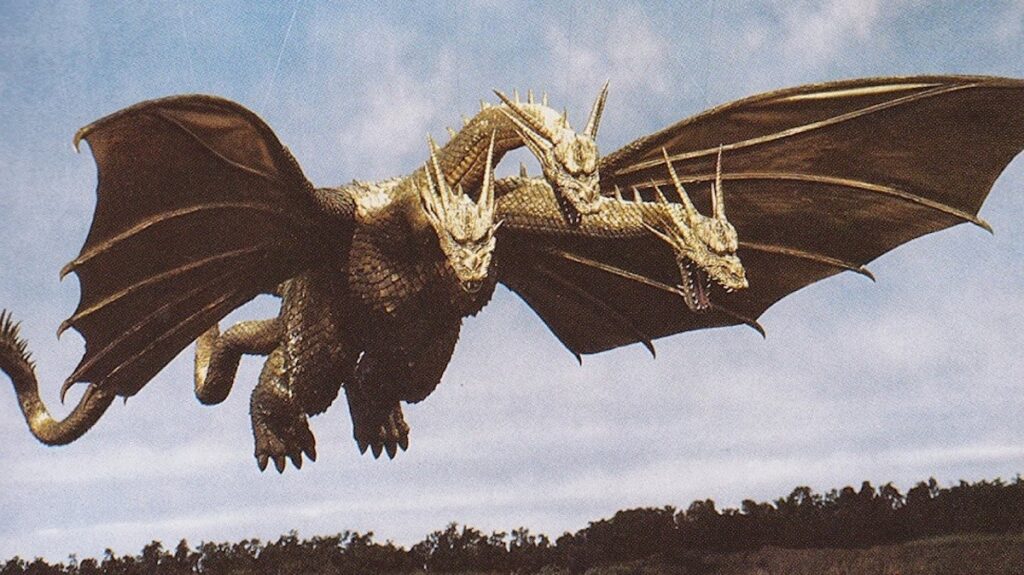
King Ghidorah (King Ghidorah) — a three-headed dragon from Mars (or somewhere else in the universe — officially unknown). The only 'extraterrestrial' Titan. Each head thinks independently. Regenerates severed heads. Emits gravity beams and controls electrical storms. The main antagonist of the franchise — and in a sense, the only true villain, because he purposefully wants to destroy life on the planet.
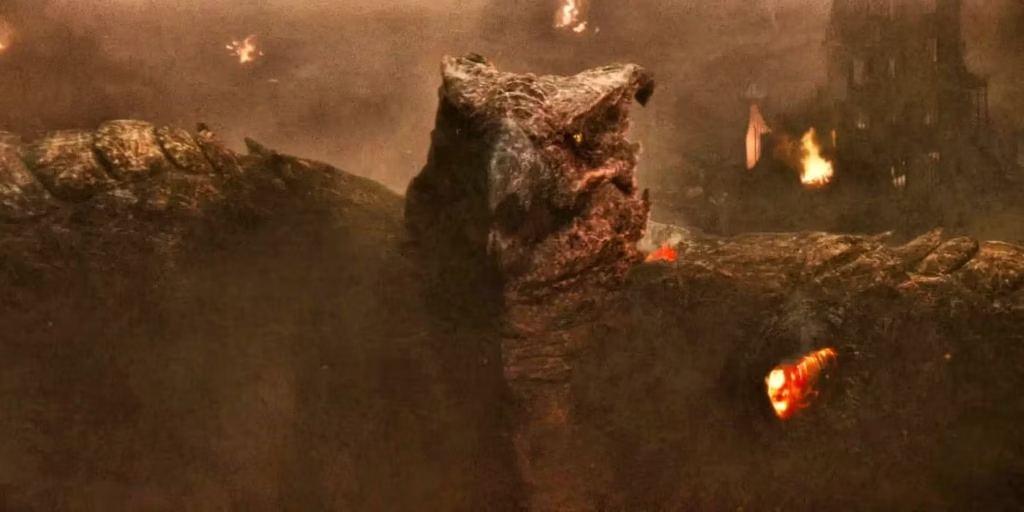
Rodan (Titanus Rodan) — a fire pteranodon from a Mexican volcano. Formidable and powerful, but somewhat inconsistent in his sympathies: he easily sides with the stronger. You could call him a political opportunist among the Titans.
Scar King — a tyrant from the Hollow Earth, ruler of a secret ape empire. Keeps Shimo in slavery using a control crystal.
Shimo — an ice Titan of unknown species, capable of causing a new ice age. After being freed, she sides with Kong.
People of the MonsterVerse: Key Characters
If the Titans are natural forces, then the people in the MonsterVerse are conscience, curiosity, and sometimes a complete lack of common sense. Here are the main characters worth knowing.
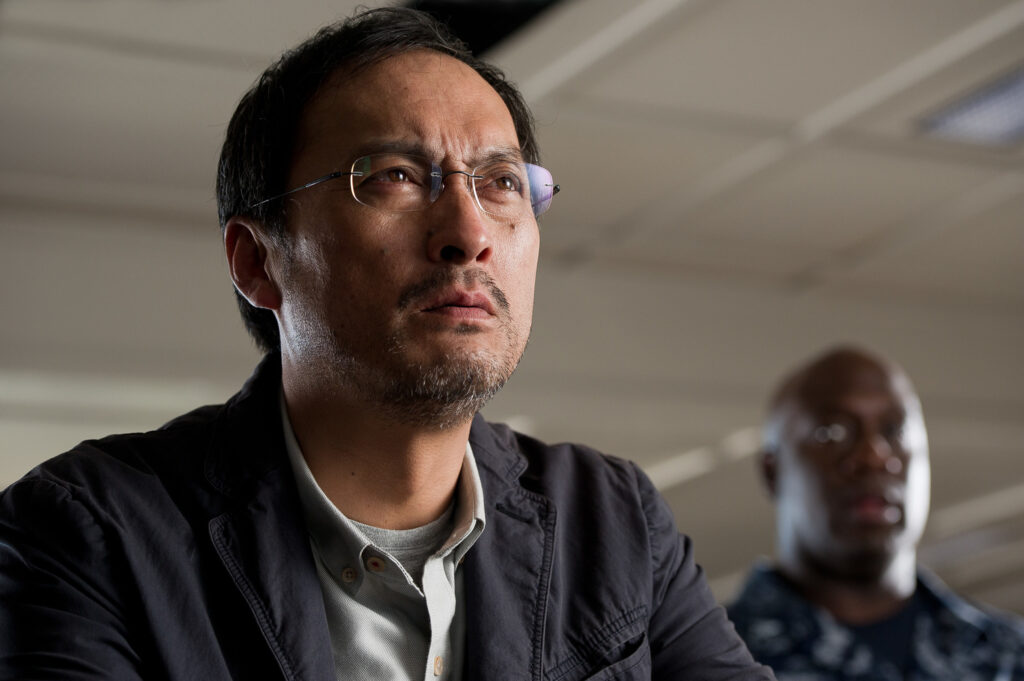
Dr. Ishiro Serizawa (Ken Watanabe, appears in the films 'Godzilla', 'Godzilla: King of the Monsters') — the patriarch and moral compass of the entire universe. A first-wave 'Monarchist' scientist, survived Hiroshima. His phrase 'Let them fight' is perhaps the main philosophical thesis of the entire franchise in two words. In 'King of the Monsters', he sacrifices himself to awaken the weakened Godzilla. His death is the only one in the universe that truly feels like a loss.
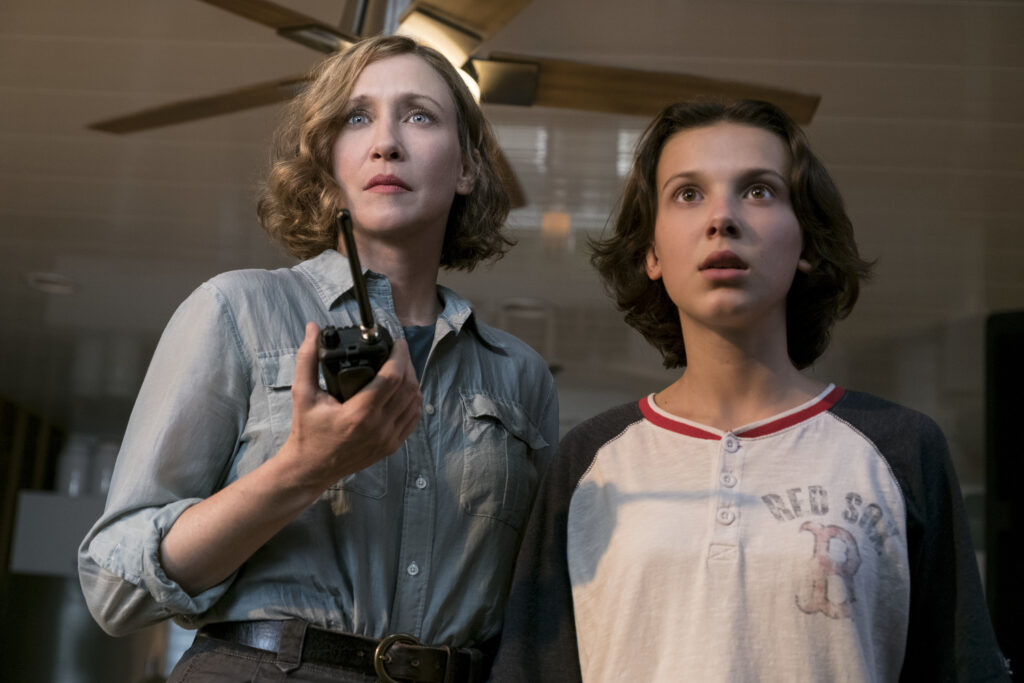
Dr. Emma Russell (Vera Farmiga, appears in the film 'Godzilla: King of the Monsters') — a paleobiologist and perhaps the most ambiguous character in the series. Created the 'Orca' device for bioacoustic interaction with Titans. Collaborates with eco-terrorists to awaken all Titans at once, believing it will 'reset' the planet's ecosystem. A villain with sincere motives, which is much more interesting than a villain out of principle.
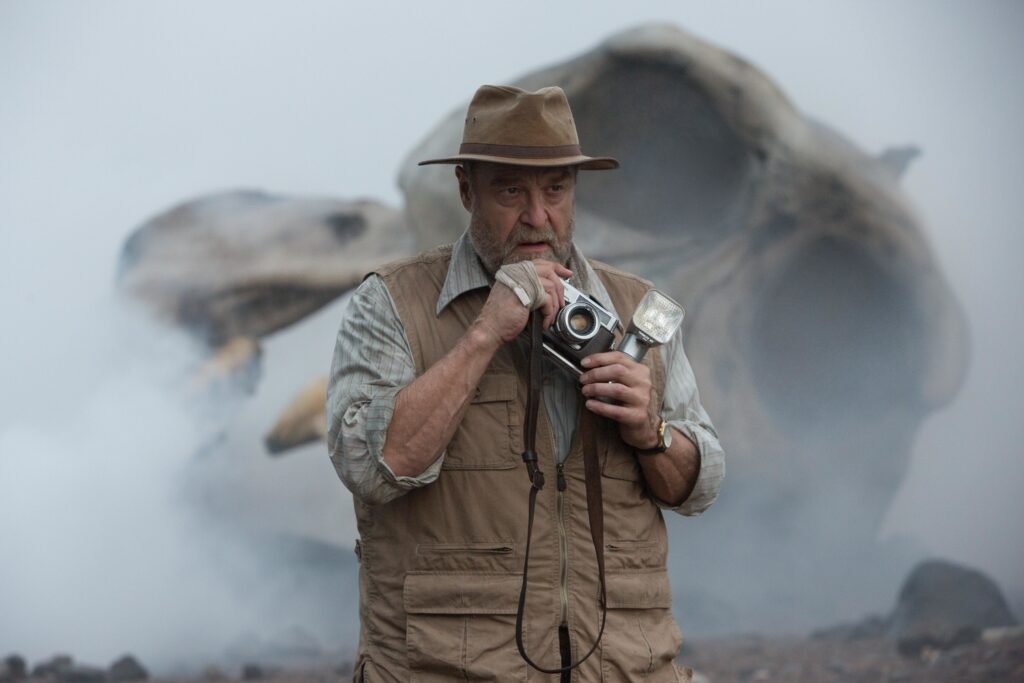
Bill Randa (John Goodman in the film 'Kong: Skull Island'; Anders Holm in the series 'Monarch: Legacy of Monsters') — one of the founders of 'Monarch', a man who saw something unimaginable in 1943 and has been unable to forget it since. In the 2017 film, he rushes to Skull Island under the guise of a geological expedition — and dies there. The series 'Monarch' shows him young: obsessed, charismatic, not always honest with allies, but sincerely convinced of his rightness.
Keiko Randa (Mari Yamamoto, appears in the series 'Monarch: Legacy of Monsters') — a scientist, one of the founders of 'Monarch'. Got stuck in the Axis Mundi in the 50s until her grandchildren pulled her out in 2017. Personally encountered various Titans.

Lee Shaw (Wyatt Russell as young / Kurt Russell as older, appears in the series 'Monarch: Legacy of Monsters') — a military officer attached to 'Monarch' in the 1950s, and probably the most tragic character in the entire universe. Spent decades watching his comrades age and die while he himself barely changed — a side effect of contact with the Axis Mundi. Casting father and son Russells for the same character is one of the best decisions of 'Monarch'.

Cate Randa (Anna Sawai, appears in the series 'Monarch: Legacy of Monsters') — the main heroine of the series, granddaughter of Bill and Keiko Randa. Survived the 2014 San Francisco disaster (was there on the day of the attack) and now uncovers family secrets that turn out to be much deeper than she thought. Stubborn, broken, not giving up — a standard set for a drama heroine about secrets and monsters, but Sawai pulls off the role through nuances.
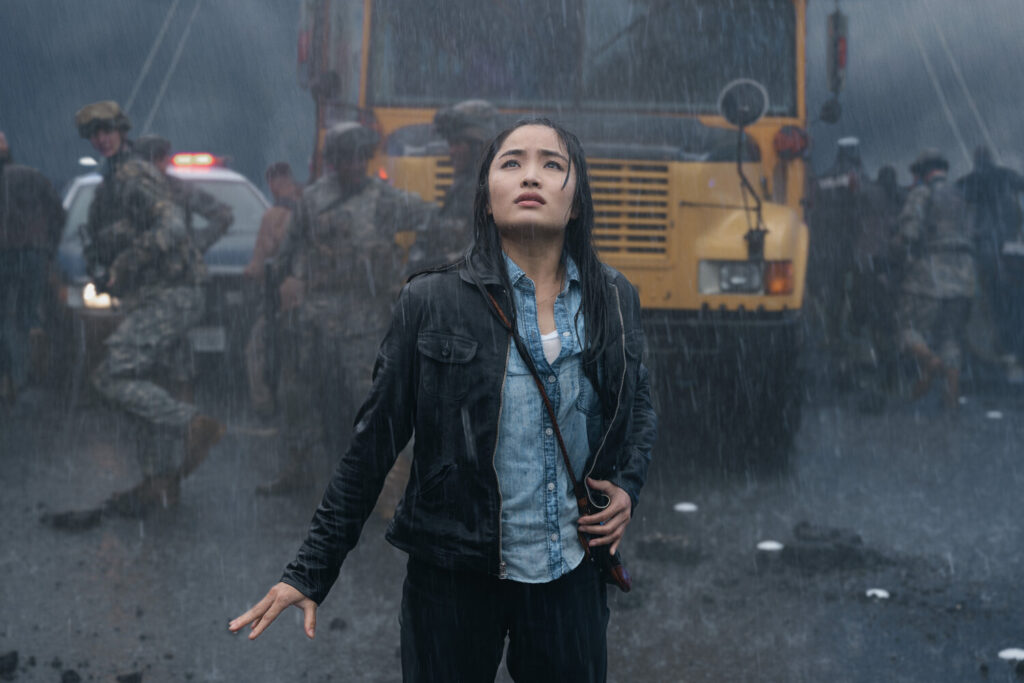
Jia (Kaylee Hottle, appears in the films 'Godzilla vs. Kong', 'Godzilla x Kong: The New Empire') — a hard-of-hearing girl, the last survivor of the Iwi people of Skull Island. The only person in the universe with whom Kong communicates as an equal — through sign language. Her connection with Kong is the most human line in the entire MonsterVerse, and it is she who, in 'The New Empire', helps Kong find his people in the Hollow Earth.

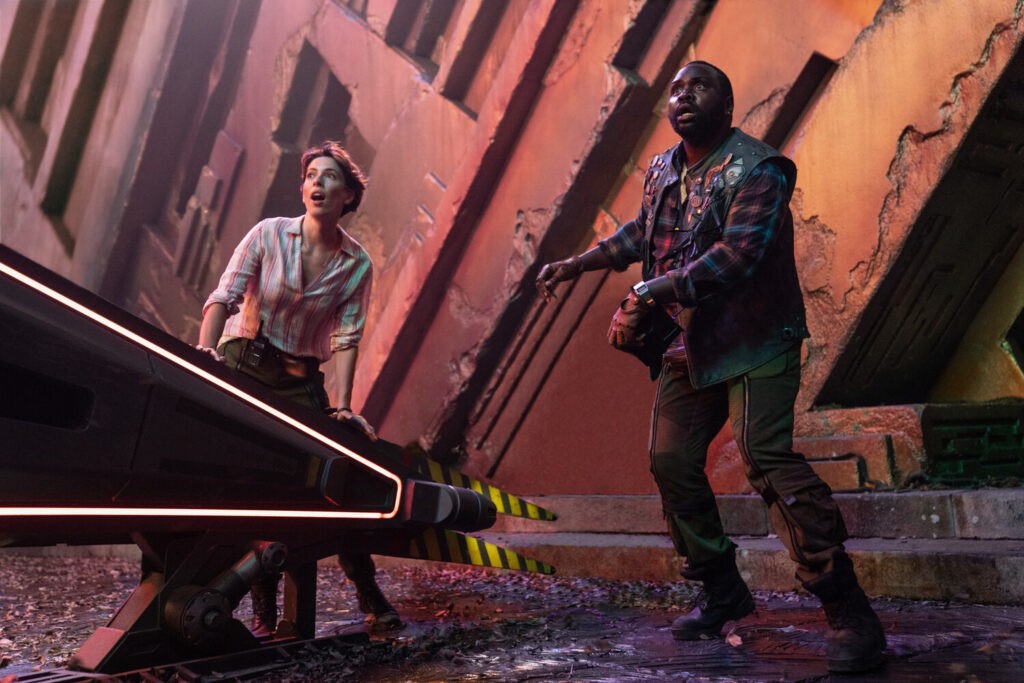
Bernie Hayes (Brian Tyree Henry, appears in the film 'Godzilla vs. Kong') — a self-taught conspiracy theorist and blogger who accidentally turned out to be absolutely right about everything. Worked as an insider at Apex Cybernetics and hosted a podcast about Titan conspiracies — and he is the only person in the universe whose reaction to events seems one hundred percent honest. The comedic heart of the film.
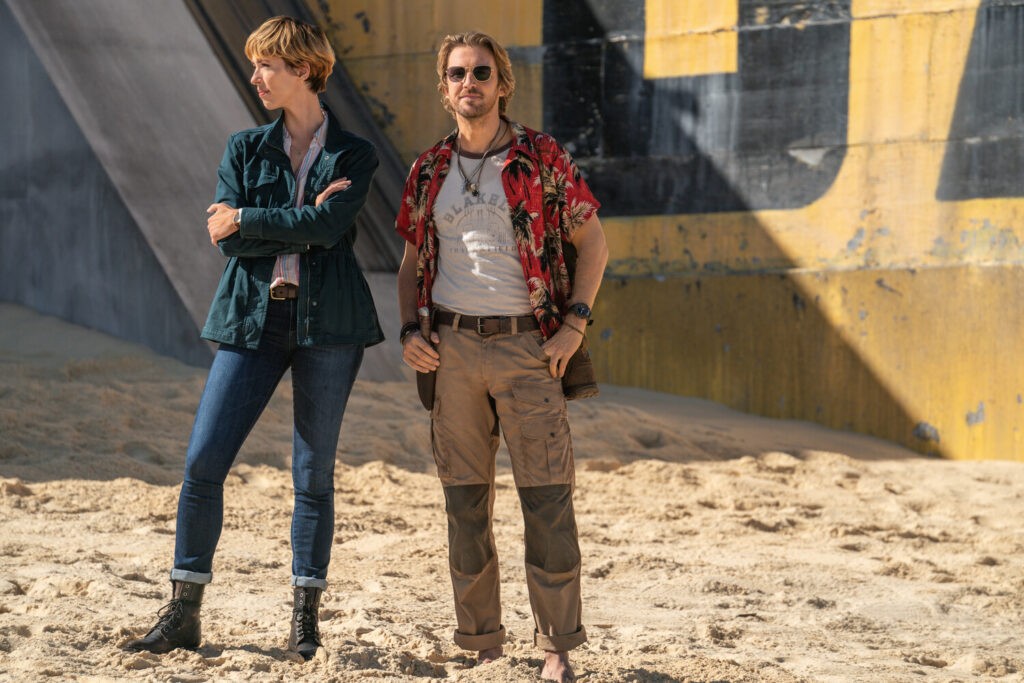
Trapper (Dan Stevens, appears in the film 'Godzilla x Kong: The New Empire') — a self-taught veterinarian specializing in Titans, with controversial methods and obvious enjoyment of his work. Fits Kong with a prosthesis right in the field. So unflappable in the face of hundred-meter monsters that you start to suspect some kind of diagnosis. It is already known that Dan Stevens will appear in the film 'Godzilla x Kong: Supernova'.
What Order to Watch
Two approaches are possible here, and both work in their own way.
By release date (recommended for first viewing):
- 'Godzilla' (2014)
- 'Kong: Skull Island' (2017)
- 'Godzilla: King of the Monsters' (2019)
- 'Godzilla vs. Kong' (2021)
- 'Skull Island' (animation, 2023)
- 'Monarch: Legacy of Monsters', Season 1 (2023)
- 'Godzilla x Kong: The New Empire' (2024)
- 'Monarch: Legacy of Monsters', Season 2 (2026)
By chronological order (for rewatch):
- 'Kong: Skull Island' (events in 1973)
- 'Skull Island' (animation, 1993)
- 'Godzilla' (2014)
- 'Monarch: Legacy of Monsters', Season 1 (2015, flashbacks 1950s–1962)
- 'Monarch: Legacy of Monsters', Season 2 (2017, flashbacks 1957)
- 'Godzilla: King of the Monsters' (2019)
- 'Godzilla vs. Kong' (2021)
- 'Godzilla x Kong: The New Empire' (2024)
The chronological order is more interesting after the first acquaintance with the universe — when you already know all the characters and understand how the details come together. It is especially curious to watch 'Monarch' after 'Godzilla' 2014: the flashbacks from the series literally fill in the blank spots of the first MonsterVerse film.
Comparison of the MonsterVerse with the Original Godzilla Films

Japanese Godzilla films are usually divided into several periods. The first, considered the most important, is called the Showa era. Godzilla in this era went through a full cycle of heroic storytelling. From a symbol of nuclear threat, a terrifying destroyer of cities, he at some point turned into a frightening but benevolent savior of humanity, and then became a parody of himself ('Son of Godzilla'). It all began in 1954, when Godzilla — a dinosaur crippled by nuclear weapons tests — attacked Tokyo, and ended in 1975, when the same dinosaur (actually a different one, but the succession of Godzillas rarely interests anyone) once again defended planet Earth from his mechanical double ('Terror of Mechagodzilla') and retired.
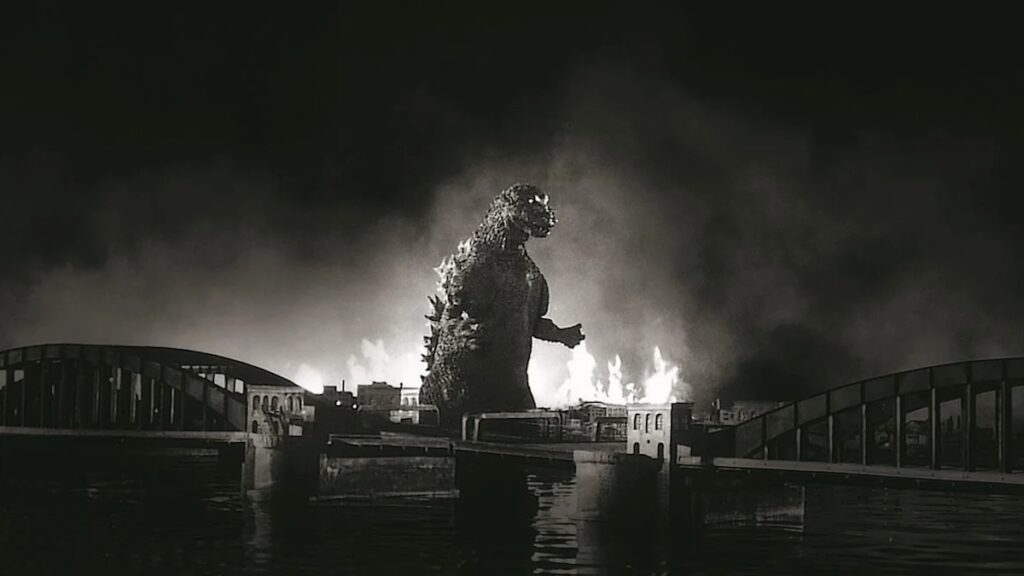
His rest was not eternal: in 1986, Godzilla attacked Tokyo again, this time again as a metaphor — no longer of nuclear threat, but of the Cold War. Over the next ten years (the Heisei era), the King of the Monsters spent his time in constant battles for the title: he faced Mothra, Battra (Mothra's double!), his own double, Biollante, and even SpaceGodzilla. In all battles, Godzilla somehow saved humanity, but usually against his will, never quite fitting into the role of Earth's protector.
In 1998, the Americans took on Godzilla and, as is well known, failed to handle the grandeur of the overseas monster. Emmerich's film is considered a textbook failure — running through the New York subway is not what you want to see in a film about a skyscraper-sized monster. Fifteen years later, the issue was approached more responsibly, and Gareth Edwards' film already shows familiarity with the mythology of Japanese films and respect for it.
'Godzilla' 2014 is most closely connected to the 1954 film of the same name. As in the 1954 film, Edwards' main focus is the horror of the King of the Monsters, the helplessness of man in the face of cataclysms, and, of course, a big discussion on how the military and politicians make decisions in an era of great disasters.
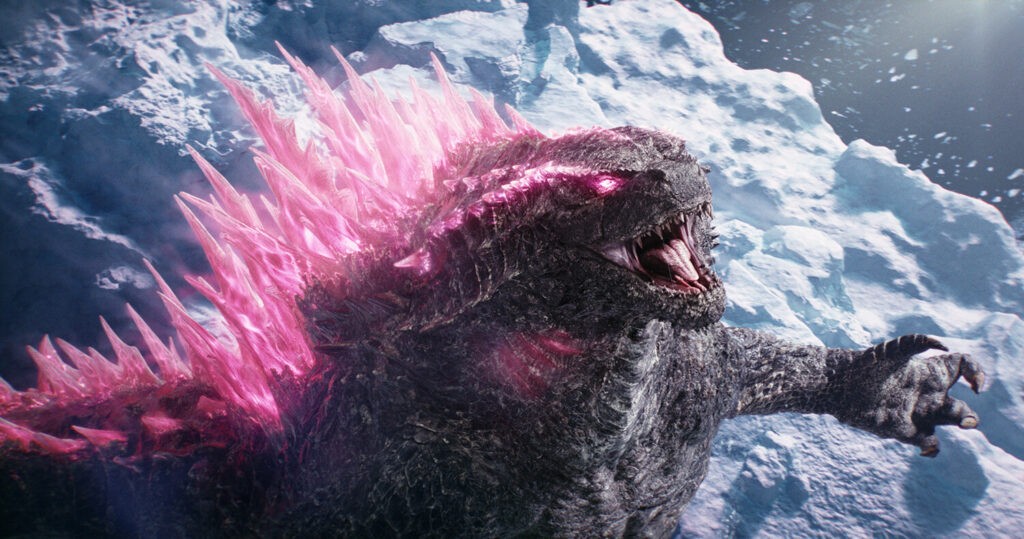
Subsequently, things simplified somewhat, the horror disappeared completely (what horror is there when Godzilla has a fashionable pink dorsal fin), but the old plots did not go away.
For instance, 'Godzilla: King of the Monsters' borrows the plot of 'Ghidorah, the Three-Headed Monster' from the Showa era, a cult film in its own right — a retelling of 'Roman Holiday' with Godzilla, Mothra, Rodan, and, of course, King Ghidorah in the background. The outstanding finale of 'King of the Monsters', dedicated to Mothra's high moral qualities, incidentally, duplicates the finale of the film 'Godzilla vs. Mechagodzilla 2', in which, however, Rodan was in Mothra's place.
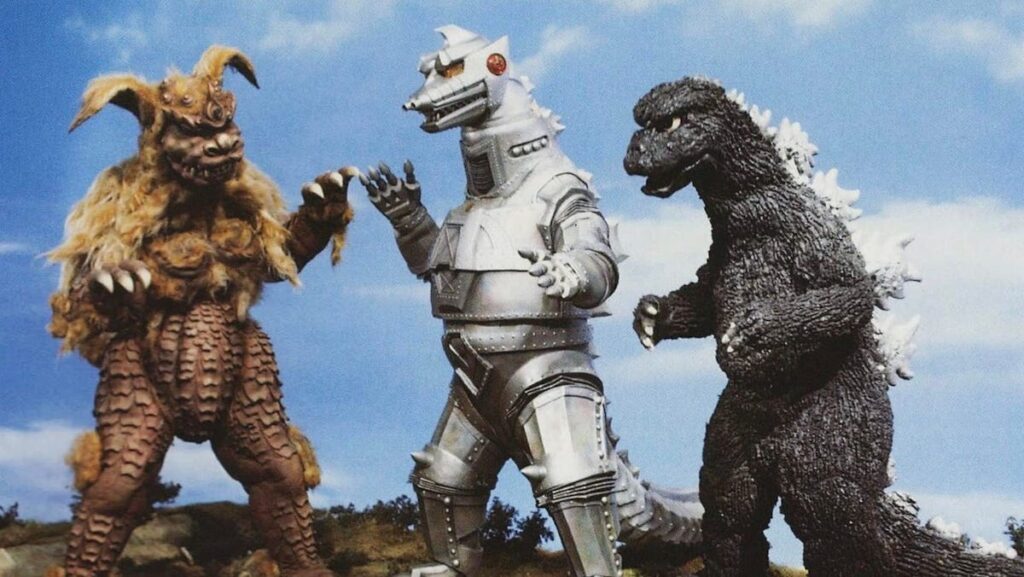
'Godzilla vs. Kong' combines two classic plots at once: the confrontation between the lizard and the ape (from the 1962 film) and the clash of Godzilla with his doppelganger ('Godzilla vs. Mechagodzilla' 1974, 'Terror of Mechagodzilla' 1975). Moreover, as in all films about Mechagodzilla, the original dinosaur cannot defeat his improved version without the help of colleagues.
In 'Godzilla x Kong: The New Empire', the classic plots are already difficult to recognize. Primarily because this film is more about Kong than his radioactive comrade, which is, of course, understandable. It is through the MonsterVerse that it is very easy to notice how little Americans are actually interested in Godzilla, especially against the backdrop of Kong with his very obvious facial expressions and emotional connection with people.
In the MonsterVerse, after the 2014 film, Godzilla's main superpower is practically not used (and it's not the radiation beam from his mouth) — versatility, the ability to be an expression of any era, any anxieties, phobias, catastrophes. In all the new films, the great Titan rather goes through the motions, participating in productions of classic plots for very large sums of money. However, this has happened before in the Heisei era, and especially in the Showa era. The creators of the MonsterVerse are trying, of course, but they still have a long way to go to reach the level of the cheerful farce of 'Godzilla vs. the Sea Monster'. Although, according to the apt remark made by scientists from 'Monarch' in all, it seems, films, the King of the Monsters swims quite fast.
What's Next
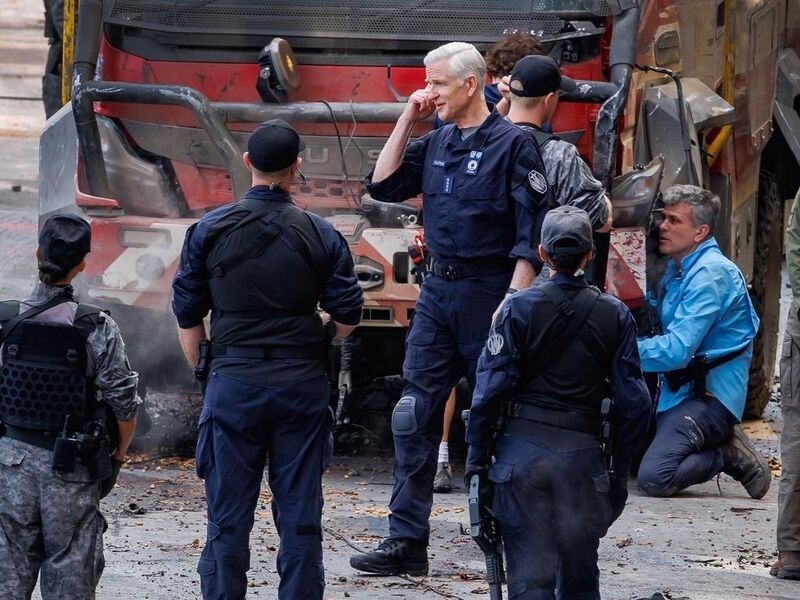
The MonsterVerse is clearly not going to stop. The film 'Godzilla x Kong: Supernova' is in preparation, starring Dan Stevens, Kaitlyn Dever, Jack O'Connell, and Sam Neill (who certainly knows a thing or two about giant lizards). The second season of 'Monarch' is releasing weekly until May 2026, and it is already clear that El Gran Dios Del Mar is preparing to become a new large-scale challenge for the television part of the universe — a creature that no single Titan can handle alone (though Godzilla will surely argue with that statement).
A spin-off of 'Monarch' is also in preparation. Actor Wyatt Russell shared what viewers can expect from the new project:
'I think people will expect one thing, and then say, "Holy crap, this is not at all what I thought." The spin-off will tell about Lee [Shaw]'s life after he came into service — as well as what happened after that, why he was needed, and what mission he went on. I'm thrilled about it. More thrilled than anything in a very long time.'
The philosophy of the universe remains the same: it is a story about how humans are not the center of the universe, that there are forces far older and more powerful than us, and that the only reasonable response to this is not panic, but an attempt to understand. 'Monarch' as an organization and 'Monarch' as a series — both are about this: about how humanity learns to live alongside those it once considered myth.
And while Godzilla dozes in the Colosseum, and Kong raises a little gorilla in the Hollow Earth, somewhere in the depths of the ocean, something very big and very displeased is glowing. The next meeting with the main Titans will be very soon.
Comments
0No comments yet.
Sign in to join the discussion.