

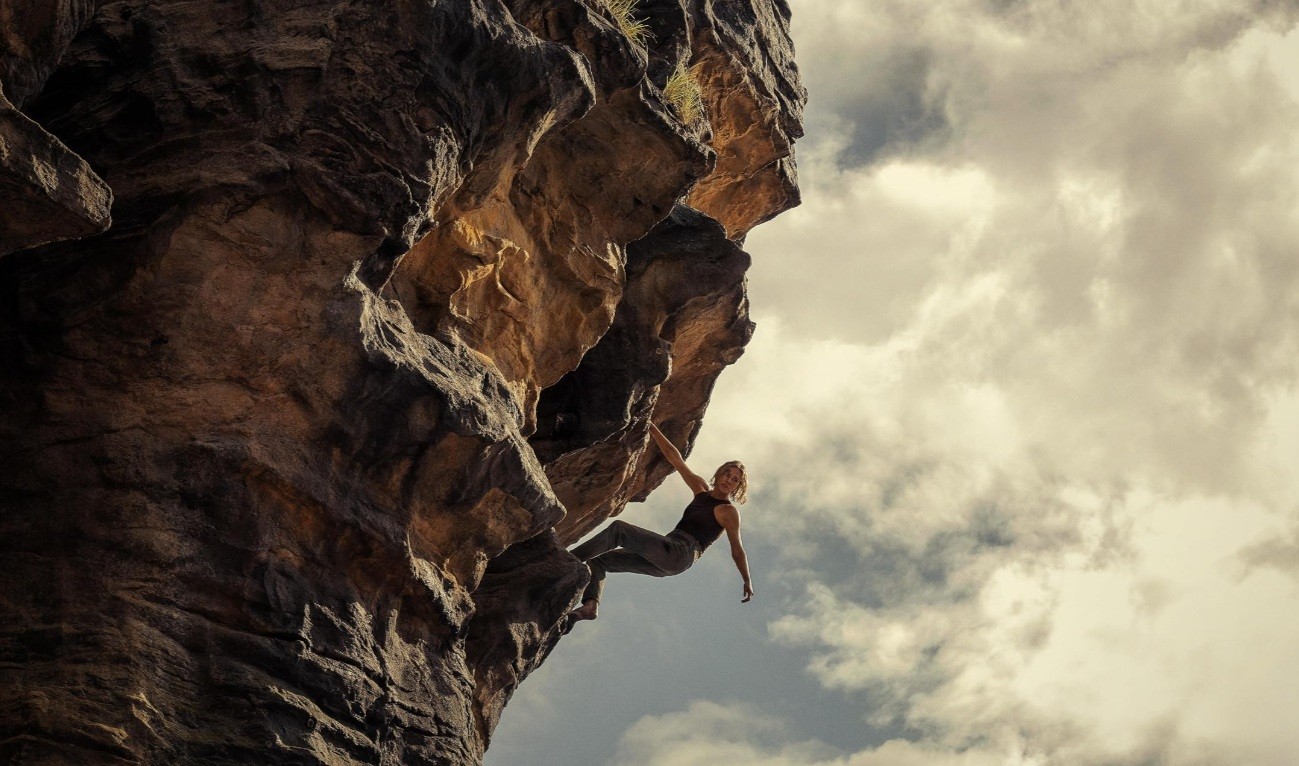
Netflix has released the survival thriller "The Summit" from "Everest" director Baltasar Kormákur, in which Charlize Theron flees a maniac through the Australian wilderness. Where the film finds its footing and where it goes bitterly wrong—in our rev...
A woman named Sasha (Charlize Theron), grieving for her husband who died before her eyes in the mountains of Norway, arrives in her husband's homeland of Australia to make a solo swim down a dangerous mountain river and honor his memory. In a local village, Sasha meets the smiling and friendly Ben (Taron Egerton), who helpfully points out the most scenic spots on her travel map. However, Sasha soon becomes a target for Ben, who has long turned the tourist area into his own hunting grounds. Many trusting travelers have already lost their lives to his crossbow in these wild places.
The film begins as a textbook advertisement for travel gear. Picture-postcard Norway, followed by Australia; the SUV, clothing, tools, tents, dishes—all shown with the cataloging love of someone who has shot a dozen commercials for an ad agency. Individual scenes could be cut into small pieces and shown on television. And Charlize Theron, it must be said, fits this setting perfectly, as she does any other.
Having had their fill of wild nature shots, the filmmakers, following a classic setup, decide to smoothly steer the plot to the main event—Sasha's arrival in Australia. But this brief interlude with the introduction of the main antagonist doesn't particularly shine with originality: there are rather dull, formulaic, and not particularly important dialogues that the characters simply need to speak so the audience starts fidgeting in anticipation of the main event.
However, it's worth remembering that the main intrigue of "The Summit" has already been spoiled by the trailer, so its attempt to deceive with false villains and portray the antagonist in a favorable light naturally doesn't work. All that's left is to impatiently wait for Egerton's character to stop being polite and finally start the hunt. The intrigue isn't so much bad as it is nonexistent. But the problems with the first third of the film don't end there. The second difficulty is the bald-shaven Egerton. His character, frankly, bears little resemblance to a psychopathic killer. Ben seems more like a person awkwardly making faces to play the villain. Because of this, watching him is a bit uncomfortable, and at times you just want to look away, especially when he's swimming naked.
Egerton desperately grunts, periodically bares his teeth, flexes his muscles, and even removes his dentures (what's underneath is a separate discussion), but his innate intellectual softness is hard to overcome, no matter how hard he tries. The same cannot be said for Charlize Theron. She once again proves that her Oscar was well-deserved: one tense look into the distance says far more than the film itself demands. And the actress's physical form remains impeccable.
Where "The Summit" is undeniably successful is in the direction by Baltasar Kormákur ("Everest"), who has honed his skills on disaster films where characters exist in survival mode, and his cinematographer Lawrence Sher, whose filmography includes "Joker" and the "Hangover" trilogy. This successful creative duo in every sense knows exactly how to beautifully transfer nature from a postcard to the screen and create tension where you wouldn't expect it. They don't care who kills whom and why, but they know how a mountain river, a dark cave, and a chase should look to sometimes send chills down your spine. This is where it becomes a bit disappointing for "The Summit," deprived of a wide release: such beauty at least deserves the big screen.
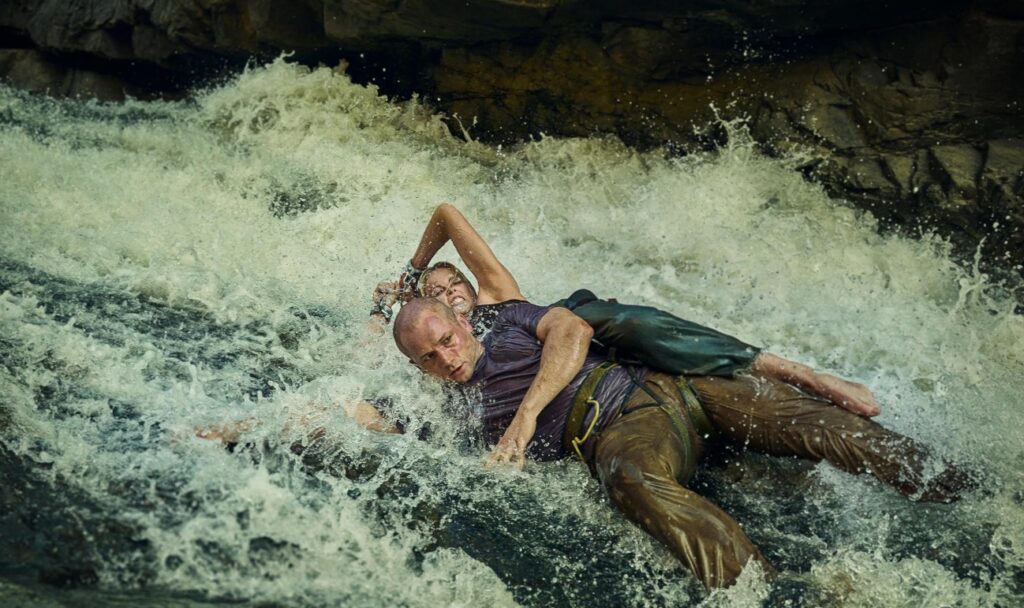
And when the "Running Man" or "Hard Target" mode kicks in, Kormákur also tries to squeeze the maximum out of what he can do, not allowing the two top stars to drown in mediocre direction. So at times, you genuinely feel anxious for Theron's character (the climax is the cave scene), and the dizzying stunts are not without inventiveness. For example, when Egerton and Theron fight while tied to each other. Nevertheless, Kormákur doesn't dwell too much on pure action either, strictly following the rule: "The best is the enemy of the good."
"The Summit" is exactly the kind of film you put on in the evening on a streaming service, scrolling through the menu in search of something unobtrusively harmless. It can, of course, briefly captivate you with the beauty of the heroine and wild nature, but no more. Something in the category of not too essential, whose viewing can be postponed. But there is one valuable lesson in "The Summit": traveling in Australia is dangerous not only because of sharks, snakes, and spiders, but also because of unexpressive maniacs with dentures.
Comments
0No comments yet.
Sign in to join the discussion.