
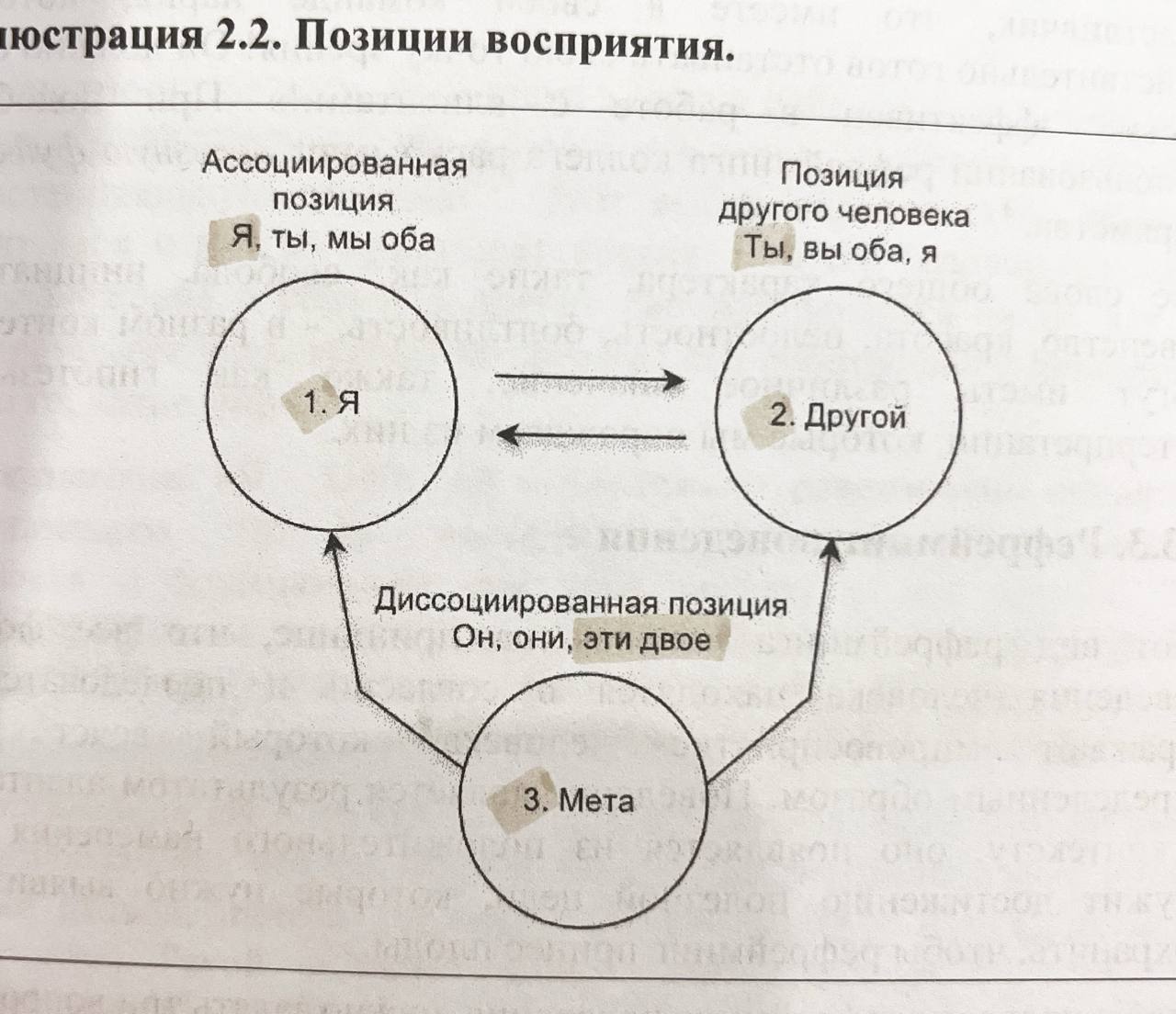
Every time I am convinced that nothing happens by chance. One day I experience a strong quarrel with a loved one, trying to find ways to get through it without negative consequences. And the next day, while reading a book, I stumble upon this diagram. We studied the Reframing tool in training, and it turned out to be applicable to my situation as well.
The essence is to look at the situation from different points of view: a quarrel, an unpleasant conversation, one where it is difficult to accept another person's position because there are hurt feelings (anger, resentment, shame, etc.). This helps to find a different perspective on the situation and perceive it anew. In general, to lower the emotional intensity when it goes off the charts, and to give the opponent a chance to have important motives in your eyes.
⭐️1st position - tell the situation (in my case, the quarrel) from the I position. How it happened. What exactly hurt me. Why I reacted that way.
⭐️2nd position - tell the same situation as if you were your opponent. How it happened. What exactly hurt (you, if you were them). Why they reacted that way.
⭐️3rd position - tell the same situation as if you were an outside observer who does not know the context, for example, a cafe visitor at the next table. How it happened. What those two did.
This technique literally shifts you into the mindset of another person, and also shows how the situation looks from the outside, outside the context of hurt feelings. Use it to remove the frames of your own beliefs about the situation. And to take a breath in the moment.
#to_think_about
*materials from the book "Mastery of Coaching" by Sylviane Cannio and Viviane Launer
Comments
0No comments yet.