
The second season of the most expensive series in television history has concluded. About how 'The Rings of Power' and its heroes never tire of repeating past mistakes—in our review.
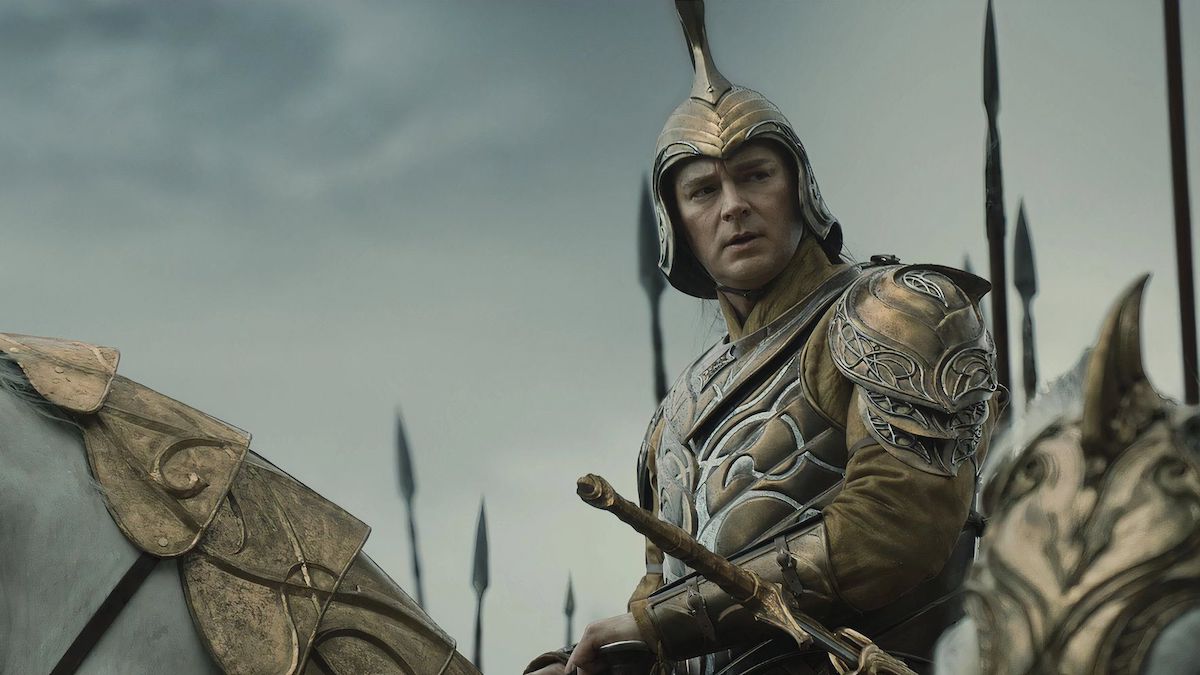
Gil-galad, the High King of the Elves, dismounts and tells the shocked Elrond (Robert Aramayo) that a ruler's place is where they are most needed. In this case—where the remnants of his army are about to perish and one of the greatest Elven cities will fall. This is one of the most precise, characteristically Tolkienesque moments in the entire series. Gil-galad (played by Benjamin Walker) finally appears not as a politician in tacky golden robes, as he seemed for the past fourteen episodes, but as a king ready to voluntarily meet death alongside his warriors. This is precisely what, in the works of J. R. R. Tolkien, constitutes the meaning of true power, which is always not so much a privilege as a burden—the ruler's duty to share the fate of their kingdom not only in good times but also in its final hour.
The only problem is that this happens only in the seventh episode, the last before the finale of the second season. And the six hours before that do not pass, frankly, without a trace: whatever intrigue (albeit very modest) the first season left, the first three episodes of the second destroyed it, and the next three barely managed to create a new one. Six storylines, told as if in haste and connected to each other in a very non-obvious way, constantly intercut, periodically disappear, scattering the attention of even the most devoted viewers.
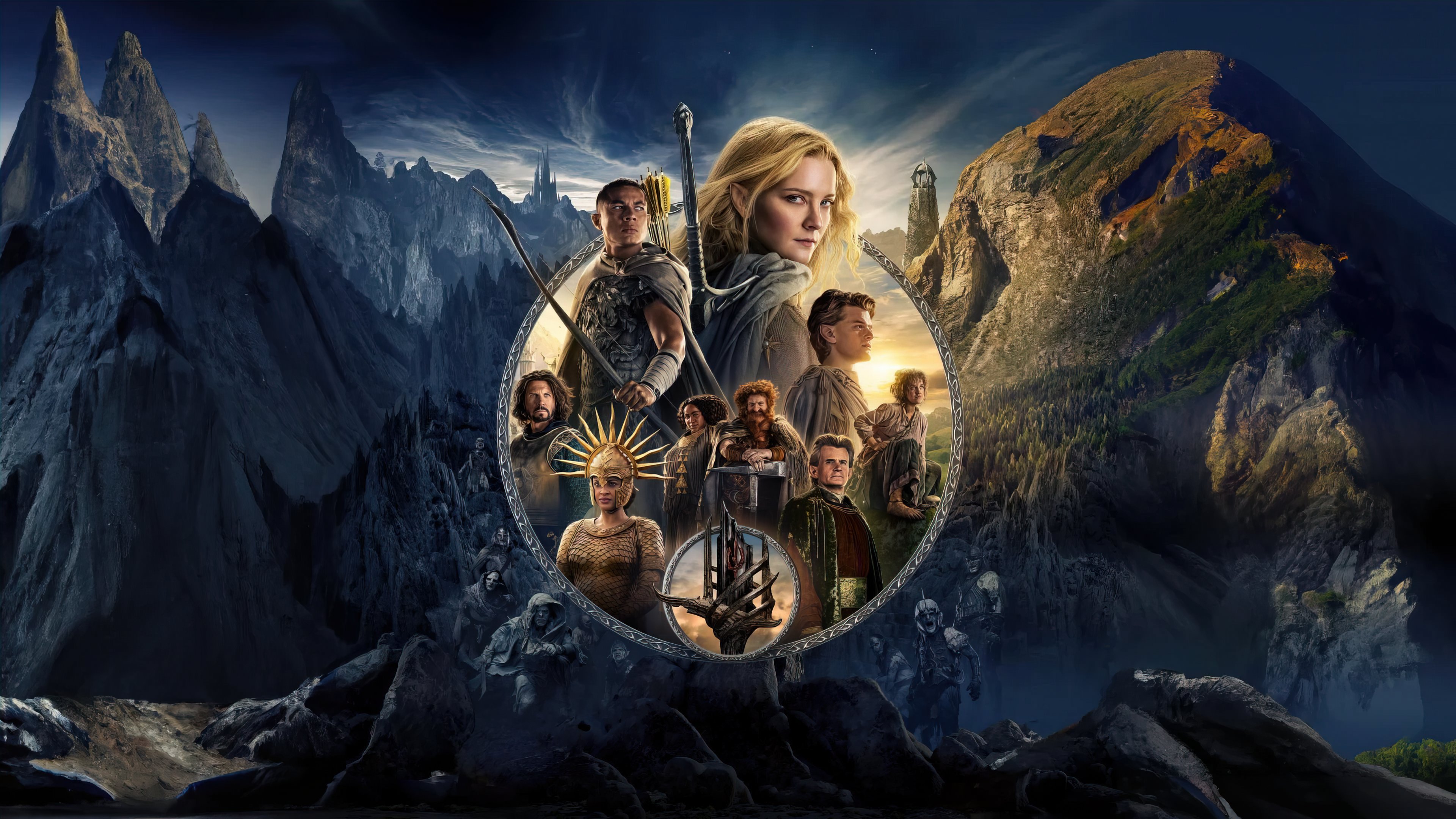
On October 14, Amazon Prime Video concluded the first season of one of the most anticipated fall series, 'The Lord of the Rings: The Rings of Power'. Did Jeff Bezos' streaming service manage to approach
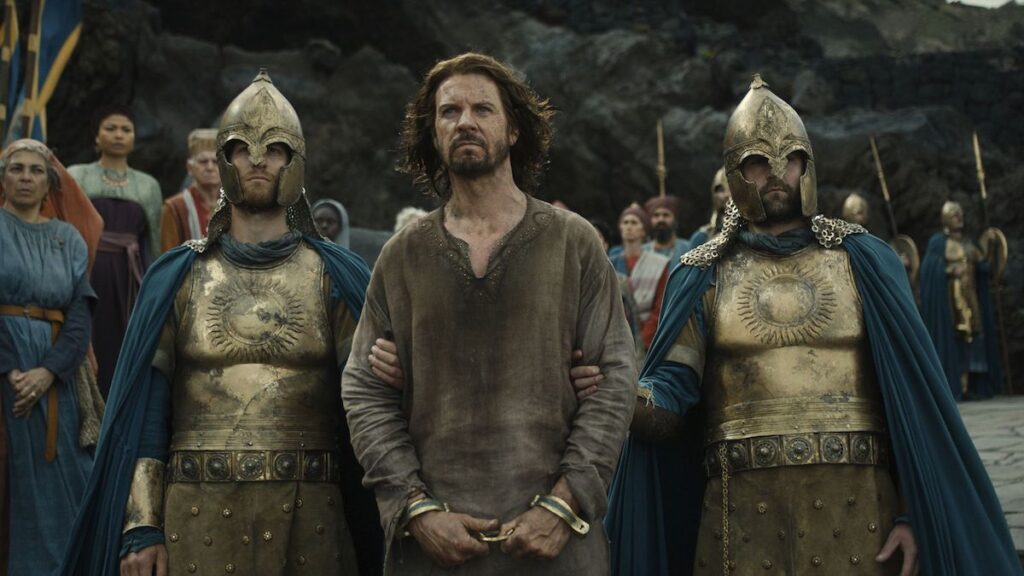
Abrir materialIsildur (Max Baldry) returns to the settlement of the Southlanders, from which he was separated by the eruption that created Mordor. His father Elendil (Lloyd Owen), though he waited for his son until the last moment, could not stay there forever and has already left these shores, heading to Númenor. On the island, a palace coup is effectively taking place: the queen (Cynthia Addai-Robinson), blinded in the previous season, is stripped of her crown by Ar-Pharazôn (Tristan Gravelle), who naturally resembles Trump, just as the blind (like justice) and righteous Tar-Míriel resembles Kamala Harris (let's hope their confrontation's outcome is not a prophecy about the results of the US election).
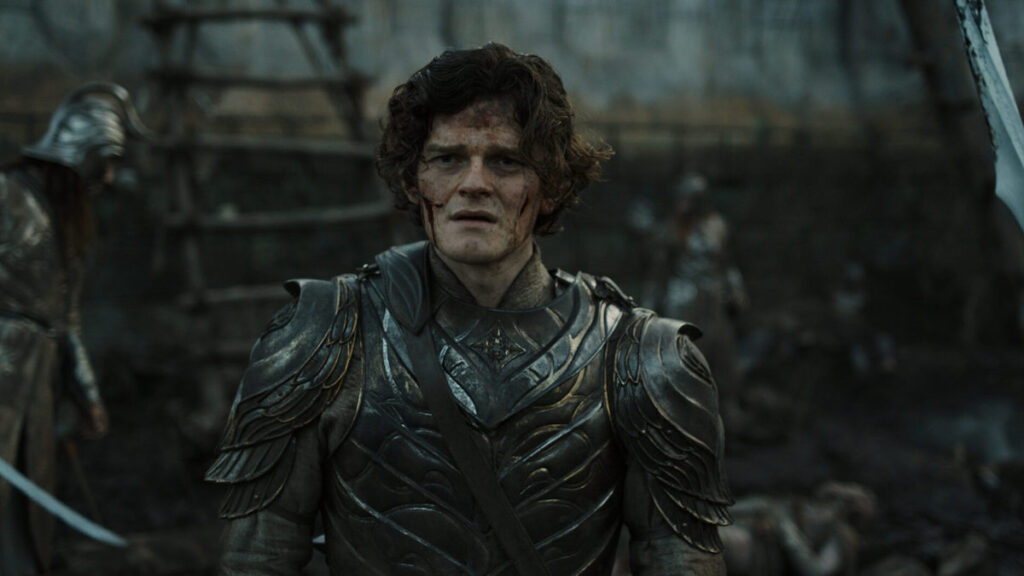
Like his father, Isildur returned to a very different place than the one he left. Bronwyn, the local healer and leader of the Southlanders, died between seasons—orc arrows, alas, are too often poisoned (and actresses too often leave series). The Elf Arondir (Ismael Cruz Córdova), having lost his beloved, found himself not so much a widower as literally an orphan: the character has no clear purpose, and he wanders through places of his own and others' military glory, helping now Isildur, now Galadriel, now someone else.
The other Elves, however, are also not doing well. In Lindon, Gil-galad, Galadriel (Morfydd Clark), and Elrond try to decide the fate of the three Elven rings forged by Celebrimbor at the end of last season. Elrond believes the rings are poisoned by Sauron's dark magic, Galadriel is enchanted by them, and the High King, apparently out of despair, sings sad songs. But the Elves need to save their realms and their lives, which are gradually fading, and they agree to use the rings to prolong the world's youth.
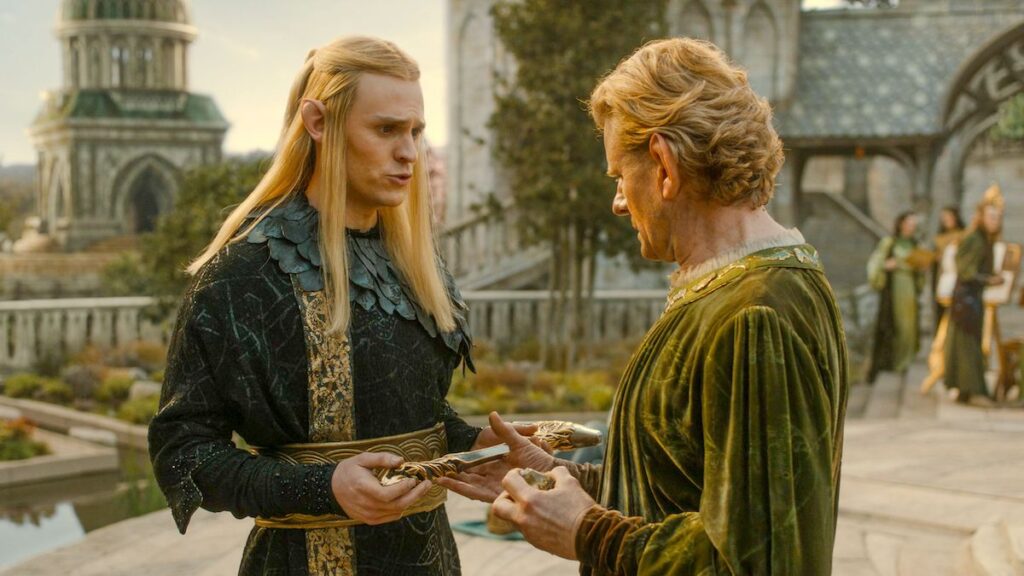
In Eregion, Lord Celebrimbor is hosting Sauron (Charlie Vickers), who pretends to be the Valar's emissary Annatar ('giver' in Elvish). Annatar-Sauron deceitfully seduces Celebrimbor into forging first the seven (for Dwarves) and then the nine (for Men) rings. However, clouds are gathering over the great smith and his city even without Sauron: an army of orcs under Adar (Sam Hazeldine) is moving from Mordor toward Eregion, and everyone understands the fortress will not hold.
The Celebrimbor storyline is perhaps the most successful of all: credit goes to both actor Charles Edwards and its thematic coherence. The smith turns a blind eye to inconsistencies in Sauron's lies, striving to create something great, greater than himself. But the pursuit of perfection, for which he compromises with evil, as always in 'The Lord of the Rings', leads not just to destruction but to decay, internal collapse—there are secrets that cannot be used while remaining oneself.
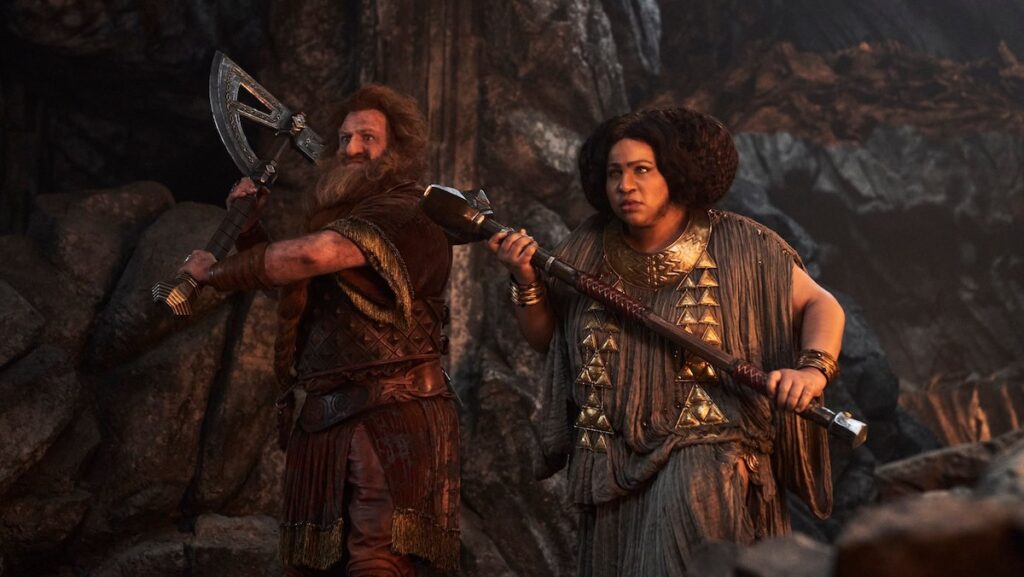
Meanwhile, the Dwarves are fighting among themselves, with a threat in the depths of the mountain and an economic crisis, while the Hobbits and their companion the Istar (the well-known Grey Wizard) are heading somewhere. The Istar (Daniel Weyman) is going, it seems, toward his destiny, and the Hobbits somewhere toward the history of their people, which strangely resembles selected passages from the Bible.
Even from this (still quite brief) summary, one can guess that it's better to watch the series with a notepad. The incoherence of the narrative, however, is in a certain sense compensated by the commonality of key themes. There are perhaps three in the season: power, the past, and the realization that if Tolkien's characters were not great heroes but real people, while they were solving their problems, Sauron would have already conquered Middle-earth.
Power in the series appears as a burden of difficult decisions. King Gil-galad tries to save his people and is forced to use the three rings, even if their effect is, frankly, unpredictable. King Durin is so absorbed in the problems of ruling that he does not notice how, while solving them, he loses himself and his son. In Númenor, the weakness of royal power and the disunity of the people, divided into a pragmatic majority and an Old Faith minority (believing in the wisdom of the Valar—local Olympian gods), leads to unrest and massacre.
All storylines in one way or another also touch on the relationship with the past. This is also a classic and important theme for Tolkien's legacy. The Dwarves cannot forgive each other for past grievances. Celebrimbor, forging the rings, competes with the long-dead Fëanor, his great-grandfather, who once created the Silmarils—stones that caused many wars in distant years. Gil-galad and Círdan, who appears in the early episodes, strive to stop the fading of the world, wish to turn back time and prolong the glorious era when they and Middle-earth were young and carefree.
Adar, one of the Elves whom Morgoth once tortured and mutilated so that they became Orcs, cannot forgive the world for not being merciful to him, and therefore seeks to kill himself. Even Sauron appears as a complex figure, not so much evil as also, like Adar, crippled by the same tormentor—Morgoth, the embodiment of all darkness in the world. Morgoth tortured Sauron, mocked him, blaming his victim for its own suffering. Evil did not pass without a trace, and now Sauron does the same to everyone in Middle-earth who is unlucky enough to cross paths with his grand plans for remaking the world.
All the heroes find themselves face to face with their own past and cannot accept it. They try to look into the future and cannot accept that either. The second season of 'The Rings of Power' in this sense repeats a somewhat worn-out, frankly, idea that to defeat evil, one must first reconcile with one's past. What is even more curious is that all the films where this idea appeared—from 'The Empire Strikes Back' to 'Kung Fu Panda 2'—the authors not only watched but actively quote, copying both dialogues and mise-en-scènes and entire storylines.
At the same time, 'The Rings of Power' still hopes to repeat the success of 'Game of Thrones' and cross, say, Elves with psychological realism. They try to reproduce the story of Westeros on the map of Middle-earth. The result, it must be said, is more like 'The Magnificent Century'. Watching the squabbles of heartfelt red-bearded Dwarves, for example, at some point becomes simply unbearable. The Elves, radically simplified to the level of human passions, lose all charm (though not all: Elrond has excellent moments, Celebrimbor is rather successful). Roughly the same situation with realpolitik in Númenor, where, through the hands of Ar-Pharazôn, either the 'Night of the Long Knives' or the plot of Sophocles' 'Antigone' is played out. In any case, the authors demonstrate more erudition (albeit commendable) than creativity.
Such persistent unoriginality, the inability to find at least a somewhat fresh wrapper for a banal thought, only confirms what everyone on the internet seems to be writing. 'The Rings of Power' is indeed nothing more than an expensive fan fiction. However, it is also nothing less. It is a series of significant failures, heavy blunders, stupid casting decisions, outright silly scenes (the duel between Sauron and Galadriel!). And at the same time, it is a truly expensive spectacle: gold glitters, blood splatters, the made-up Orcs with their quite realistic ugliness (not) pleasing the eye for all the money.
And in general, the series allows one to better navigate the confusing world: yes, the creators of 'The Rings of Power' constantly make mistakes; but when they make mistakes, it is immediately obvious. In this capacity, the show resembles its most tragic hero—Lord Celebrimbor, who in mistakes, as in insights, never stops at trifles and goes all the way. Even if it is to a terrible end.
This obviousness is what gives 'The Rings' even some pleasure. Especially, say, against the backdrop of 'House of the Dragon', which one does not want to watch, but it is not entirely clear what exactly to criticize. And the series surprises all the more when, among the neural network-generated dialogues and copied scenes (and they steal, we repeat, from everywhere), moments of pure sincerity suddenly appear.
All these scenes, however, collectively last perhaps fifteen minutes, and are unlikely to impress those who are already not so favorably disposed toward the series. And there are, of course, a majority of such people. And these people are more than right: for a series (and the most expensive on television at that), fifteen good minutes out of eight hours is, of course, unforgivably little. However, in life, even that is often a luxury.
Comentarios
0Aún no hay comentarios.
Inicia sesión para participar en la conversación.