
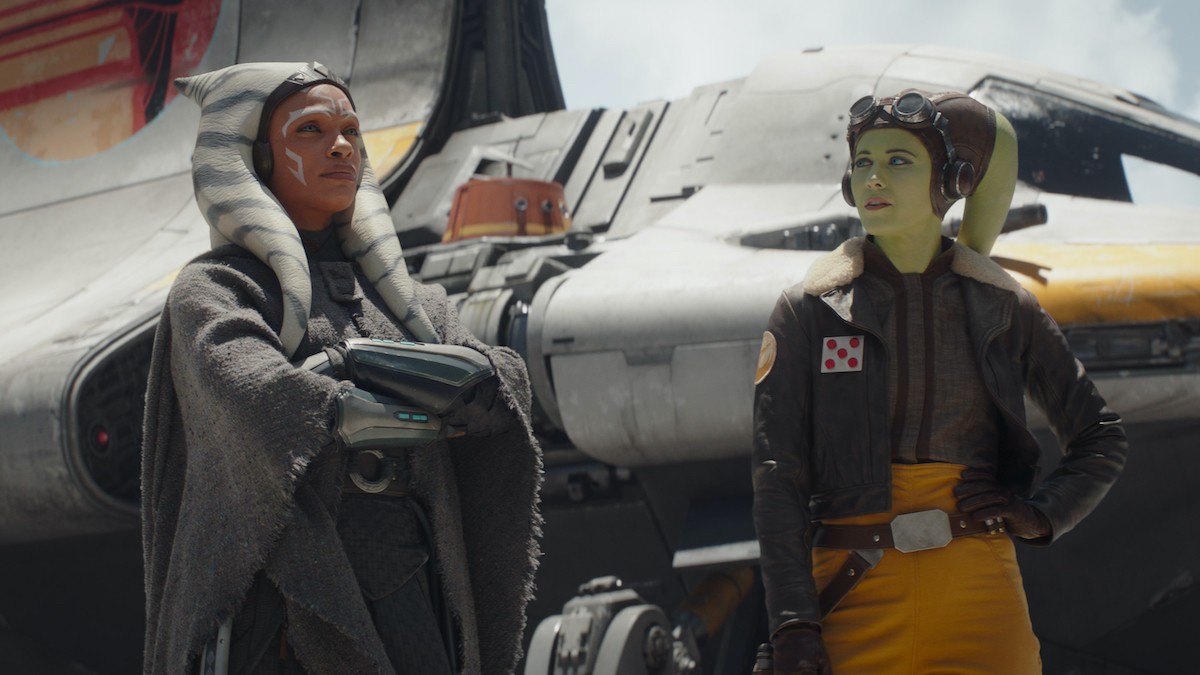
The series 'Ahsoka' has concluded, a story about a cult 'Star Wars' heroine in the 21st century, a spin-off of 'Rebels', 'The Clone Wars', and 'The Mandalorian'. We figure out what exactly happened there and why it's generally not a triumph.
The Empire fell a few years ago, and since then the galaxy has been calm. There was a great massacre on Mandalore, former Imperial generals plunder distant regions and periodically gather for meetings, free planets remain unprotected, and the New Republic is drowning in bureaucracy, but it's easiest for politicians and citizens to ignore it.
Only the former Jedi, now something of a ronin, Ahsoka Tano (Rosario Dawson, an actress with not the richest facial expressions) is searching for a strange map that the Imperials are also after. Meanwhile, former Imperial official Morgan Elsbeth (Diana Lee Inosanto, whose talent is somewhat wasted here) is freed from captivity by gray Jedi, mercenaries Baylan Skoll (Ray Stevenson with the best acting in the series) and Shin Hati (Ivanna Sakhno, we look forward to seeing her elsewhere), his apprentice with wild eyes and a hipster hairstyle.
Morgan and her crew need the map to bring back Admiral Thrawn, the great Imperial military leader who alone can restore the galaxy to its former state and defeat the New Republic. Thrawn's talents are announced so actively throughout the series that in the end, although he is wonderfully played by Lars Mikkelsen, he disappoints, since he is mainly needed in the plot for everyone to search for him. Same as Ezra Bridger, who disappeared along with Thrawn in the finale of 'Rebels', and whom everyone is also now looking for.
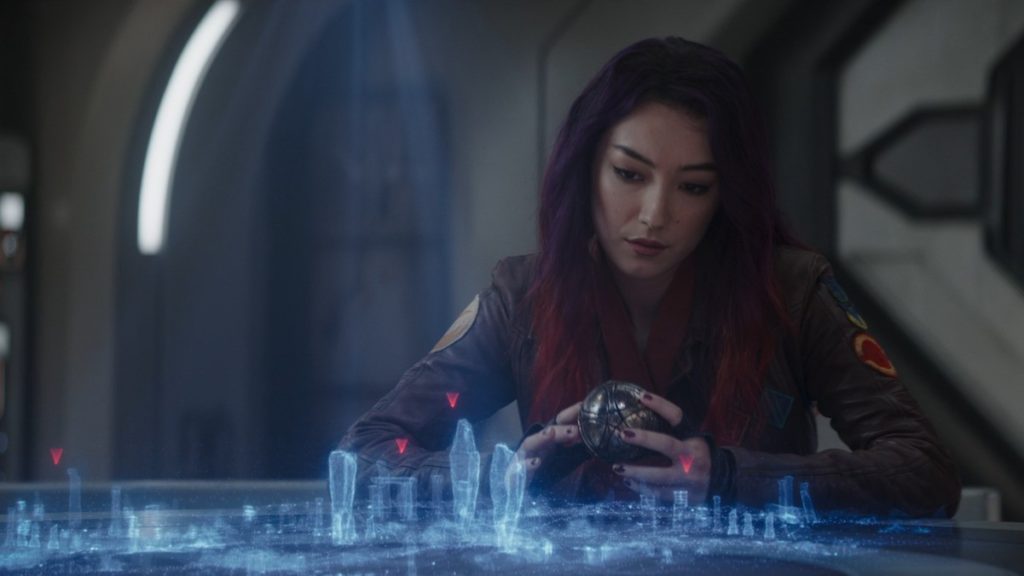
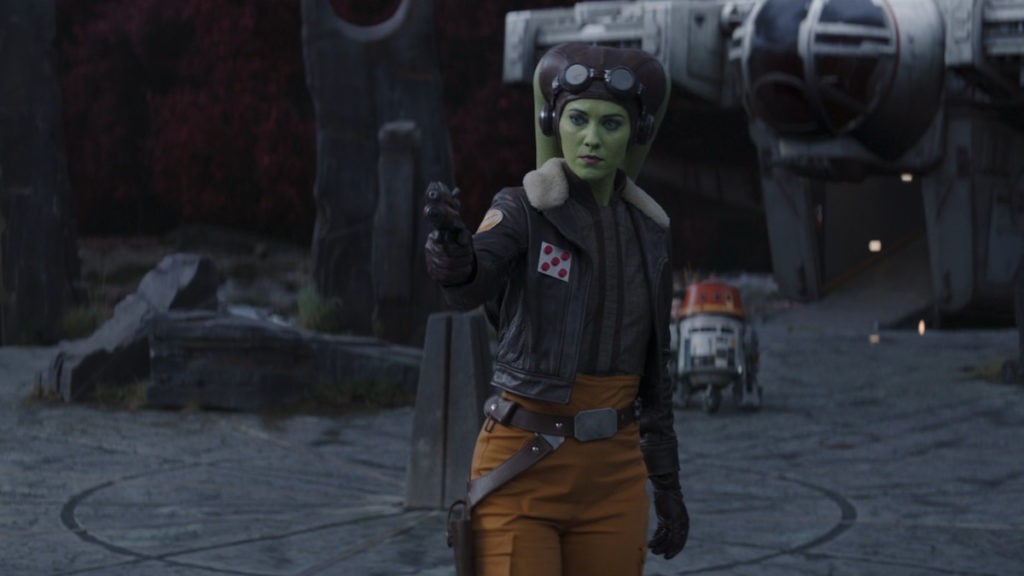
To decode Thrawn's coordinates, Ahsoka enlists Hera Syndulla (Mary Elizabeth Winstead, a wonderful actress), a Rebellion hero and New Republic general, and Sabine Wren (Natasha Liu Bordizzo), a rebel, Mandalorian, and her former apprentice. All three fought together at some point during the Rebellion, and it seems the history of a galaxy far, far away, having made another circle, brings them back to that stage: they need to work together again, stop the Imperials again, and for that they again need some strange blueprint (previously it was the Death Star plans, now a map with a hyperspace route).
'Ahsoka' as a series predictably turned out to be tied to familiar characters, constant references to 'Rebels', and ultimately to memories. The Imperials dream of the Empire not even because it was so great, but because it was a time when they were younger, stronger, and in power. Baylan Skoll periodically nostalgizes about the Jedi Order – it wasn't a very successful organization, but the idea was good, and he was obviously good in those days. Ahsoka remembers her fallen teacher Anakin Skywalker (Hayden Christensen), Hera Syndulla remembers her fallen husband Kanan Jarrus, Sabine remembers her friend Ezra Bridger, who may have died or simply disappeared (that's the series' intrigue).
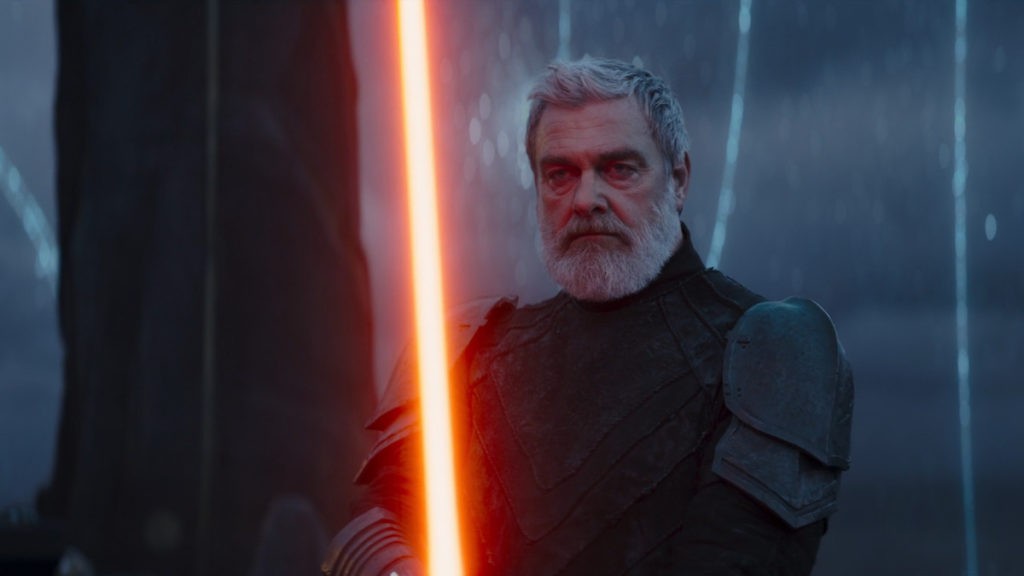
It doesn't turn into a lamentation only by a miracle, mainly because the women have no time for it – the galaxy needs saving, enemies need fighting. That's what everyone is busy with: Sabine trains with the lightsaber she got from Ezra and generally develops significantly as a character. Hera disobeys orders, argues with the Senate, takes her son on dangerous missions, and eventually comes to help – though always at the wrong time. Ahsoka, as the titular character, does all the same but with more screen time.
Yet, despite the abundance of well-staged (sometimes exceptionally well) duels, space shootouts, chases, and special effects, 'Ahsoka' is primarily not about what is happening, but about what has already happened, what cannot be changed. The first episodes focus on Ahsoka and Sabine's attempts to rebuild their relationship after a great tragedy (which, alas, is not fully revealed); in the fourth episode – where the most and best fighting occurs – the duel between Ahsoka and Baylan at some point resembles a meeting of Vietnam veterans from 'Rambo'; the fifth episode is about attempts to reconsider the past; the final episodes are about attempts to bring back the past. About how going to the edge of the galaxy for an aging general with red eyes is easier than starting to live.
However, this is not exactly a new idea. 'Andor' (which we consider great here) dealt with the attempt to reconcile dreams and reality, the third season of 'The Mandalorian' was dedicated to mistakes, second chances, and historical parallels, which generally turned out more interesting than 'Ahsoka', and the important theme that the past is only beautiful as the past (and returning to it brings only pain and war crimes) was already raised in the original trilogy.
Without saying anything new in terms of content, formally 'Ahsoka' also copies old techniques, plots, and stylistic moves. Some say that with its simplicity of thought and straightforward plot, this series is the closest to the original trilogy we've seen since the first 'Mandalorian'. However, it seems easy to confuse simplicity of thought with its absence. The main thing the plot of 'Ahsoka' tells us is about its own optionality.
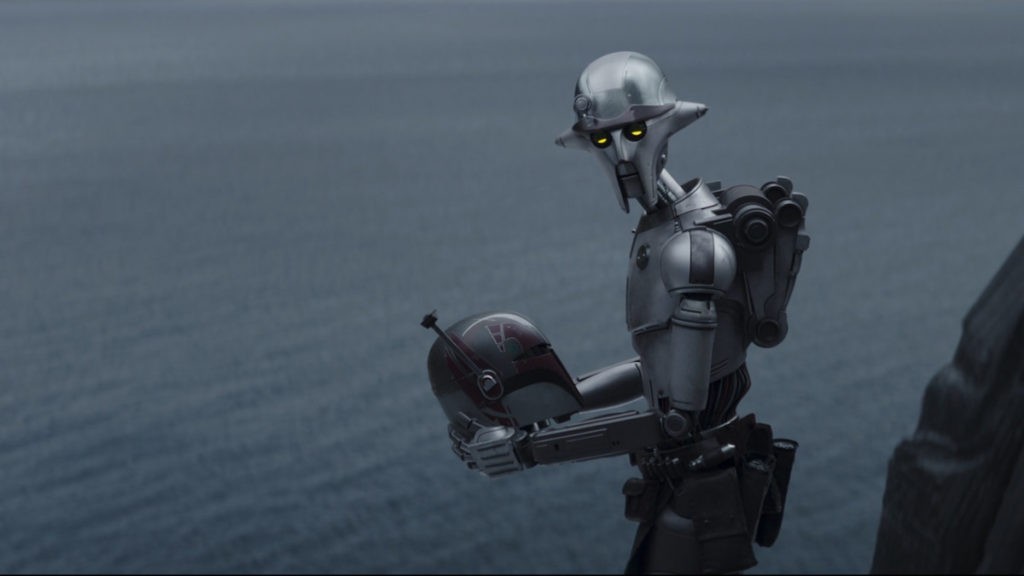
Although when the authors somewhat distract themselves from quoting 'The Lord of the Rings' (which is everywhere – from Ahsoka's fate to the forest fight), the series gains an interesting second layer. The boredom of repeating the same events actually illustrates that some historical moments simply could not have not happened and could not have not repeated themselves. Certain traumas are so deep that not only people but history itself is forced to relive them again and again.
And sometimes 'Ahsoka', not thanks to the writers' efforts but despite them, is still a decent, albeit sad, series. For example, we were already shown how Boba Fett, in his old age, without accumulating capital, started solving hipsters' water supply problems. And now we've been shown that good teenage girls, having grown up and spent their youth at war, know nothing but it and just fight, fight, fight and see the ghost of an abusive teacher everywhere. Meanwhile, enemies are increasingly boring, allies increasingly stupid, and situations increasingly predictable.
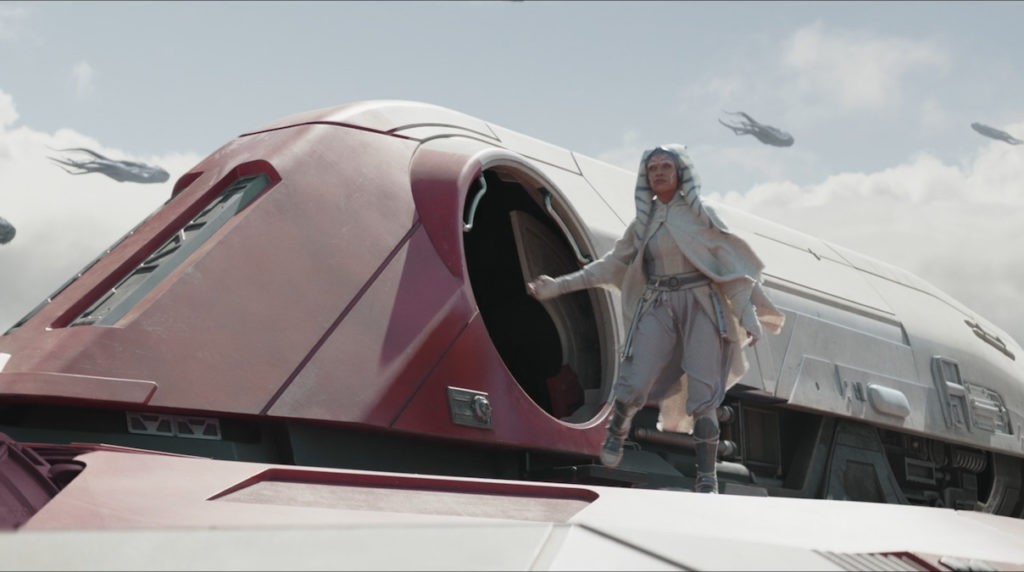
In general, it's a small drama of unsettledness and disappointment: it's impossible to come to terms with the thought that even such wonderful people as Ahsoka might not have a settled life, and such dashing heroes as Boba Fett might have a boring old age. But watching all this seriously for the tenth time is also, of course, impossible.
Comments
0No comments yet.
Sign in to join the discussion.