
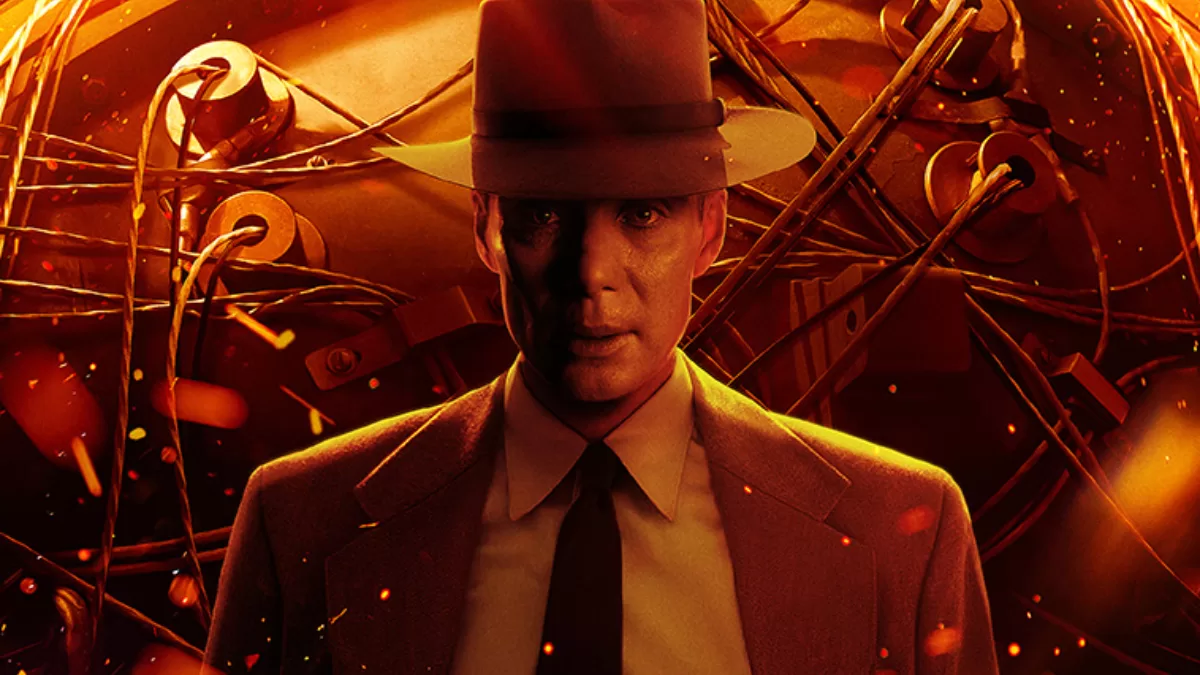
Authors of 'After the Credits' discuss the pros and cons of Nolan's deliberately assumed neutrality towards the story of Robert Oppenheimer.
"Prometheus stole fire from the gods and gave it to humanity. For this, he was chained to a rock and subjected to eternal torture."
Christopher Nolan – an adherent of sprawling cinema and monumental structures – could not bypass a story of epochal scale. Not only directing but also personally adapting the book "American Prometheus: The Triumph and Tragedy of J. Robert Oppenheimer" by Kai Bird and Martin J. Sherwin for the screenplay, Nolan seemed to sign with his film the existence of parallels in personal qualities between a man of science who, using a slice of classical physics laws and breakthrough science for creation, was endlessly devoted to his work, and a man of art who, using classical laws of cinema alongside breakthrough ideas (the first use of black-and-white film in IMAX cameras), creates with a sense of devotion to cinema. But despite this, the biopic by plan, but not at all one in essence, "Oppenheimer" is a three-hour cinematic article not so much about "Prometheus" as about his "gift to humanity."
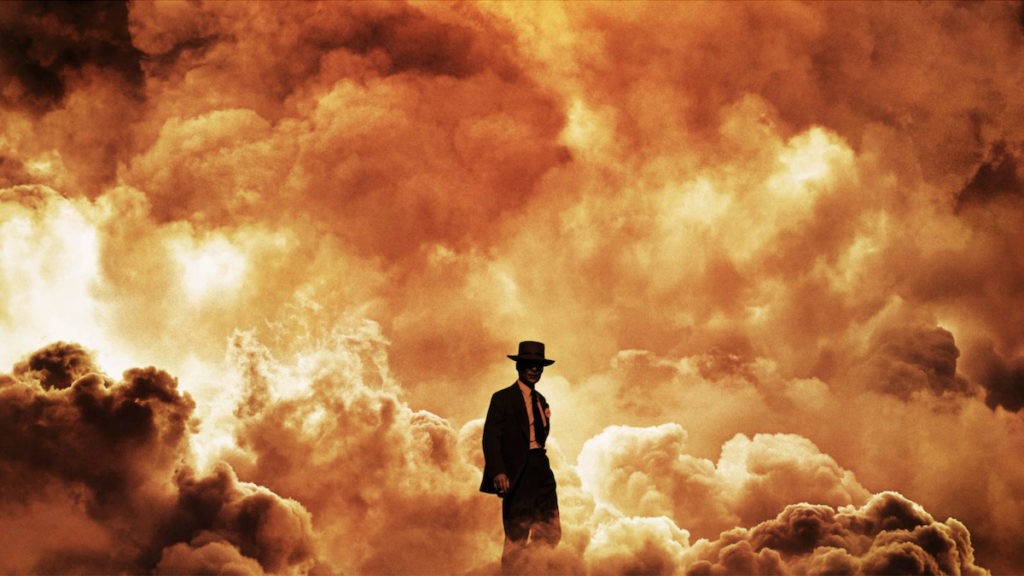
The film is divided into two conditional parts. The first, as regrettable as it may sound within a biopic, can be described in the words: "Once upon a time there was a man, and then, as usual, he died." And it's not that Nolan is completely uninterested in the social aspects of the scientist's life, although even about Oppenheimer's wife (Emily Blunt), the viewer only learns that she is a former drinking party communist who finds motherhood very difficult, but they are nothing more than fragments. Torn from life, like free electrons from an atom, in order to briefly get acquainted with the people who will later appear in the main events.

And they are concentrated on creating the atomic bomb. Nolan pays special attention to the work of physicists, constructing the narrative with all available and favorite means: he tells the story non-linearly, maneuvering between the past and the future (a slightly less distant past), using inserts with visualization of physical processes. Composer Ludwig Göransson, who previously worked on "Tenet" (read about the film in ), again heightens the atmosphere of an already quite tense film. At certain moments, you don't immediately understand where the seemingly learned feeling of unease comes from inside, until you realize that the melody is interwoven with the sounds of a siren, sounding on city streets in case of alarm.
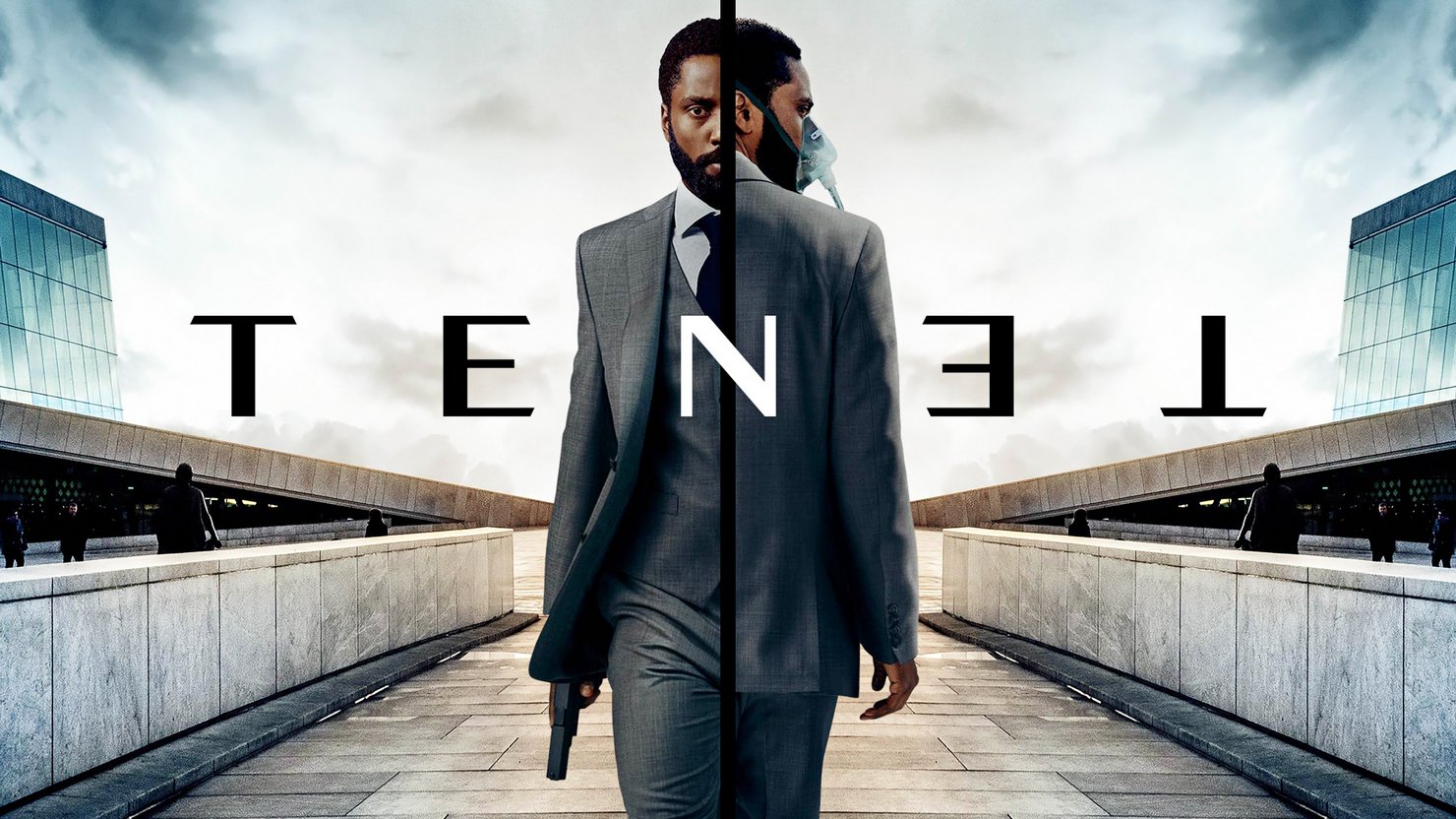
"Tenet" is not bad, but if you remember that its director was Christopher Nolan...
Open materialIn this part of the story, all previously introduced characters gather, and if you suddenly get confused about the names of scientists and their nationalities, don't worry – you'll be reminded with flashback shots. The conveyor of characters is colossal, but not everyone gets even a drop of attention. Only their beliefs and party affiliation are of interest, in order to build a conflict through the prism of opinions. It seems that most of the famous or at least simply well-known actors, such as Casey Affleck, Rami Malek, Kenneth Branagh, Gary Oldman, jumped into the film out of respect for Nolan and interest in working with him, since the most they are given is a fragmentary appearance and, at best, at least a couple of weighty phrases.
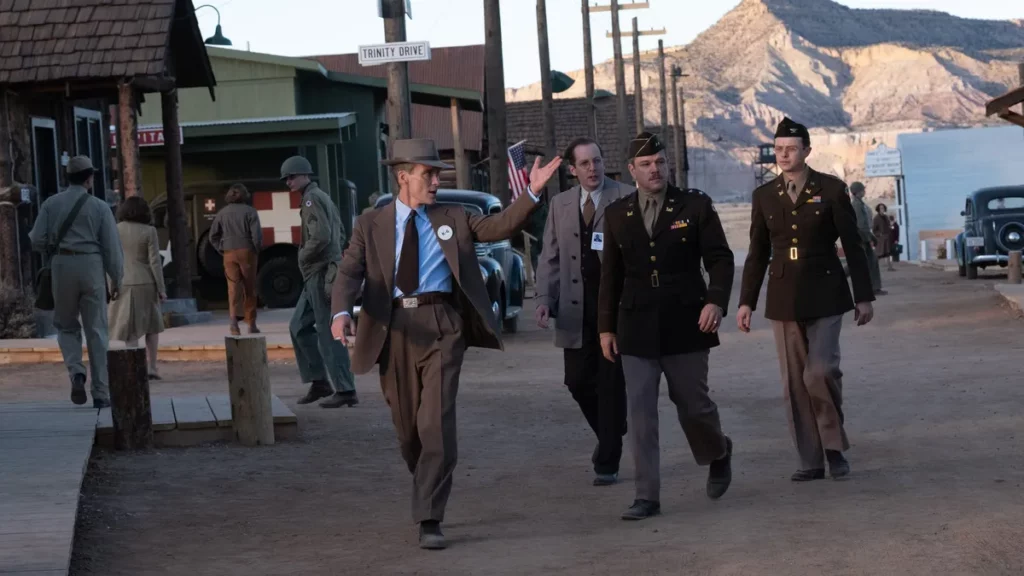
The main characters are Robert Oppenheimer and Lewis Strauss. The invisible confrontation between the physicist and the businessman is a consequence that is no less important than the action that led to the designated turn of events. Therefore, Nolan not only squeezes everything out of the incredibly talented actors but also resorts to artistic methods. While Robert Downey Jr. indulges the inflated ego of a capitalist offspring, for whom there are only extremes, Nolan conveys this polarity through black-and-white imagery. While Cillian Murphy throws himself wholeheartedly into the role of a work-obsessed sociophobe, the director is generous with close-ups, giving Murphy's facial expressions as much time as needed for the viewer to heed the character.
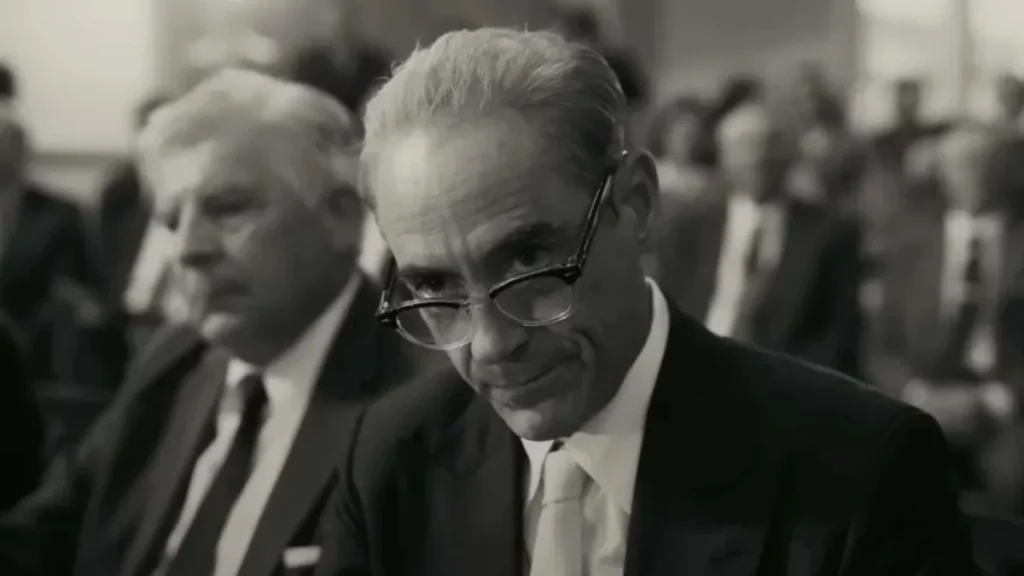
But the difficulty is that you want to understand a contradictory personality, which Oppenheimer was, but on screen you have to comprehend his more sterile version. The director saves the central character from the fire of value judgment, shielding him with one-sidedness. Oppenheimer is shown mainly as a positive character, tormented by pangs of conscience, or at least "not such a bad guy." The director justifies him in every possible way, endowing him with the image of a martyr, contrasted with America.
Neutrality is also maintained in relation to history as a whole, and Nolan, like a skilled tightrope walker, moves along a thin rope, trying to maneuver between "us" and "them." Many times in the film, opposing phrases are uttered regarding the justification of the American government's actions, polar opinions about Oppenheimer's personality, and even visually different shots, considering the instability of historical opinion, with one stroke concerning the life of Jean Tatlock, played by Florence Pugh.
Those scientists who openly expressed their thoughts in life, in the film more often shrug their shoulders and make grimaces. The struggle of opinions does not lead to conclusions, positions are not taken, and it becomes clear that Nolan made the film so that neither his own people would tear him to pieces, nor would the global release fail. And only statements about communists take on a slightly sharper tone, although the term "McCarthyism" and the methods of implementing this movement are also omitted.
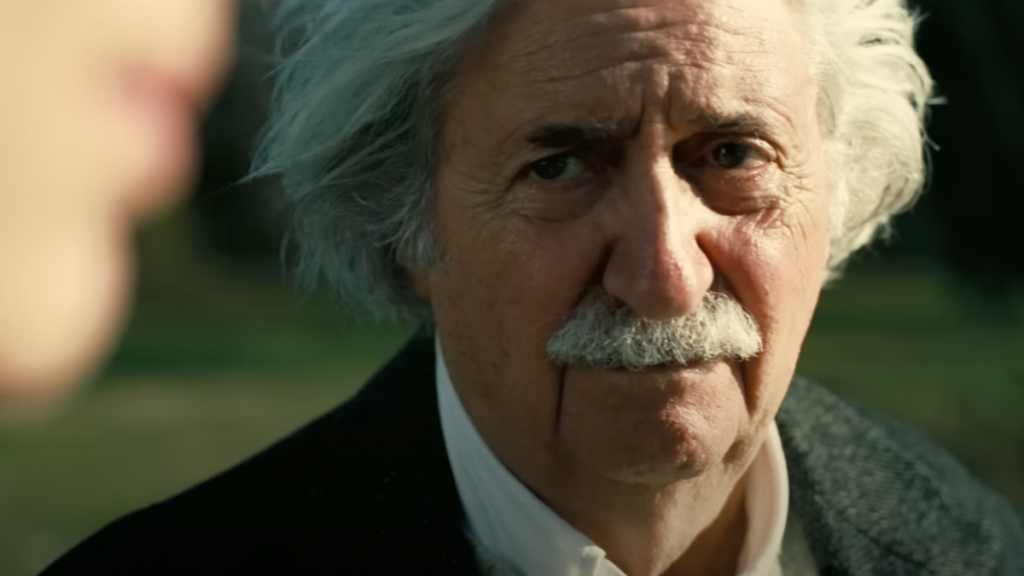
So it turns out that "Oppenheimer," for all its advantages of stunning visuals and acting, is a very ideologically sterile film. This is a story about how the mind gave birth to death, but neither the mind nor death are examined with the proper focus. If we compare the film to physics, we can say that from the available data of the problem called "Oppenheimer," an extensive solution is built, written out on three boards, but not leading to a specific answer.
Valeria Stoykova
Just as polar opinions in the film lead to neutrality, neutrality itself generates polar opinions about it
"Oppenheimer" by Christopher Nolan is an abundance of dialogue, reflections, and unhurried actions, but at the same time it is also a very tense, intriguing, and at times mesmerizing film. The three-hour runtime flies by unnoticed thanks to the non-linear plot development, beautiful cinematography, and a certain detective line. Suspense is created through sound design, when in the most tense moments silence sounds or, conversely, the sound jumps sharply. And Ludwig Göransson's compositions at the intersection of instrumental and mechanical finish off our last sensitive neurons.
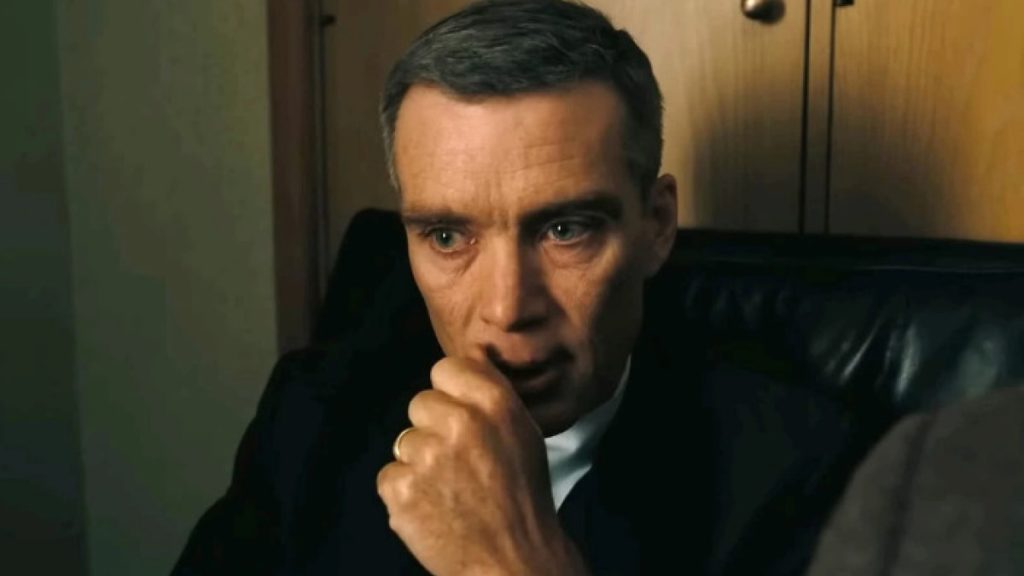
Nolan managed to make a non-trivial biographical film in which he does not express his personal position. And I believe this is the film's merit. The director tried to present Oppenheimer as objectively as possible: both as a scientist passionate about science and as a destroyer of worlds. There is both the triumph of human intellect and the triumph of cruelty and humanization. As a result, Nolan not only made a strong pacifist statement but also reminded us that scientific progress and bloodshed almost always go hand in hand.
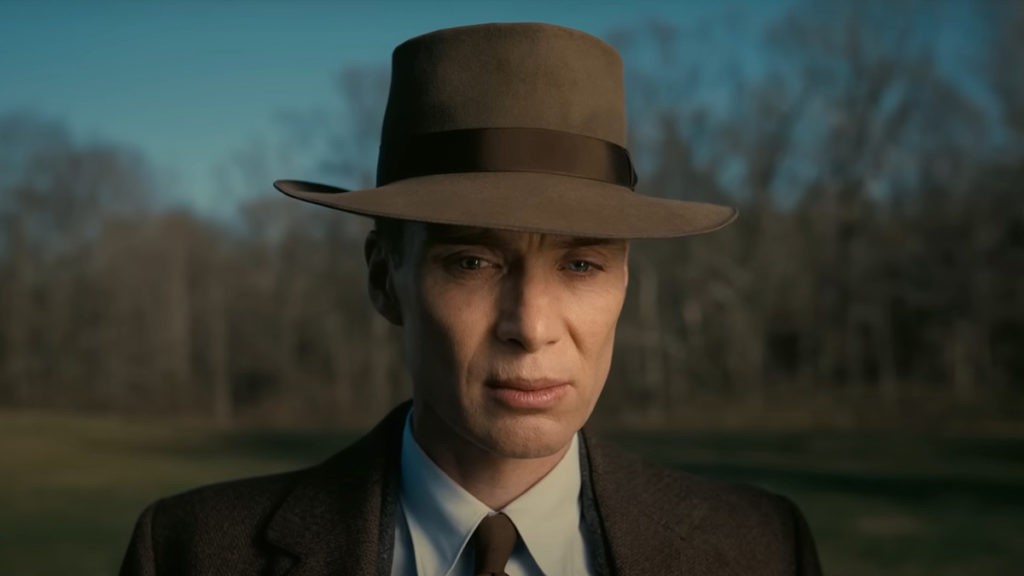
In "Oppenheimer," personal tragedy coexists with reflections on humanity and the price of scientific revolutions. And we see all this through the eyes of one physicist who naively believed that the atomic bomb would bring peace. He was neither bad nor good, he was just a man.
Nadezhda Vasilyeva
Comments
0No comments yet.
Sign in to join the discussion.