
In the third episode – dashing and captivating – a poison is discovered at the heart of the New Republic, a giant ship resembles a ring of power, and everyone wants to become Jedi. All about this in our recap.
Previous recaps:
Warning: spoilers for the 3rd episode of the series 'Ahsoka' follow below
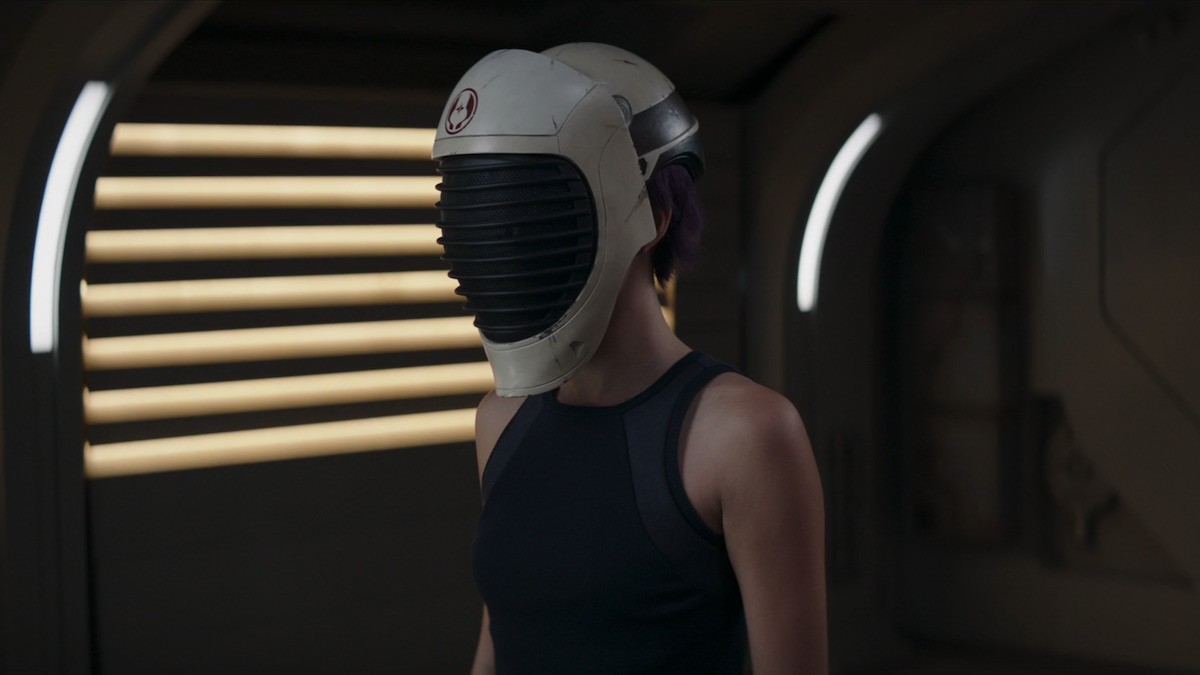
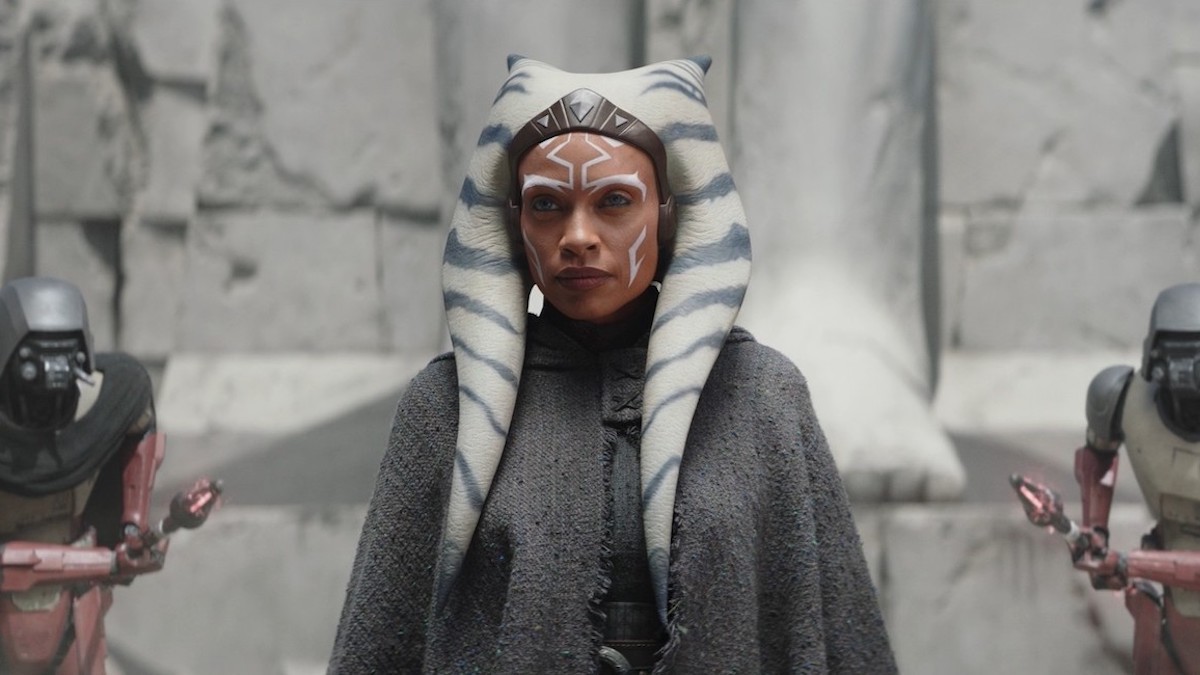
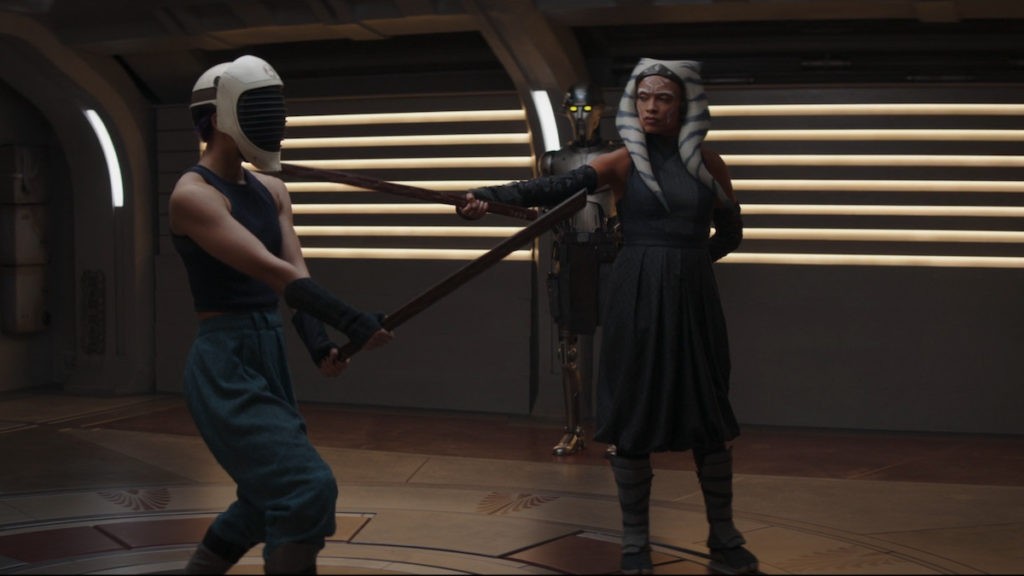
Ahsoka (Rosario Dawson) and Sabine (Natasha Liu Bordizzo) flew, as often happens with 'Star Wars' heroes, towards adventure, and the Jedi, to pass the evening, decided to train her Padawan. Sabine doesn't remember the old lessons too well and is, in general, learning fencing anew. Seeing the Mandalorian's irritation, Ahsoka suggests Huyang (David Tennant) give her a training session using the 'Zatoichi' technique.
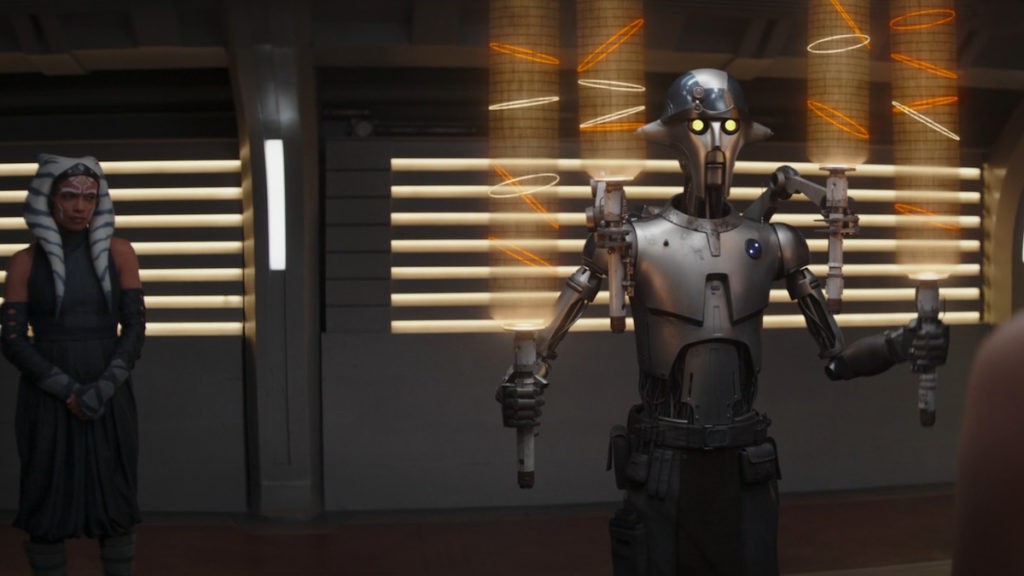
In general, it's no secret to anyone that the creators of 'Star Wars' watched a lot of old Japanese films, but so far only George Lucas has admitted this so explicitly. By the 'Zatoichi' technique, the characters mean blind training – Sabine, not seeing Ahsoka, must deflect her strikes. Besides simply appreciating the authors' honesty regarding copyright, this is also an interesting scene and a wonderful homage.
A bit of history: before filming 'A New Hope,' Lucas rewatched his favorite Kurosawa films many times, particularly the great film 'The Three Villains in the Hidden Fortress,' from which he borrowed a number of plot conflicts and visual solutions. Homages to 'Seven Samurai' can be found in Dave Filoni's animated series and in the first season of 'The Mandalorian.' The series itself, about a mercenary traveling with a child, plot-wise quotes the eighth film from the 'Zatoichi' franchise – about a clumsy blind masseur who is actually a master of the blade. These films were also referenced in the great scene from 'A New Hope' (blind training) and the storyline of one of the heroes of 'Rebels.'
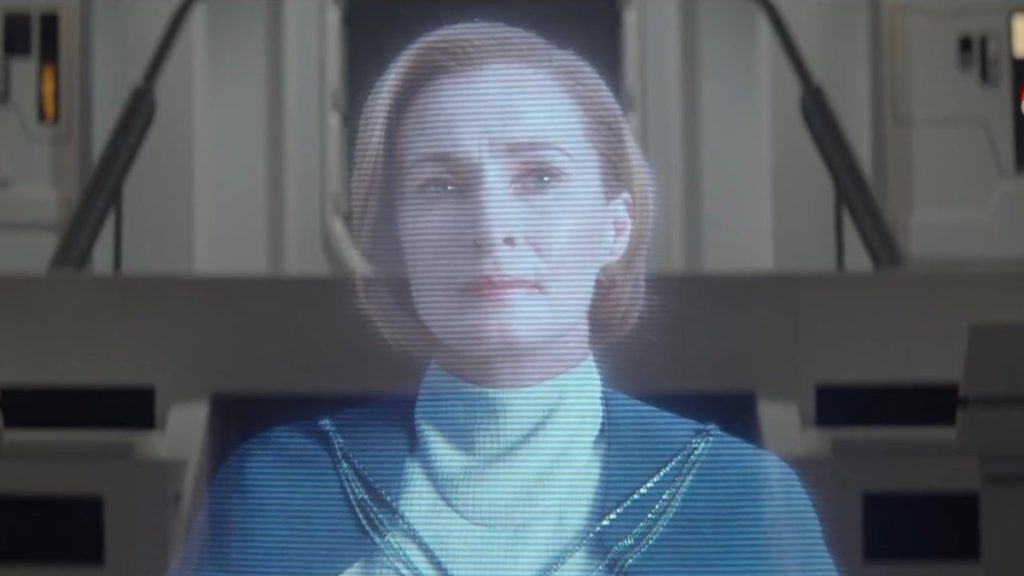
Meanwhile, Hera Syndulla (Mary Elizabeth Winstead), to help Ahsoka, contacts the leadership of the New Republic – representatives of the Galactic Senate and its Chancellor, Senator Mon Mothma. Hera speaks with the latter as an old friend from the time of the Rebel Alliance, but not everyone in the bureaucratic upper echelon is so benevolent towards the battle-hardened general. In particular, Senator Xiono, an arrogant man (and, as follows from the conversation with Hera, one who joined the New Republic only when it had already won), convinces his colleagues not to send the fleet to the Eye of Sion.
Senator Mon Mothma first appeared in 'A New Hope' as the leader of the rebels. Later, this supporting character appeared both in the numbered episodes of the saga (for example, in the deleted scenes of 'Revenge of the Sith,' she and Padmé were, in general, assembling the opposition coordination council) and in animated series – from 'Rebels' to 'The Clone Wars' – until finally Mon Mothma became one of the main (and most morally sympathetic) characters of 'Andor.'
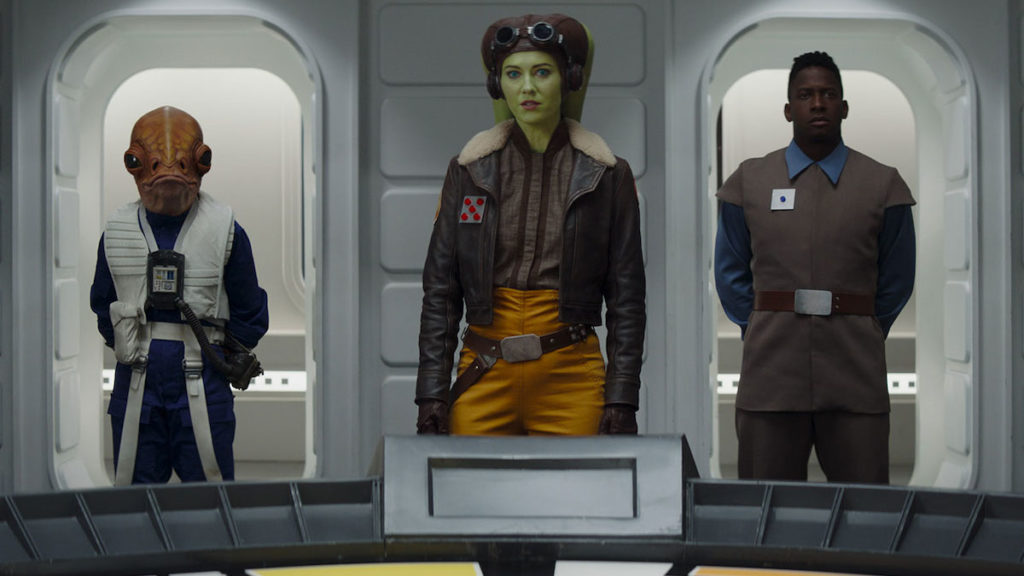
Disappointed with the meeting's outcome, Hera meets her son Jacen (her child from Kanan Jarrus from 'Rebels.' Why their son is named as if he's about to star in a remake of 'Friday the 13th' is a question without an answer). He heard that Sabine wants to become a Jedi and expressed a desire to become one too. Hera replies that he definitely will, and smiles. This is not clarified in any way, but Jacen's father was a Jedi and Ezra's teacher, so for Hera, such a desire from her son is both a joyful and a sad moment.
Ahsoka and Sabine, meanwhile, discuss the ways of the Jedi and the fact that the Mandalorian, lacking sensitivity to the Force, cannot, in general, follow them. Ahsoka claims that the Force is in everyone, and at this moment reminds one of Qui-Gon Jinn. And the main question that actually confronts the heroines is: what does it even mean to be a Jedi? Why be one in an era when the Order is exterminated and its traditions are preserved only by a few outcasts?
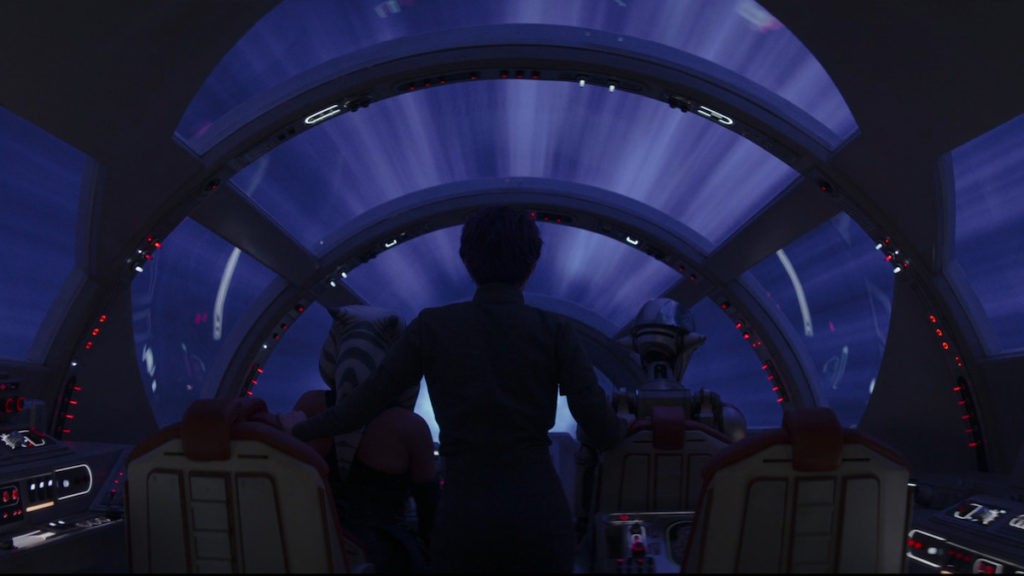
Huyang once again confirms the unusualness of Ahsoka's views, pointing out that Jedi are certainly not taught that way, and then delivers one of his best observations: that Ahsoka herself is a continuer of the line of quite unusual Jedi – exceptions, chosen ones, traitors, heroes, broken people. Anakin Skywalker, Obi-Wan Kenobi, Qui-Gon, Count Dooku, Master Yoda.
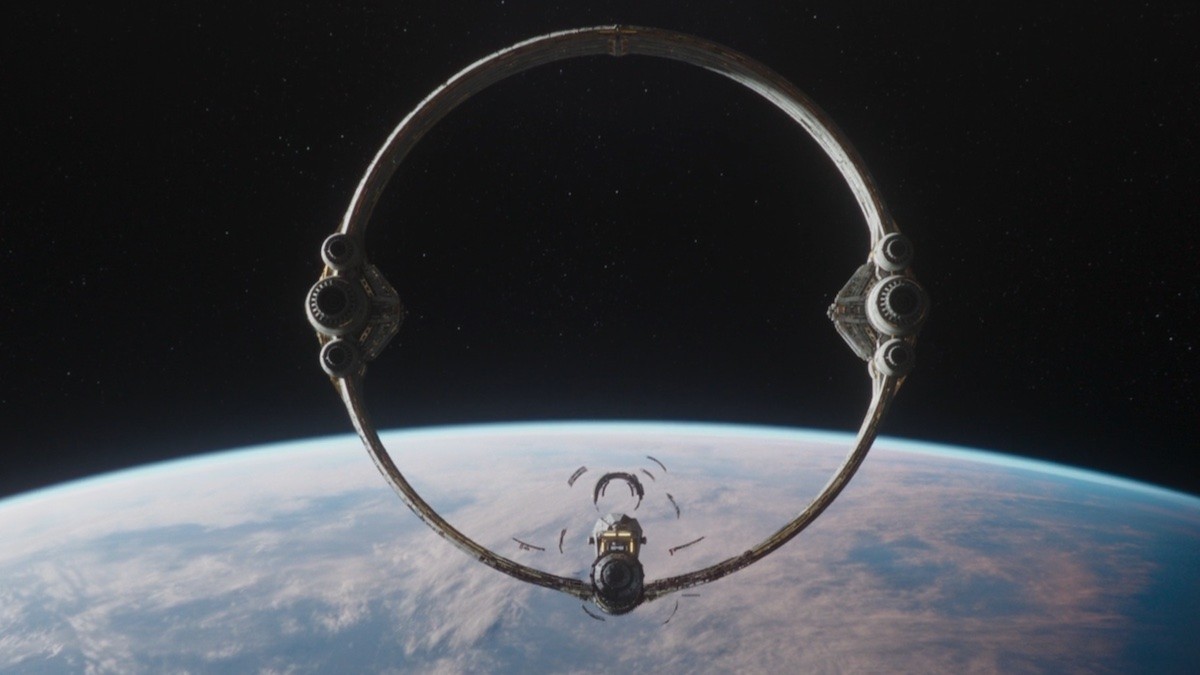
When the interesting conversations exhaust themselves, the heroes exit hyperspace and discover the Eye of Sion – a giant ring-shaped ship on which Baylan and Morgan Elsbeth plan to make a jump to another galaxy. Exploring the ship, the heroines fly too close, and a small squadron of fighters is sent after them.
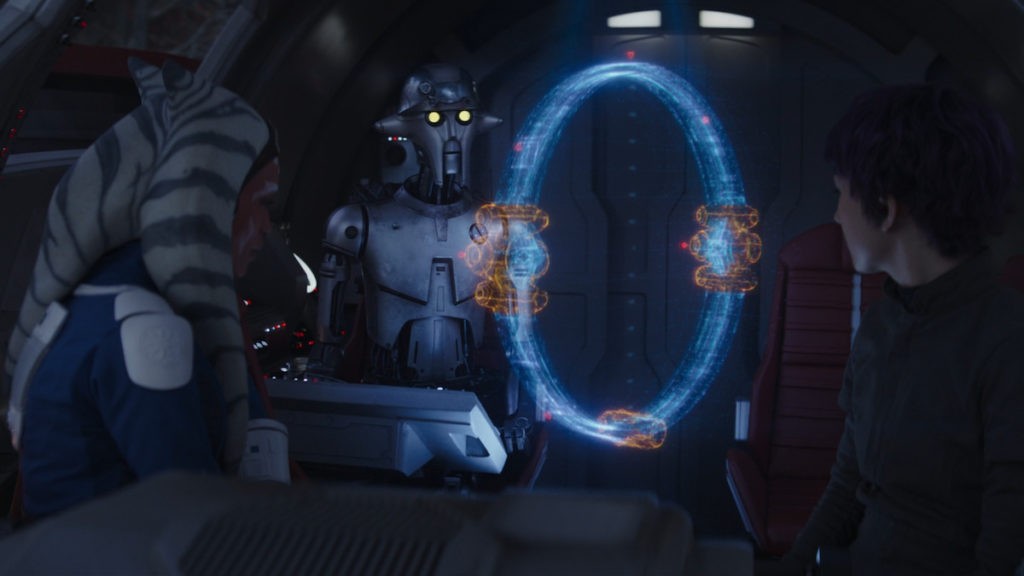
With Ahsoka at the helm (and at one point on the shuttle's wing with lightsabers!) and Sabine at the turret, the number of enemy ships decreases not so much rapidly, but indeed spectacularly, until only Shin remains – Baylan's wild-eyed student, ready to pursue the heroines to the end. They miraculously escape to a nearby planet, evading pursuit following the precepts of Han Solo in the film 'The Empire Strikes Back' (and again encountering giant space whales, which we already saw in 'Rebels' and 'The Mandalorian'). In the finale, Baylan and Morgan Elsbeth's hunters (also from 'The Mandalorian') are sent after them.
Impressions
Steph Green directed another excellent, albeit too short, episode, which quotes the classics ('Zatoichi'!), features a lot of shooting and reflection.
It's curious that in a series about one of the last representatives of the Jedi Order, there is no particular longing for the Order – after all, there is a new life and new heroes, and the Order was not an ideal organization – but there is a special melancholy. For youth, for the past, for the rebellion (in Hera's case).
The visual side of the show also sets a sad tone. Everything is done in the colors of the titular heroine: matte silver, white, muted orange. The galaxy far, far away looks stylish and slightly dreary, so that, for example, Hera Syndulla appears as a particularly joyful spot. So we will note once again how good actress Winstead is.
A particular joy of the episode: seeing Genevieve O'Reilly again in the role of Mon Mothma. A favorite (since 'Andor') heroine of those who prefer quiet melancholy and principledness to a good fight.
At the same time, politically, the episode continues important motifs for the new 'Star Wars': the reasons for the fall of the New Republic were within itself (that unpleasant Senator Xiono); the rebellion did not make everyone happy; resentment in a galaxy far, far away is closer than it seems.
In general, we will keep watching.
Comments
0No comments yet.
Sign in to join the discussion.