
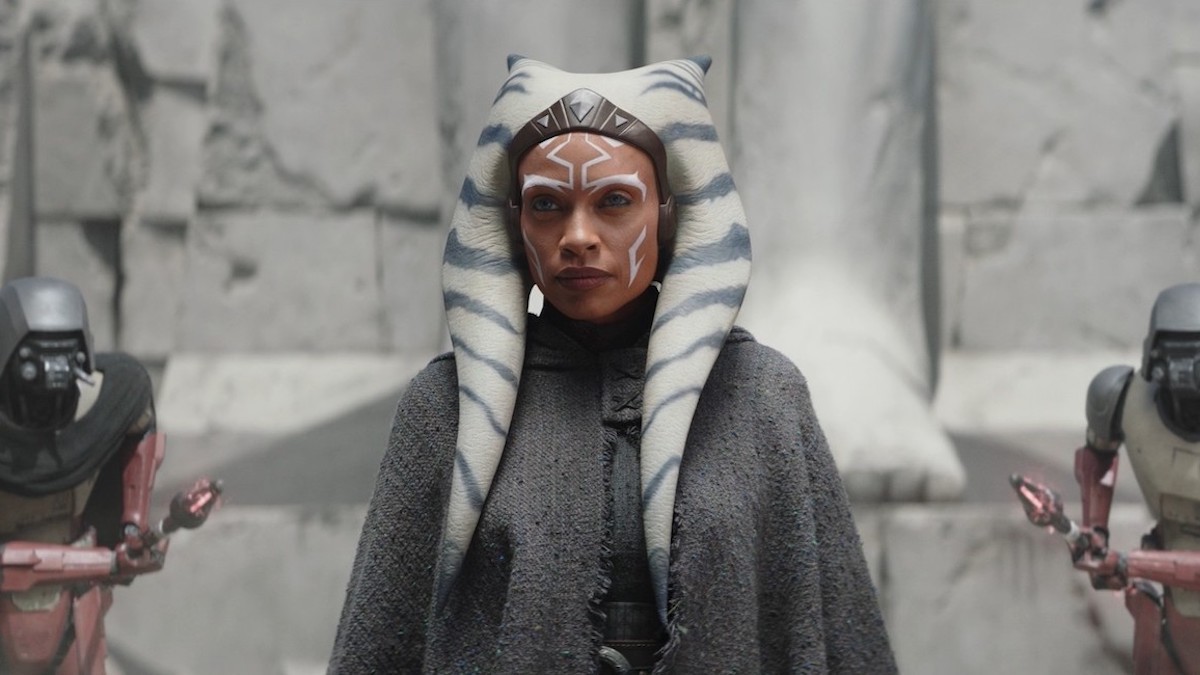
One of the most anticipated series of the year, 'Star Wars: Ahsoka', has started airing. We will recap it, unravel the mythology of this intricately constructed show, and generally not abandon you. We'll start with a recap of the first episode.
'Ahsoka' is a series about a former Jedi, first introduced in the animated series 'The Clone Wars', or more precisely, in the feature-length animated film that preceded it. Everyone hated her a little back then, but 'Star Wars' fans do that to all characters (if Luke Skywalker were debuting now, it's terrifying to imagine how much everyone would hate him), so later they loved her and even brought her into the series 'Rebels', making her one of the founders of the resistance against the Empire.
She later appeared in the second season, and even in 'The Book of Boba Fett', which takes place after the fall of the Empire. Her solo project is also set around the same time after 'Return of the Jedi' and seems to be situated between the second and third seasons of 'The Mandalorian'. Since simply listing the projects where Ahsoka appeared took a whole paragraph, it's clear the series is full of references to events that may be unknown to anyone except nerds, fans, and other Sheldon Coopers. To avoid burdening everyone with constant explanations in the main text, important lore facts will be placed in footnotes. Anyway, for a show so tightly tied to the past, the season started off briskly and promisingly.

'The Mandalorian' used to be praised, but now, after the new season, it's being criticized. About why the uneven third season is an interesting and unexpected step forward for the series, which
Open materialPlot
'Ahsoka' began with credits in the style of the main 'numbered' episodes and a reference to 'A New Hope', and that's probably right, though not very original. A ship was flying through space, transporting one of the Empire's magistrates, Morgan Elsbeth (Diana Lee Inosanto), in custody. Two gray Jedi – a master and an apprentice – arrived to rescue her, cutting through the entire crew as they walked down the corridor.
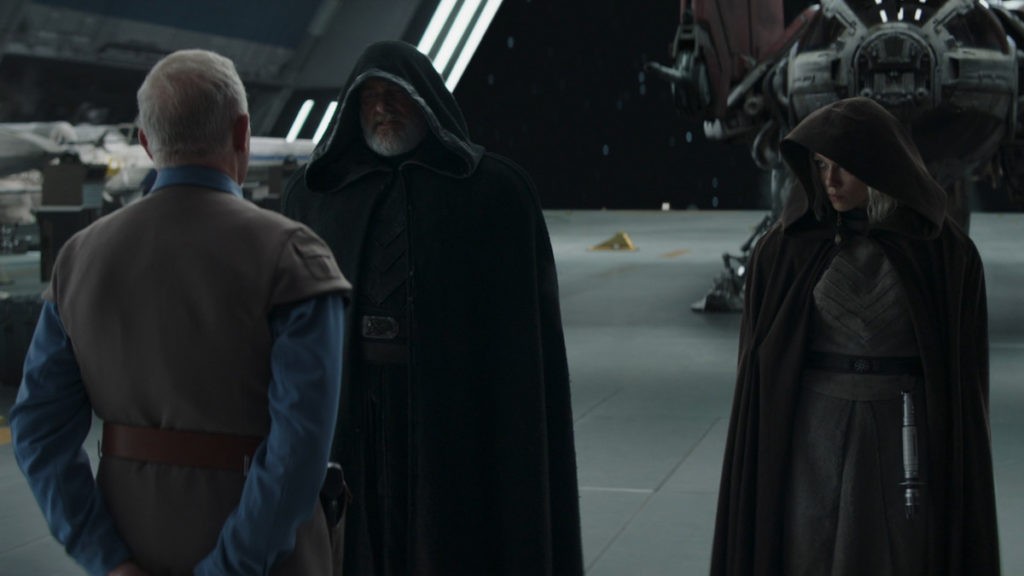
Gray Jedi are those who left the Jedi Order to work for themselves. Sometimes they remain faithful to the principles of the light side of the Force (as seen in the cult game Knights of the Old Republic), sometimes they lean toward the dark side (as here), and sometimes they remain neutral.
Meanwhile, Ahsoka (Rosario Dawson) lands on a desert planet and tries to infiltrate a suspicious-looking abandoned temple. The sanctuary turns out to have a puzzle – the heroine cleverly moves things around and manages to retrieve a holocron containing a map. However, she cannot open it. After a battle with unexpectedly appearing assassin droids that activate a self-destruct program, Ahsoka retreats to her ship, where her own droid, who once served in the Jedi Temple, is already waiting for her (voiced by our beloved actor David Tennant, and this is another reason to watch in the original with subtitles). The temple and the wasteland are meanwhile engulfed in the fire of the explosion, like many, it must be said, places where a Jedi has set foot.
On Lothal, the home planet of Ezra Bridger, they are celebrating Independence Day: the mayor is saying something, the senator is thanking everyone, and the heroes of the series 'Rebels' gaze eloquently from a mural at the citizens, reminiscent, of course, of the founding fathers. The Mandalorian Sabine Wren (Natasha Liu Bordizzo) has run away from the celebration, as her own stubbornness and universal melancholy prevent her from rejoicing with everyone else. At her home – the former guard tower of her comrade from the series, Ezra – she is sad again, feeds her cat, and rewatches the holocron, Ezra's last message, who left and never returned.
Ezra Bridger disappeared in the finale of the series 'Rebels', sacrificing himself in the battle for Lothal and dragging the invincible Imperial Admiral Thrawn into a portal between galaxies. Their fate remained a mystery, which, judging by the synopsis, 'Ahsoka' might just resolve.
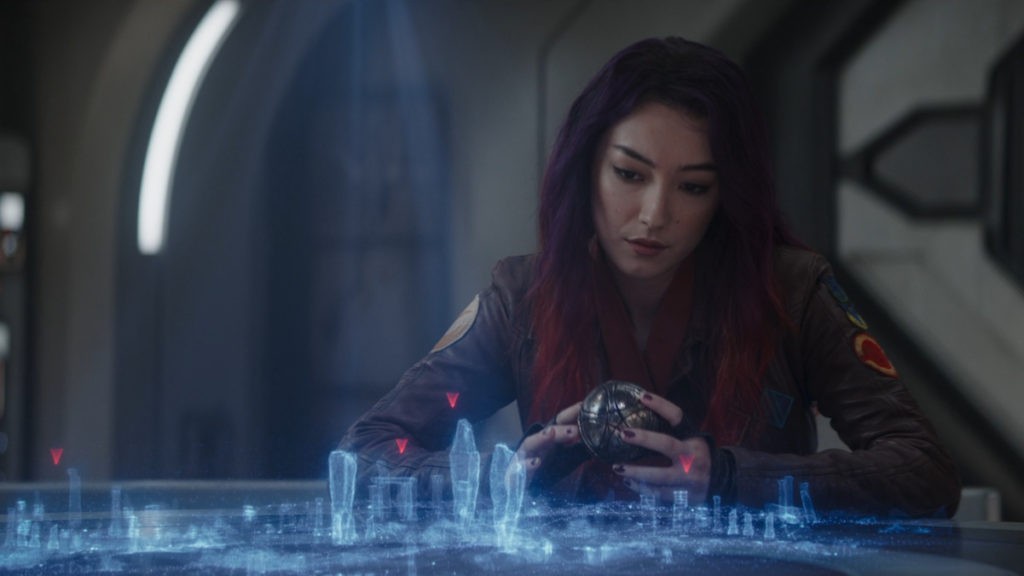
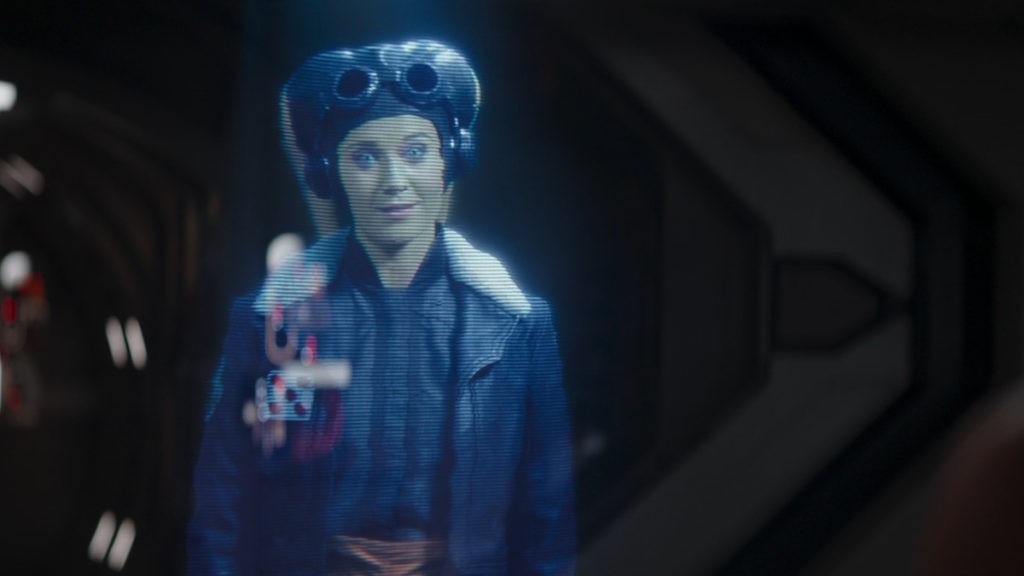
Ahsoka, at a council of commanders, discusses with General Hera Syndulla (Mary Elizabeth Winstead, a remarkably cheerful actress) who could unlock the holocron. The general suggests asking for help from Sabine, who is perfect for such a task. Ahsoka has a complicated relationship with Sabine, but she agrees to go to Lothal.
Sabine Wren, like Hera Syndulla, was part of the crew of the ship 'Ghost', a small but important unit for the birth of the Rebel Alliance, which at some point became a real family. Hera is an outstanding pilot and remained in service with the New Republic. Sabine is a Mandalorian who returned the Darksaber to her people, giving it to Bo-Katan (who also appeared in 'Rebels', as well as in 'The Mandalorian'), and without being Force-sensitive, became Ahsoka's Padawan, but Ahsoka left her (this is hinted at by the series' characters; details are yet to come).
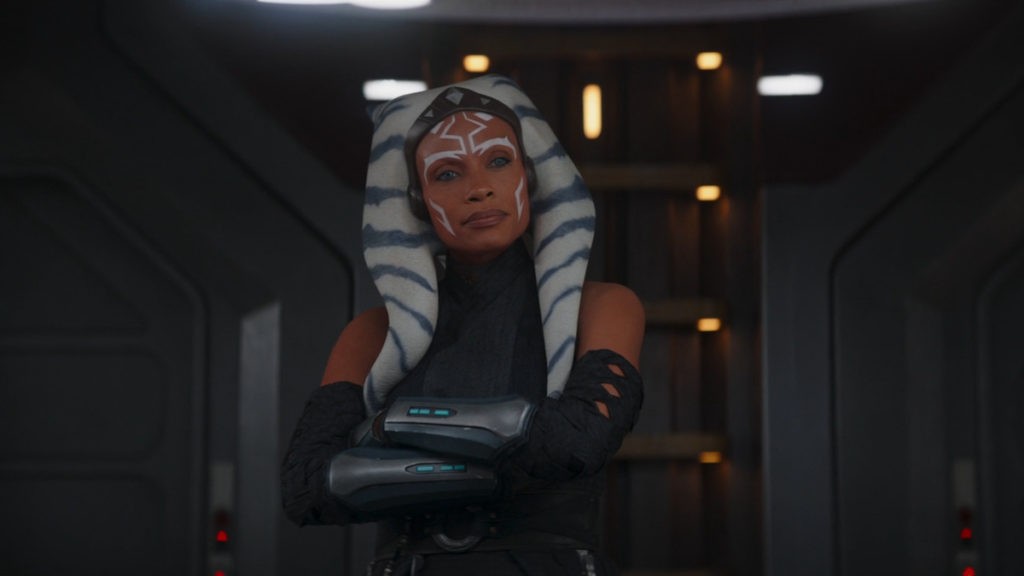
On Lothal, Ahsoka meets Sabine at the palace and invites her to her ship. There, she asks Sabine to decipher the map, staying on the ship, but as soon as the heroine turns away, the Mandalorian has already escaped with the map to her home, where she works better.
Ahsoka is angry with her former Padawan and doesn't understand why she recklessly took such an important item (we don't understand either), and, of course, blames herself for having left Sabine once. Just as she left her own master, Anakin Skywalker (this happened at the end of the fifth season of 'The Clone Wars'). Hera comforts her friend and pushes her to offer Sabine to become her Padawan again.
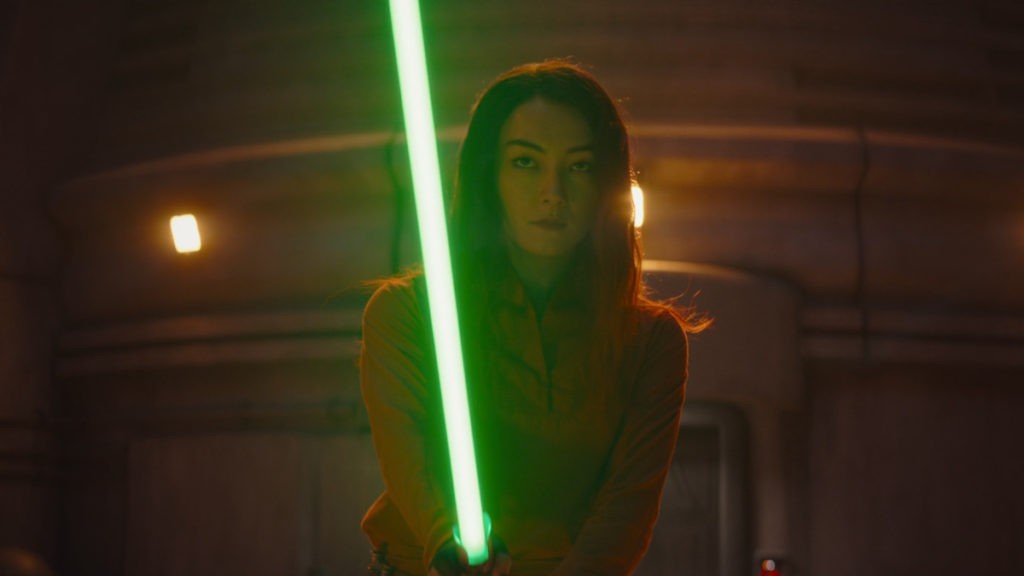
Sabine, meanwhile, managed to decipher the holocron and extract a map that points to a portal to another galaxy (!), where Admiral Thrawn is imprisoned. But on Lothal, by order of Morgan Elsbeth and her master (played by the late Ray Stevenson), the dark Jedi apprentice Shin Hati arrives. She finds Sabine and takes the map. The Mandalorian tries to oppose her in a lightsaber duel, but it ends predictably: Hati runs her through. Qui-Gon Jinn died from such a blow in 'The Phantom Menace', but here the threat is obvious, and no one dies.
Ahsoka arrives too late to intercept the map but saves Sabine.
End of the first episode.
Impressions
'Ahsoka' started off in terms of direction not as briskly as one might have hoped, since Filoni, while a worthy screenwriter, is too static as a director – even the inherently interesting duels in the episode lack dynamism. From a script perspective, however, it's the opposite: it's engaging, well-conceived, and definitely worth watching.
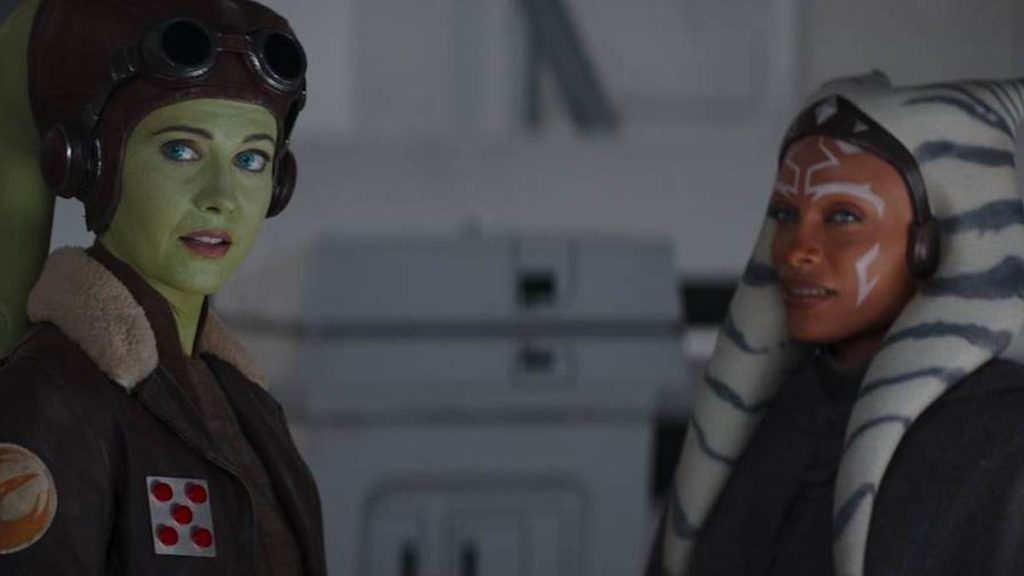
The creators manage to find a balance between the constant (and inevitable) references to 'Rebels', 'The Clone Wars', and the original trilogy (everything happens after 'Return of the Jedi'), without descending into fan service. The heroes of old stories don't just appear to please everyone; they live, and watching this is a rare pleasure. Particularly pleasing, oddly enough, is not Sabine Wren, but Hera Syndulla – she is played by actress Winstead, who became a star in our countercultural circle after her role as Ramona Flowers in 'Scott Pilgrim vs. the World', meaning she is automatically the kind of person you can watch endlessly. She is also, by the way, a 'scream queen' (although the remake of 'Black Christmas' is an indelible sin in any biography), as well as the wife of Ewan McGregor, so she is someone accustomed to 'Star Wars'.
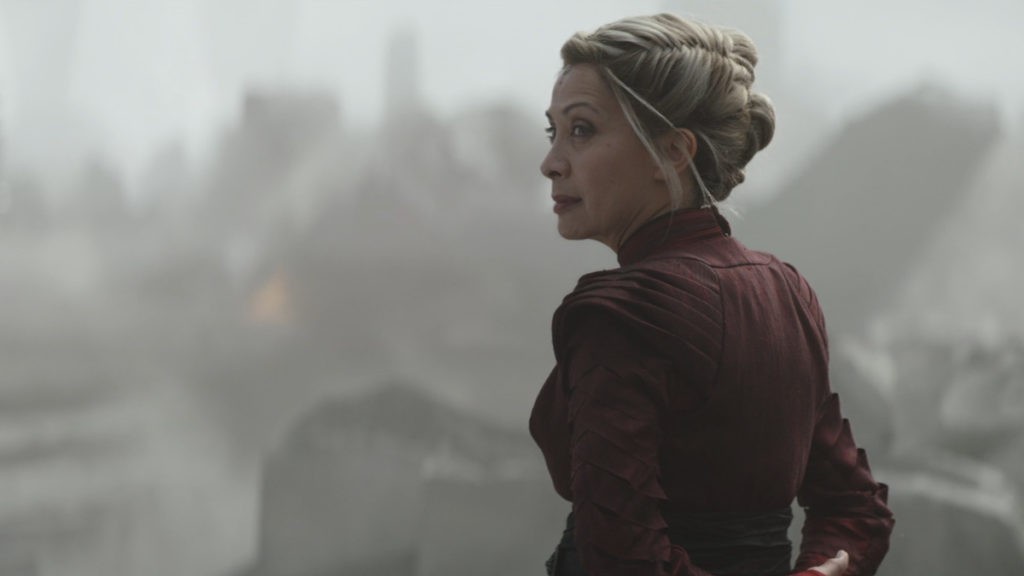
The new characters are also pleasing: Morgan Elsbeth, who only briefly appeared in the second season of 'The Mandalorian', turns out to be one of the last Dathomirian witches (very interesting villains from the 'Star Wars' universe, who once, for example, both befriended Count Dooku and opposed him); and the dark Jedi – Baylan Skoll and Shin Hati (Ivanna Sakhno) – are simultaneously like Sith and not. In Stevenson's character, besides the usual lust for power, one senses melancholy, and this adds potential depth to the anticipated confrontation.
The promising plot, with the Imperials' attempts to bring Thrawn back from another galaxy (cleverly twisted), so that he can lead the remnants of the Empire, not only looks entertaining but also references again (Episode 7 of Season 3), where at a council of former Imperial generals they discussed the same matters and, of course, were vying for power. Probably, the main motif – of both the third season of 'The Mandalorian' and this storyline in 'Ahsoka' – is that evil does not simply disappear, democracy is not built in a day, and to achieve happiness, it is not enough to blow up a second 'Death Star'. And this is likely the best marginal commentary on the original trilogy that these series can offer.
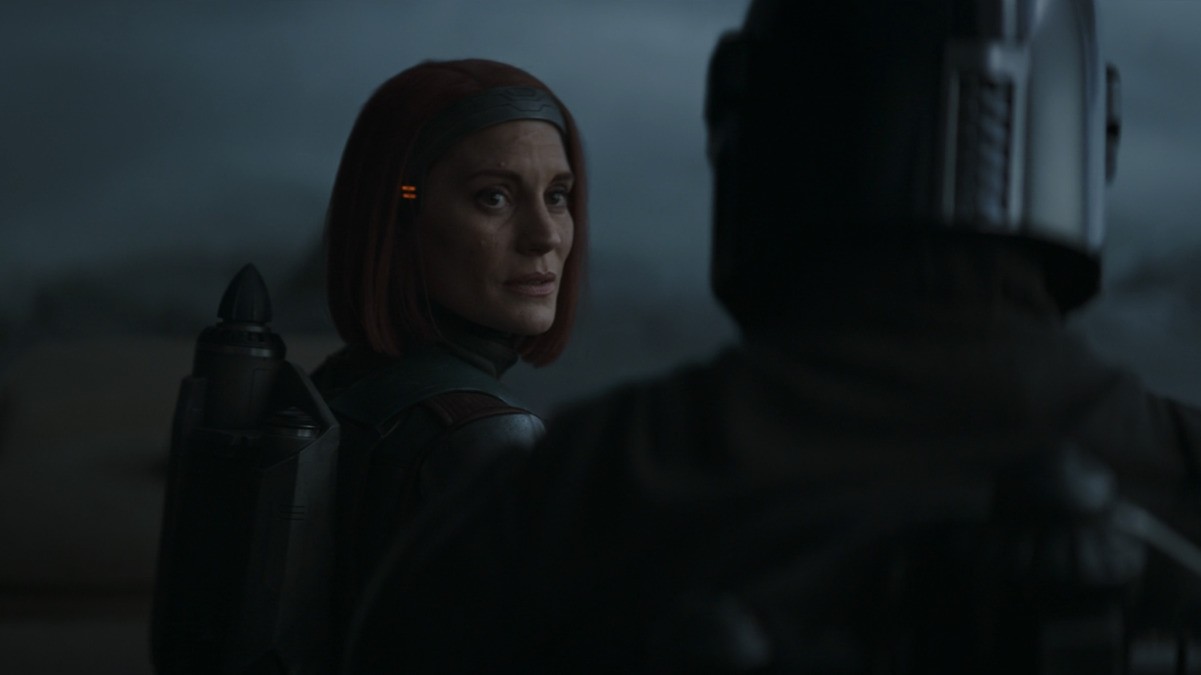
Mandalorians vs. Imperials, Mandalorians vs. Godzilla, Mandalorians vs. themselves. About old grievances and what the path really is – in our recap of the penultimate episode of the third
Open material
Comments
0No comments yet.
Sign in to join the discussion.