
Droids and people in search of a second chance, Mandalorians in search of happiness, Christopher Lloyd in search of historical justice. All this and why in the sixth episode ‘The Mandalorian’ turns out to be a wonderful police procedural – in our rec...
In the new episode, Din and Bo-Katan fight political terrorism, find themselves in a quasi-ancient polis, and deftly play out “Law & Order” (or “Streets of Broken Lanterns,” if taking the local context) in the “Blade Runner” setting. Not everyone in the Western press seems to have liked it, but this may be one of the best episodes of the season and a generally endlessly joyful spectacle. The episode was directed by Bryce Dallas Howard, who is responsible for the most memorable episodes of the second and first seasons (and she also played Gwen Stacy in the Spider-Man with Maguire). In short, “The Mandalorian” at its best.
Previous recaps:

Warning: the following text contains spoilers for episode 6 of “The Mandalorian”
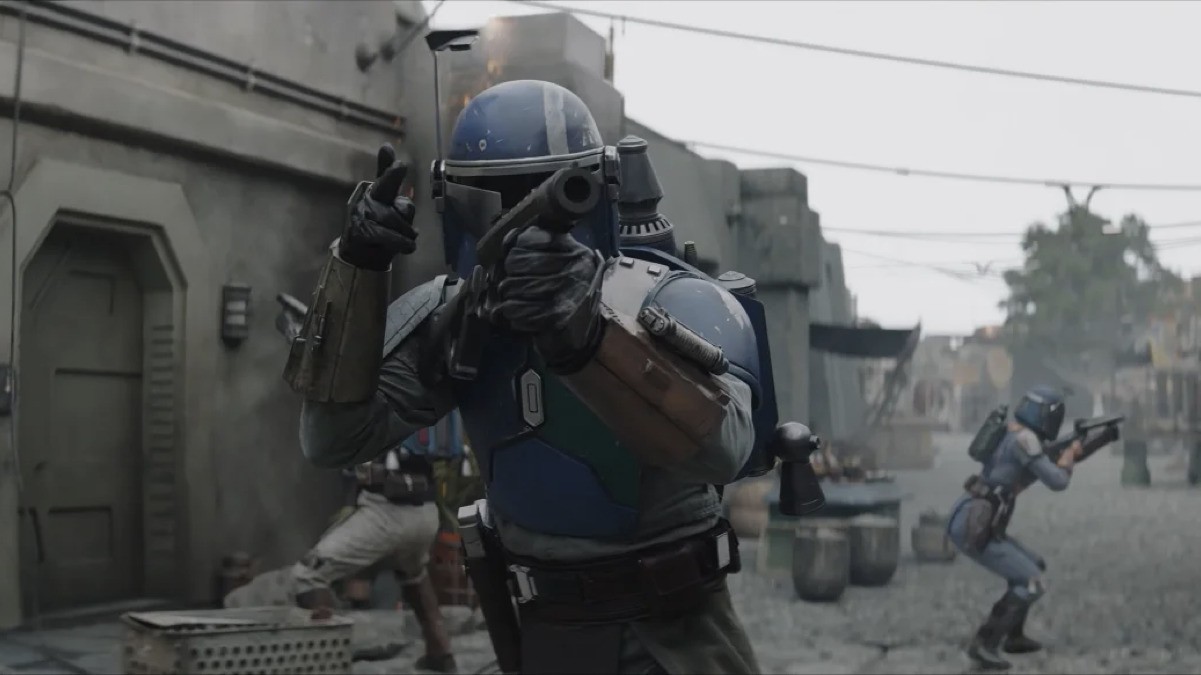
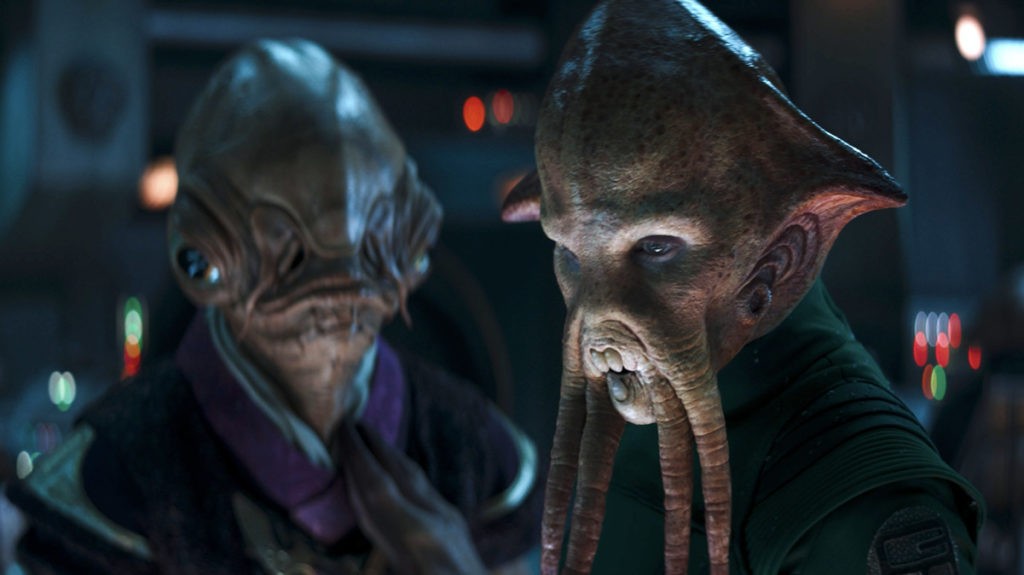
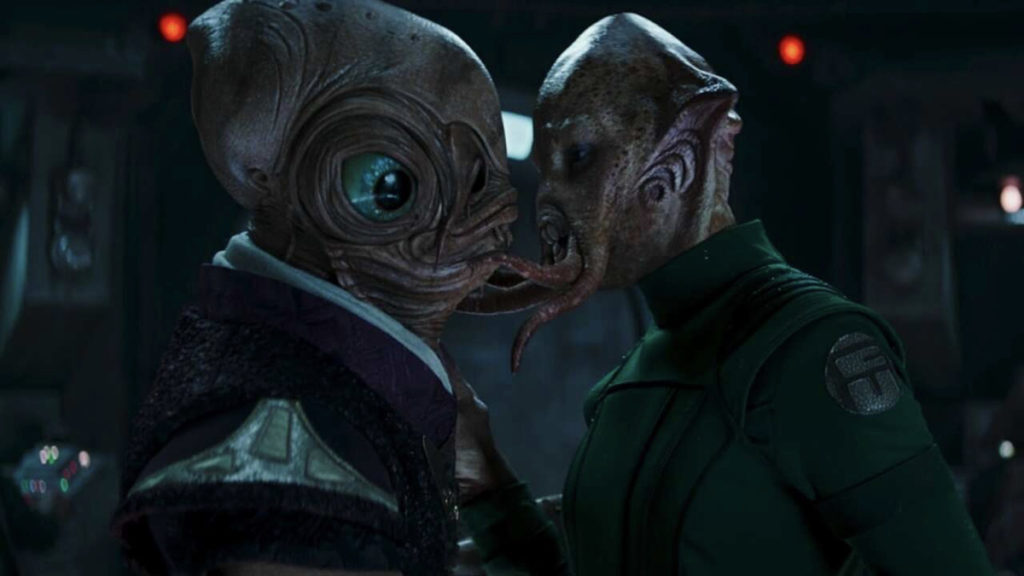
The episode begins with a tragic scene: the Mandalorian fleet, led by a former Imperial cruiser, stops the ship of some noble representative of the Quarren race (humanoid amphibians), on which she fled from Mon Cala with a Mon Calamari prince (a different race, whose most famous representative is Admiral Ackbar). The war between the two races, forced to coexist on one planet, recently ended with a fragile peace, and the prince’s escape with the aristocrat could reignite it, so the lovers are forced to part, and the Mandalorians take the prince home. Their argument, however, is simpler: they are bounty hunters.
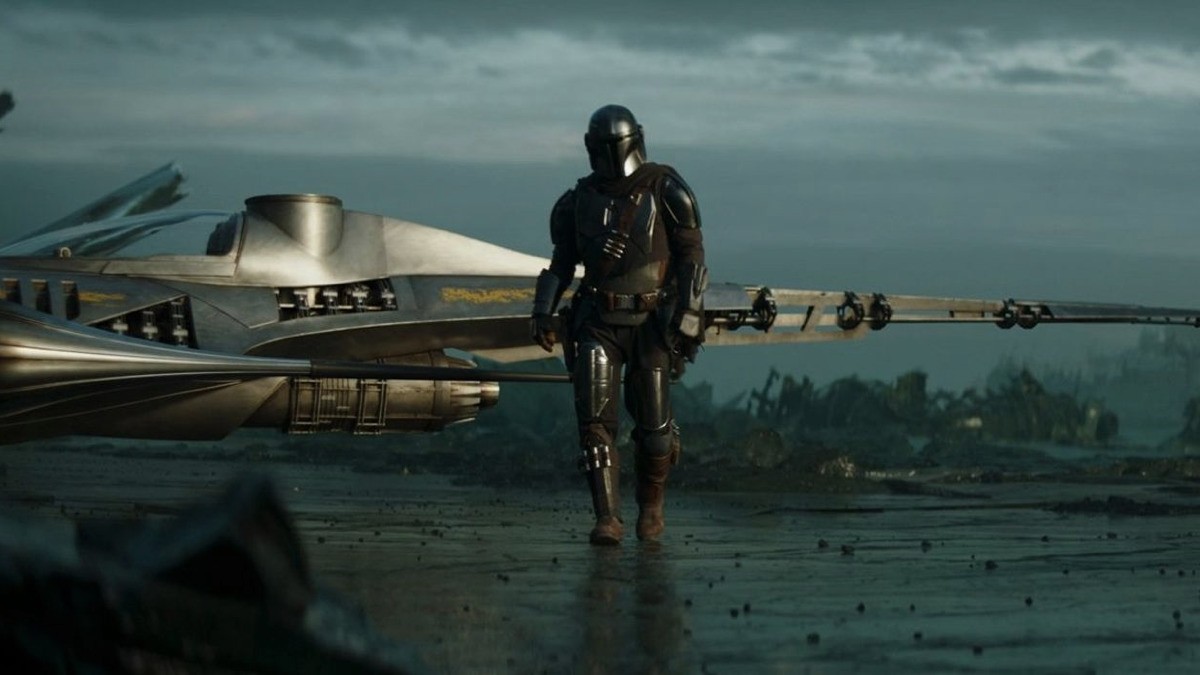
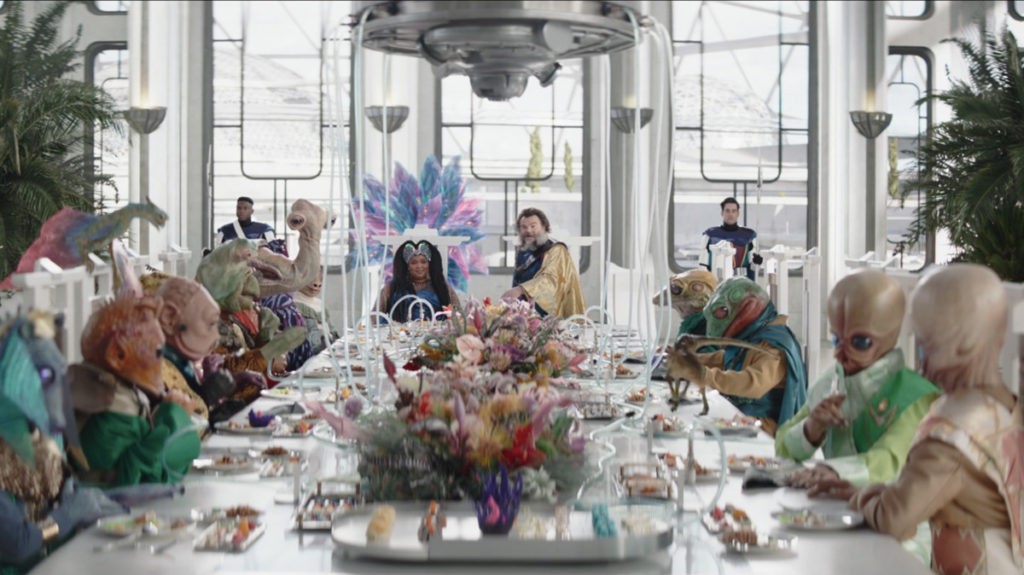
The hard lot of freelance gunslingers also led them to the other end of the galaxy: to the planet Plazir-15, an idyllic place, the only world in the Outer Rim with direct democracy (i.e., without a parliament), where there is no trouble, no poverty, where everyone is happy and no one works. The Mandalorians, as a mercenary army, are based in the forests of Plazir, and Bo-Katan hopes to find them there. But her and Din’s ship is intercepted by remote control (and a voice in the spirit of this song sounds in the cockpit), and they are forced to go to a reception with the planet’s leadership.
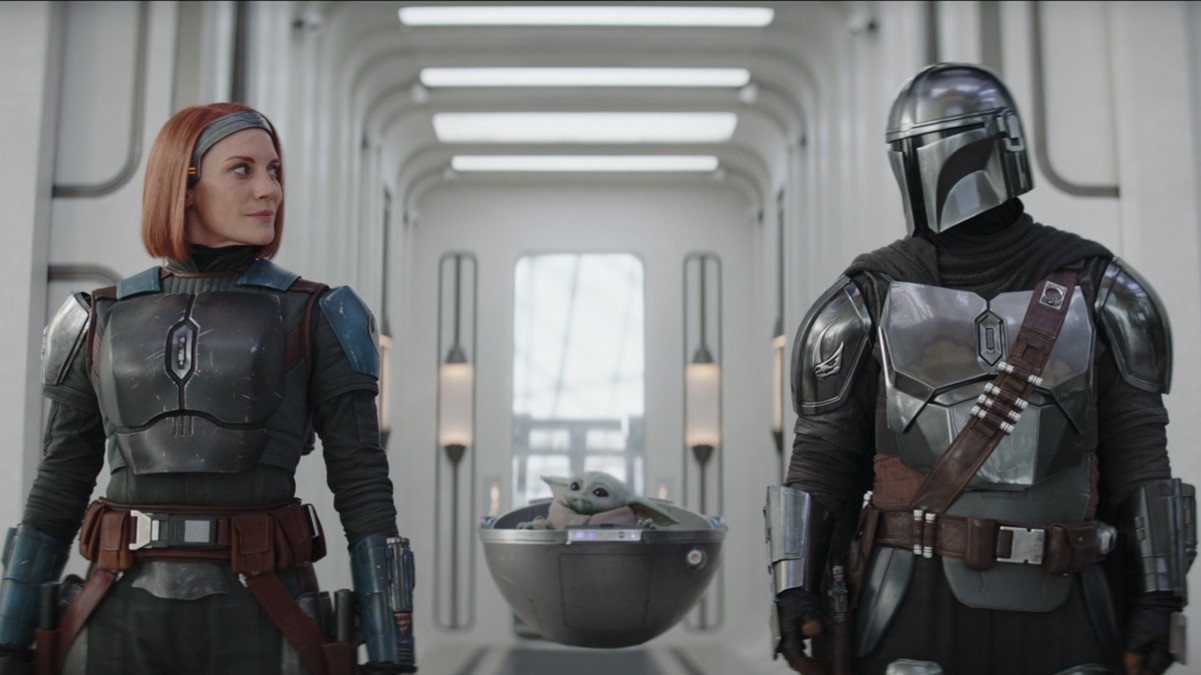
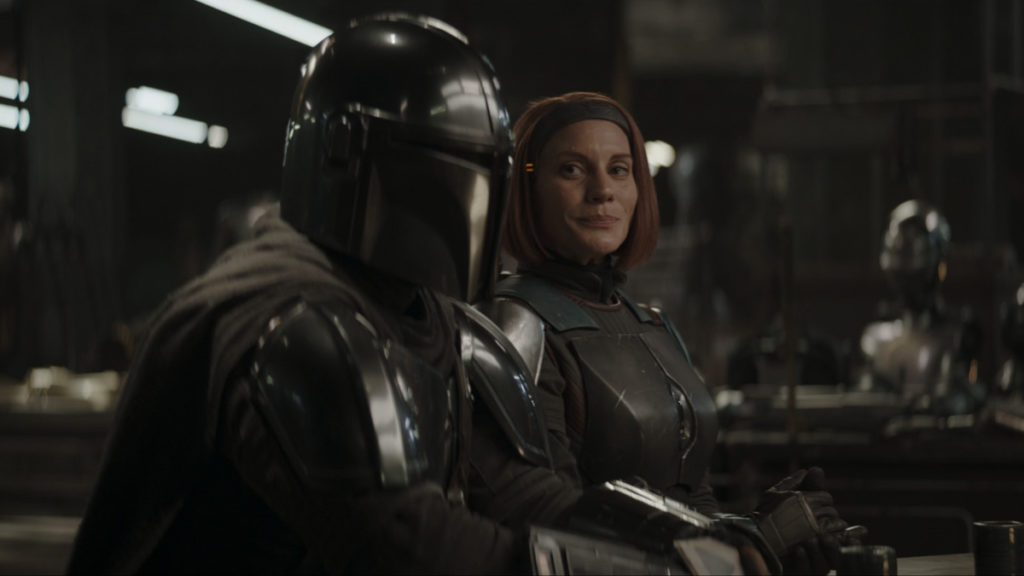
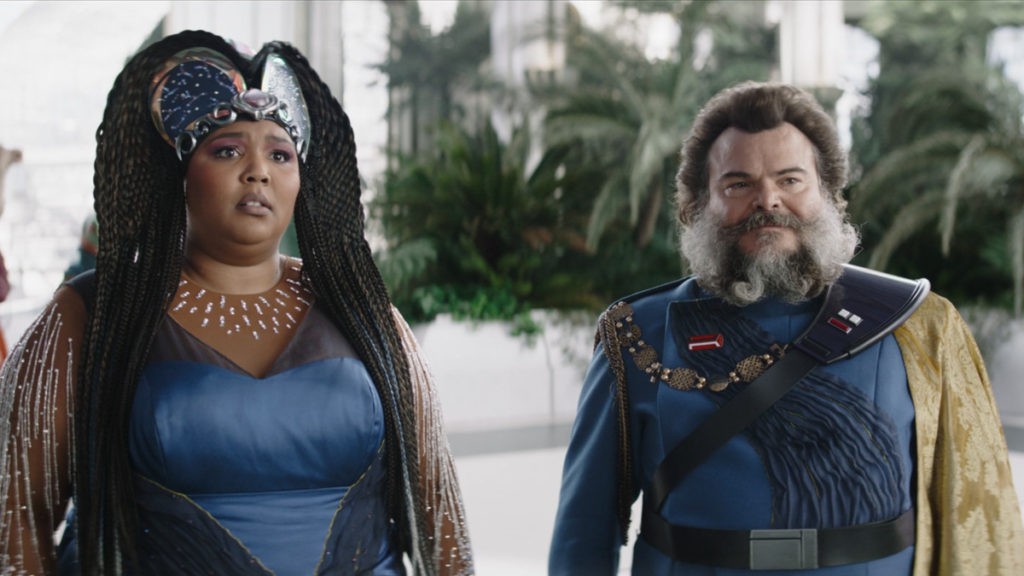
Plazir-15 is ruled, feasting and carefree, by a married couple: she is a representative of the local royal family, he is a former Imperial captain of something like the engineering corps (who underwent a rehabilitation program for former Imperials on this planet, as in episode three). Her name is Duchess, his is Captain Bombardier, she is played by singer Lizzo, and he by Jack Black, and this is, frankly, a surprise of surprises. They meet Din and Bo-Katan (who are also increasingly resembling a married couple: the woman interacts with Grogu as if he were family and looks at her comrade very sweetly), and they, although not too eager, agree to help the rulers with a delicate problem in exchange for access to the Mandalorian shelter in the forest.
The thing is, no one works on Plazir-15 because all the work is done by droids – and not new ones, but reprogrammed old ones – Separatist and battle models. However, lately some droids have been glitching, showing aggression, attacking people, and since no armed army is allowed on the planet’s territory (that’s the treaty with the New Republic, because Bombardier is a former Imperial), Bo-Katan and Din Djarin are the only hope for this small paradise to be saved.
Bombardier promises Bo-Katan diplomatic recognition of Mandalore (a question that has become relevant, since the goal of the heroes’ journey is to reclaim the planet) and free passage to her former comrades. She agrees, looks at Din, and he agrees with joy: the only thing he hates more than the Empire is droids.
What follows is a classic episode of your favorite cop-partner series (ranging from “Castle” to “Law & Order,” from “The X-Files” to “Bones”): Din and Bo-Katan go to investigate an incident and wander all over Plazir, following clues. First, they go to the head of the planet’s security service, played by the great actor Christopher Lloyd (!). He tells them that he himself wouldn’t have bothered and would have shut down the droids, but since Plazir-15 has direct democracy and the residents voted to maintain the current order, it can’t be done.
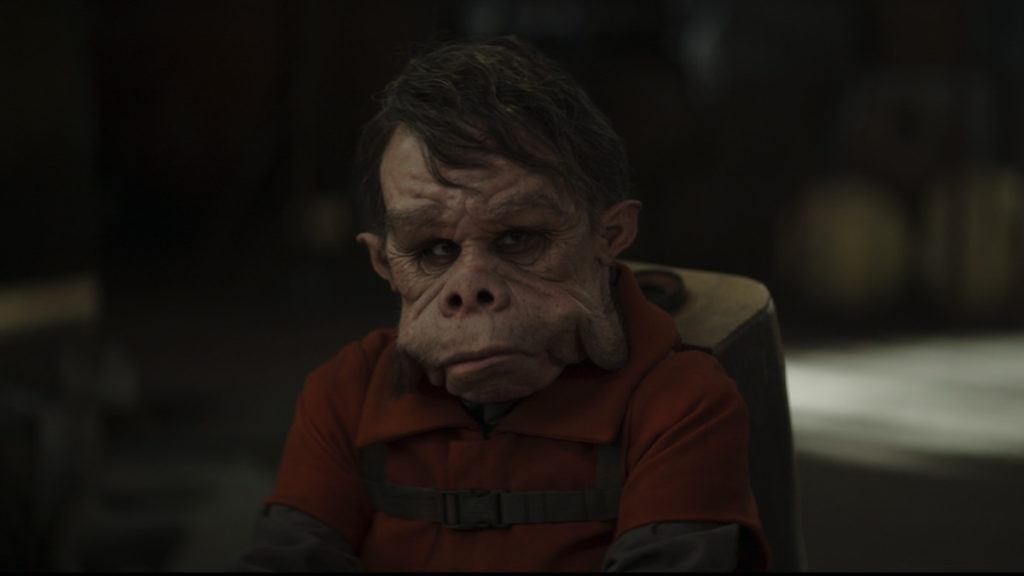
Next, our detectives descend to the technical level of the planet to get information about the droids from the Ugnaughts (representatives of the race of Kuiil from the first season, brilliant mechanics). They are not eager to talk to outsiders and ignore Bo-Katan, but Din, who once managed to befriend Kuiil, finds common ground with them too, and they agree to help the Mandalorians. Having received data from the Ugnaughts about the likely location of the next incident, Bo-Katan and Din head there. Along the way, the woman wonders how her companion managed to find common ground with such stubborn humanoids. Jarin explains the rules of successful negotiation: name a mutual acquaintance, praise the interlocutor, and end phrases with the words “I have spoken.”
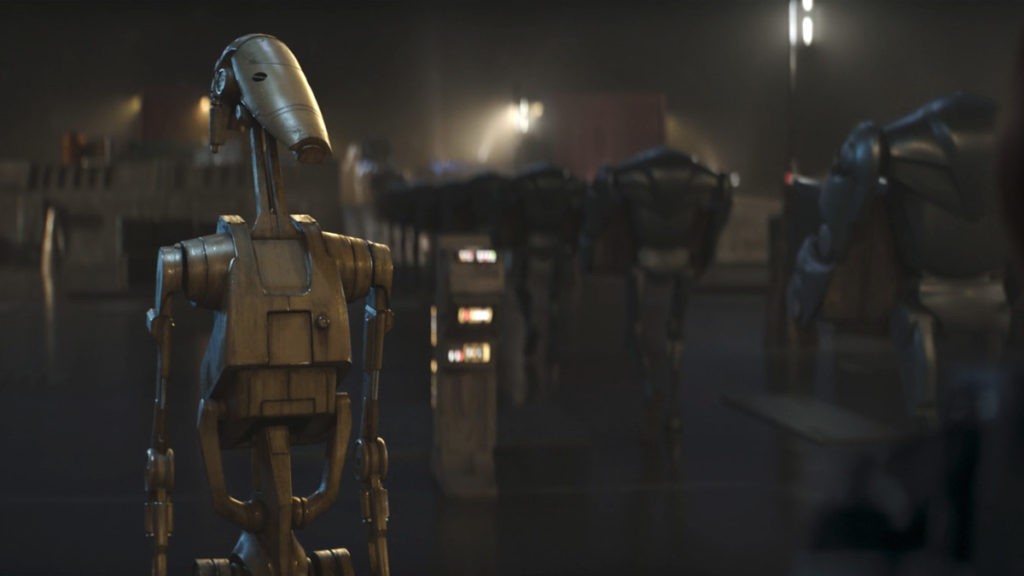
Already in a warehouse swarming with seemingly peaceful Separatist droids, Bo-Katan tries to talk to their commander, while Din uses a more radical method and simply kicks the robots until one of them goes, so to speak, mad. The malfunction is found, but the droid still needs to be caught. A colorful chase concludes in the spirit of films with Clint Eastwood, which we are once again happy about.
On the droid’s chassis, a ticket to a bar (a bar for droids!) is found, and the heroes head there. At the entrance, Bo-Katan tries to convince Din that negotiations with droids are probably better left to her: he hates droids too much. The princess’s rightness is quickly confirmed – while she tries to negotiate with the droid bartender, Din is already promising to rip out some of its not unimportant parts. She calms her friend, and the bartender himself, as it turns out, is happy to help: humans created droids, and they can still serve them, and even if in the past many droids did terrible things (recall, several Separatist models killed Din’s parents), didn’t humans program them? In the desire to serve their creators, the whole bar unites – droids of the most diverse models clink glasses approvingly (if you are 6 years old at heart, like me, this is a heartbreaking scene), even Din thaws out.
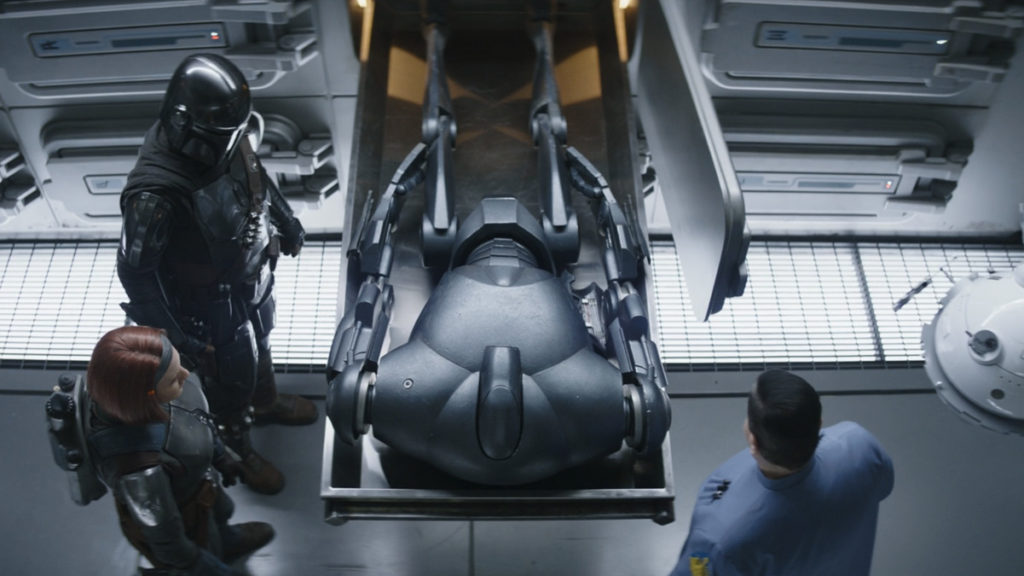
The bartender explains that all the droids that showed aggression drank what is drunk in such bars from the same barrel, and the problem is likely in it. Already in the morgue (in the best traditions of morgues from cop shows), Bo-Katan, Din, and a pathologist test the oil in a droid, causing the pathologist’s assistant to also go mad and try to kill everyone. Din destroys him, Bo-Katan makes a funny joke, and it turns out, as if the previous joys weren’t enough, that the liquid contains nano-droids that make the droids aggressive, reviving their battle programs. Christopher Lloyd ordered these nano-droids.
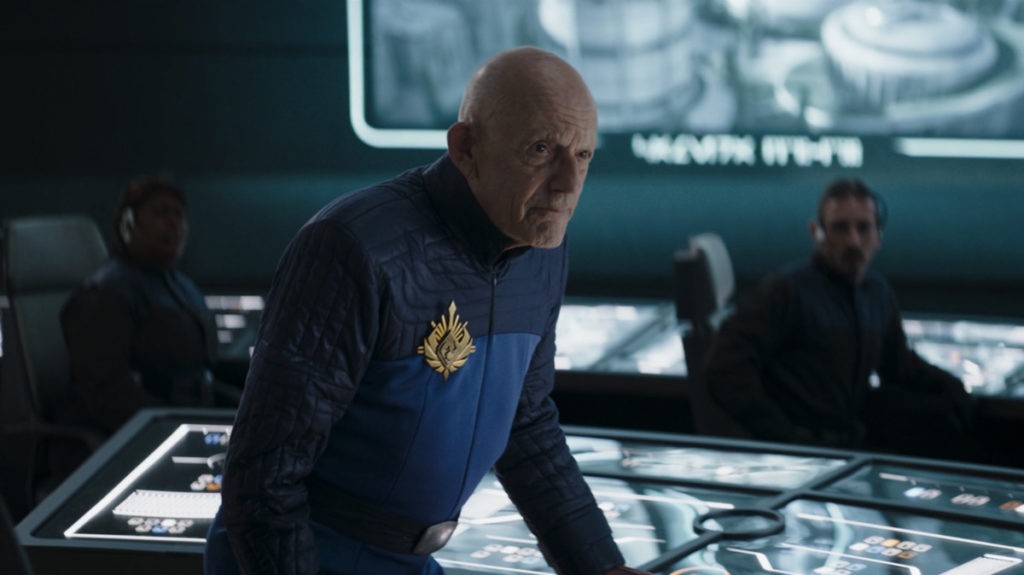
When Bo-Katan and Din expose his sabotage, he threatens that with one press of a button (oh, that nuclear blackmail) he will return all the droids to battle mode. But this, of course, doesn’t work out for him: while Christopher Lloyd explains that he did all this out of hatred for direct democracy and sympathy for the visionary politics of Count Dooku (mind-blowing!), Bo-Katan, with a bored look, says “politics” and neutralizes the Separatist.
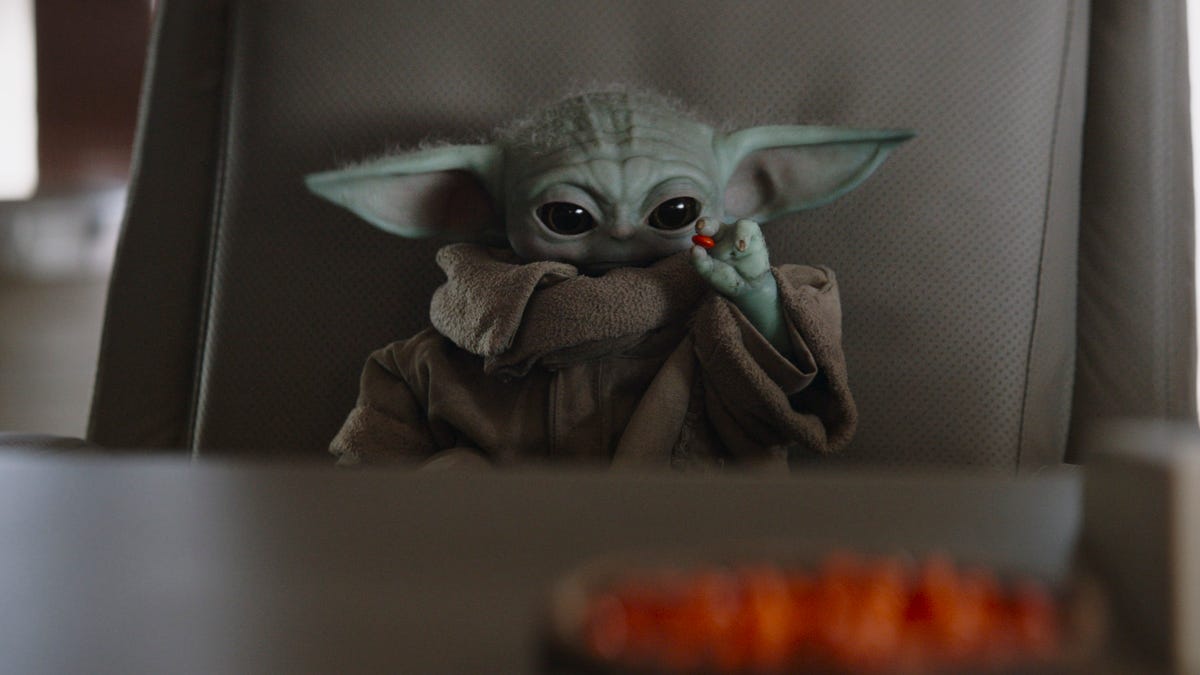
Meanwhile, Baby Yoda, whom his parents (we insist on granting Bo-Katan parental rights) left with the good ruler Lizzo, amuses himself as best he can. In particular, he helps the Duchess win an original version of space bowling-basketball. But the Mandalorians bring the bound Christopher Lloyd, and the joy is somewhat dampened – once he faithfully served the royal family and the Duchess’s father, but did not accept the former Imperial as a ruler. Lizzo seems to give him a second chance, but first sends him into exile, after which she thanks Din and Bo-Katan, handing them the key to the planet (an unironically funny scene: a big key!) and knighting Grogu (wonderful).
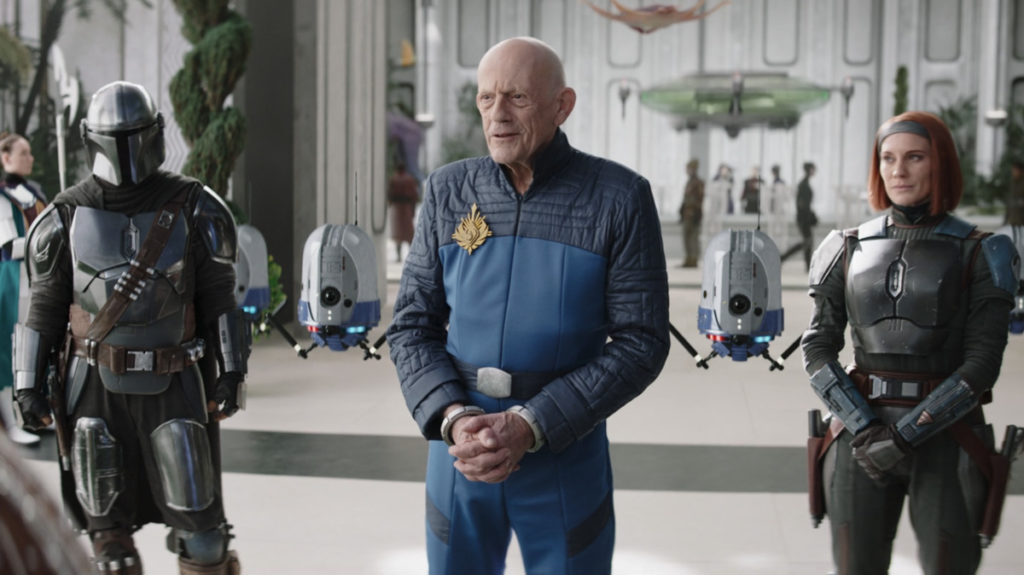
Just when you start expecting the credits, the episode unexpectedly shifts to the main plot, and in the last 10 minutes, Bo-Katan and Din find the Mandalorian base and enter into negotiations with them. Axe Woves is not very happy with the arrival of his former boss – now he leads the fleet himself and does not want to part with power, but Bo-Katan challenges him to a duel. The experienced warrior takes the initiative from the start and, although not without a couple of difficulties, wins fairly quickly. But Woves, already defeated, reasonably notes that she still won’t lead the people without the Darksaber, and that it wasn’t with him she should have fought, but with Din. But Bo-Katan is not ready to betray friendship for power and looks with sad eyes at the armor-clad Pedro Pascal.
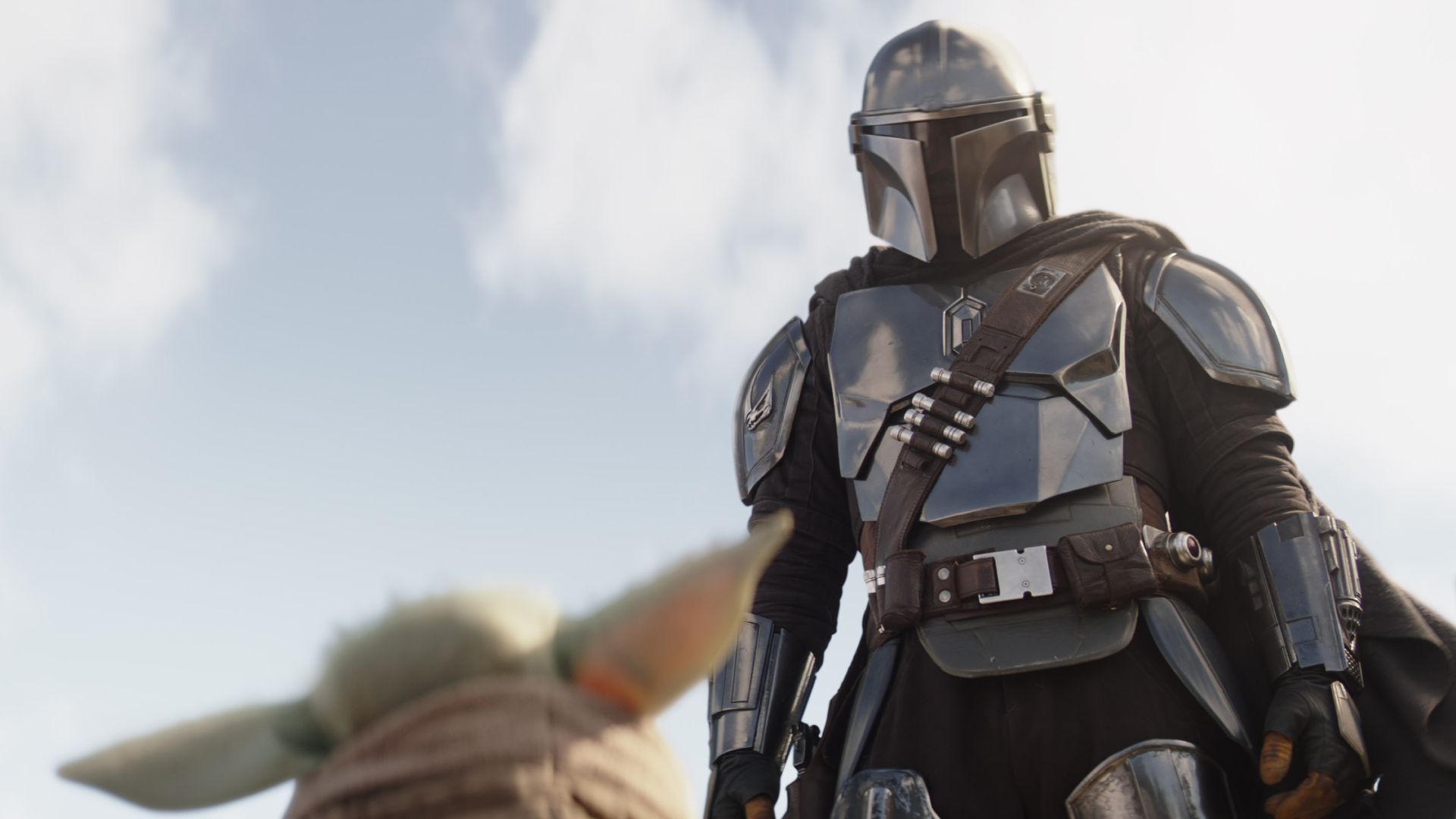
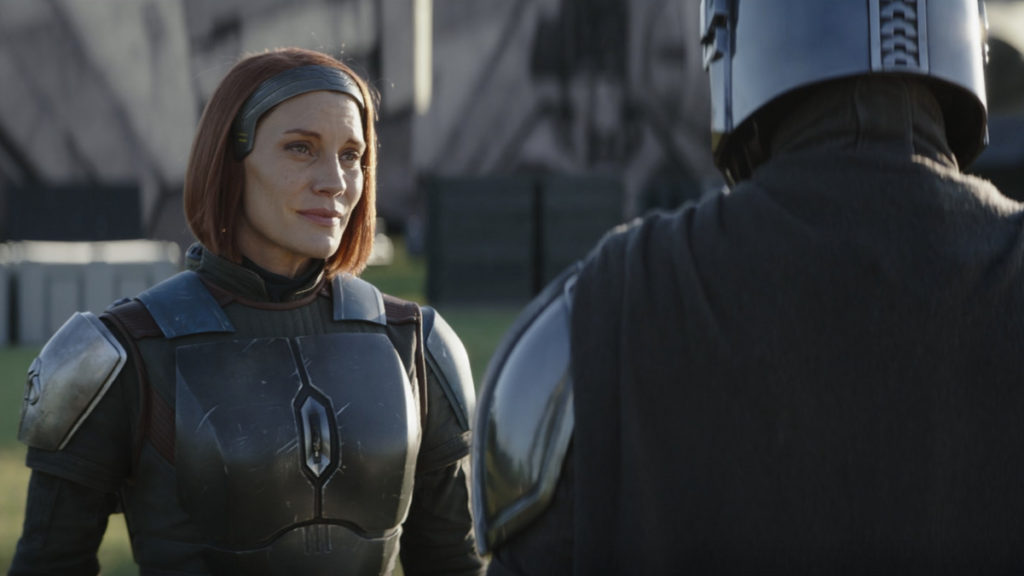
Woves insults him, calling him a cultist and saying there’s no Mandalorian blood in him, but Bo-Katan passionately defends her friend’s honor: he chose to follow the Way and is therefore as much a Mandalorian as the founders of their people. And certainly no less than any of them. It’s hard not to be moved by such a touching speech, and Din seems to be moved – he again offers Bo-Katan to take the Darksaber from him. She again, with even sadder eyes (actress Sackhoff is finally put to use after “Battlestar Galactica,” and that’s gratifying), looks at him and refuses: the saber must be won in battle and cannot be accepted as a gift, even if the giver is sincere in his desire.
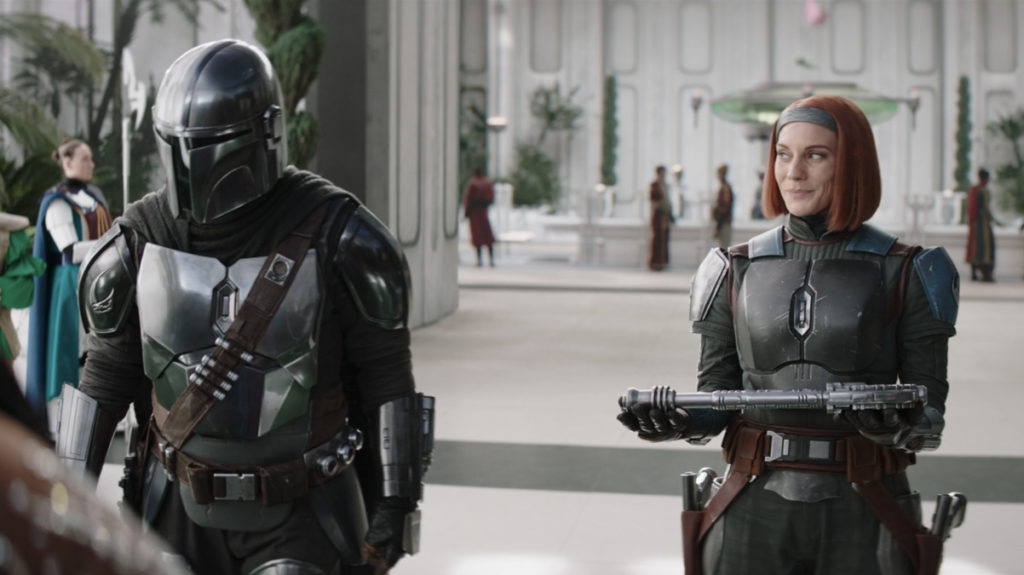
Suddenly, Din asserts that this is not a gift and that in the mines of Mandalore, when that spider-like cyborg grabbed and disarmed him, Bo-Katan saved him and defeated the enemy who had overpowered him, which means the saber, by right, is hers. In short, “the wand never belonged to Snape. It was Draco who disarmed Dumbledore that night...” An unexpected and touching, but somewhat, admittedly, amusing twist. After these revelations, the Mandalorians recognize Bo-Katan’s leadership, and she ignites the Darksaber in the final shot.
Impressions
Since this is a very important episode, we’ll divide the impressions into several sections (about the episode and about politics), and conclude with an analysis of the foreign press.
Many, it seems, criticize this episode, but, speaking for myself here, I personally had almost childlike enjoyment, as if I was watching “Return of the Jedi” at age 8. Interracial love in a galaxy far, far away; a bar for droids; Christopher Lloyd praising Count Dooku; Jack Black as a good-natured former Imperial; “Streets of Broken Lanterns” discovered on a “Blade Runner”-esque planet; the way Bo-Katan without her helmet looks at Din. I don’t want to say that whoever didn’t like it has no heart, but it seems that it is precisely for episodes like this that it’s worth watching “Star Wars.”
The main problem with the episode, perhaps, is (and this is noted fairly) that it’s two episodes artificially combined into one, so that by the final revelation with the saber we approach somewhat tired, and everything that happens on Plazir-15 begins to feel like a prologue.
It’s probably worth noting that the main theme of the episode is the right to redemption. Failed, taken away, rejected, undeserved, but also successful, given to those who truly deserve it – the second chance turns out to be, generally speaking, a recurring theme throughout the season, and this, frankly, is quite touching. IG-11, Dr. Pershing, Jack Black, the Separatist droids, the Mandalorians – all of them are trying to fix what they did, hoping to turn back time, to replay the worst moments of their lives.
The main arc of redemption in the season, of course, belongs to Bo-Katan, who moves from understanding power as domination to understanding power as service; who proves to be a worthy leader and, more importantly, a worthy person. And it seems impossible not to sympathize with her at the moment when she essentially refuses the struggle for power and prefers friendship with the strange cultist Din Djarin and the baby under his protection over a duel for the Darksaber.
A certain melancholy is added to the theme of the second chance by the fact that in the bar for droids, patrons drink some kind of machine oil called “Nepente.” In ancient mythology, this was the name of a drink of oblivion, which was drunk by, among others, Helen of Troy, to come to terms with the horrors of the lost Trojan War.
Politically, the episode continues the transformation of “The Mandalorian” into “Andor.” No one seems to write about it, but the planet Plazir-15 is a parody of the ancient polis. Not only because there is direct democracy here, but also because for the inhabitants to, in Christopher Lloyd’s words, “feast, contemplate life, and participate in politics,” the labor of droids is necessary. It’s not often talked about, but the ancient polis, where inhabitants did roughly the same thing and created the most perfect political model in history, also existed in its known form because, besides wealthy white male citizens in Athens, there was a numerous class of slaves (in “SW” – droids). An interesting and surprising satire, especially amusing because a police procedural unfolds in the local ancient polis, and Jack Black is in power.
Since “The Mandalorian” is almost not covered in Russia, we recommend several English-language sources for anyone interested. First of all, if you read English, we suggest paying attention to Keith Phipps’ recaps at Vulture. His moderately detailed retellings and outstanding analysis are a feast for the heart. Analyses of interesting references are done at Collider, and that’s also engaging reading. Also, wonderful recaps are written by Meg Dowell (for example, the best analysis of the sixth episode) for a site with a funny name and by Brady Langmann for Esquire.
The classic American film critic Alan Sepinwall also recaps “The Mandalorian” (a significant part of the recap culture itself grew up on his texts about TV series), but he sometimes watches the series with half an eye (and at the same time sometimes writes with surprising accuracy) and sees in “The Mandalorian” the authors’ sympathy for the Empire because they criticize the New Republic.
It’s unexpected that such topics are raised at all in a series about how a mercenary in a helmet adopted a green-eared baby, but still: the authors are not against the Republic, but against the state. It’s a story about how a system built on bureaucratic institutions loses to a community built on dignity and honor (the Mandalorians). About how freedom in a galaxy far, far away is in as much danger as in a galaxy very, very close.
Comments
0No comments yet.
Sign in to join the discussion.