

Forced psychiatry, amnesty for war criminals, ghosts of the past, signs of the future. All this – in the new episode of The Mandalorian.
The third episode surprisingly contains a lot of ordinary life, political satire, and human tragedy. The episode tells a story about life after the tribunal, about love after totalitarianism, about a country after terror – unexpected themes, to say the least.
Previous recaps:
Warning: spoilers for The Mandalorian Season 3, Episode 3 ahead
The episode begins right where the previous one left off: Bo-Katan (Katee Sackhoff) has pulled Din (Pedro Pascal) out of the water and is slightly shocked by what she saw in the depths (). She asks her comrade leading questions, but he didn't see anything, and she doesn't tell him anything (why? Because of the prophecy? Out of fear?). The main thing is that the Mandalorian has now washed away (literally) his sins and can return to the clan.
Dark past, dark mines, dark waters. All this and a few history lessons – in the recap of the second episode of the new season of The Mandalorian.
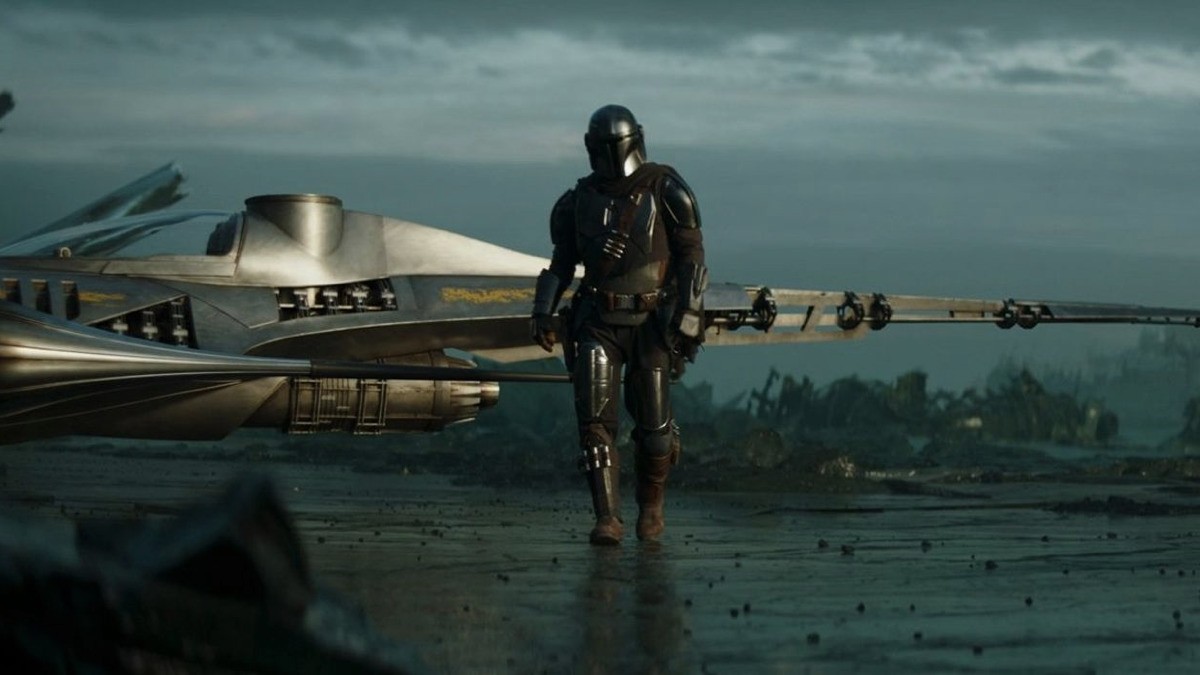
Open materialOn the way home, he thanks Bo-Katan, who is still processing what happened, but their thoughts about themselves and, perhaps, each other (oh, that exchange of the phrase "This is the Way", even Grogu in the background is delighted) are interrupted by an Imperial fighter raid. The Empire has, of course, fallen, but some former military and officials have gone underground with their people, and Bo-Katan, by her own admission, is on bad terms with them. From the intense firefight – Kryze recalls childhood memories and systematically mows down enemy fighters, Din urgently transfers to his starship and at one point plummets down in a skillful dive and other little joys – the Mandalorians emerge victorious, but it's a Pyrrhic victory.
The bombers destroyed Bo-Katan's castle (and she is furious – so far the best part of the season), and a whole squadron has latched onto our heroes, which a former general (First Order?) shouldn't have in the first place. The Mandalorians jump into hyperspace and won't come out until the end of the episode.
To avoid breaking the narrative, we'll tell you their ending right away, and then return to the main content of the episode. The Mandalorian brings Bo-Katan to his clan's hideout, which she is generally not thrilled about. There, in turn, they are not thrilled about his return – right on the doorstep, Paz Vizsla (Tait Fletcher) tells Din he's not welcome. Bo-Katan introduces herself and vouches that he really did bathe in the Living Waters, and so on. But she is not trusted – to the Children of the Watch clan, Kryze is an apostate and no better than Din.
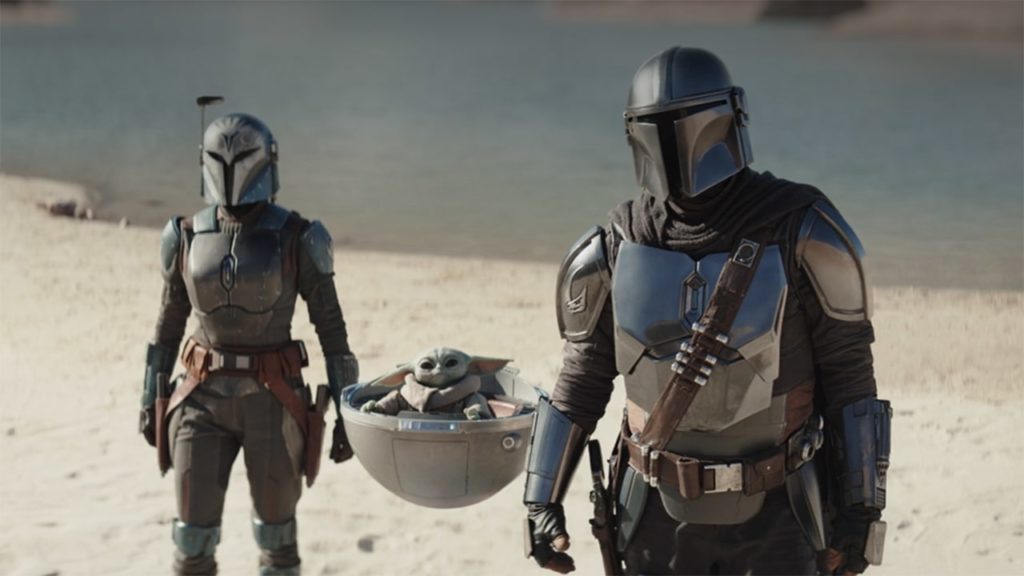
Nevertheless, they are allowed in to see the Armorer (Emily Swallow). Din gives her a water sample from a vial, she pours it into the crucible, and it becomes covered in mist. One can't help but feel that Dumbledore will appear and say that curiosity is not a sin. But no, if this is a Pensieve, we're not told about it yet.
The Armorer tells Din that he has atoned for his sins, and, most unexpectedly, adds that Bo-Katan has also atoned for hers, and if she hasn't removed her helmet since saving the Mandalorian, she can follow the Way and live with their clan. Bo-Katan is shocked (presumably, it's hard to see much through the helmet), and everyone pats her and Din on the shoulders, welcoming them, so to speak, into the family. An unexpected turn, to say the least. Bo-Katan, meanwhile, looks at the Mythosaur skull cast in beskar hanging on the wall.
The remaining half hour or so is devoted to a completely unexpected plotline. As we remember from the second season, Moff Gideon and his henchmen were taken prisoner. As we learned from this one – they were put on trial. The intergalactic Hague is, alas, not shown to us, but that's okay, we'll see plenty of it later. The episode doesn't focus on the trial of war criminals itself, but on the rehabilitation program that Dr. Pershing (Omid Abtahi), a former Imperial scientist and cloning specialist, ended up in.
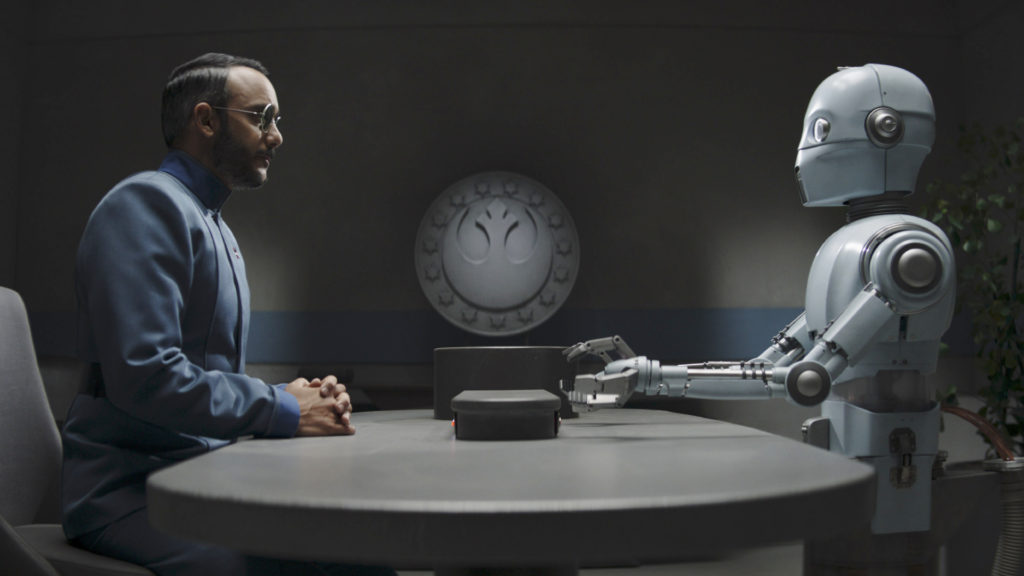
Now he works a meaningless job, lives in a rehabilitation center, having moved there from a reintegration institute. The center is better than the institute, his former colleagues and new roommates – Imperial pilots, soldiers, officers – are sure of that. One of them, G68 (Katy M. O'Brian), used to work on Moff Gideon's (Giancarlo Esposito) ship, and any mention of that name slightly frightens everyone, but they drink some interesting beverage (murky water, looks like the Imperials are brewing moonshine), discuss the cookies that used to be part of the rations, and seem quite okay with becoming part of the New Republic.
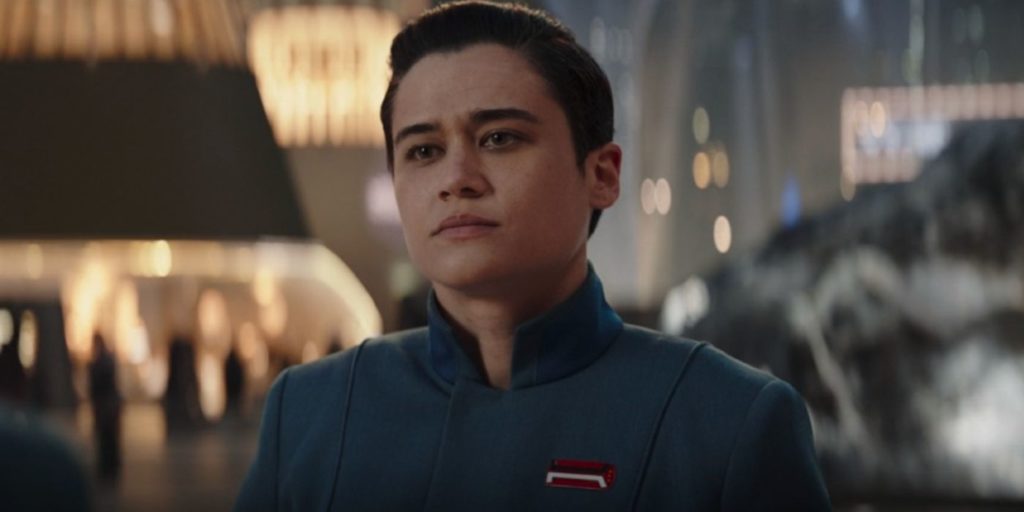
At night, Pershing finds a black box with the cookies he likes so much on his doorstep. It's generally clear who they're from (G68, they seemed to like each other). And in the next scene, the characters are already walking around Coruscant, eating ice cream and admiring the peak of the planet's highest mountain – and also the only part of the natural landscape visible on all of Coruscant (everything else is a giant city).
G68 and Pershing discuss his past work; the fact that his research could be useful to the New Republic, which, while getting rid of its Imperial past, occasionally throws the baby out with the bathwater, and the girl suggests Pershing continue his scientific work despite the ban. After all, it was following the rules that once led them to complicity with Imperial totalitarianism, so breaking them for a good cause is not a crime.
At first, Dr. Pershing resists this idea, but the deadly dullness of everyday life, weekly conversations with a psychological assessment droid, and the tempting thought that he could be useful to the new community, the emerging state, force him to agree to the proposal of his new friend from his old life.
The next night, they sneak out of the campus (Pershing convinces himself in front of a mirror that this is the right thing to do) and, bypassing security at the station, board a tram that, characteristically, flies through the air. A giant man of an alien race (familiar to us from "The Clone Wars") looks at them suspiciously, but G68 has the best small talk in history with him: "Tundays, am I right?" (apparently, it's Monday or something like that). The man thaws; Tunday is a tough day.
Since our heroes didn't buy tickets, their peace is false and temporary, and in the next scene they are already running from a controller droid through the entire tram to jump off it (soft landing on bags) and end up right at the graveyard of dead Imperial ships, where a giant Star Destroyer cruiser, once the great power of the Empire, now a pile of junk, lies in state. They need it to get a mobile laboratory necessary for Pershing's research.
On the ship, they finally tell each other their real names: he is Pershing, she is Elia; they walked the same corridors for so many years but never introduced themselves. However, business awaits, and so the heroes are already in the ship's laboratory, where an admiring Pershing shares childhood memories with his friend. Their idyll is interrupted by an approaching patrol – so the cruiser is guarded after all – from which the heroes flee through the ship's labyrinths, break free, and find themselves surrounded. At this moment, Elia steps away from Pershing towards the police and turns him in. It was all a setup: new times, old betrayals.
In the next scene, Pershing is already lying on an operating table under some very modern brainwashing device. The good doctor convinces the hero that it's not a memory eraser, that it will just help him become a new person, that he went through it himself, and so on. Pershing trembles with fear; it all terribly resembles a lobotomy. When he is finally connected to the machine, Elia, in the next room watching the "alleviation of her friend's suffering," turns the device's regulator to maximum. Apparently, it was a lobotomy after all.
Impressions
This beautiful episode – the views of Coruscant, the wonderful firefight, the very well-done mise-en-scènes – was directed by Lee Isaac Chung, director of the film "" (one of the most interesting Oscar nominees last year). The director is excellent, and the episode turned out great, even despite the fact that it breaks away from the Mandalorian's own story to, firstly, introduce a new antagonist (apparently Elia, and I bet she works for Gideon or someone like that); and secondly – to show the ordinary life of the Galaxy. On Coruscant, they not only decide fates and ruin lives but also actually live – trams, ice cream, a talkative droid taxi driver. "The Mandalorian" allows us to take a slightly better look not at the great people of a galaxy far, far away, but at ordinary ones. And that, naturally, is pleasing.

"The Mandalorian" is certainly not "Andor", but that's precisely why the episode's moral ambiguity, its political satire, are so pleasing and so disarming. There's even a feeling that "Andor" showrunner Tony Gilroy gifted his colleagues a book on political theory – if not Hannah Arendt, then Bakunin. The New Republic is shown here as little different from the Empire (all states, as we know, are bad) – the same corrupt elites who can't even distinguish between regimes (a funny scene at the beginning of the episode), the same extrajudicial punishments for misdemeanors (lobotomy without a court order is totalitarianism, folks), the same attempts to create an ideal citizen for the state instead of becoming an ideal state for the citizen. In short, forced psychiatry, hello, USSR.
As for the storyline with the Mythosaur, Bo-Katan, Din, and the clan – everything is fine there (and in the part with the starship duel, it's even too fine, simply magnificent), although it's not yet very clear where it's all heading globally. But the twist with Bo-Katan and her acceptance into the clan is mind-blowing. True, the prospect of watching actress Katee Sackhoff in a helmet is less pleasing than the prospect of seeing her without it. And it's a real pity about her castle, of course.
Comments
0No comments yet.
Sign in to join the discussion.