
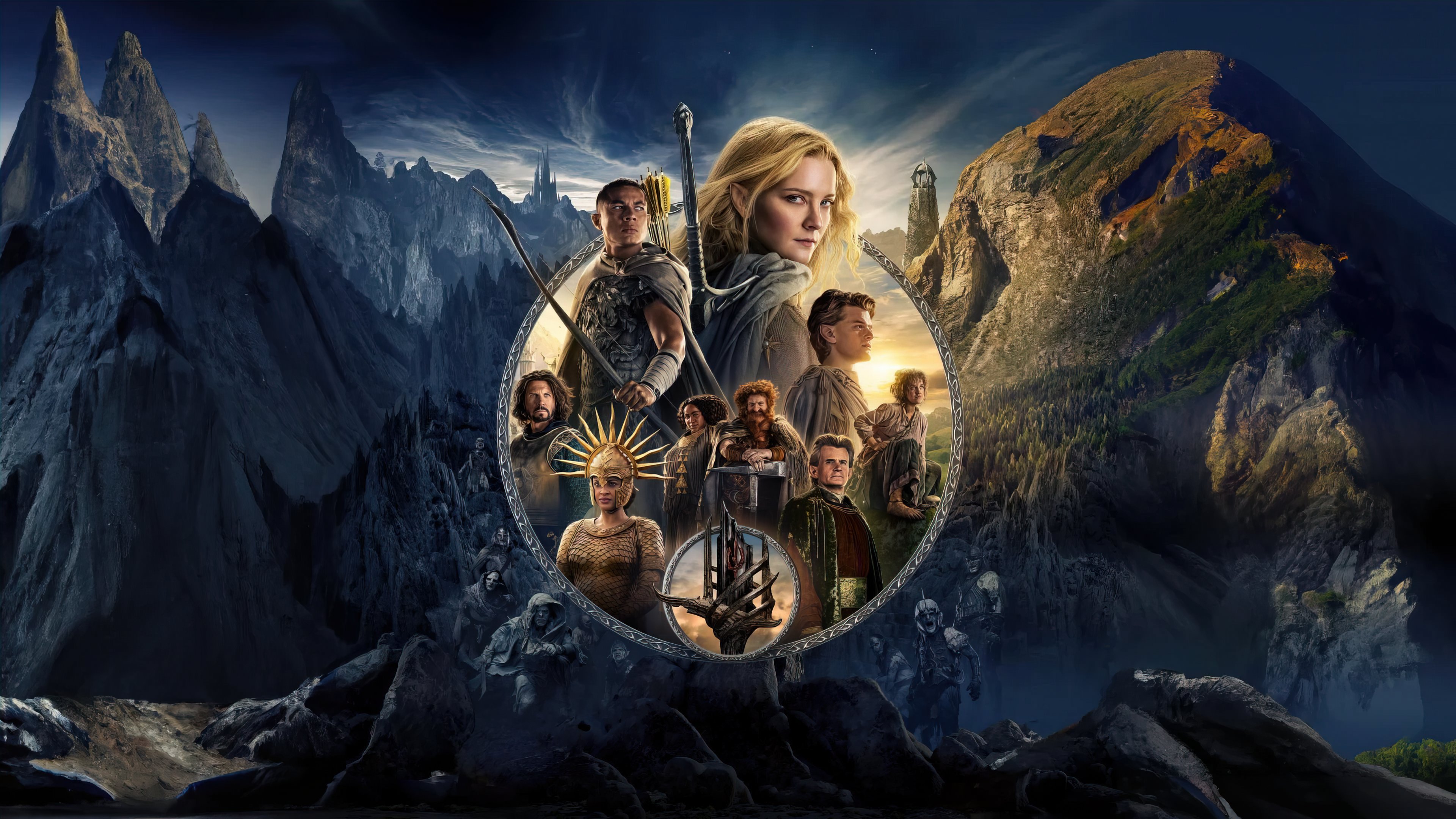
On October 14, the first season of one of the most anticipated series of autumn, 'The Lord of the Rings: The Rings of Power,' concluded on Amazon Prime Video. Did Jeff Bezos' streaming service manage to approach the success of Peter Jackson's films,...
After watching the first two episodes, opinions on the series immediately split, much like everywhere else in the world. Viewers were far from indifferent: some mercilessly trashed the series for its multiracial cast, while others went out of their way to justify any missteps by the creative team. In general, it's quite difficult to watch 'The Rings of Power' objectively, as many moments depend solely on your mindset and perception. If you're expecting the level of Jackson's films or strict adherence to book canon, you'll likely be disappointed. But if you're simply a fantasy fan and 'The Lord of the Rings' is just a name to you, then perhaps the series' positive aspects will outweigh the negative ones.

What did critics promise after the preview of 'The Lord of the Rings: The Rings of Power'? Why is Amazon freezing ratings and claiming their project is being deliberately review-bombed? How did viewers and the media react?
Open materialThe thing is, for all its scale, 'The Rings of Power' is a rather controversial project, which is why it has sparked a huge amount of discussion. The beautiful visuals are diluted by silly dialogue, and believable scenes are replaced by illogical character actions. But let's take it one step at a time.
ATTENTION! THIS TEXT CONTAINS SPOILERS, SO IF YOU HAVEN'T WATCHED IT, THE RESPONSIBILITY IS ENTIRELY YOURS!
What About the Plot?
The action of the series 'The Lord of the Rings: The Rings of Power' unfolds in the Second Age of Middle-earth. That is, long before the events of 'The Hobbit' and 'The Lord of the Rings' by Peter Jackson. Elves and some Men had recently won a hard-fought victory over Morgoth, after which relatively peaceful times ensued, but not for Galadriel (Morfydd Clark). The Elf has been certain for hundreds of years that the enemy's chief lieutenant, Sauron, who killed her brother, is still alive and lying low, waiting to strike a sudden blow against the complacent inhabitants of Middle-earth.
The heroine's fruitless search has dragged on for so long that even her loyal warriors can no longer continue the journey and persuade their commander to return. Upon returning to Lindon, Galadriel and her company are awarded the greatest honor: the chance to return home to Valinor. Defying the king's order, the Elf decides not to leave these lands and, at the very last moment, jumps from the ship into the open sea, planning to swim to Middle-earth. She believes she has not completed her mission to find her brother's killer, so Valinor can wait.
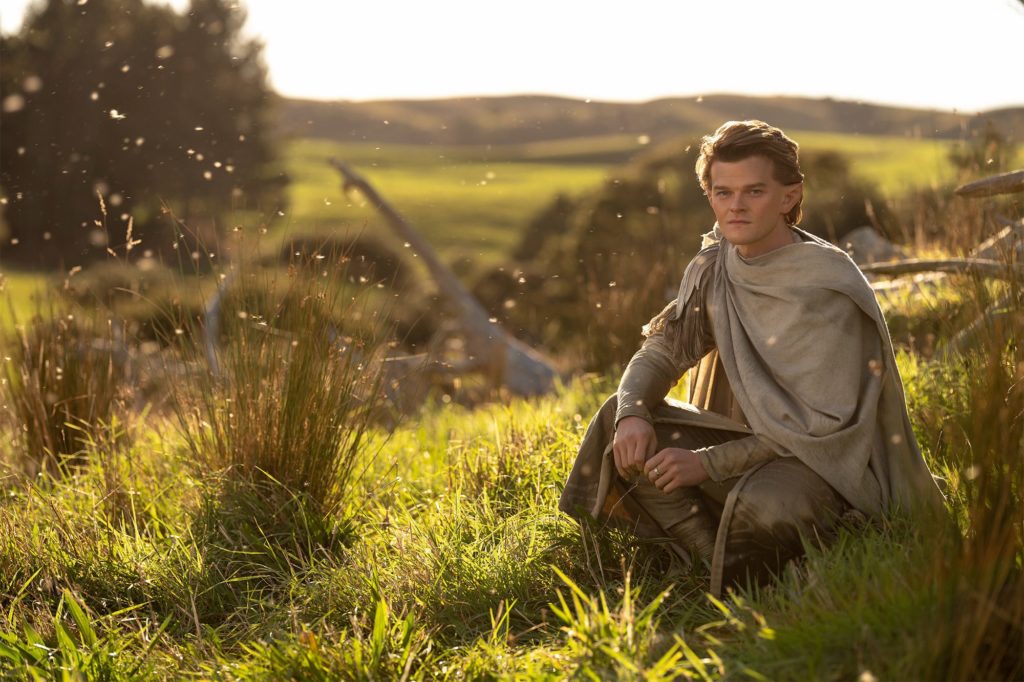
Having sent his friend home across the sea, young Elrond (Robert Aramayo) meets one of the greatest Elven smiths, Celebrimbor (Charles Edwards), who wishes to build a great forge where the most magnificent artifacts in history can be crafted. However, time is short, and the forge is needed by spring, so Elrond decides to turn to an old Dwarven friend, Prince Durin IV (Owain Arthur), who lives in Khazad-dûm. Only, the Elf forgot that the last time he and Durin saw each other was 20 years ago, and in that time, the Dwarf has 'lived a life.' The prince has married the charming Disa (the magnificent Sophia Nomvete) and has two young children, and his friend missed it all! Naturally, Durin is offended. Moreover, Elrond didn't just come to visit; he came asking for help, or worse, he was sent to pry out Dwarven secrets.
At the same time, in the Southlands, Elves have been watching over human villages for nearly a century. The ancestors of the rural population once swore allegiance to Morgoth, so even generations later, the nearly immortal Elves do not trust Men. Eventually, the Elven King Gil-galad (Benjamin Walker) recalls all patrols and declares the war completely over. This news does not bring joy to the watchman Arondir (Ismael Cruz Córdova), who is secretly in love with the local healer Bronwyn (Nazanin Boniadi). Before leaving, the Elf comes to say goodbye to his beloved, but by chance, he is forced to travel with her to a neighboring village, as something strange is clearly happening in the Southlands.
Parallel to the grand events of Middle-earth, the Harfoots (ancestors of Hobbits) live their own lives, preparing for their seasonal migration. The tribe's leader, Sadoc Burrows (Lenny Henry), observes bad omens everywhere, foretelling the arrival of something sinister. And indeed, a meteorite falls near the camp, inside which is a strange man (Daniel Weyman) possessing magical powers. The stranger is found by Nori Brandyfoot (Markella Kavenagh), a Harfoot far too curious and restless for her kind. Ultimately, young Nori, defying the halfling code, decides to help the giant, taking her best friend Poppy (Megan Richards) as her partner. With this decision, the friends will bring significant changes to the peaceful way of life of the Harfoots.
You Can't Just Take and Fix the Pacing in a Series
Let's start with the fact that 'The Rings of Power' is an extremely uneven series in terms of storytelling. The first five episodes of 'The Lord of the Rings' series accelerate very slowly (I'd even say they mark time), introducing the viewer to the world and its inhabitants. The sixth episode seems to shift into action and event mode, but the seventh starts with reflection mixed with summing up the season. The authors set up hooks for future episodes, and in the finale, they pile a bunch of events on top of each other, turning all the season's storylines into mush.
Honestly, this looks strange. Everyone knows that the first season was conceived as one big exposition with a primary setup for the future, but you can't release the first 6 hours of material moving at a pace of two events per hour. Why not distribute the events evenly across 8 episodes, so you don't have to gallop in the finale and can maintain viewer attention for the entire distance? But no, the stakes were 'two mind-blowing twists' that absolutely had to be revealed in the finale. Never mind that these unexpected turns turn out to be almost childishly obvious; they had to be in the last episode. For the rest of the episodes, we tediously drag out two questions posed to the viewers in the first episode and intrigue them with nothing else. Well, as planned, so done. Was it worth it? Who knows.
You Can't Just Take and Write Good, Lively Dialogue
I don't know how serious the work on the script was, but this is the part that raises most of the questions about the series. The universe of 'The Lord of the Rings' isn't known for light and casual conversations, and it certainly isn't written in modern everyday language, but there was always life in the characters' words. Their words didn't grate on the ears, and the dialogues didn't make you cringe. 'The Rings of Power' somehow completely forgot about this, and almost every Elf (Elrond and Arondir are exceptions) speaks in phrases conceived in a test tube, mixed with pathos and arrogance. The characters' communication is mostly absurd and unnatural.
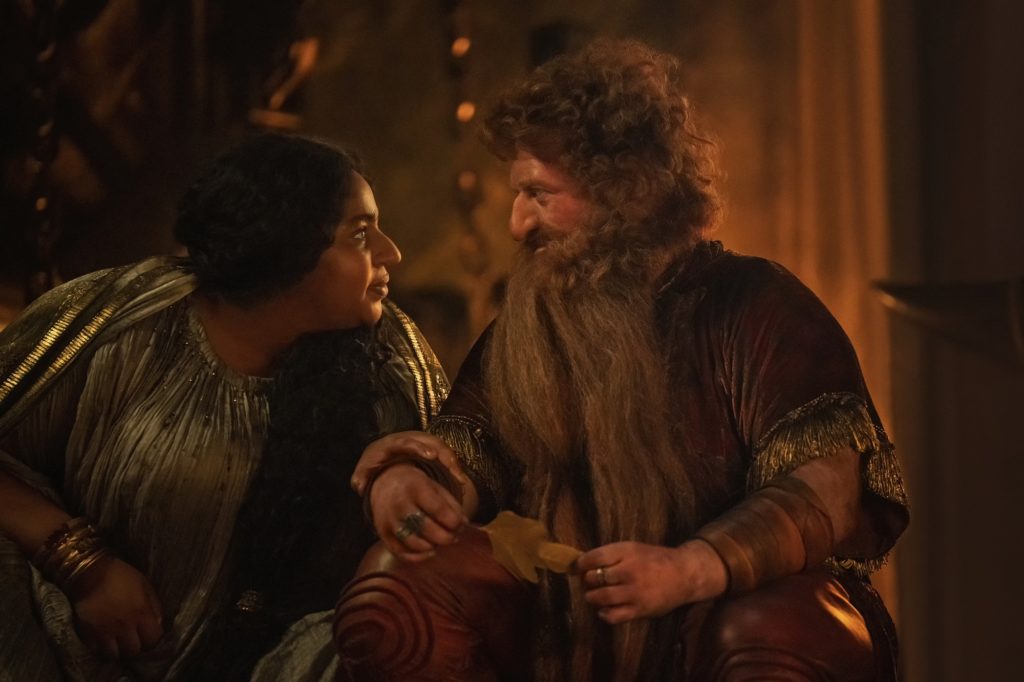
It's great that the good stands out against the bad, so hand on heart, one can safely say: 'How wonderful that the Dwarves are here.' The inhabitants of the mountain kingdom are perhaps the best thing in the entire series. Father and son Durin, Princess Disa, and the other inhabitants of Moria are incredibly funny, vibrant, and memorable. The Dwarf storyline is the most carefully crafted in the series, so you rejoice at any appearance of these characters on screen, which, unfortunately, cannot be said about Galadriel...
The Elf delivers such speeches that your ears wither (and she'd be better off swearing). The scriptwriters gave the heroine a nasty character, a wagonload of smugness, and kilotons of pathos. Her appearance on screen causes irritation and awkwardness. Every time the character opens her mouth, you wish that at least something sensible would come out this time. From the very beginning, Galadriel behaves arrogantly, disregards everyone, pursues her own selfish interests under the guise of the common good, and lectures everyone around her. This 'dream set' does not allow viewers to feel the slightest sympathy for the Elf or empathize with her even a little bit.
The parade of the heroine's lofty speeches reaches its peak in the scene with the interrogation of the dark Elf Adar (Joseph Mawle). Here, Galadriel explicitly promises to commit genocide of an entire race, while the season's main antagonist reasonably says that every creature in the world should have a home. The villain looks more humane than the protagonist, which makes the former a more layered character and the latter incredibly flat.
And the Elves are still surprised why they are so disliked in Middle-earth. Of course, it's hard to love racists and dictators pretending to be saviors. They came to a foreign land with a noble goal to help, but ended up watching over entire generations of people for years, paying attention to every whisper, behaving arrogantly and smugly in any situation, and even deciding who deserves what kind of life in this world.
The stupidest dialogue in the series 'The Lord of the Rings: The Rings of Power' also involved Galadriel. Upon arriving with Halbrand (Charlie Vickers) in Númenor, the heroes face hostility and negativity from both the population and the authorities, including Queen Regent Míriel (Cynthia Addai-Robinson). During the royal audience, the human kingdom's side states that they are not happy to see the Elf on the island, to which she responds with mutual unwillingness to be there. Míriel is offered to provide Galadriel with a boat so she can quickly leave for Middle-earth, but the Queen Regent suddenly refuses and says, 'You will be our guests.' What? Don't ask.
You Can't Just Take and Write Clear Motivations and Conflicts
Regarding the characters' motivations, there are also some questions. For example, let's take the already much-suffering Galadriel (what can you do, she's the main character in the series). Her main goal is revenge for the death of her brother, who was searching for Sauron and fell by his hand. Why was Finrod searching for Sauron? How did he find him, since Galadriel has zero leads? In the end, the Elf is driven only by egoism. Yes, she seems committed to the sound idea of eradicating evil, but in the end, she evokes more disgust than the Orcs. The scene of teaching Númenóreans the basics of fighting enemies is a pure act of a narcissist full of self-love and self-importance.
Galadriel doesn't care about the fates of her own warriors, who are trying to convey to their commander that they are tired of aimlessly chasing an ephemeral evil that disappeared hundreds of years ago. Galadriel doesn't care about Gil-galad's order to go to Valinor, so she jumps from the ship into the open sea. Galadriel doesn't care about the laws of Númenor and the orders of its queen, so she behaves arrogantly and speaks condescendingly to everyone. Galadriel doesn't care about Halbrand's decision to stay in Númenor, so she persuades him to return to Middle-earth. Galadriel doesn't care about anything at all. The heroine is no longer pursuing a common good goal, but only a personal interest, which consists of exterminating an entire race of beings. And tell me, how can such a character make you empathize with her? Isn't she the main antagonist of the season?
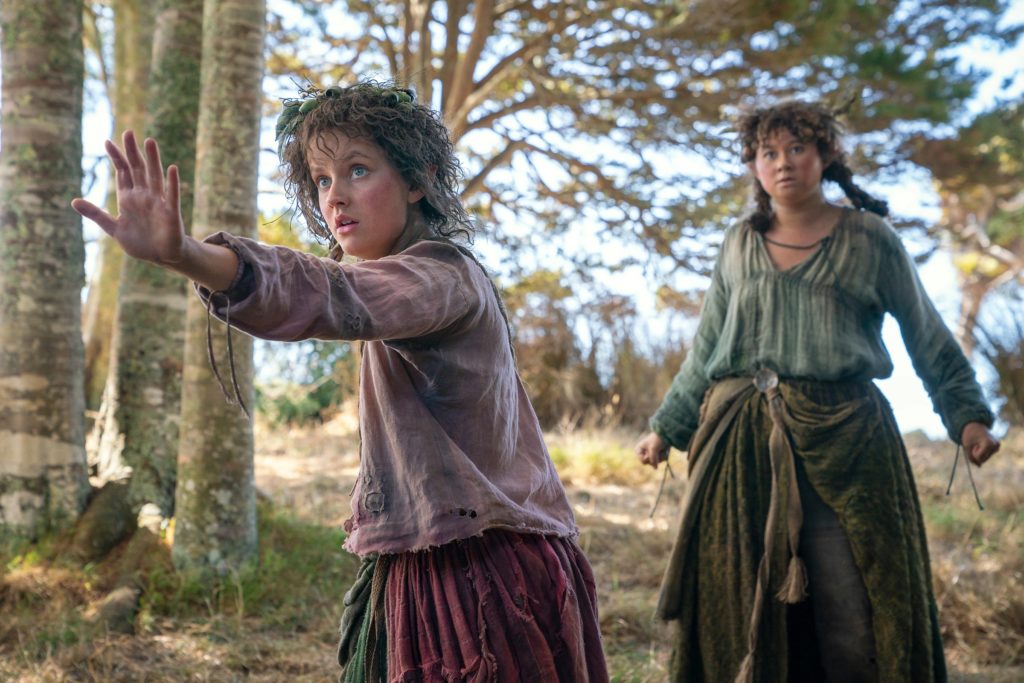
Another example: the Harfoot elder Sadoc is disappointed by Nori's decision to help the Stranger. By all laws, he is obliged to expel the young rebel from the tribe, but since she is too young, Sadoc mercifully turns a blind eye to what happened and leaves Brandyfoot in the ranks of the clan. However, Elder Burrows places Nori's family at the end of the caravan during the migration. The situation is worsened by the injury of her father, who twisted his ankle and cannot walk fast.
Burrows essentially condemns the entire family to death. Where is the mercy in this act? It is very cruel, but most importantly, it is baseless. In my opinion, it would have been more humane to expel the culprit and not 'sentence' every family member, including the younger sister, to death. Obviously, this plot device was simply necessary to prompt the Stranger to help his new acquaintances in a difficult life situation. The technique looks extremely cheap. 'The Rings of Power' continues to surprise, I must say.
The conflict between Dwarves and Elves looks no less amusing. The friendship of Elrond and Durin is tested for trust. It turns out that the cunning Gil-galad specifically sent the young politician to Khazad-dûm to find out from the Dwarves about a newly discovered ore that is stronger and lighter than any known metal, and even glows. The ore is called mithril. And it turns out that the Elves vitally need it because they are fading and will die by spring, and this miracle has magical properties and can save the race from extinction. How will it save them? Isn't mithril needed only for armor? Why did the ore suddenly turn into a magical artifact capable of prolonging life? Why are the Elves suddenly dying at all? If only the showrunners would give answers to the viewers, but they don't have time for that.
In general, the conflict with mithril is pulled out of thin air. Durin trusts Elrond with the Dwarven secret and makes him swear never to tell anyone about the ore. In the end, the Elf immediately gives the ore to Celebrimbor, breaking his oath, and spends the whole episode not telling Gil-galad, pretending that the secrecy is still being maintained. But Durin asked him to tell no one, not no one except Celebrimbor, he's a good guy, he can be told. Stupid? Never mind, 'The Rings of Power' moves on.
You Can't Just Take and Not Insert Stupidity into the Series
As has become clear, the script for the 'Lord of the Rings' series is a wonderful mechanism held together by luck, snot, and the holy spirit. Many character actions defy logic and are inserted into the script on the principle: 'Whoever needs to will stretch it and justify it, and whoever doesn't will nitpick.'
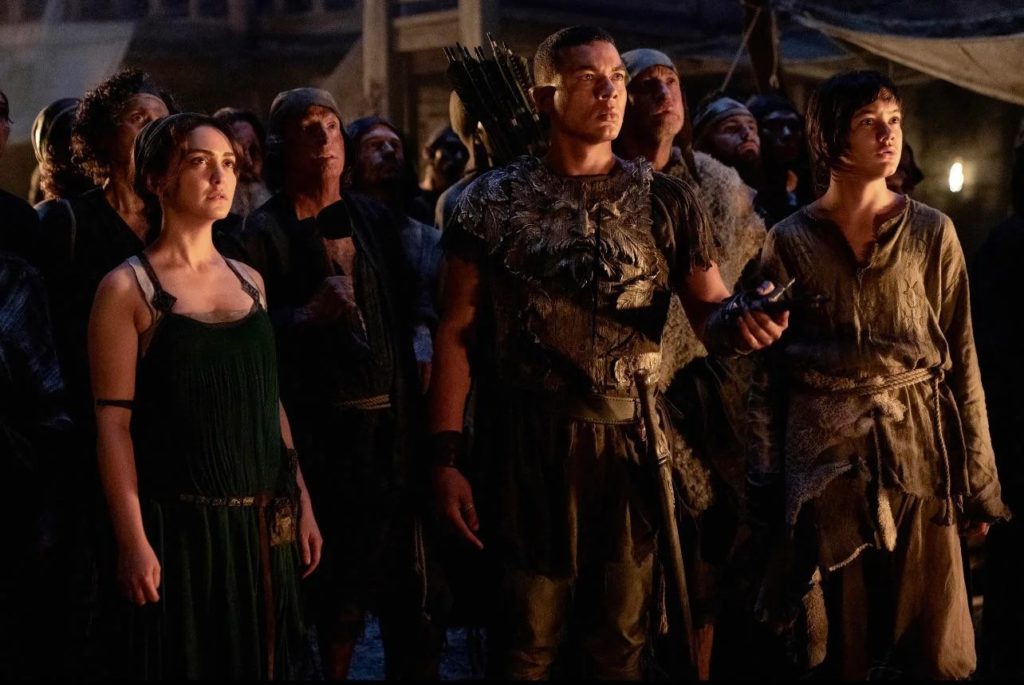
The most striking example is the solving of the mystery of the 'Sauron Mark.' Our beloved Galadriel wandered the world for hundreds of years searching for traces of the enemy, but it was all fruitless; the search had practically reached a dead end. The only clue is a mysterious mark left on the body of her dead brother. The heroine chases this mark. The journey to the cold mountains ends with a mutiny of the squad, but the answer wasn't in the mountains. The revelation miraculously comes in the library of Númenor. The Elf simply turns the mark over and realizes that the drawing is not Sauron's signature, but a map. And not just any map. It's the territory of the Southlands (why Southlands? Mordor was always in the east). Miracles are performed by libraries and a 90-degree turn. What can I say, fantasy. Only why leave a map of your location on the body of a dead enemy? Ah, don't ask.
There are a ton of similar moments. Starting from the brilliant decision to jump into the open sea, hoping to swim to Middle-earth, and ending with the creation of the rings, which require gold and silver of pure quality (from Valinor). Imagine, in the entire Elven kingdom, the metals were found only in one dagger, incredibly important to Galadriel. Oh my god, seriously? It's clear that they needed to show that the heroine is ready to sacrifice such a valuable item for the common good, but couldn't they have shown it more elegantly?
And that's not mentioning the scenes that could be debated for a long time. For example, how did the Númenóreans find the village attacked by Orcs so quickly? Why didn't Galadriel or Arondir check the most important enemy artifact? The Elves just held the packaged bundle in their hands and eventually gave it to a boy who is tempted by this object and had already effectively handed it to the enemy once before. Brilliant.
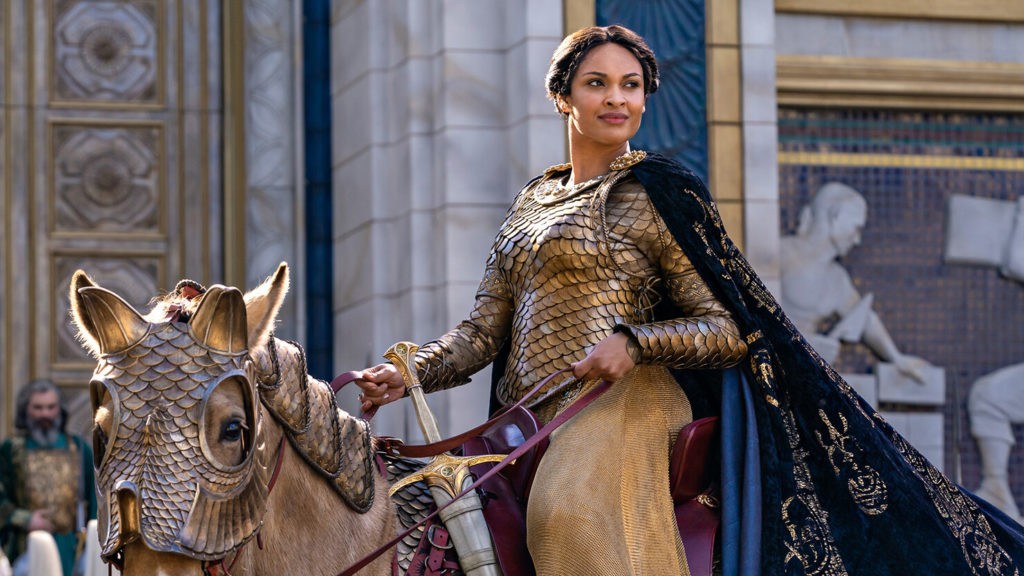
Also, no one explained the instant construction of the forge tower. The events of the season, by very rough estimates, last about a month, and during this time the Elves and Dwarves manage to build a huge tower? A long and labor-intensive project, ready only in blueprints at the beginning of the season, by the middle of the series a substantial part is built, and in the finale it is already being fully used. How did this happen, considering that Celebrimbor says from the very beginning that it's practically impossible to complete the construction by spring? And here it's done in a month. What can I say? Well done, guys. If the Egyptians had used 'The Rings of Power' as a manual and known such secrets, humanity would have fewer questions about the construction of the pyramids.
One could continue the list of questions for a very long time. Why does the Stranger so absurdly accidentally set fire to a page from a book? Why does the Queen Regent first tell her subjects not to show that anything is wrong with her, and in the next scene sit with a typical eyepatch? The same question applies to her in the final episode. How can just three rings with an alloy of mithril save the entire race of Elves? Why did Galadriel alone defeat a snow troll with two swings of her sword, while a prepared squad of Elves couldn't do anything? The last one is understandable. A strong woman. But why, in most cases, is a woman portrayed as strong by making men outright weak? Isn't that offensive? Who would answer this heap of questions... One hopes that at least some will be resolved in the following seasons.
You Can't Just Take and Not Break the Canon
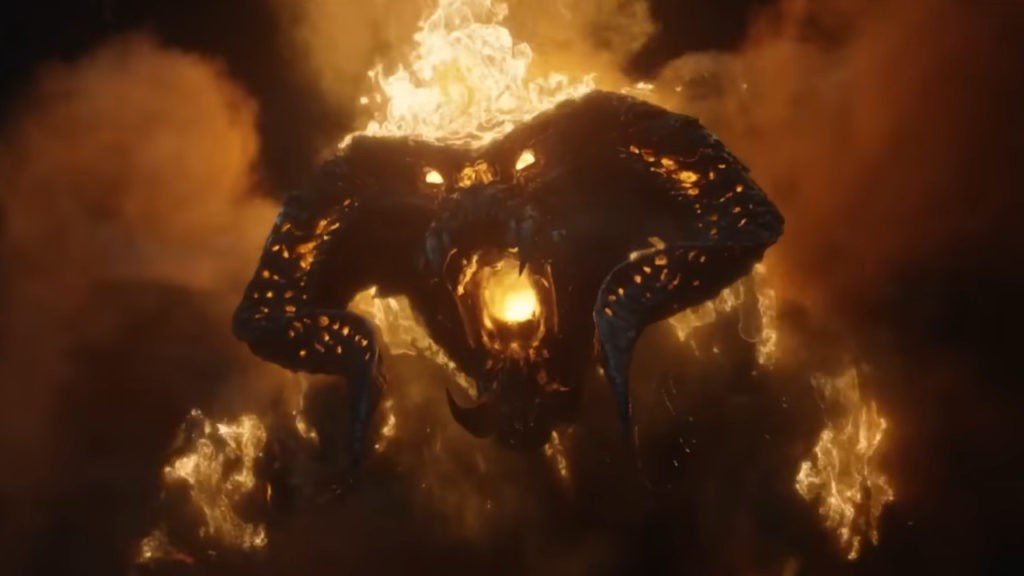
As is known, Amazon and the series' showrunners have a very limited amount of copyrights. Many events of 'The Rings of Power' cannot be covered, so the writers literally have to invent a lot, thereby breaking the canon. The awakening of the Balrog, the presence of an Istari in the Second Age (presumably Gandalf), the absence of Galadriel's husband, the forging of all rings with an admixture of mithril, the order of forging — this is a violation of the canon. On one hand, break it as much as you like, because Jackson also didn't follow the books exactly, but the main thing is to do it with love for the source material and the fan base. On the other hand, you can't be so dismissive of the fans' feelings. The entire story directly involving the main artifacts of the series is one of the weakest points in the plot.
The showrunners and actors falsely accuse fans of conservatism and racism, but the problem with the series is not the actors of color. Sophia Nomvete is simply breathtaking; there are zero complaints about Lenny Henry, Ismael Cruz Córdova, and other actors representing different races and cultures. The main problem is the raw script and the dismissive attitude towards fans. Prime Video buys dubious, incomplete rights to adapt 'The Lord of the Rings' for $250 million, invests a ton of money in the visuals, and ultimately rolls out a controversial product, blaming the low ratings (which they delete) on racists and non-progressive viewers. Oh, really?
They should first decide who they are making the series for. Progressive viewers or fans of the books and films about Middle-earth. If the intention was to cover both groups of people, then the creators clearly spent very little time on the script and its development. There's no need to shout: 'Want canon? Read the books, no one is rewriting them.' Then don't take on an adaptation if you spit on the source material. Can't maintain a balance? Then why take it on? If all you needed from 'The Lord of the Rings' was a big name and a foundation, it would have been better to come up with your own fantasy. If the goal was to make a good series in the universe, then you needed to approach its creation more responsibly, rather than just throwing a lot of money at the rights holders and visual effects specialists.
You Can't Just Take and Not Praise 'The Rings of Power' for Its Visuals and Music
The series' huge budget makes itself known in almost every frame. You get the feeling that you missed some big premiere in the cinema and are now forced to watch the film on a small screen, even though its place is in the movie theater. Lindon, Eregion, Númenor, Khazad-dûm — all the locations are majestic and beautiful. You can immediately see that one episode costs $60 million. And when the eruption of Orodruin occurs, bringing with it the creation of Mordor, you get not only visual satisfaction. The authors took into account the real causes of volcanic eruptions and created a geologically sound reason for the awakening of Mount Doom. A small detail, but a pleasant one.
In addition to the gorgeous locations, 'The Rings of Power' can boast incredibly ugly Orcs. And that's a compliment. Their makeup is simply amazing. Each one is individually terrible in their own way. Moreover, Adar considers each one his 'child,' which makes the Orcs not just a gray mass of evil, as in Jackson's films, but full-fledged characters and inhabitants of Middle-earth.
Also, the series' opening is visually pleasing, somewhat reminiscent of 'Game of Thrones' (couldn't avoid mentioning it). Coupled with the music by Howard Shore, the author of the original soundtrack for 'The Lord of the Rings' ('The Rings of Power' generally heavily indulges in salutes to Jackson's films), you don't want to skip it at all. But we must not forget that all the other music for the first season was composed by Bear McCreary, who worthily conveyed the motifs of Tolkien's world.
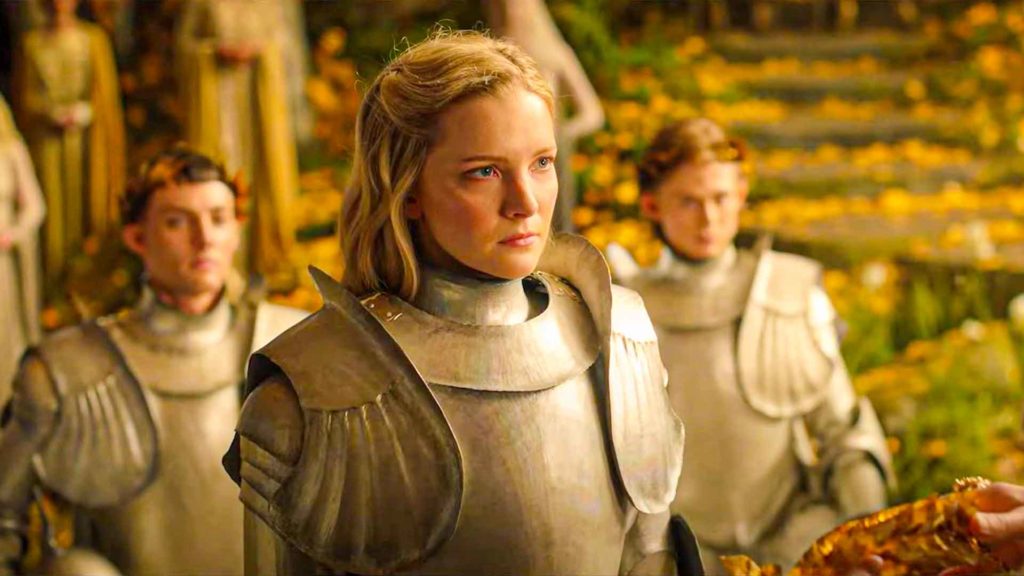
However, there are a couple of flaws in the visual component of the film. Specifically, the Elven armor, which suspiciously resembles the wrapper of chocolate coins, and the questionable slow-motion throughout the series, which is especially bewildering during the scene of Galadriel (her again!) riding a horse. It looks, I won't hide it, extremely embarrassing, but the rest of the visuals completely distract attention from these moments.
What's the Verdict?
In the end, I would like to say that the most expensive series in history, with a budget of $715 million, turned out good and everyone should definitely watch it, but I can't bring myself to say it. Almost all the new characters don't make you empathize, and the old ones certainly don't (nothing will happen to them, and even if something does, many deserve it), the final plot twists don't impress, the hooks for future seasons don't intrigue, but most importantly, the series leaves a bitter aftertaste of unrealized potential and the squandering of a huge amount of money.
In essence, Amazon Prime Video made an expensive fan fiction set in the 'Lord of the Rings' universe, which looks absurd and funny due to its weak script. If you judge 'The Rings of Power' within the paradigm of Tolkien's legendarium and Jackson's films, it turned out to be a very bad series. But if you judge it as a separate fantasy series, detached from its iconic title, it's an average project among dozens of similar ones. In either case, the end does not yet justify the means. All that remains is to wait for the continuation and keep our fingers crossed. Hopefully, hopefully. Hopefully, hopefully.
Comments
0No comments yet.
Sign in to join the discussion.