
Rebels quarrel, millennials argue with boomers, ex-cons compare tattoos. And yes, all of this is ‘Star Wars’ and the series ‘Andor’.
The fifth episode of "Andor" is the most interesting one in the series so far: it has some dynamics, conflicts are well-presented on all sides of the barricades, and the introduction of new characters has finally been completed. We break down what was shown in this intense episode and how "Star Wars" and anarchism relate (spoiler: perfectly).
Previous recaps:
Warning: the following text contains spoilers for episode 5 of the series "Andor"
The episode begins unusually – with the poetry of a futuristic city. The fired policeman Syril Karn (the antagonist of the first episodes) looks out the window, an industrial landscape is in the window, melancholy on his face, and the situation is also suspiciously reminiscent of the meme "Russia for the Sad".
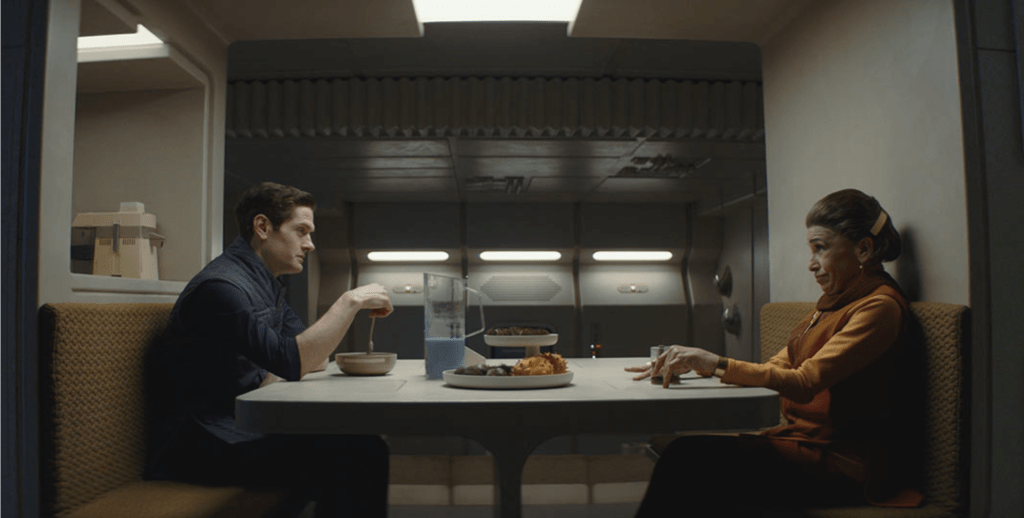
Then follows a completely Balabanov-esque conversation between the hero and his mother (Kathryn Hunter, who brilliantly played the witch sisters in "The Tragedy of Macbeth" by Joel Coen), in whose Khrushchev-era apartment he returned after being fired. She criticizes his career decisions, states the lack of prospects, and responds to her son's sarcasm with even harsher sarcasm.
Their family relationship in general is quite non-obvious, there is tension and the invisible presence of a long-standing conflict. To solve (in her understanding) her son's problems, the mother wants to call Uncle Harlo (the same relative in any social drama who will always throw some job your way). Karn is clearly not thrilled, and judging by the course of the scene, Uncle Harlo lives in St. Petersburg, responds to the nickname Tatarin and looks like Viktor Sukhorukov.
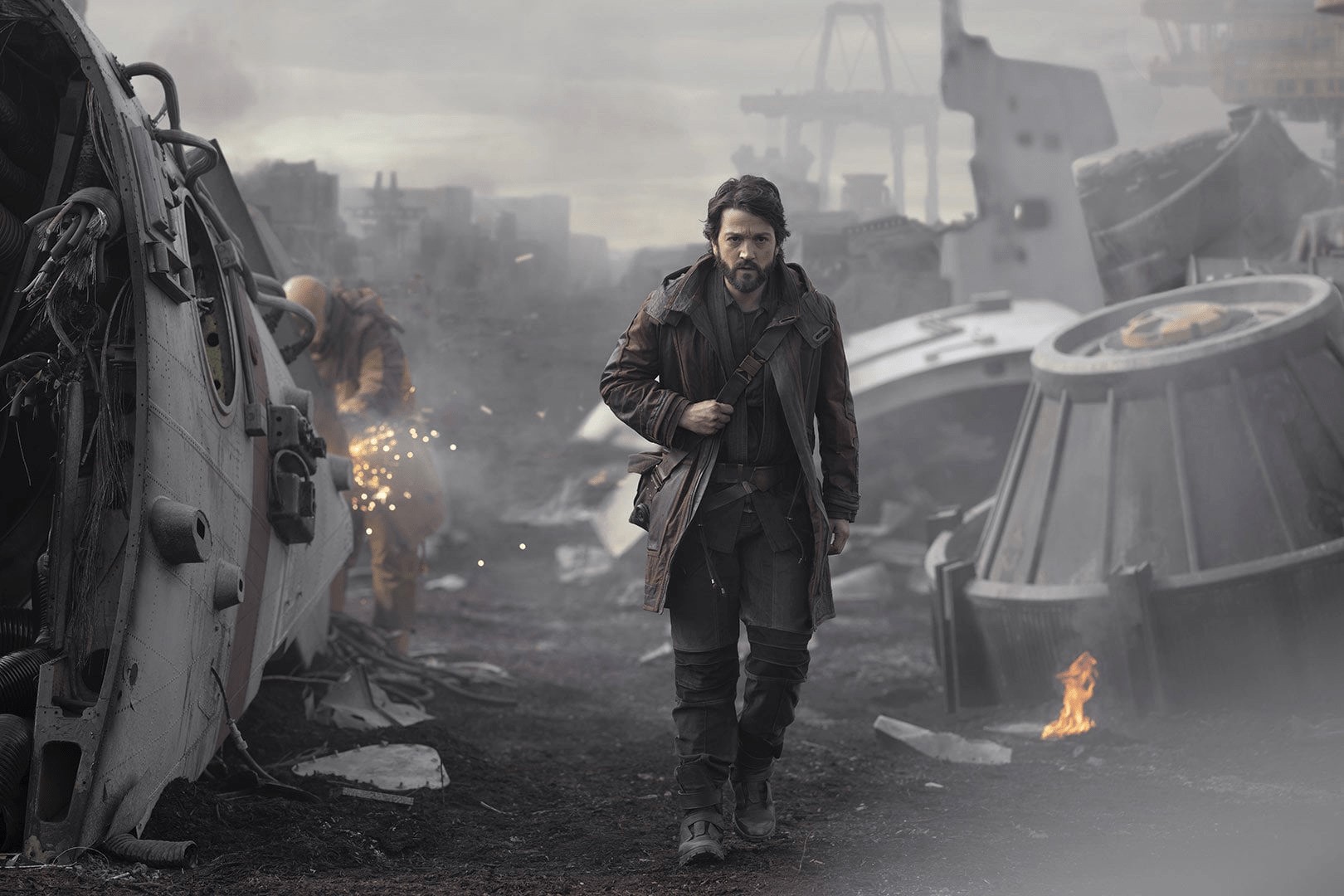
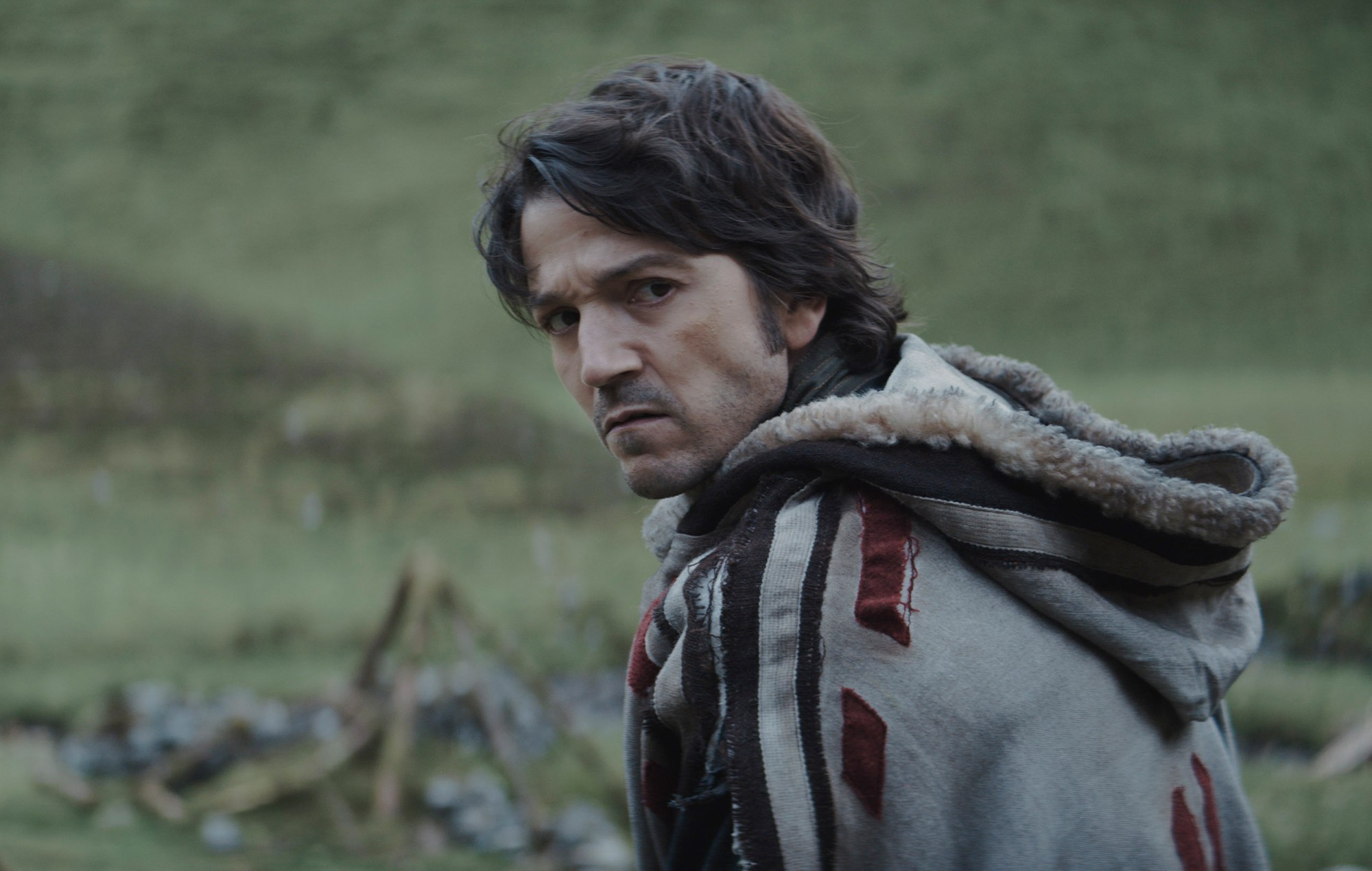
Meanwhile, on Aldani, against a completely non-industrial landscape, Cassian (Diego Luna, melancholic and decisive at the same time) wakes up, notices his belongings are missing, and quickly understands what is going on. His belongings (including his weapon) are being inspected by one of the rebels, Skeen, who suspects the newcomer of betrayal. Andor is angry but doesn't show it, answering questions about himself evasively. But Skeen is quite talkative – he catches Cassian's gaze on his tattoos and turns out to be not at all against telling about them.
Skeen was obviously in prison for murder, and Andor is familiar with prison tattoos because he was also locked up, albeit in a juvenile colony. Skeen, convict to convict, tells Cassian that he is taking part in their heist for revenge. Andor questions him about the members of the squad, and thus we learn that although these guys look like a ragtag bunch, each has his own motives and hidden capabilities.
Meanwhile, in Syril Karn's apartment, a call to his uncle has taken place, and mother and son discuss it. She insists that her son is to blame for his own problems, he – in a hidden, albeit textual, way – that she doesn't make the cut for the "Mother of the Year" contest. We've seen a lot in "Star Wars", but probably not this.
One way or another, Uncle Harlo seems to be going to help, but Syril's heart is restless. In bed, he looks at the hologram of Andor; at the table, he stubbornly ignores his cereal (characteristically, it's there for both lunch and dinner). Where this obsession with catching Andor will lead him is anyone's guess, but it seems wise to bet that this lost young man will ultimately join the rebellion.
But the most interesting subplot, the Coruscant one, involves Senator Mon Mothma (Genevieve O'Reilly, can't look away). The intensity of political passions on Coruscant is diluted by personal dramas: one episode where the senator has breakfast and reminds her husband that her driver has a name (and doesn't need to be referred to simply by the dismissive "chauffeur") is worth a significant part of the film "Attack of the Clones", it's that good.
Moreover, Mothma's teenage daughter Leida joins the sweet family squabble at some point, and we learn that politics is, in general, easier than raising children: neither her mother's authority nor her eloquence works on the willful Leida. Mon Mothma leaves, upset; the daughter emotionally crushes her breakfast, and the senator's husband seems to have experienced life, so he sits with a somewhat blissful (and self-satisfied) expression.

The senator's storyline doesn't continue after that (a pity), we only see another sluggish quarrel with her husband – about a charitable organization that Mon Mothma opened without telling him. You don't need to think long to understand: the senator didn't hide this for no reason. She is probably laundering money for the rebels, and it's quite possible that her husband suspects something.
Moving from Aldani to Coruscant, the episode reveals the motives of the rebel squad: in the key scene of the episode, Andor communicates with the youngest member of the squad, an idealist, talented mechanic and political activist Karis (Alex Lawther). He proves to his older comrades (Cassian and the sarcastic Skeen) that digitalization contributes to oppression, that the Empire commits crimes everywhere and all at once, because one violation of the law by the state is a shock, but forty a day is already the norm, and generally says many correct and interesting things, and also advertises his writing manifesto of the communist party of a free society.
This is perhaps unexpected for a series set in a universe where the Empire was overthrown by talking teddy bears, but the dialogues about politics are the most interesting part of "Andor", and it is thanks to them that this is an outstanding spectacle, a real kind of cyberpunk about global oppression – as if a school robotics club was entrusted to an anarcho-Luddite. No one might master robotics, but selected theses from the Revolutionary Catechism will bounce off your teeth.
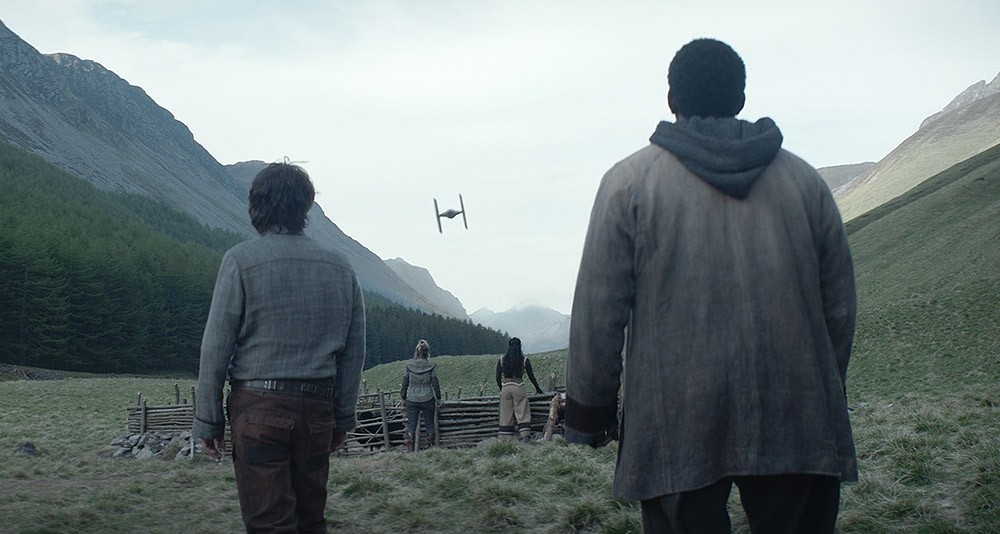
A five-minute political information session is followed by an organizational briefing: group leader Vel and Lieutenant Gorn check if Andor is ready to go all the way, but in reality they are trying to hide their own powerlessness – the mission is tomorrow, and they don't even know how to lift an Imperial ship off the ground (Cassian knows, they are lucky). Meanwhile, Imperial scouts fly over the camp, staying on the wasteland is becoming increasingly dangerous, and yet preparations are in full swing – Andor learns to march, the others feed the local sheep and prepare for the retreat.
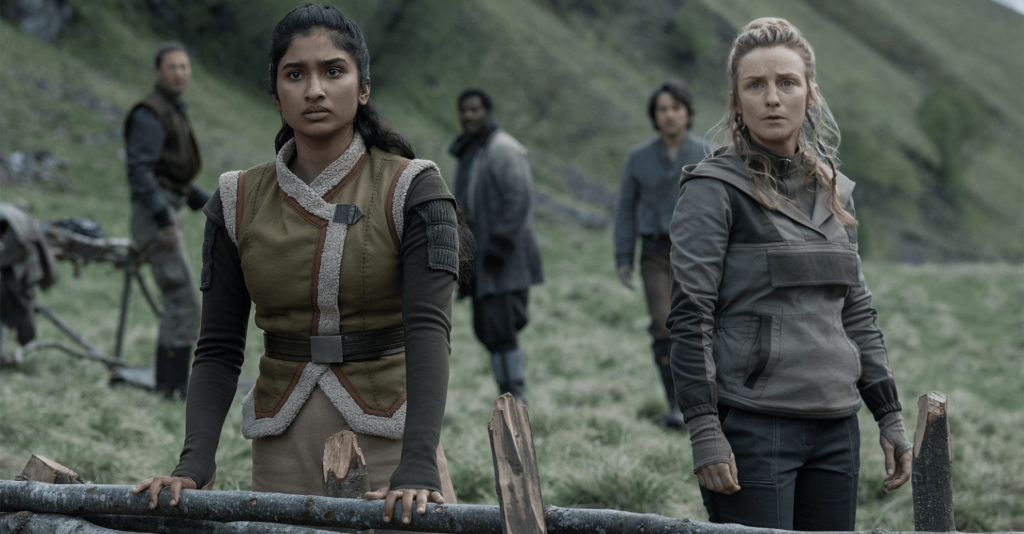
Already on the way, Cassian discusses Lieutenant Gorn with Vel – as is known, a double agent most often turns out to be a triple agent, so the suspicious thief doesn't trust him. Vel explains to Andor that Gorn loved the Empire and a woman from Aldani, but totalitarianism tolerates nothing human, so the unfortunate lieutenant first lost his promotion, then the woman, and then his love for the Empire. Andor believes his comrade, but no one believes him. The suspicious Skeen even considers the hero a spy.
From the gloomy foothills of Aldani, a sort of Scotland with Ken Loach color filters, we are transported again to Coruscant. In the basements of the Imperial KGB, Dedra Meero (the officer introduced in the previous episode) persistently searches for traces of a conspiracy of mysterious rebels, and looks exactly where it really is.
And on Aldani, the escalation of distrust in the squad leads to Skeen threatening Andor with a knife and taking away his kyber crystal (which Luthen, the hero played by Skarsgård, gave him as a pledge of two hundred thousand credits for the job). Open confrontation escalates: everyone points weapons at each other, and Skeen asks a reasonable question: how can you trust a man from nowhere, especially one with such an expensive item on him? Andor eventually tells the squad that he is a mercenary, meaning that unlike them, he will receive not only moral satisfaction but also money for his work.
Everyone eventually makes peace with Andor's mercenary nature, and in the finale, Skeen even apologizes to Cassian, telling him that he hates the Empire not because he was imprisoned, but because it essentially killed his brother – a farmer whose farm was flooded by local officials, depriving him of the meaning of life. After this story, Skeen had no doubt that the Empire must be fought, and we, sentimental viewers, have no doubt that this series is, of course, worth loving.
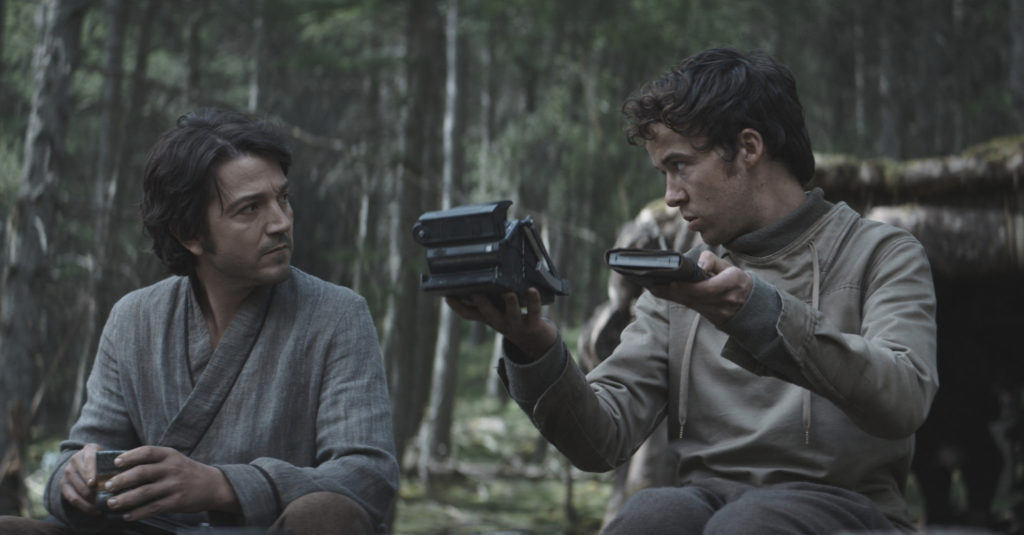
And while the rebels prepare for the job, their secret handler Luthen Rael on Coruscant cannot sleep and catches their signal on jammed radio frequencies. Tired, apparently, of the noise of interference, his assistant persuades the anxious conspirator to sleep: it is impossible to control everything.
How Was It?
The fifth episode turned out to be interesting, although not much happened in it: events on Aldani develop actively, but on Coruscant all four (Rael, Karn, Mon Mothma, Meero) plot lines are given more as sketches, although the actors are wonderful, it's filmed beautifully, we wait to see what comes next. But for the first time in the history of live-action "Star Wars", the rebels are truly interesting to watch. The secondary rebels here have characters, motivations, and even some diversity – for the first time, in general, we see that the rebellion of a former prisoner and the rebellion of an idealist anarchist are two somewhat different processes, although the goal is, of course, the same.
And even that's not quite it – with a little more authorial license, in a galaxy far, far away, they might seriously understand that there is not only freedom from, but also freedom for. What will the rebellion strive for when the Empire falls? A restoration of the Republic? A confederation of free systems? Maybe a model of a galactic European Union? If "Andor" asks even one of these questions, Tony Gilroy should be given an Emmy, and, in fact, it could be given already: while the series is high-quality entertainment, it is also a relevant statement about politics, freedom, and responsibility. After all, this is the first time in "Star Wars" that someone writes a manifesto.
Comments
0No comments yet.
Sign in to join the discussion.