
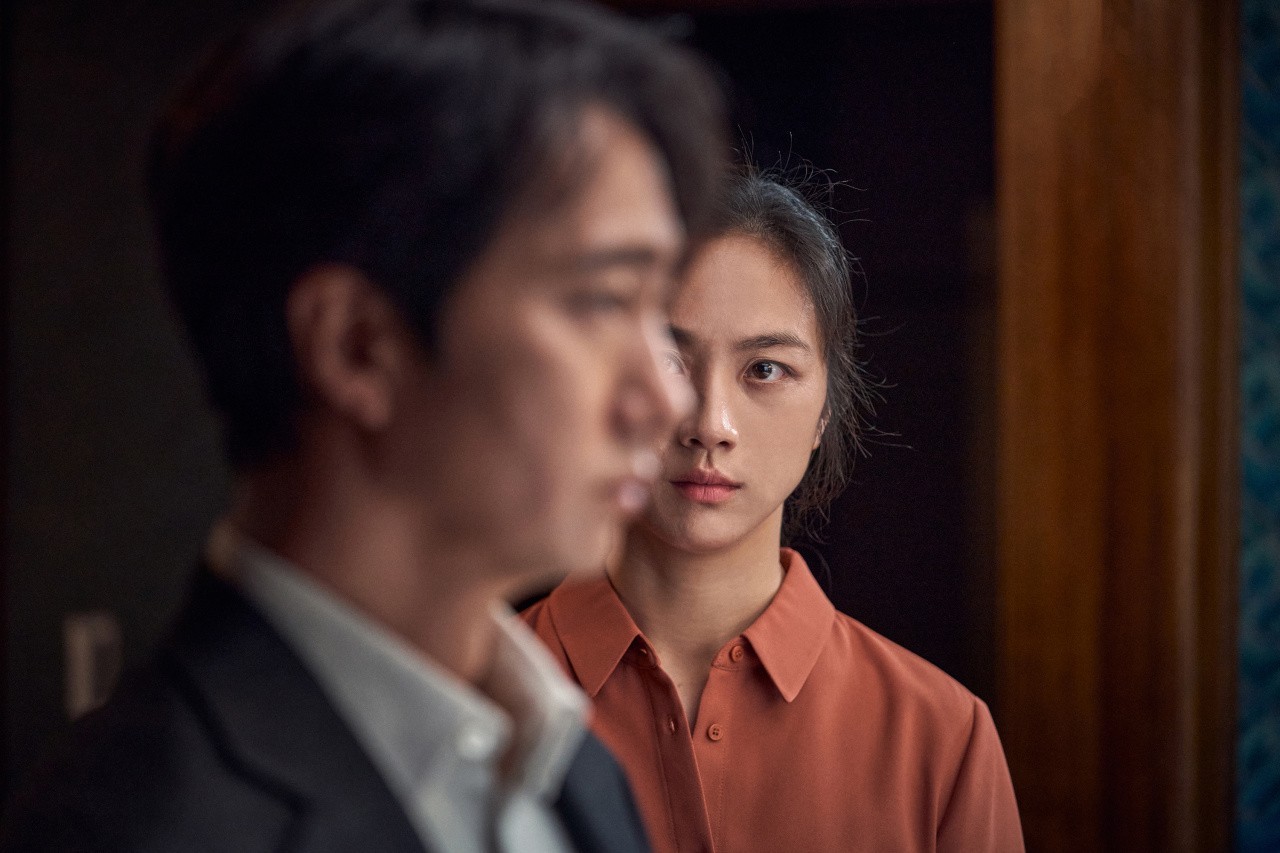
The Cannes prize-winner «Decision to Leave» by Korean classic Park Chan-wook has been released. This beautiful neo-noir is unlikely to become a big hit, yet it is a subtle and intelligent film about love, duty, and freedom, and perhaps the best film...
The youngest detective in the history of the Busan police force, Hae-joon (Park Hae-il, great here), works the same way he lives – efficiently, flawlessly, but with boredom. He suffers from insomnia (as a classic noir hero should – sleeping at night means missing all the interesting stuff), automatically loves his wife, an employee at a nuclear power plant who loves quoting statistics (there's even one about the connection between turtles and male depression!), understanding that if he died in the line of duty, she wouldn't be surprised. In short, Hae-joon is as happy as a neurotic, lost city dweller can be, whose moral rigor weakly correlates with the world around him.
The detective's ennui is interrupted by the investigation of a strange case – not a murder, not a suicide, not an accident. The latter is suggested by the fact that an aging man fell from a cliff. Thoughts of suicide are prompted by threat letters the deceased, a corrupt immigration service official, had received. And leading to murder, essentially, is only one rather thin thread. The victim's wife, a beautiful young Chinese woman, Seo-rae (Tang Wei), who speaks Korean poorly, shows no grief for her husband – he beat her, didn't respect her much, and generally loved mountains and rock climbing while his wife was afraid of heights. Gradually, more and more evidence begins to point to her involvement in her husband's death, but the more obvious her guilt becomes to the audience and the other police officers, the more Hae-joon falls in love with the suspect.
The first half of the film is devoted to the heroes' turmoil over this forbidden love (watching their quiet gestures, brief glances, loud sighs could go on forever) and the fact that Seo-rae most likely killed her husband. In the second part, the situation resets, everything begins again, in almost the same manner, but more straightforward and, in general, harsher: for the price of one film, Park Chan-wook sold us two, which resemble each other like the main character's dress, if you look at it from different angles – is it green or blue.
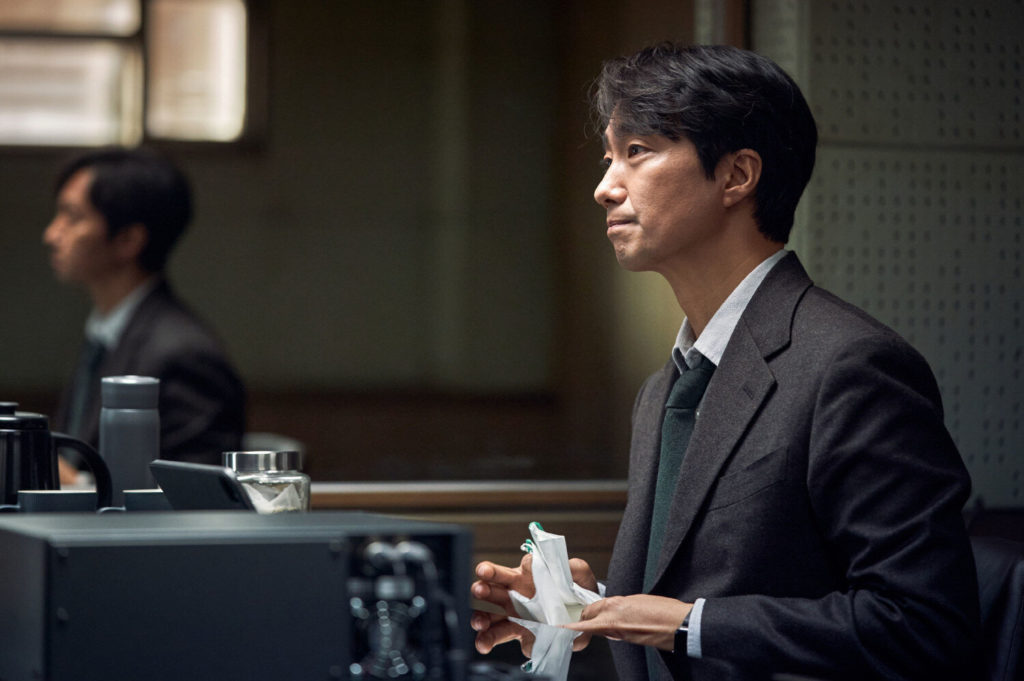
Of course, «Decision to Leave» is not a new word in noir. The gap between one's own honesty and the world's meanness weighed on the classic noir hero Marlowe from the books, and most vividly in cinema – in Altman's «The Long Goodbye» with the great Elliott Gould. And the genre itself began with the forbidden attraction between a detective and a suspect. Suspects – often femme fatales – were loved by Sam Spade and Philip Marlowe (Humphrey Bogart in «The Maltese Falcon» and «The Big Sleep»), J.J. Gittes (Jack Nicholson in «Chinatown»), and Scottie Ferguson (James Stewart in «Vertigo»); in fact, «Decision to Leave» largely repeats the conflict of the latter film. This is a film about passion, obsession, the contradiction between reality as it is and reality as it should be, about a nearly ancient conflict between love and duty.
Like any true noir, «Decision to Leave» is valuable not for its detective intrigue, though quite intriguing, but for its subtle psychologism, its exploration of pain and loneliness. The loneliness to which a person is condemned by the metropolis, history, institutions – Hae-joon is lonely because he fits perfectly into society, Seo-rae is lonely because she is completely out of sync with it. In a good melodrama, they would find each other, suffer, and find happiness, but Park Chan-wook is not an heir to Frank Capra, but to Hitchcock: in the shattered world of his film, one of the heroes is always a detective, the other a suspect; one is a criminal, the other a victim, and both, of course, are doomed.
The director's mastery (simply phenomenal in this film) allows him to swap the heroes' places in this scheme of things right in the middle of the action, practically within a single cut: here the detective is watching Seo-rae, and here he closes his eyes, and now she is peering at him. Yes, the relationship between a detective and a potential criminal is an old noir theme, but it seems no one had yet elevated the story of it to the level of a great philosophical statement, an existential drama, as Park Chan-wook did, turning a love story into a cold case (unsolved case), and feelings into evidence.
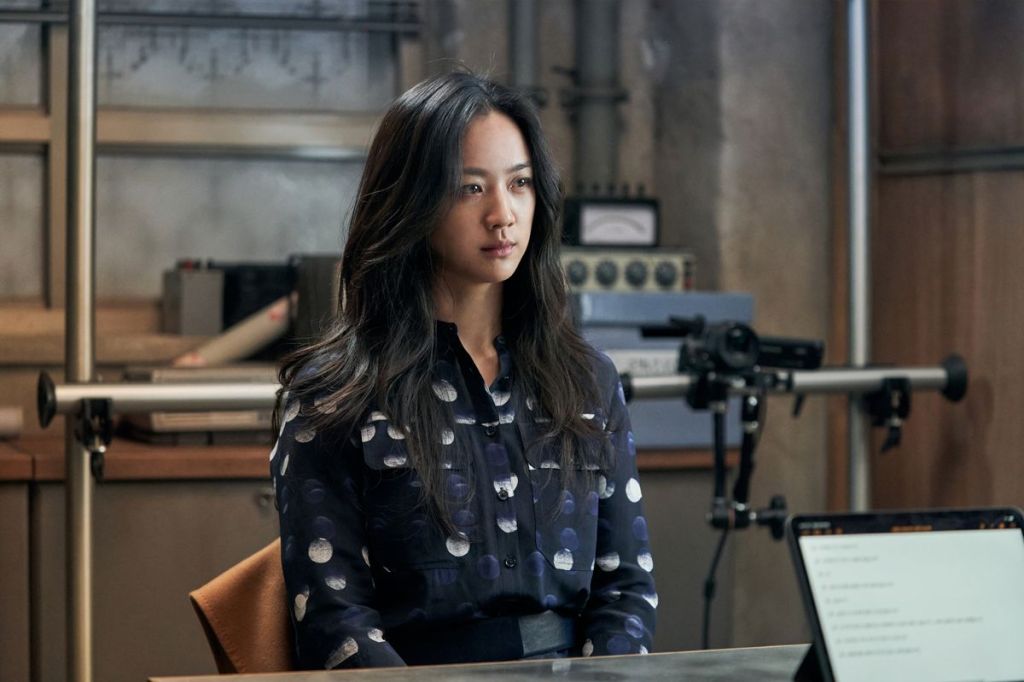
In this sense, «Decision to Leave» is, of course, an outstanding film about love. Including love as the ultimate manifestation of freedom, such a limit of it that turns out to be impossible in a world ruled by the state, society, and the fear of breaking away from them. This fear was also in «Vertigo» (the most obvious inspiration, though the director denies it), whose protagonist left the police and found himself alone in the world – without the state, without the uniform, without institutions – and in the absence of institutions, gaining freedom, he consistently experienced all the phobias available in the fifties and the main one – the fear of falling from a height (which also torments Seo-rae).
In Hitchcock's film, vertigo came from encountering reality without intermediaries; poor Scottie couldn't handle it, and when he met a woman in the second part – the real embodiment of his dreams and fantasies – he tried to change her, re-format her, rebuild his familiar world. Hae-joon, as a more modern person, upon meeting a femme fatale, no longer tries to change her, of course, on the contrary – he tries to somehow coexist with her. The result is the same, but what can you do, such is life.
«Decision to Leave» is a great success, not only stylistically (though, of course, making an erotic thriller where the peak of tension is lunch with a premium sushi set is great craftsmanship), but also in terms of deconstructing the genre. Park Chan-wook breathed life into the neo-noir, which had been dormant since «Inherent Vice»; before us is finally a genuinely existential detective story, where the criminal is life itself, which should have turned out happily, but just can't seem to fulfill this, in general, simple task. With the two-act structure of the film, the director even seems to console us: maybe the second time will be lucky, everything will work out, perhaps better. But probably, it still won't.
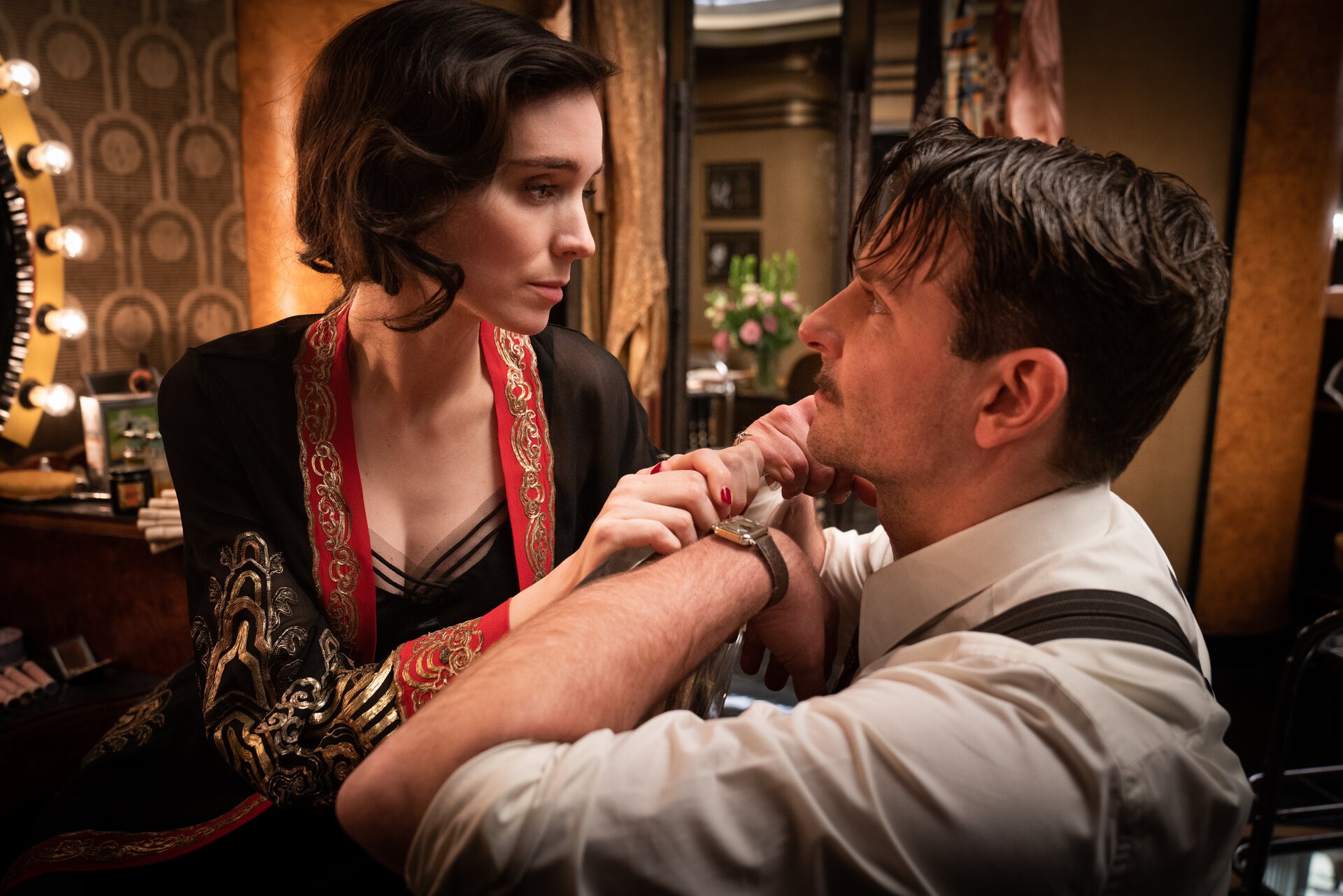
The spectacular «Nightmare Alley» became another immersion of Guillermo del Toro into the world of fantasy, but insufficiently mystical and frightening. Mythical creatures are no longer so monstrous, and the film
Open material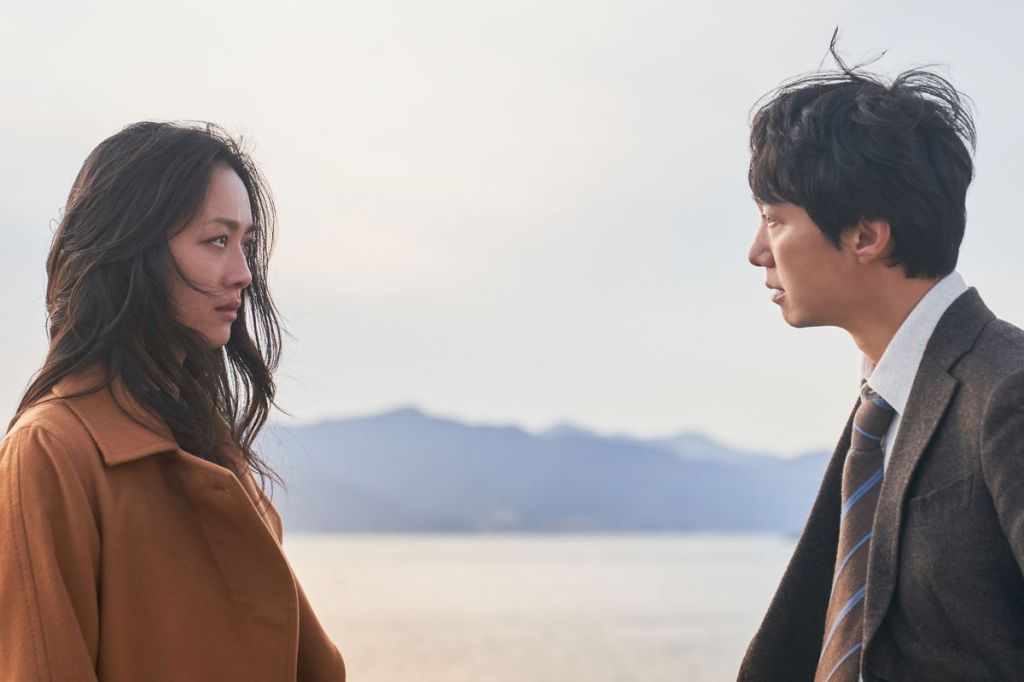
With its finale, «Decision to Leave» leaves the viewer with a dual impression – on one hand, great sadness, unbearably melancholy, the meme with a man on a sandy shore abruptly ceases to be funny; on the other hand – like Shakespeare's tragedies, for example, this film does not just upset, but elevates: in a world where such stories, dramas, and feelings are possible, one doesn't exactly want to live, but at least everything is not in vain, and the heroes had something in their lives, after which one can say that it definitely wasn't wasted. As the director convincingly shows, this feeling is not accessible to everyone.
While a significant part of the world around is furiously spitting into eternity, Park Chan-wook, with unexpected sadness and even more unexpected (from the director of «Oldboy») tenderness, tries to look into it, and against such an ugly backdrop, his already beautiful gesture acquires a certain nobility, which, as the characters note, is uncharacteristic of our era.
Comments
0No comments yet.
Sign in to join the discussion.