

We tell how “Dual,” the story of Karen Gillan's struggle with her own double, deceives audience expectations and covertly criticizes capitalism.
On May 19, “Dual”, the new film by Riley Stearns, the director who stirred up many critics with his previous film “The Art of Self-Defense,” hits theaters. As before, the filmmaker hides a critique of capitalism under the mask of a superficial popcorn movie. And as before, it turned out to be controversial but intriguing. In a way, this tech horror in the spirit of “Black Mirror,” featuring two Karen Gillans and a dancing self-defense coach Aaron Paul, came out unsettling and... funny.
Kill Yourself
In the near future, people have the right to create a clone of themselves in the event of a fatal diagnosis. This is exactly the situation Sarah (Karen Gillan) finds herself in. Despite the contradictory nature of her relationships with loved ones, she still can't bring herself to upset them with her departure. However, after some time, the girl fully recovers, and by law, only one version of a person can exist. To resolve such issues, there is a deadly duel to decide who deserves to live more. So Sarah must face her own double.
The plot setup and promotional materials for “Dual” practically scream that the viewer is in for a gritty action film about the struggle for survival, a kind of “Hunger Games” on a smaller scale. It's no wonder that Karen Gillan's character seeks help in preparing for battle from Aaron Paul's brutal character, who tries to awaken the beast within her. In reality, the story is not about that at all.
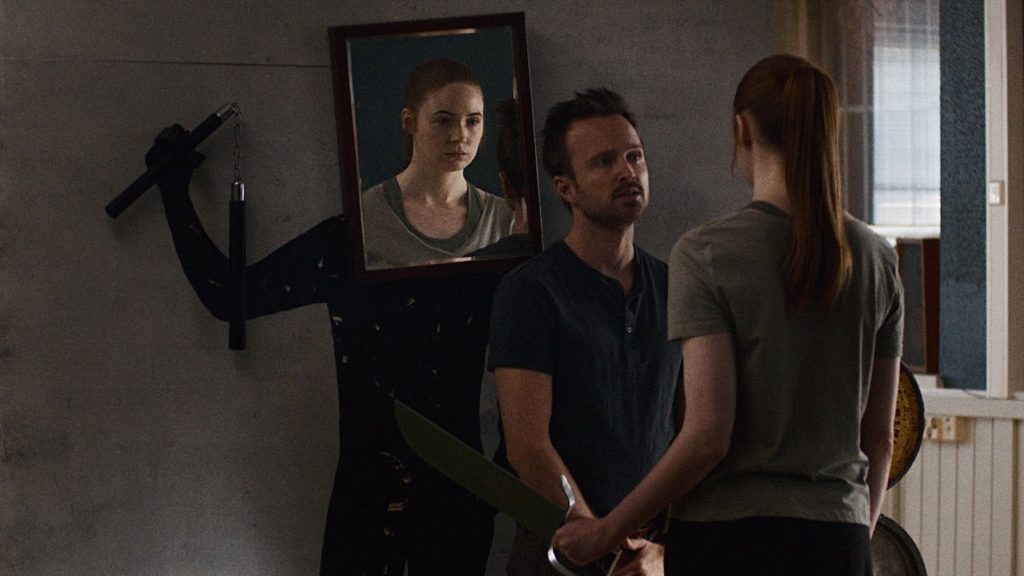
Stearns cleverly deceives naive audience expectations. Instead of a warning about the ambiguity of new technologies, he offers unsettling thoughts about what remains after a person (especially relevant in pandemic times). Instead of an abundance of bloody fights — dancing to Lil John's “Get Low.” And the final twist can leave a mixed impression, to say the least.
But perhaps the main charm of “Dual” lies in this unpredictability and non-obviousness. It is strange, it doesn't try to please, it can entertain, but only if you are ready to play by the author's rules. This means reading between the lines and enjoying the process, not the result. And also laughing where there are no straightforward jokes.
Obvious and Not-So-Obvious Subtexts
As in “The Art of Self-Defense,” Riley Stearns casually critiques capitalism in this film. This time, it targets the very essence — the pursuit of personal gain and benefits, despite everything else (circumstances, people, etc.). This drive is usually celebrated as positive in traditional capitalist society: “pull yourself up by your bootstraps,” “the American dream,” and all that. Stearns ironically pokes fun at it, suggesting that it's not always about achievement. And what you desire, surprise-surprise, may not bring the expected happiness.
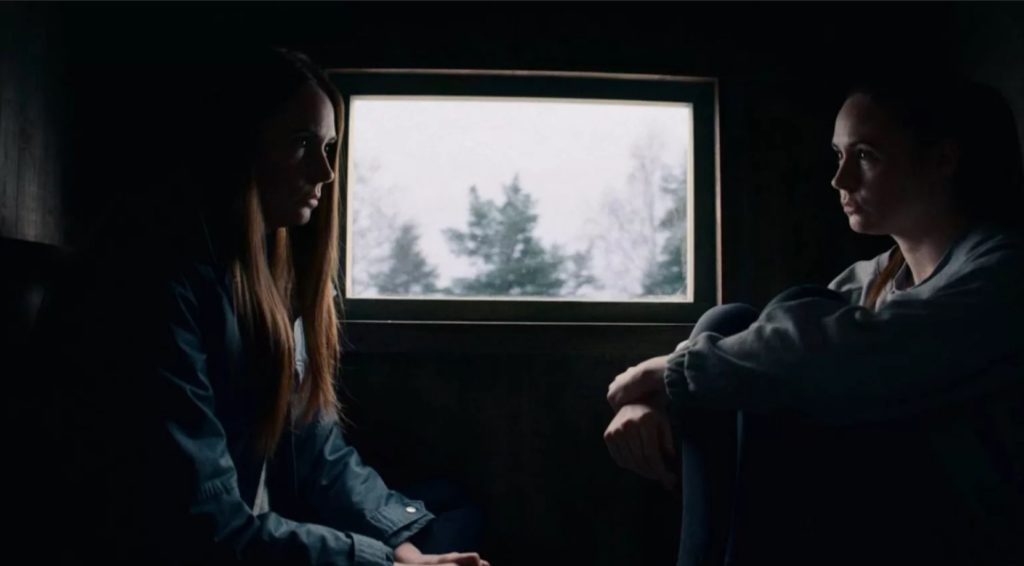
Additionally, the director again ironizes the nature of violence. In his view, which is easy to agree with, cruelty does not bring peace, but only harms both sides of the conflict. And no matter how right you are, it's not a solution.
Problems with “Dual”
The film's undeniable advantages, unfortunately, do not allow us to overlook its shortcomings.
First, “Dual” is derivative. As noted above, it repeats much of the author's previous work, bringing almost nothing new. And a joke told twice often no longer seems so funny.
Second, the characters are written so lazily that it feels like novice screenwriting students could have done better. In the end, we have Sarah, who has a dreary life (why?) and problems with relatives (because of what?), but has a desire to live (for what purpose?). Why we should be interested in following her, let alone empathize, is unclear. The secondary characters received even fewer traits.

Third, the future world here is so conventional that it makes you cringe. Clones appear from test tubes, and movies are still watched on DVDs for some reason. From a script perspective, there is no interesting work done to create additional atmosphere. Circumstances for the sake of circumstances, texture for the sake of texture.
So it turns out that “Dual” is literally woven from contradictions, making it almost impossible to recommend for viewing. Except perhaps to personal fans of Karen Gillan, who for the second time gives viewers a double dose of her beloved self (the first was back in the days of “Doctor Who”).
“Dual” in theaters from May 19.
Trailer:
Commentaires
0Aucun commentaire pour le moment.
Connectez-vous pour participer à la discussion.