
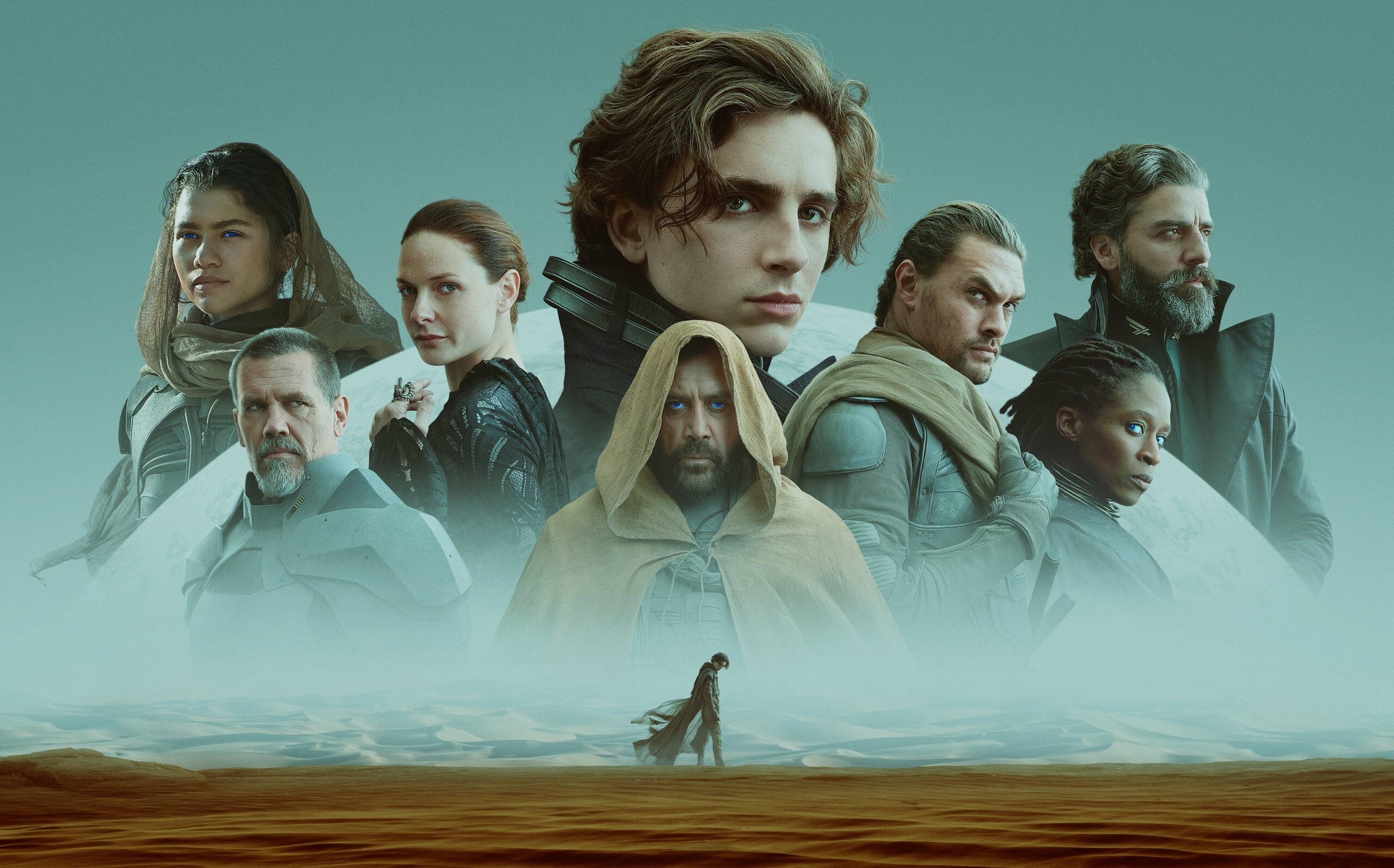
Let's talk about Denis Villeneuve's 'Dune' from two points of view: someone who has read Frank Herbert's books and someone who first encountered the planet Arrakis and the conflict unfolding around it.
The long-awaited 'Dune' by Denis Villeneuve continues to storm theaters. Our authors, Varvara Ulianenok and Roman Kovalev (hereinafter — V.U., R.K.), watched the work of the Canadian director and tried to answer several questions that arose from two perspectives: a person who read Frank Herbert's book (Varvara) and a viewer who first encountered this universe in Villeneuve's work (Roman). We hope you find a lot of interesting things within this peculiar interview.
— Did 'Dune' succeed?
R.K.:
Yes. There can be no doubt about it. Even those who criticize the film for certain aspects (for example, the development of secondary characters) note the magnificent visuals, outstanding sound design (this is the quietest of loud $100 million blockbusters), perfect casting, and most importantly, the effect the film produces — it captivates. It is IMPOSSIBLE to tear yourself away from it.
From the very first minutes, Denis Villeneuve's plan to immerse the viewer in other worlds kicks in, and at certain moments it even becomes hard to breathe from the tension and fear of missing something. The cold, contemplative detachment mixed with rare but very emotional episodes, which the director has honed over the years, fits perfectly here. This kind of cinematic experience is hard to forget. So yes, 'Dune' can be spoken of as a successful film.
V.U.:
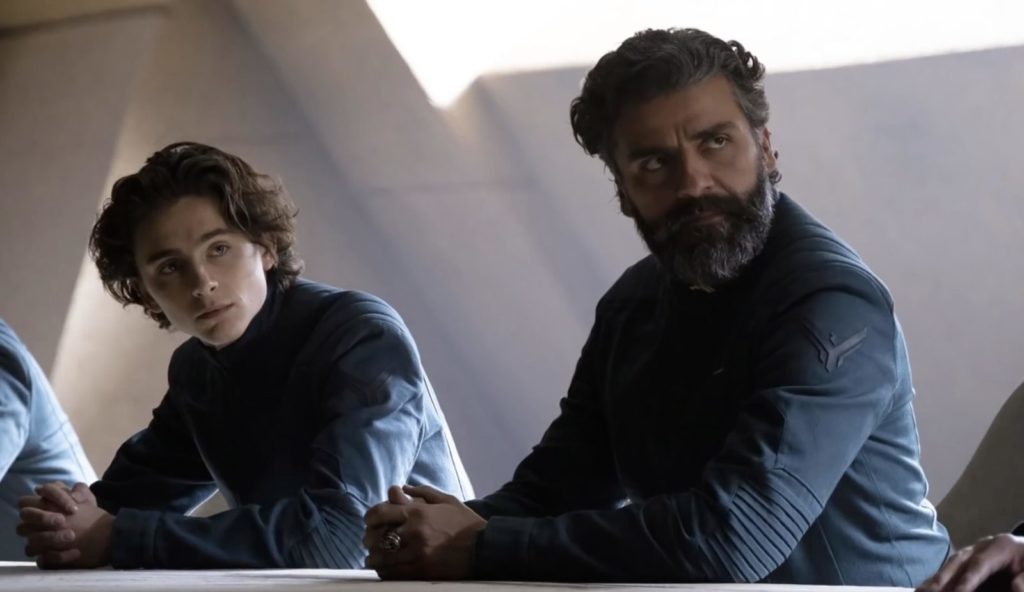
Oh, absolutely. 'Dune' became the object of a long-overdue wait for fans around the world, who already had several adaptation attempts on hand (hello, David Lynch and the strange 2000 mini-series). Villeneuve promised to approach the material with respect and delight Herbert's connoisseurs. And yet, a grain of skepticism poisoned the anticipation, because the mega-canvas that inspired hundreds, if not thousands, of science fiction writers worldwide seems almost unfilmable.
All the more joyful is the fact that the new 'Dune' is watched with genuine pleasure. It leaves a very pleasant aftertaste and makes you eagerly await the continuation, for an even more interesting development and even more colorful characters await us.
Does the film evoke delight? With a stretch, rather no. But it has definitely succeeded.
— Is it necessary to read the book before watching?
V.U.:
This is a very difficult question. On one hand, knowledge of the book allowed me not to get lost among the faces and locations; moreover, a special kind of pleasure comes from the fact that Denis Villeneuve very often did me, a fan of Frank Herbert's epic, a great favor. Just look at the large bull's head hanging on the wall at the beginning, and the phrase 'Is he taunting him?' thrown by Javier Bardem's character at the end of the film.
On the other hand, Villeneuve almost entirely follows the letter of the book, reserving the right to make only cosmetic changes, which somewhat deprives the events of intrigue. I tried my best to watch 'Dune' with a fresh perspective, but I cannot pretend that I am hearing the words of the Reverend Mother for the first time, and that they evoke as much surprise and indignation in me as they do in Paul.
So I am equally in favor of reading the book beforehand and of complete ignorance of the lore. Both perspectives have their charm, and Villeneuve allows both sides to enjoy what is happening.
R.K.:
I am a proponent of adaptations being as close to the source material as possible, but bringing something of their own, becoming original works. Peter Jackson cut entire story arcs from 'The Lord of the Rings' in his time, but ultimately that did not prevent him from creating a full-fledged and completely independent work that is perfectly perceived apart from Tolkien's books.
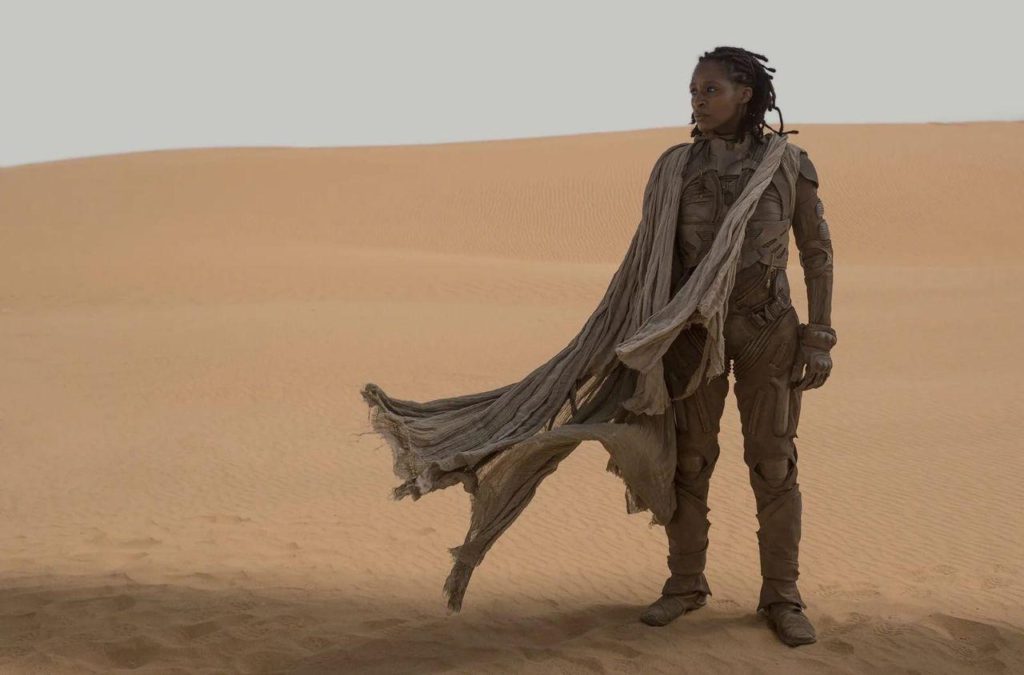
It seems to me that Denis Villeneuve managed to pull off something similar, resolutely deciding to split the first book of Frank Herbert's series into 2 separate films. Thanks to this, as a viewer unfamiliar with the source material, I was extremely comfortable getting acquainted with the lore and characters of the epic. The unhurried narrative style also contributed to deep immersion and attachment to this world and its heroes. Perhaps knowledge of the original helps to navigate what is happening faster and better understand the context of relationships between the characters, but overall, reading the book before watching is not at all necessary. The other thing is that after watching, you will definitely want to do it.
— Are the plots of a 55-year-old work relevant for modern cinema?
R.K.:
What makes 'Dune' wonderful is that it raises many themes (sorry for the pun). Some are stated, so to speak, head-on, like messianism (in the paradigm of parallels with Middle Eastern religions), the harmfulness of colonialism, and eco-problems. Others are rather implied naturally (the relationship between son and mother, the values of duty and honor). Still others are only outlined — behind-the-scenes political games, the structure of imperialism, planned religious fanaticism.
And it cannot be said that any of the themes are terribly outdated. The same environmental issues in the mass consciousness now play a much more important role than they did when Herbert wrote his books. This is what distinguishes great works from passing ones — universality and timelessness. Denis Villeneuve himself considers 'Dune' more relevant than ever. And it is hard to disagree with him.
V.U.:
The hero's journey has always been, is, and will be relevant. This is one of the oldest plots, found both in mythology and in works of mass culture everywhere, so it will never become outdated. Another matter is that for most, such an arc will not seem innovative. But, as they say, everything new is well-forgotten old.
It is quite another matter that we live in an era of social justice, and many will prematurely run to accuse the creators. After all, the main character is again a handsome white boy, and there are no representatives of non-traditional sexual orientation at all (a small spoiler — there is one, we just haven't been told about his preferences yet, and I don't think they will tell, so as not to offend anyone). And here you have to make allowances for the time when the book was written.
Moreover, Villeneuve tried to somehow correct this by changing the race and gender of one of the key characters. The purist inside me is indignant, but the movie lover understands that now in Hollywood, alas, it is impossible without this. Get used to it.
— What is the film 'Dune' really about?
V.U.:
If I were asked this question regarding the book, I would say that it is impossible to answer. 'Dune' says so much that reducing everything to just one theme would be sacrilege. Just in passing, it deconstructs the concept of the 'chosen one' twice. Twice, Karl!
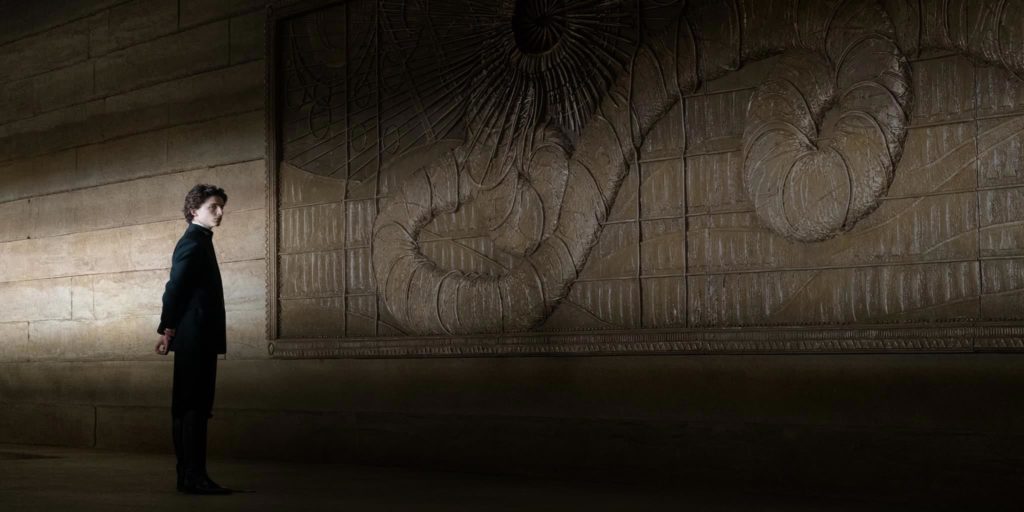
But if we are touching specifically on the new adaptation, I would answer that one of the main themes is the search for oneself. Around Paul Atreides, many people have gathered who have already decided on their path and purpose, which makes his helplessness and confusion especially acute. He has yet to properly weigh who he can become — a duke, a Fremen, a Kwisatz Haderach, a Lisan al-Gaib, a ruler of the world, or a good father. And the choice will be oh so difficult for him. As for all of us.
R.K.:
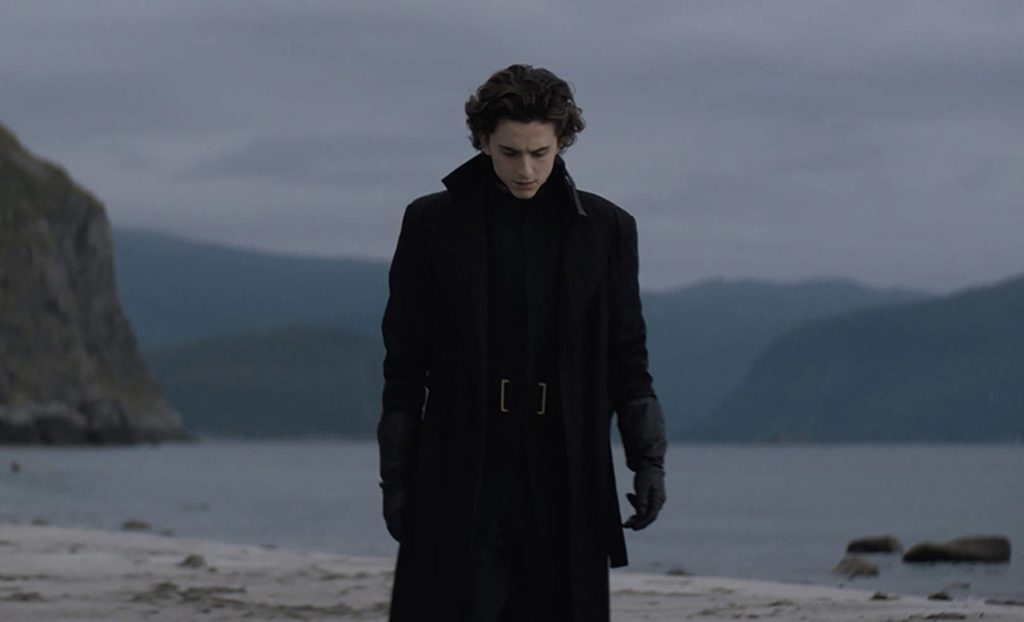
Despite the abundance of themes touched upon, Villeneuve's 'Dune' seems to me more of a metaphor for growing up. A transition from one state of consciousness to another. Similar to how Timothée Chalamet's hero goes from a privileged heir to the throne in a noble house to a person who will lead millions of people, the viewer can recall how they changed their youthful maximalism for pragmatism, began to take responsibility for themselves and their loved ones. On one hand, such a metaphor may seem complex and far-fetched, and on the other — just try to look at the film from this angle, and you yourself will notice obvious, in my opinion, parallels.
— Why is 'Dune' immersive cinema?
V.U.:
I have always had a weakness for slow and thoughtful films that work on atmosphere more than on short-term surprise for the viewer. Here we are given enough time to feel part of the action, and enough puzzle pieces to try to put the mosaic together ourselves. That is, some responsibility is placed on the viewer to figure everything out, which increases their engagement.
We also cannot ignore the soundtrack by Hans Zimmer, which adds color and character to the film, which other similar works in the space epic genre lack. Almost primitive motifs mix with industrial, extraterrestrial sounds, which cannot fail to impress.
R.K.:
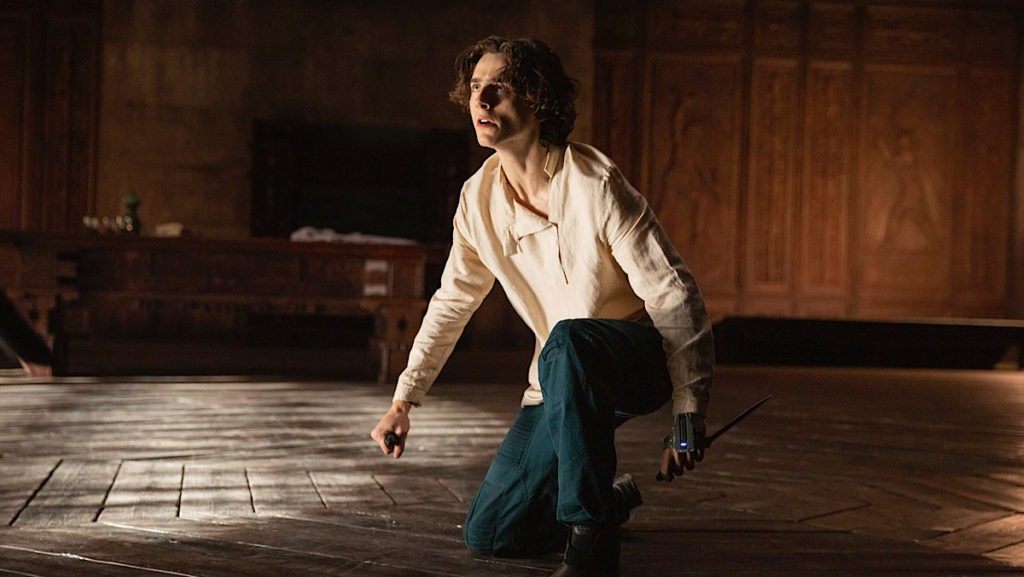
Denis Villeneuve deliberately focused on the story of Paul Atreides, and the entire plot is primarily told through the prism of his vision of events. But this is not just a screenwriting decision and attempts to simplify unwieldy literature that even David Lynch could not handle. This hides a desire to make the film as immersive as possible. Greig Fraser's camera either finds itself over Timothée Chalamet's shoulder so that the viewer can identify with the hero, or delves into seemingly unnecessary details (like sand slipping through fingers), which actually provide even more opportunities not to understand the film, but to feel it. This kind of viewer experience is more often encountered when watching complex auteur cinema, but, as Villeneuve shows, it can also be done in an expensive space opera.
— There are many characters in the film, but did they manage to develop everyone?
R.K.:
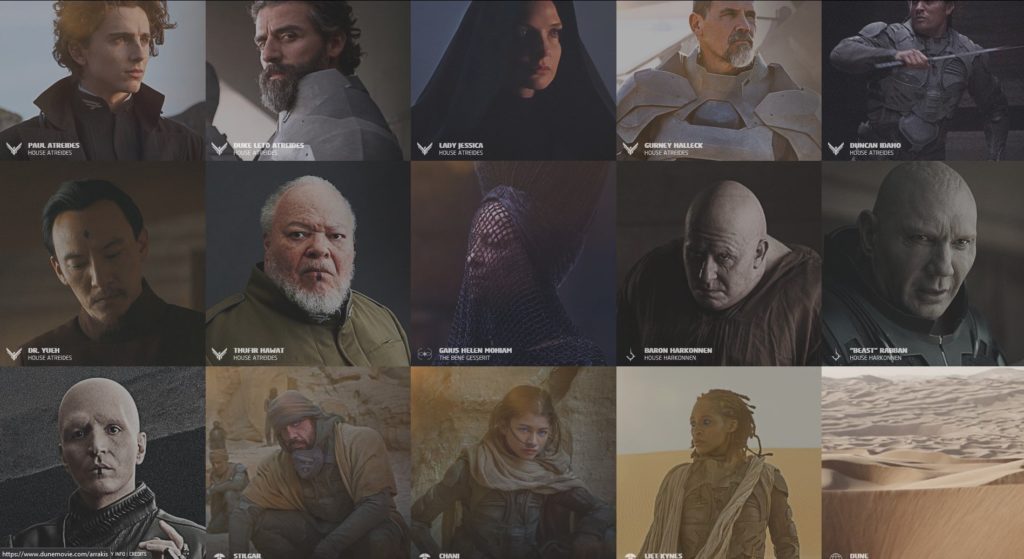
More no than yes. But, apparently, such a task was not set. It is quite obvious that the same representatives of the Harkonnens (the conditional antagonists of 'Dune') will be given more time in the future. Whereas the first film was aimed at properly developing the central characters — Paul and Jessica — as well as giving time to characters who will no longer be in the future. This approach seems logical and noticeably simplifies the perception of the film for those unfamiliar with the literary source.
V.U.:
So far, the character development is more like scattered breadcrumbs along which we have yet to walk the path out of the forest. We have not yet seen many important characters — the often-mentioned Padishah Emperor, Princess Irulan Corrino, the magnificent and very important character of Sting from David Lynch's adaptation (by the name of Feyd-Rautha Harkonnen). Also, I no longer hope for the appearance of the extremely curious representatives of the Guild of Navigators or Count Fenring.
However, there is certainly hope that most are saved for the future. There are many missed opportunities and many already deceased characters who were much better developed in the book. But hoping that you can cram the uncrammable, that is, develop every character in 2.5 hours, is a utopia. And I am already glad for how it was done.
— Which actor steals the viewer's attention?
V.U.:
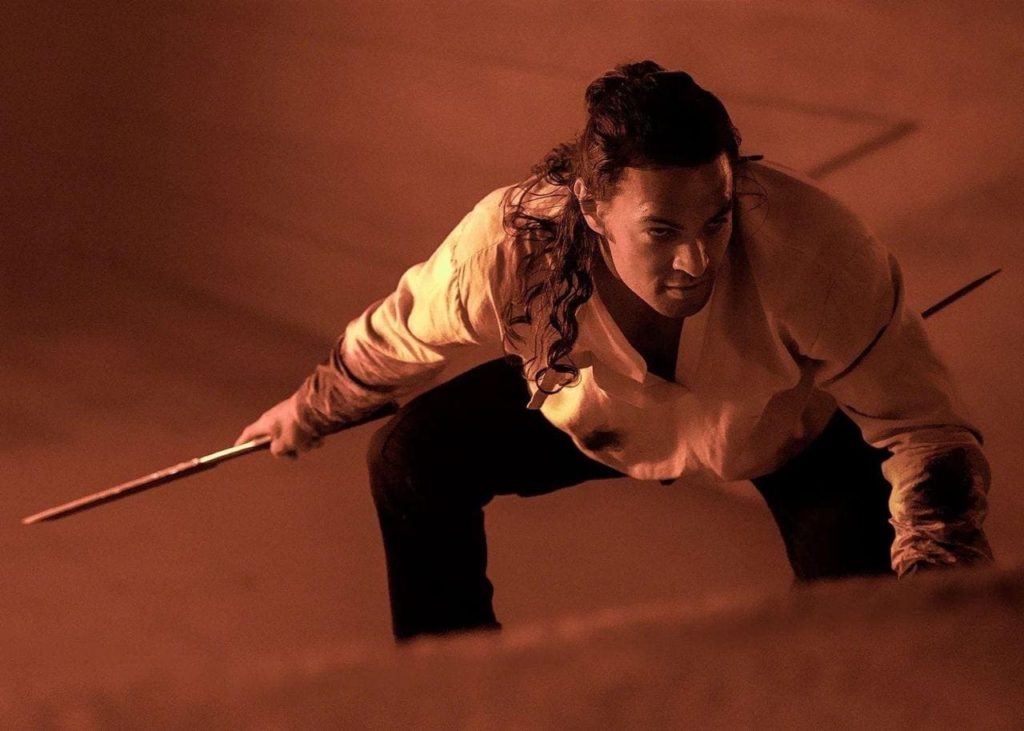
All actors are perfectly selected, each of them responsibly approached their task, so the question is a bit confusing. But if I have to choose, I will say that the coolness of Jason Momoa has once again been confirmed. The charm of Aquaman just oozes from him.
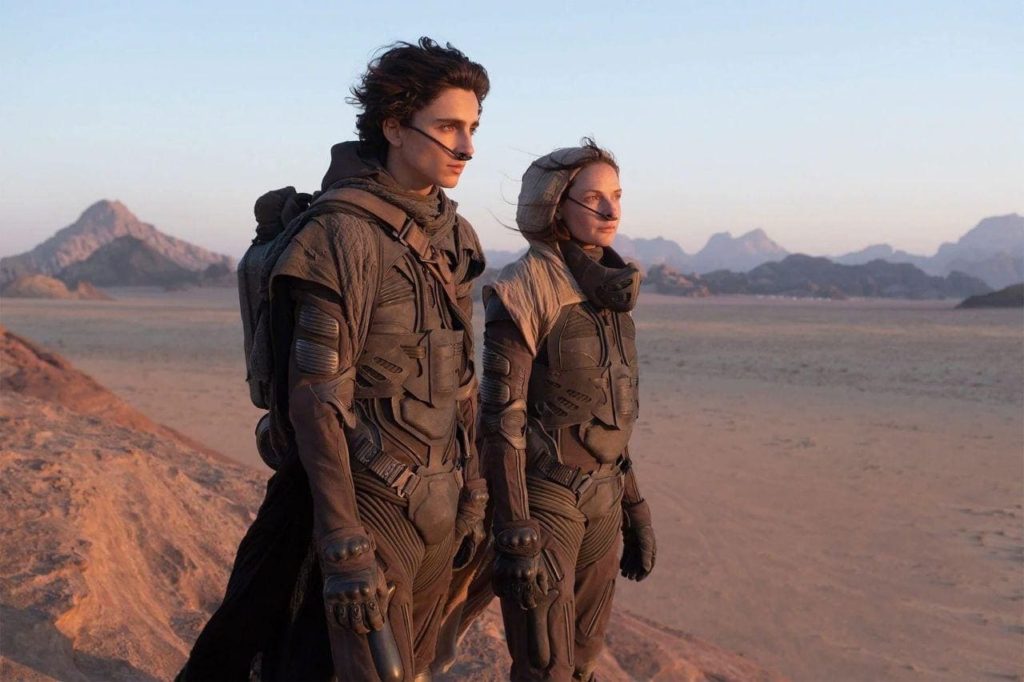
I want to dwell a bit on Rebecca Ferguson. I have already heard opinions that she is not fatal enough for Lady Jessica, plus too emotional for a Bene Gesserit sister. I am ready to defend her tooth and nail. Firstly, I consider Rebecca one of the most beautiful actresses in Hollywood. Secondly, watching an emotionless log throughout the entire 'Dune' would be unbearable. Moreover, Villeneuve acted quite wisely, and Jessica allows herself to cry only in solitude or as a last resort. Excellently conceived and magnificently played.
R.K.:
Of course, Timothée Chalamet handled his tasks best of all. It could not have been otherwise, because otherwise the film would have failed. But other actors also performed excellently, regardless of the significance of their characters to the story or screen time. For example, Javier Bardem. An effective appearance at the doorstep of the Atreides house. Charisma overflowing, reminding us that not so long ago the actor played the brightest antagonist in the Bond franchise. Bardem did not have much time on screen, but he definitely managed to be memorable.
— Why is 'Dune 2' potentially the most important film in the genre for the coming years?
R.K.:
For all its merits, 'Dune' is just one big exposition. A prologue opening the doors to something truly grandiose. Villeneuve introduced us to a new universe, explained the rules, placed the pieces on this chessboard, and let black make their move. Next up is white's move. And that should be grandiose. More grandiose than the return to Pandora, which has already dragged on for more than 10 years.
V.U.:
A very loud statement. I would not call it that, although I cannot immediately recall a single film that would surpass 'Dune' in this field. A comparison suggests itself with Villeneuve's own 'Blade Runner 2049', which has a huge advantage over 'Dune' — it is already finished.
Probably, the film that will define the genre and become its main picture has yet to appear, and there is a small chance that it could be the sequel to 'Dune', which will no longer have to spend so much time placing pieces on the chessboard. Let's cross our fingers and pray that 'Dune' collects good box office (just in case).
— Is Villeneuve a genius?
V.U.:
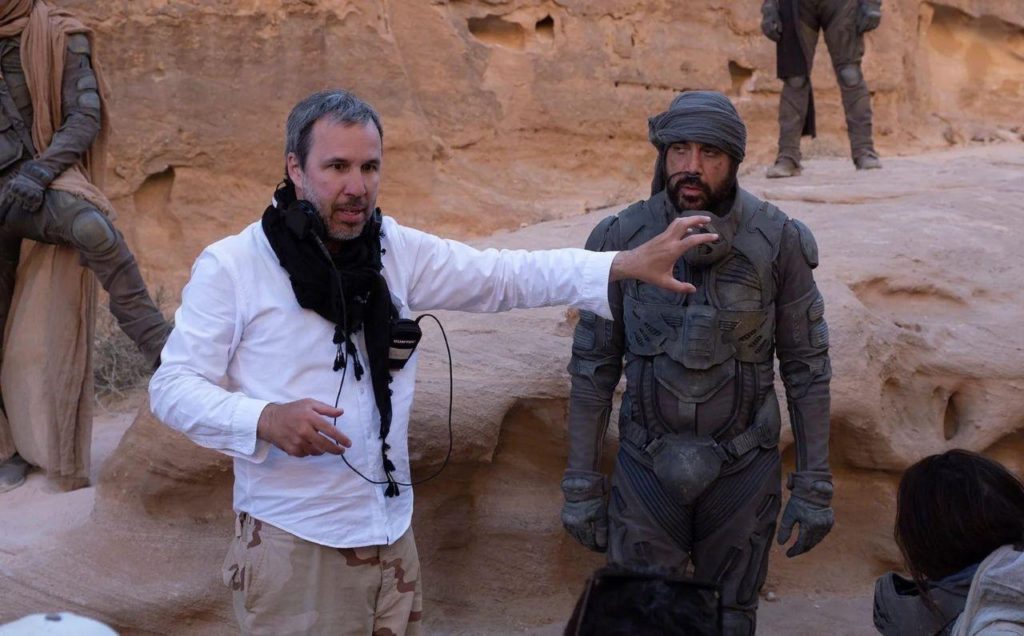
Villeneuve is an excellent director, and that is more than enough. I will say more — he is one of the few directors who specifically do not disappoint me from film to film. Denis has already proven that he is not a one-hit wonder or a creator of a single film. The word 'genius' is too pompous, but a slight touch of genius in Villeneuve's works is undeniable. Thanks to him, 'Dune' was worth the wait and is worth continuing to wait. Bravo.
R.K.:
If earlier, whether seriously or jokingly, it was customary to call Christopher Nolan a genius, then the director's recent works have rather undermined his authority. He began to turn into a kind of Steven Spielberg of the 2000s, who is still seemingly good, but his best works are already behind him. So the vacant spot of a blockbuster genius can well be given to Denis Villeneuve. He knows how to work with original scripts and adaptations. He creates new worlds and impresses with their visualization. He creates conditions under which actors show, if not the maximum, then certainly their best qualities. The main thing is that the Canadian continues to move at this pace and does not betray himself.
Comments
0No comments yet.
Sign in to join the discussion.