

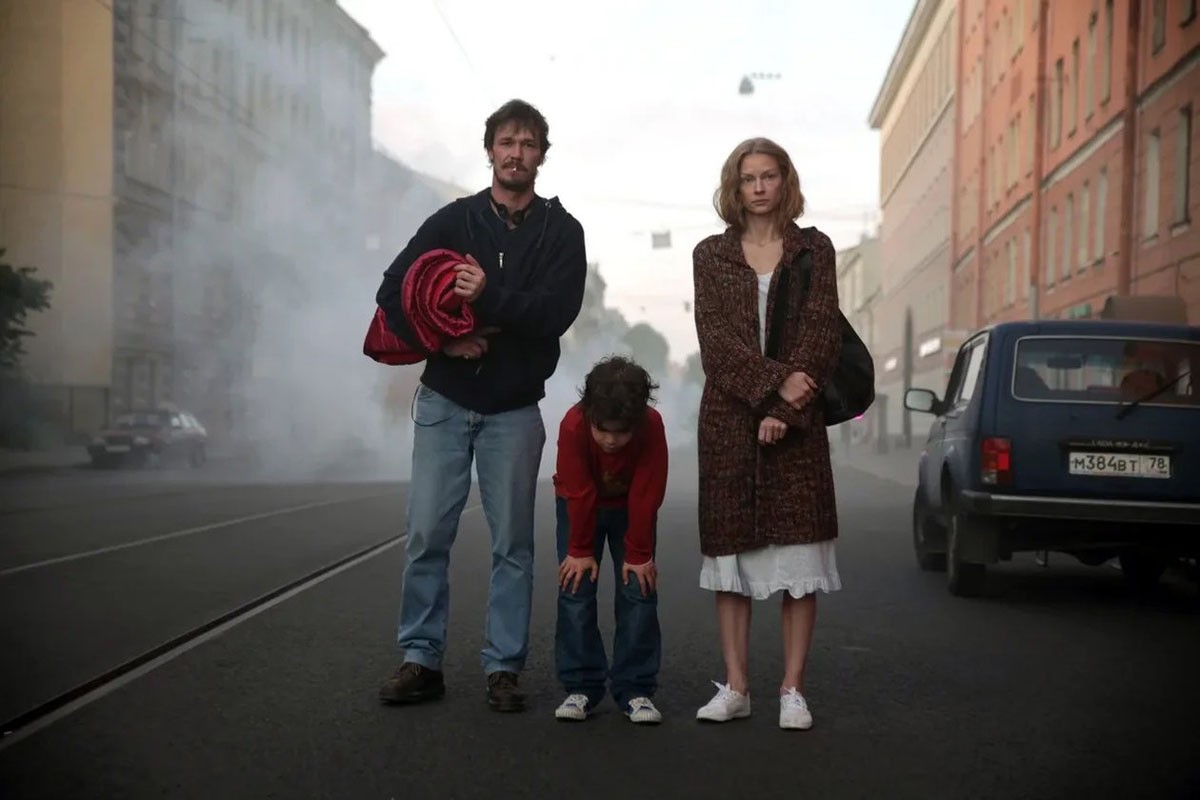
"Tell Her" makes you think, makes you laugh, evokes nostalgia, but does not leave you without emotions. Read the review to find out what else is good about the film.
The second feature film by Alexander Molochnikov, "Tell Her," is being released, telling the story of a family breakdown and parents who try to divide their child but cannot come to an agreement. The film was a participant in last year's Kinotavr, and from May 13, everyone can see it. And there is indeed something to see.
When Adults Are Like Children
Sveta (Svetlana Khodchenkova), Artyom (Artyom Bystrov), and their son Sasha (Kai Alex Getz) live in a small apartment in St. Petersburg in the late 90s, worn down by time and circumstances. They live out of sync: the father, a St. Petersburg intellectual and teacher, enjoys the simple things, rides a bicycle, and goes to rock concerts; the mother cannot come to terms with the current state of affairs and dreams of a better life far from Russia; the son adores both parents and does not understand why they cannot love each other. All this leads to the natural development of the situation—divorce. The situation is complicated by Sveta's desire to leave for America and take Sasha with her.

In recent years, cinema has increasingly raised the topic of divorce, showing it from various perspectives. We have seen the brilliant "Marriage Story," which showed how sincerely and truly loving people can lose the brightest feeling. We also watched , in which a husband and wife continued to endure each other "for the sake of the children," thereby destroying both their own and their children's lives. "Tell Her" looks at the issue through the eyes of the main victim of such a situation—the child. A child onto whom adults shift responsibility for their actions.
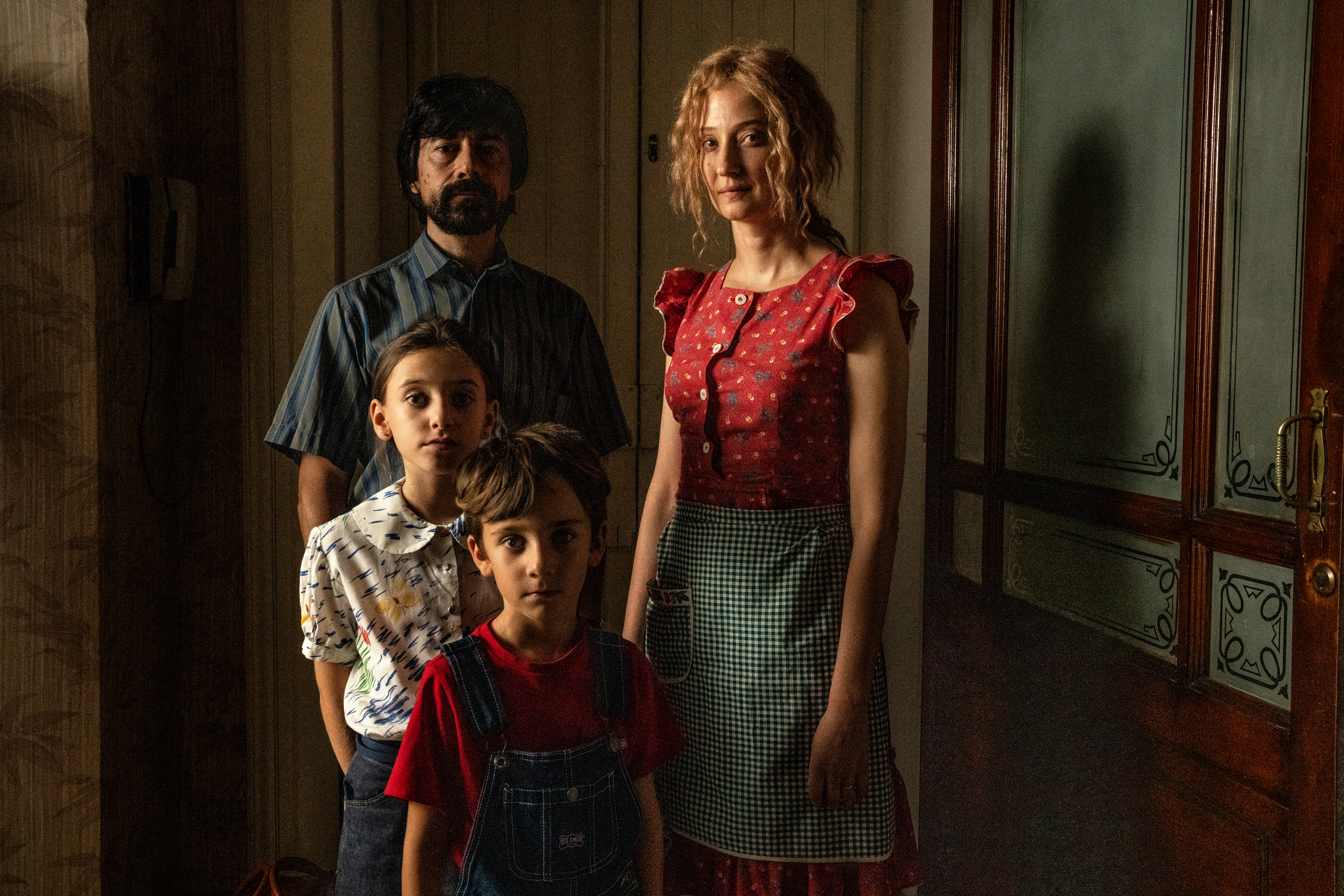
We tell you what makes the Italian drama "The Vicious Bond" by the director of "My Brilliant Friend" notable.
Open material"Tell her you're not going!" — the father says to Sasha in one scene.
"Tell him you want to come with us!" — the mother tries to convince Sasha in another episode.
And Sasha is only 10 years old. He loves both and tries to please everyone. The boy cannot make such a choice. But in this story, against the backdrop of infantile parents, each with their own truth, Sasha appears as a more integral and mature personality. Naive, perhaps, but with his own vision of the world and the situation between his parents. And over time, the hero will still be able to defend these views before the adults.
Life Before and After
The film "Tell Her" is conditionally, but quite clearly, divided into two halves and shows Sasha's life in St. Petersburg and in America. Each part is deliberately overgrown with all sorts of stereotypes, as if to emphasize the already obvious difference in mentality and lifestyle between Russians and Americans: from fake smiles and correctness on one side, to hollow intelligentsia and a touch of recklessness on the other.
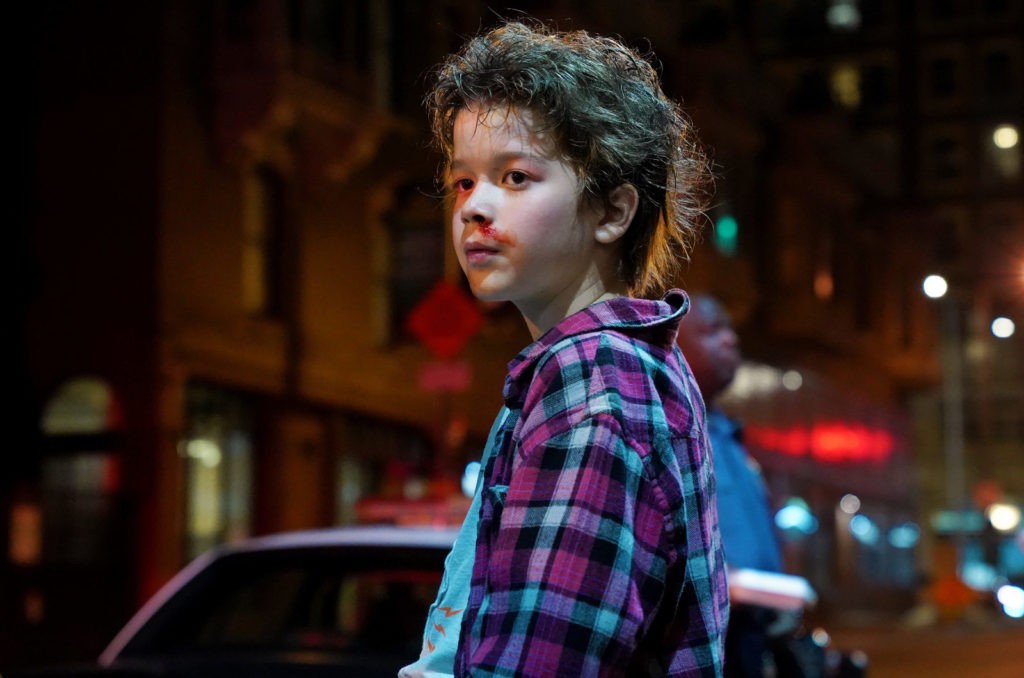
A significant portion of the humor is built on this (yes, despite the dramatic agenda, the film is funny in places, but without excesses). The same accounts for the changes in the boy's life. Leningrad rock gives way to Western rap, the bicycle to a skateboard, and Limonov's books to communication with shallow peers. Almost everything changes, but the conflict between the parents, both before and after Sveta and Sasha's move to the States, remains unchanged.
Tell Them, Someone
Despite the film's events unfolding on two continents, it turned out to be extremely intimate. Viewers are literally placed in the tight space of a child caught between two parents. And in the most difficult moments of the story, it becomes truly uncomfortable. You want to address the screen with the phrase, "Someone tell them already that they can't behave like this!"
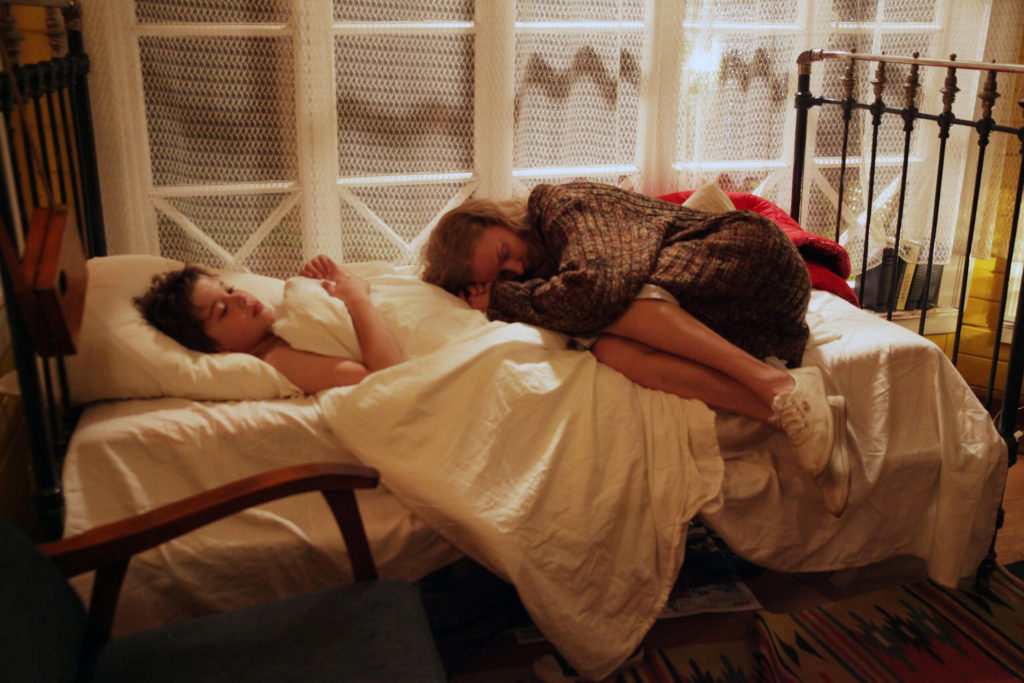
Credit to Molochnikov and his team for the fact that even the disaster looming in the first half of the film occurs without the pompous dramatic strain that most similar stories descend into. In "Tell Her," there is no moralizing, but there is a warning—adult quarrels can ruin a child's life. Not every child will have a strong character like Sasha to withstand psychological and emotional pressure. Additionally, the film contains a thought that may be seditious for some: perhaps life in a single-parent family is not the end of the world, and sometimes it is even the best solution for a child's fate.
Is It Worth Watching the Film "Tell Her"?
"Tell Her" is a well-crafted film on an important topic that is simply pleasant to watch. The actors raise no questions, the cinematographer skillfully plays on the contrasts between America and Russia and deftly captures the characters' emotions, and the film features pleasant music. Perhaps Molochnikov could be accused of overall secondary nature of the story, naivety, and a slightly rushed ending (not as bold as one might expect). But for some reason, you don't want to do that at all.
Trailer:
Comments
0No comments yet.
Sign in to join the discussion.