
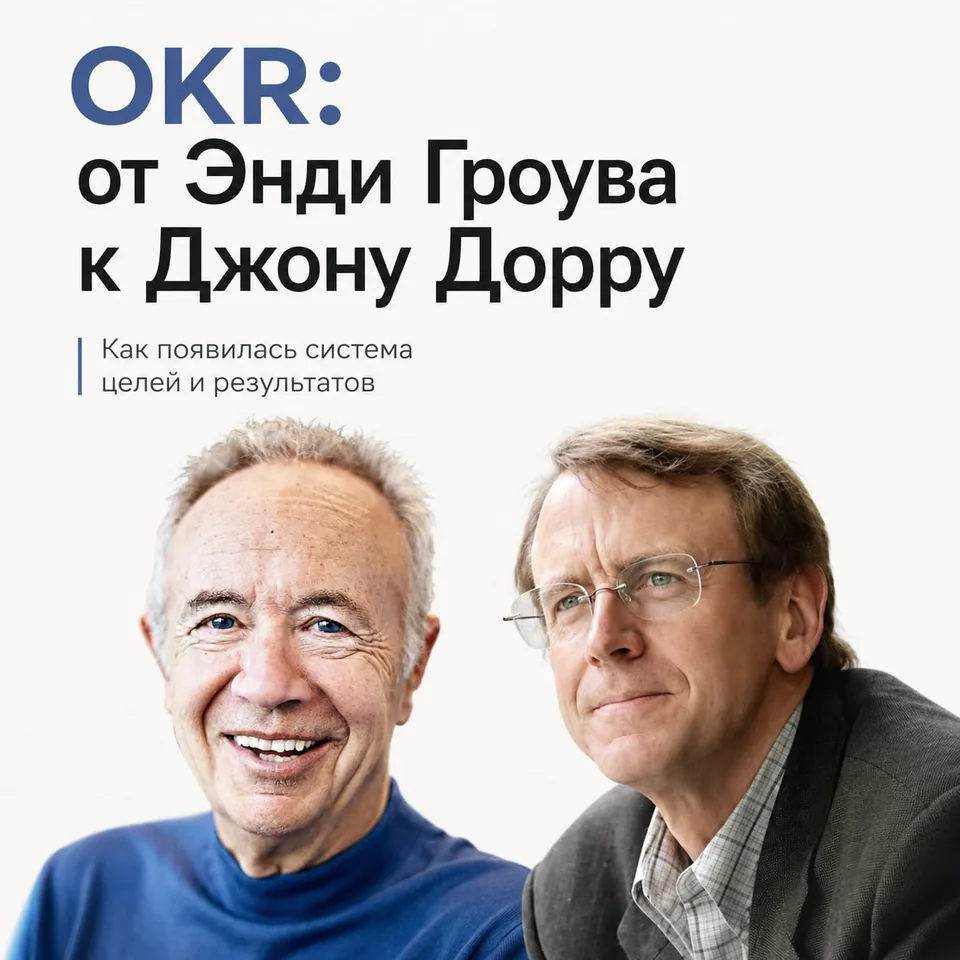
In the early 1970s, Andy Grove began applying the iMBO goal-setting system at Intel — Intel Management by Objectives, which would later be called OKR. In 1975, a young Intel employee John Doerr became acquainted with it.
The system was supposed to help people manage their own work independently:
— not turn into another report for management;
— not prove that you are "good";
— not adjust results to fit the annual bonus.
OKR was conceived more like a stopwatch in an athlete's hand: to understand your pace, see the direction of movement, and notice deviations in time.
In his book "High Output Management," Grove described the basic principles of management through measurable goals and results. Later, his student John Doerr systematized this approach, named it OKR, and brought it to Google. From there, the system spread to companies around the world.
But along with popularity, the idea itself changed.
In many organizations, OKR turned into:
— a reporting form;
— a way to evaluate employee performance;
— a basis for calculating bonuses;
— a ritual during which everyone explains why the goal was not achieved.
And here lies the main problem: when money, status, or the manager's attitude directly depend on OKR completion, employees stop setting ambitious goals. They choose what can be guaranteed to be done, lower their targets, and prepare explanations in advance.
A development tool turns into a self-defense tool.
Instead of the question:
"What significant thing can we achieve?"
people start thinking:
"What goal should I set so I don't get in trouble later?"
A good OKR system creates transparency, helps prioritize, and allows the team to experiment. A bad one forces you to beautifully package what was already planned.
Therefore, before implementing OKR, it's worth answering one question:
Are we creating a tool that helps people achieve more, or just another way to control them?
📲 MAX 👮♂️ VK ☺️DZEN 🙃 SETKA ✈️ TG #okr #history #goal #results #system #tools
Comments
0No comments yet.
Sign in to join the discussion.