

Another rental week brings to Russian cinemas a heist film by David Mackenzie ('Hell or High Water', 'Outlaw King'), a horror about a demon in prison, and a domestic animation in the style of David Lynch.
«Fuze»
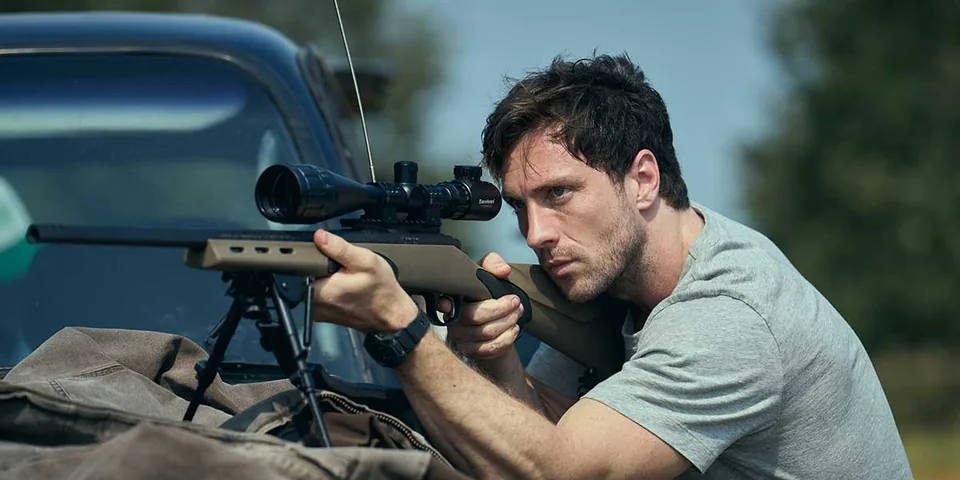
On a gloomy morning in central London, construction workers discover an unexploded World War II bomb. An explosives officer (Aaron Taylor-Johnson) is immediately dispatched to the dangerous find. While the area is hastily evacuated, a group of experienced burglars led by a local gangster (Sam Worthington) robs a bank. It all looks like a carefully planned operation. But at some point, the reliable plan falls apart, and it turns out that the circle of those involved in the heist is much wider than it seemed at first glance.
A new heist film by David Mackenzie, made together with screenwriter Ben Hopkins ('Inside', 'Marionette') — is already a mark of quality. The author takes the best from recognized representatives of the genre and builds a personal criminal world. The film was shot within his native Britain, and Mackenzie again returned to thoughtful staging of each scene, while reflecting on the fact that in a matter like a robbery and an attempt to solve it, a great deal of effort from a huge number of people is required.
«Ghost in the Cell»
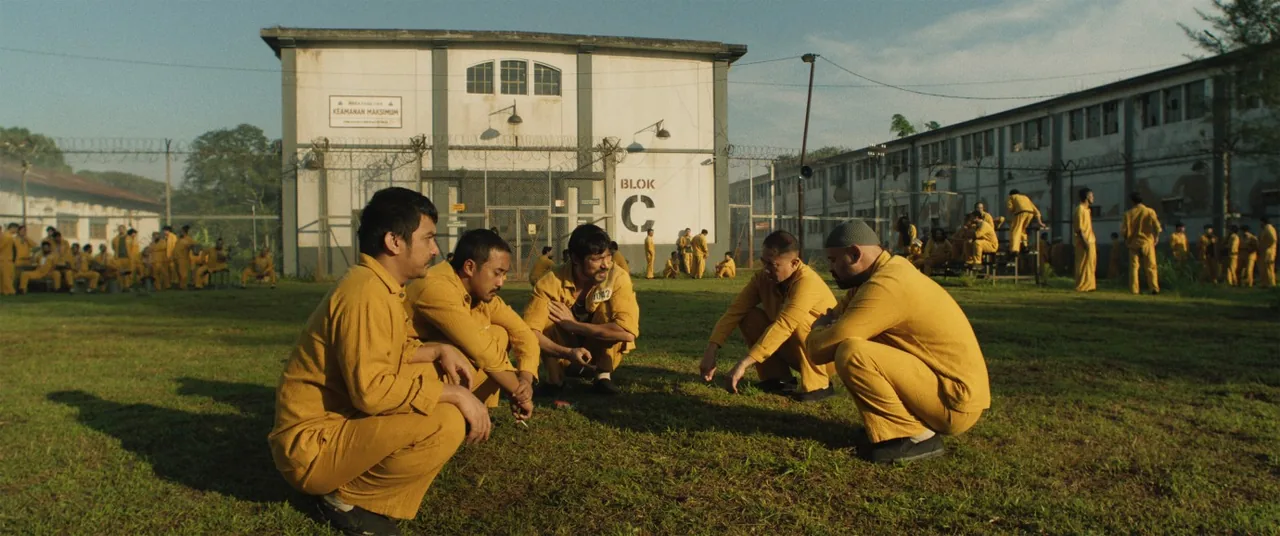
In an Indonesian maximum-security prison, a powerful demon appears that kills inmates. The specialized facility has long been in complete chaos: prisoners form gangs, and the corrupt prison administration turns a blind eye, not forgetting to periodically beat the inmates. But faced with a common enemy, everyone decides to unite to try to survive in the conditions of escalating nightmare.
'Ghost in the Cell' is a joint project of filmmakers from Indonesia and South Korea. From the former, the film features the usual shocking brutality; from the latter, formal exoticism in the form of prison corridors. The film was directed by Joko Anwar, already well-known in wide circles as a director of splatter horrors, with a rich list of genre works like 'The 13th Floor' and 'The Witch: The Village of the Damned'. And if someone goes to this screening hoping to see something between 'The Shawshank Redemption' and 'The Evil Dead', they will most likely get exactly what they expected: an uncompromising, noisy spectacle with a full set of genre pleasures. Roman Kovalev detailed the film in his review.
«Nepokoy»
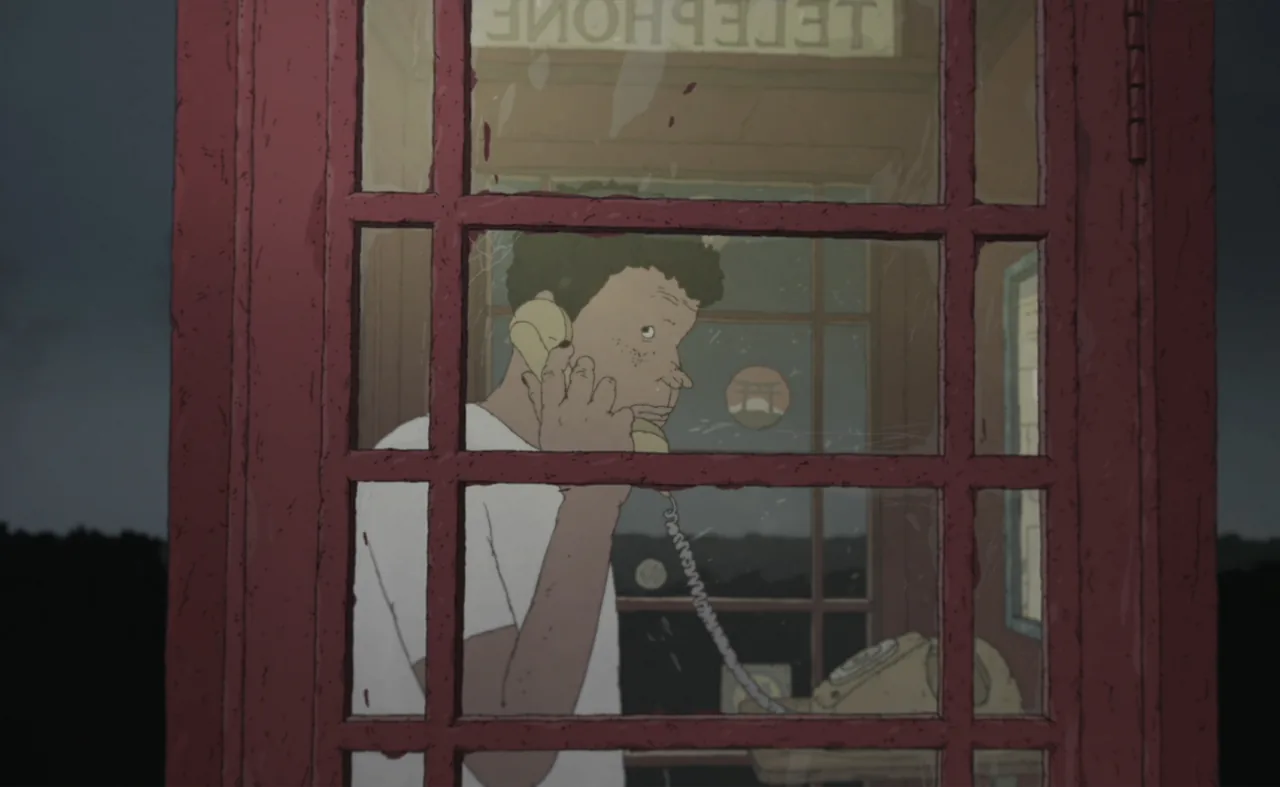
Yasha and Bernard are two close friends. One day, they go on a road trip and, as usual, take a wrong turn. Amidst endless fields stands the lonely hotel 'Rosa', where the friends check in. But once inside, both realize that this is a paradoxical sanctuary where time flows as it pleases, and everyone around exists by rules that are not even hinted at. Getting out is almost impossible. All that remains is to observe.
'Nepokoy' is a Russian animation made using rotoscoping. Director Leonid Shmelkov, known to viewers for 'Mimi Bears' and 'Orange Cow', unexpectedly turns to surrealistic imagery that references either the psychedelic films of Pat Gavin ('Heavy Metal') or the early works of Igor Kovalyov ('His Wife's Chicken'). The film's special atmosphere is enhanced by the music of avant-garde composer Sergei Kuryokhin — it takes this story beyond ordinary perception, turning the viewing into a meditative and unique experience.
Comments
0No comments yet.
Sign in to join the discussion.