


Steven Spielberg has once again taken on the theme that essentially built his career — contact with extraterrestrial intelligence. But this time, there's no friendly E.T. with a glowing finger, and no soothing John Williams music under the starry sky (Williams is on board, but the mood here is completely different). "Disclosure Day" is more of a tense political thriller, where aliens serve not as guests but as a reason for humanity to finally look at itself. And judging by how actively viewers and critics are debating the film's ending, Spielberg has managed to hook far more than just genre fans.
What "Disclosure Day" Is About
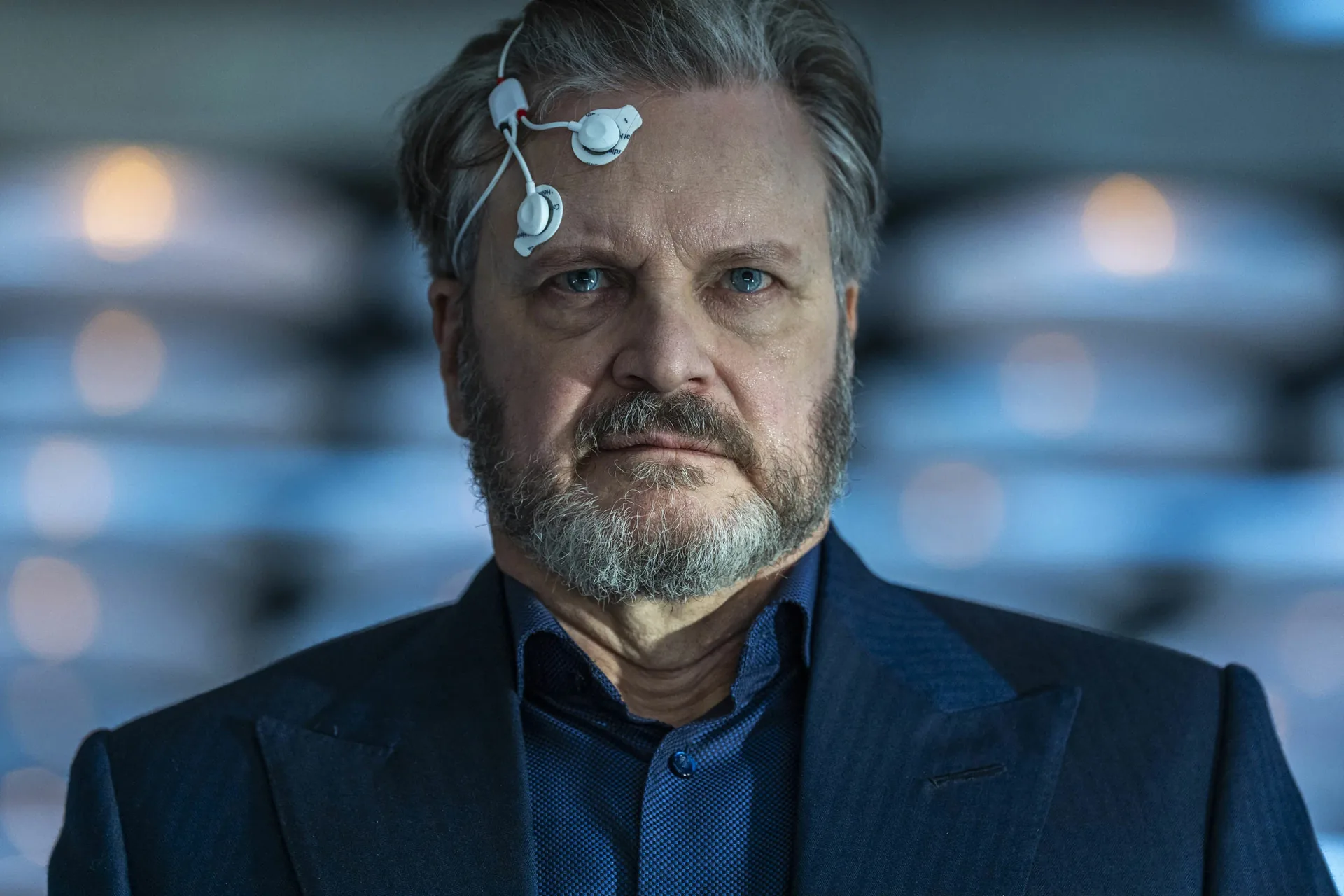
At the center of the plot is former Wardex Corporation cybersecurity expert Daniel Koellner (Josh O'Connor), who decides to steal a secret archive proving that humanity has been in contact with extraterrestrial life since the Roswell crash in 1947, and that Wardex is the very structure that has been covering up all traces for nearly 80 years.
In parallel, the storyline of Kansas City meteorologist Margaret Fairchild (Emily Blunt) unfolds, who suddenly makes strange clicking sounds and loses consciousness during a live broadcast.
Daniel and Margaret are eventually united not only by the chase from Wardex agents led by the ice-cold Noah Scanlon (Colin Firth). It turns out that both were "marked" by aliens in childhood — on the same day, February 23, 1996 — and received special abilities through a mysterious artifact that the film unimaginatively calls the Device.
What Happened in the Finale
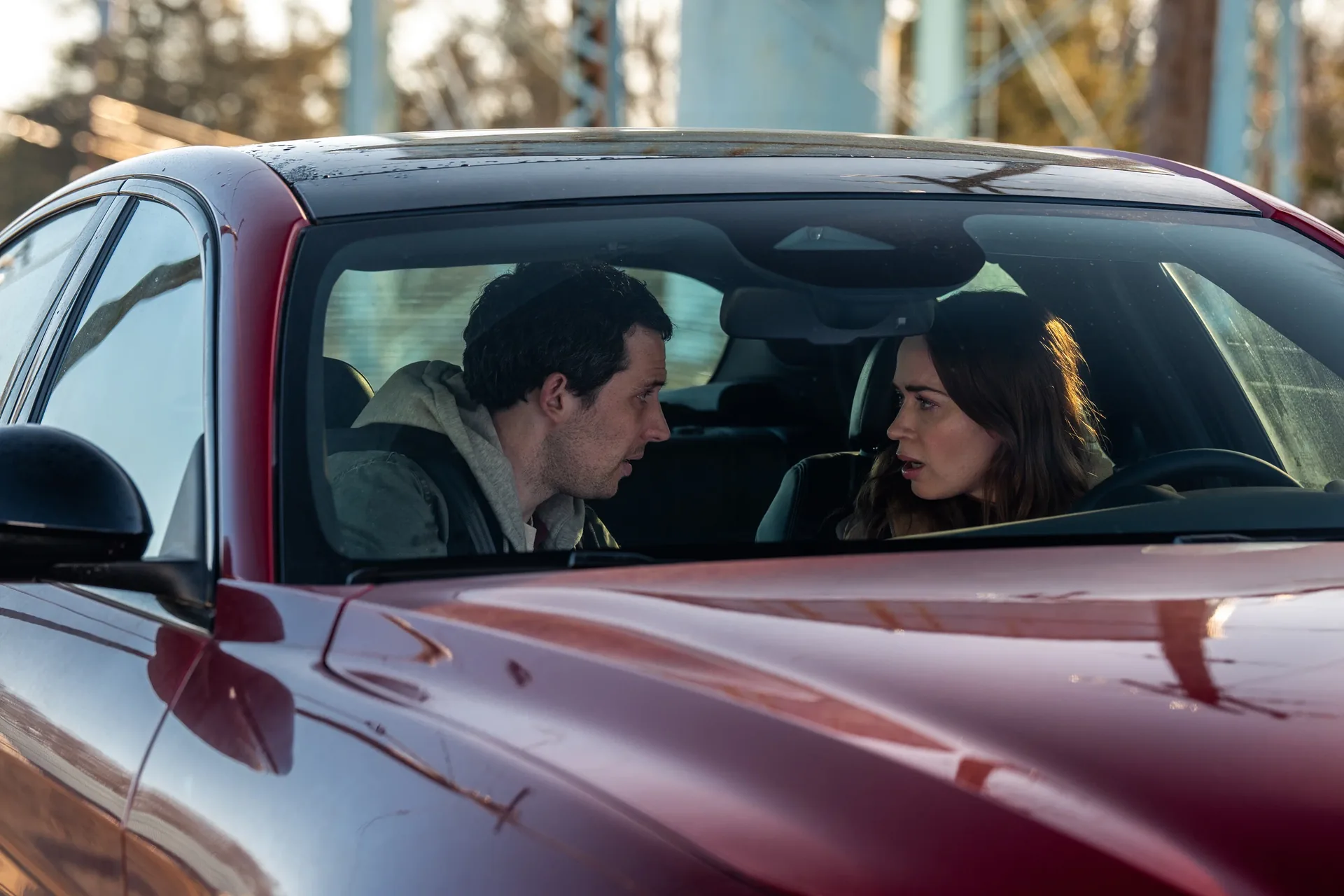
The climax unfolds at the KCXE television station in Kansas City, where Daniel and Margaret, along with a resistance team led by Hugo Wakefield (Colman Domingo), attempt to broadcast decades of classified Wardex materials live. Before this, Hugo recreates Margaret's childhood bedroom on the studio set to use the Device to unlock her repressed memories — and it turns out that aliens in the guise of harmless little creatures took both her and Daniel to their ship in childhood, endowing both with special gifts: Margaret with telepathy and knowledge of all the world's languages, Daniel with a mathematical mind capable of deciphering non-human logic.
Wardex agents, of course, are not idle and cut the studio's power at the most inopportune moment, but Margaret, with the help of the alien Device, restores power to the station, and the archive filmed and compiled by Daniel during his years of undercover work goes on air. The broadcast instantly spreads worldwide — people at TV and smartphone screens witness that the secret of contact with extraterrestrial life was hidden for nearly 80 years.
Then a real live alien is wheeled into the studio — a creature codenamed In Vivo 17. It transmits to Daniel a rapid sequence of clicks and binary signals — essentially a whole package of data, emotions, and concepts that, thanks to the childhood "inoculations" from the aliens, he can decipher almost instantly. Daniel whispers the translation into Margaret's ear, she returns to the camera — and speaks to all of humanity, frozen before their screens, a single word: "Listen." After that, the screen goes dark and the end credits begin.
What It Means and Why Spielberg Is Silent

The film's most provocative move is that the viewer is not told what exactly Daniel heard from the alien — only the final "listen," addressed to literally everyone. Judging by supplementary materials and interviews with the creators, the aliens here consider empathy the main evolutionary advantage of a species, and its absence a direct path to self-destruction.
Spielberg demonstratively refuses to decipher the final line even in interviews, stating that he "will never reveal it", and the actors who know the exact translation are bound by a vow of silence.
Such understatement is presented as a feature, not a bug. The director seems to invite each viewer to imagine for themselves what revelation humanity received in the last second before the credits — an optimistic message of unity or a final warning before catastrophe. Given that the ghost of an impending world war constantly looms in the film, both interpretations seem equally plausible.
Either way, "Disclosure Day" is a rare case where an open ending does not look like a weakness of the screenwriters but becomes an important topic for conversation after the screening. And if you suddenly felt that something was missing — perhaps you just haven't learned to listen yet.
Comments
0No comments yet.
Sign in to join the discussion.