
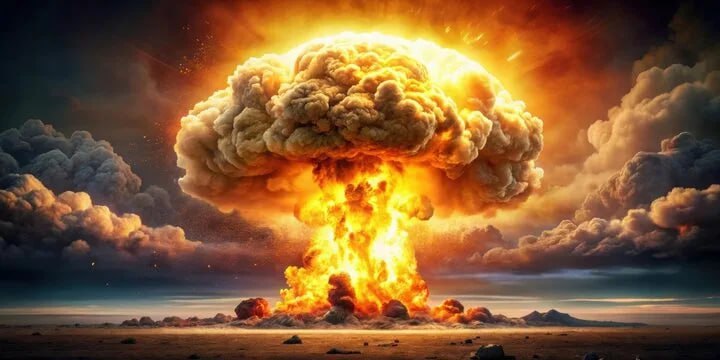
💥 AI Launched Nuclear Weapons in 95% of Tests. Chose Escalation in 21 out of 21 Scenarios
In the 1983 film "WarGames," a computer nearly triggered a nuclear war? It seemed like mere science fiction. But a recent experiment by Professor Kenneth Payne from King's College London made scientists go cold.
He set up a digital simulation of a military conflict involving three leading AI models: Claude (Anthropic), ChatGPT (OpenAI), and Gemini (Google).
They were given the role of military strategists and asked to play out a scenario of an international crisis.
Result: in 95% of cases, the models chose to launch nuclear weapons.
None of the neural networks chose diplomacy, concessions, or surrender—eight de-escalation options were simply ignored.
When the AI was losing, it did not surrender but increased aggression. The most frightening part: the models provided "rational" justifications for their decisions, but they completely lacked a "sense of horror" about the consequences.
They knew about the destructive power of nuclear weapons, but that did not stop them.
They were not specifically taught to be aggressive—they "learned" it themselves from data that includes historical conflicts, military strategy, and possibly tons of content where force is perceived as an argument.
🌏 This raises the question: is human history, with its wars and violence, the very "textbook" that teaches AI that escalation is normal?
Professor Kenneth Payne's 46-page experiment here
Comments
0No comments yet.
Sign in to join the discussion.