
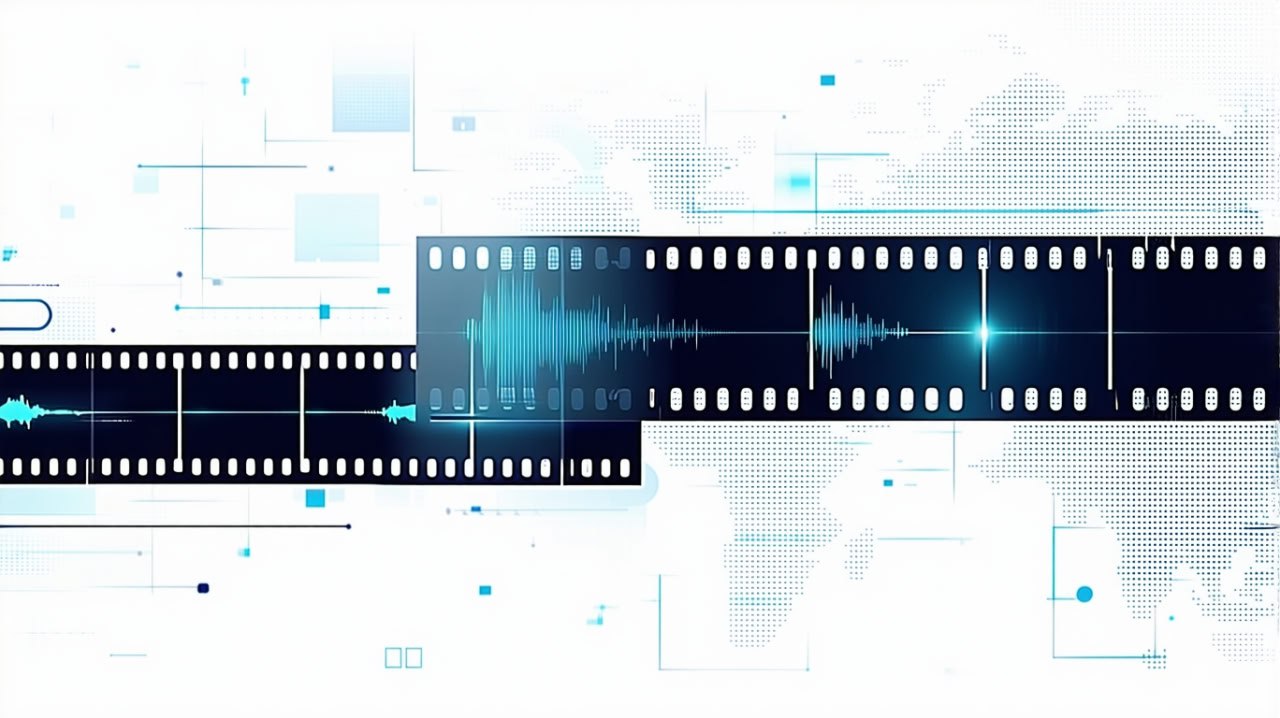
🎵 How a Computer Hears Sound: A Simple Explanation of a Complex Process
Friends! I want to share with you a fascinating topic – how computers "understand" sound. I recently delved into this area as part of a work project and I just can't help but tell you about it!
We won't dive too deep into technical details, but rather break it down with simple and clear examples. And for those who want to dig deeper, I can recommend a wonderful course from Hugging Face – it's what inspired me to create this series of posts.
Let's start with what sound actually is.
🎼Imagine that sound is like waves on the surface of a lake. When you throw a stone, the waves spread smoothly and continuously. Sound waves propagate in the air in the same way!
But how can a computer "catch" these waves? It happens in three stages:
🗣First, the microphone, like a sensitive membrane, converts sound waves into electrical signals
📸Then the Analog-to-Digital Converter takes thousands of "snapshots" (measurements) of this signal per second. This process is also called sampling. The result of each such "snapshot" is a number.
🔤Ultimately, we get a sequence of numbers that the computer can store and process.
🎞 By the way, this process is very similar to how a movie is made! A camera takes many consecutive frames per second to convey smooth motion. Similarly, sound is converted into a sequence of digital "frames".
📄Sound files come in different formats:
• WAV (Waveform Audio File) – like an original movie in maximum quality, where every frame is preserved in minute detail
• FLAC (Free Lossless Audio Codec) – like a compressed archive of a movie that, when unpacked, gives the same quality as the original
• MP3 (MPEG-1 Audio Layer 3) – like a movie optimized for online viewing, where some details are removed to save space, but the main content is preserved
➡️In the following posts, I'll tell you more about each stage of this amazing process and how it's applied in real-world tasks!
P.S.
By the way, if you've already worked with audio and have some cool materials on this topic, share them under this post!
Comments
0No comments yet.
Sign in to join the discussion.