In a world where AI writes code, diagnoses diseases, and generates strategies in seconds, the question increasingly arises: what is left for humans?
Yesterday, YouTube algorithms served me an interview with Andrey Doronichev—already the second one I’ve watched with a pencil in hand.
It’s a rare pleasure to meet someone who articulates so precisely what you’ve long felt yourself.
Last time, the discussion was about the right to be yourself and the “cringe” of beginnings.
Today, I want to delve into technology—a topic that currently causes anxiety and uncertainty for many.
What will happen to professions? What should we teach children if no university can keep up with the pace of change?
Andrey’s answer resonated with me deeply.
What remains for humans are things that cannot be automated: energy, will, desires, curiosity, empathy.
AI cannot “want” something—goal-setting and meaning will always come from us.
Thus, we cannot delegate responsibility for our state to anyone: not to a doctor, not to a tracker, not to a neural network.
And here an important nuance emerges. In a world of super-speed, our own health becomes the main bottleneck.
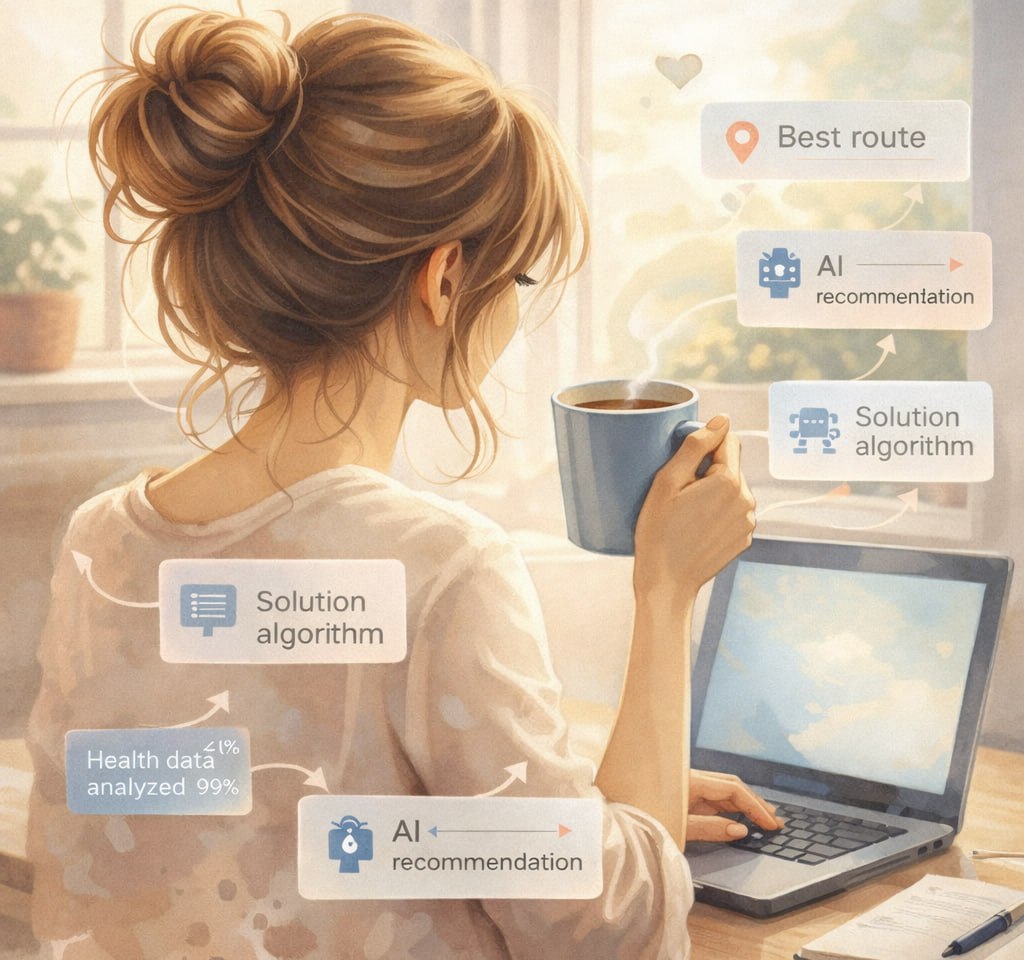
We can surround ourselves with sensors, trackers, and Health OS. A nutritionist or AI can analyze deficiencies and even create an ideal diet.
But “the choice of biologically non-obvious decisions—giving up sugar or an extra workout—still rests on human will.”
Responsibility for resources cannot be delegated.
AI can suggest the best path. But it cannot work out for us or go to bed on time.
This resonates deeply with the theme I dedicated my first post of 2026 to—about how we try to offload the complexity of health onto pills, protocols, and now AI.
So one of the most reliable investments in the future today is investing in your own health.
And this isn’t about “losing weight by summer,” but about keeping your biological apparatus in working order. So you have the strength to use the opportunities of the future, rather than spending your life “fixing” a foundation that wasn’t given timely attention.
Be honest: do you feel that your “hardware” can handle the load the modern world demands?
Or is it time to upgrade your Health OS?
Sometimes it’s very easy to check.
In the mornings. By your energy levels. By how much strength you have left by evening.
And by the way, I highly recommend watching the interview itself. There are many more interesting thoughts about AI, education, and health than can fit in one post.
Especially since Telegram now has a convenient feature—videos can be watched directly in the feed without going to YouTube.
You can just turn it on and watch the episode on Andrey’s channel.
@nastroi_zdorovie 🎧
Comments
0No comments yet.