
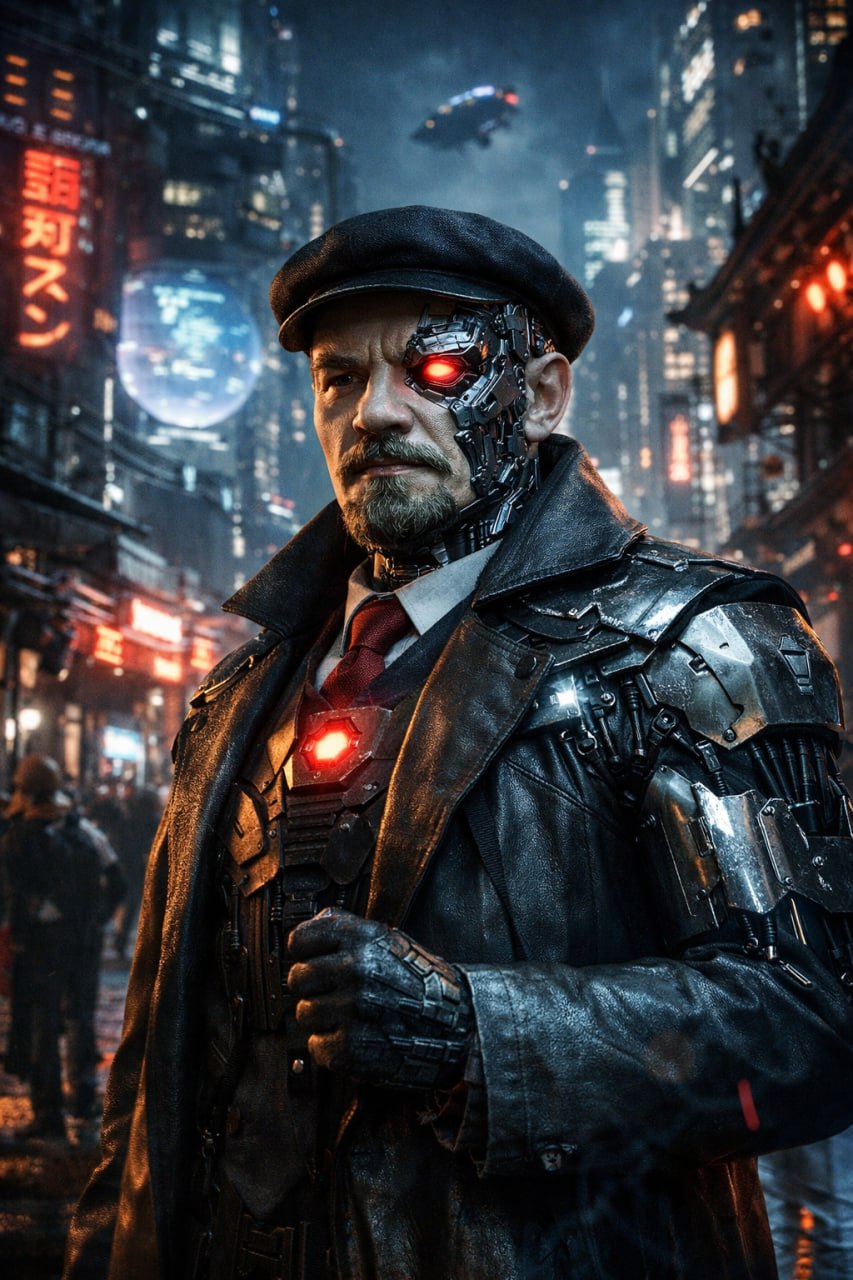
Technologies created for the benefit of humanity actually only increase inequality? Cyberpunk: high tech, low life.
Continuing the previous post about romantic relationships with AI — the problem is much deeper and more complex.
Marc Andreessen is a well-known venture capitalist, entrepreneur, and engineer. He became famous as the co-author of the Mosaic browser and co-founder of Netscape, one of the key companies of the early internet. When in one interview he was asked whether we have become too dependent on the internet and whether it harms psychological well-being, he replied:
Your question is a great example of what I call Reality Privilege
My loose translation is "privilege of living in a prosperous reality." Then Andreessen continues:
Only a small percentage of people live in the real world that is rich, even overflowing with beautiful things, beautiful landscapes, and many interesting people to talk to, work with, and meet. Everyone else, the vast majority of humanity, lacks such privileges — their online world is immeasurably richer and more vibrant than most of their real world.
Andreessen didn't reveal anything fundamentally new: only a few countries in the Northern Hemisphere are considered prosperous, while in most parts of the planet one can witness nothing but utter misery. The number of people without access to clean water, food, and housing is measured in billions. Class inequality also exists: in Paris, one of the centers of the wealthy Western world, there is simultaneously the Luxembourg Garden with housing starting at 400,000 euros for a studio and Saint-Denis with tent slums, homeless people, and shootings. One country and one city, but such different lives.
When there is hunger, poverty, and devastation around, virtual reality ceases to be entertainment and begins to replace real life. This is escapism in its purest form — fleeing from reality into a more comfortable, manageable, and understandable world. Romantic relationships with AI, which I wrote about above, are not at all a decadent whim of an era of abundance and satiety, but a consequence of despair and hopelessness.
There is a whole series of studies examining this phenomenon. For example, in a scientific article, researchers from Stanford and Carnegie concluded that people do form emotionally significant connections with bots, but on average, using such solutions is associated with lower levels of well-being (in the original "lower well-being," meaning well-being not exclusively in economic terms, but overall). The authors specifically show that people with fewer offline social connections are more likely to gravitate toward such relationships with AI. In other words, those who have problems in real life find compensation, including by entering into relationships with AI.
It doesn't stop there. Chatbots are used for self-diagnosis of diseases, psychotherapy, and other sensitive tasks. So, is virtual reality, whether games or a romance with an AI girlfriend, the domain of the poor? While the rich travel the world, the poor buy VR tours. While the rich study with a living famous Harvard professor, the poor study with ChatGPT. While the rich get treatment at a clinic, the poor diagnose themselves via AI. While the rich start a family and have children, the poor flirt with an AI avatar. Reality Privilege.
But this is not about class inequality, cyber-Lenin, and cyber-Bolsheviks. The rich 100 years ago also had access to benefits, and the poor lived hand to mouth. Technology has opened opportunities for the unprivileged majority. Continuing the example from the previous paragraph: now anyone with internet access and AI has the opportunity to get an education, although certainly not as good as a university one. As cliché as it sounds, the trend toward virtualization, at the very least, makes one think.
We long thought that in the digital age, the main scarcity would be information, but it turns out — no, there is plenty of information. It seems that in the near future, the main scarcity will be living human reality.
Truly dystopian and cyberpunk: high technology with a miserable existence.
Comments
0No comments yet.
Sign in to join the discussion.