
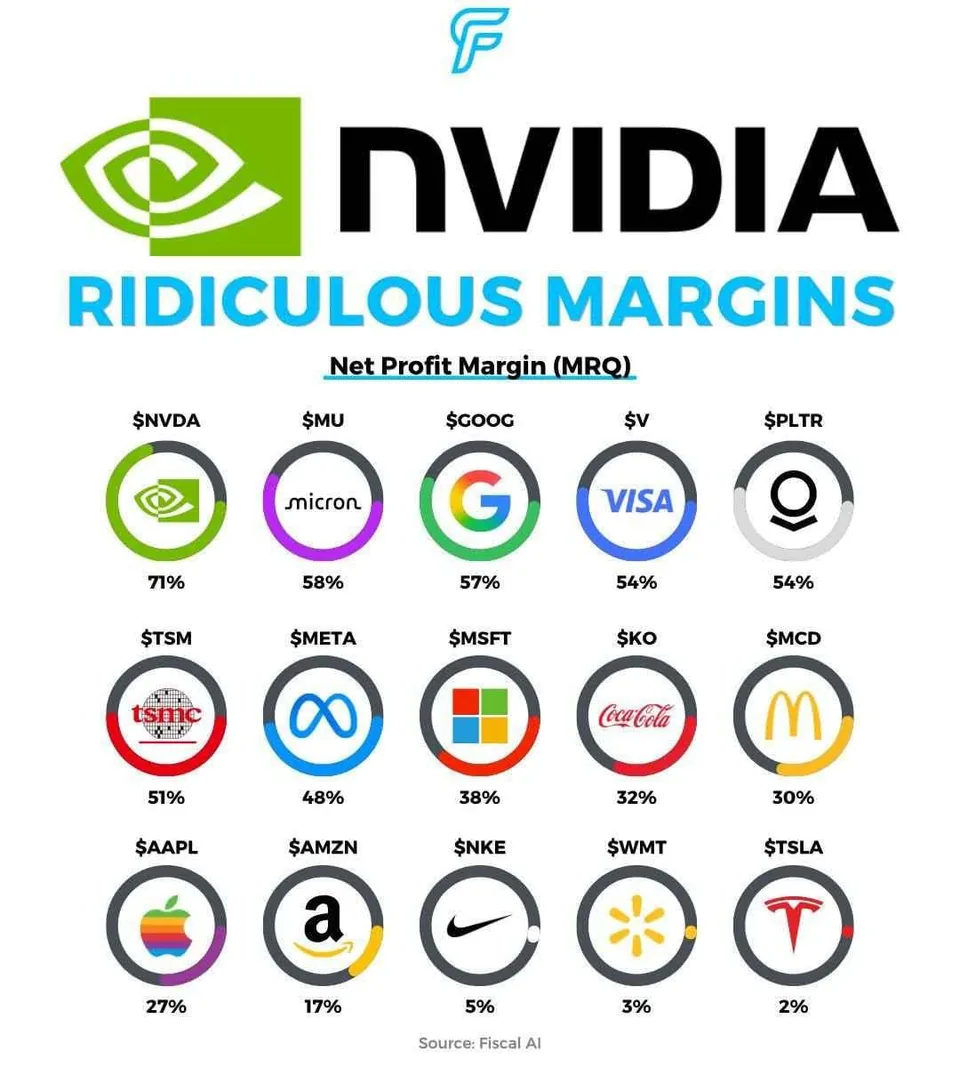
NVIDIA holds the absolute leading position with a 71% margin. This is a phenomenal result for the technology sector, especially for a company that manufactures physical hardware and microchips. In fact, for every dollar of revenue, NVIDIA generates 71 cents of net profit.
During the artificial intelligence boom, when the whole world is massively building infrastructure for neural networks, NVIDIA simply provided the market with "shovels."
Other players are applying a similar strategy. Next in profitability are component manufacturers Micron with a 58% margin and TSMC with 51%. Next time you buy RAM for $100, it's worth understanding that more than half of that amount goes directly into the pockets of manufacturers as their net profit.
For comparison, businesses with high capital or operating costs operate on ultra-low margins and survive solely due to huge turnover volumes. Traditional retail in the form of Walmart shows a margin of only 3%, and electric vehicle manufacturing Tesla generates about 2% net profit.
I analyzed the market looking for segments with even higher margins, and you can find unique examples. Chicago Mercantile Exchange CME Group demonstrates a margin of 88%. The marketing and monetization platform for mobile apps AppLovin also showed peak values of about 88%.
Becoming a shovel seller in the semiconductor market is already too late; such complex infrastructure needed to be started 20 years ago. And who else historically made a fortune during the classic gold rush? For example, those who sold basic clothing and built logistics. Levi Strauss earned his first major capital by selling super-durable denim jeans made from canvas for miners.
Who knows the clothing trends for AI company employees?)
📲 MAX 👮♂️ VK ☺️DZEN 🙃 SETKA ✈️ TG #trends #project #ai #ai #neuralnetworks #business
Comments
0No comments yet.