
The final chord of the first quarter was the Accelerator from our Sber team. The note is major.
GenAI is the latest trend and one of the hottest topics, so the conference was dedicated to it. As promised, I'm sharing the key ideas and theses that were voiced there.
▪️The world is accelerating
The number of transactions is growing at an incredible geometric progression. Visa and MasterCard now process almost 14,000 transactions per second, and this number continues to grow.
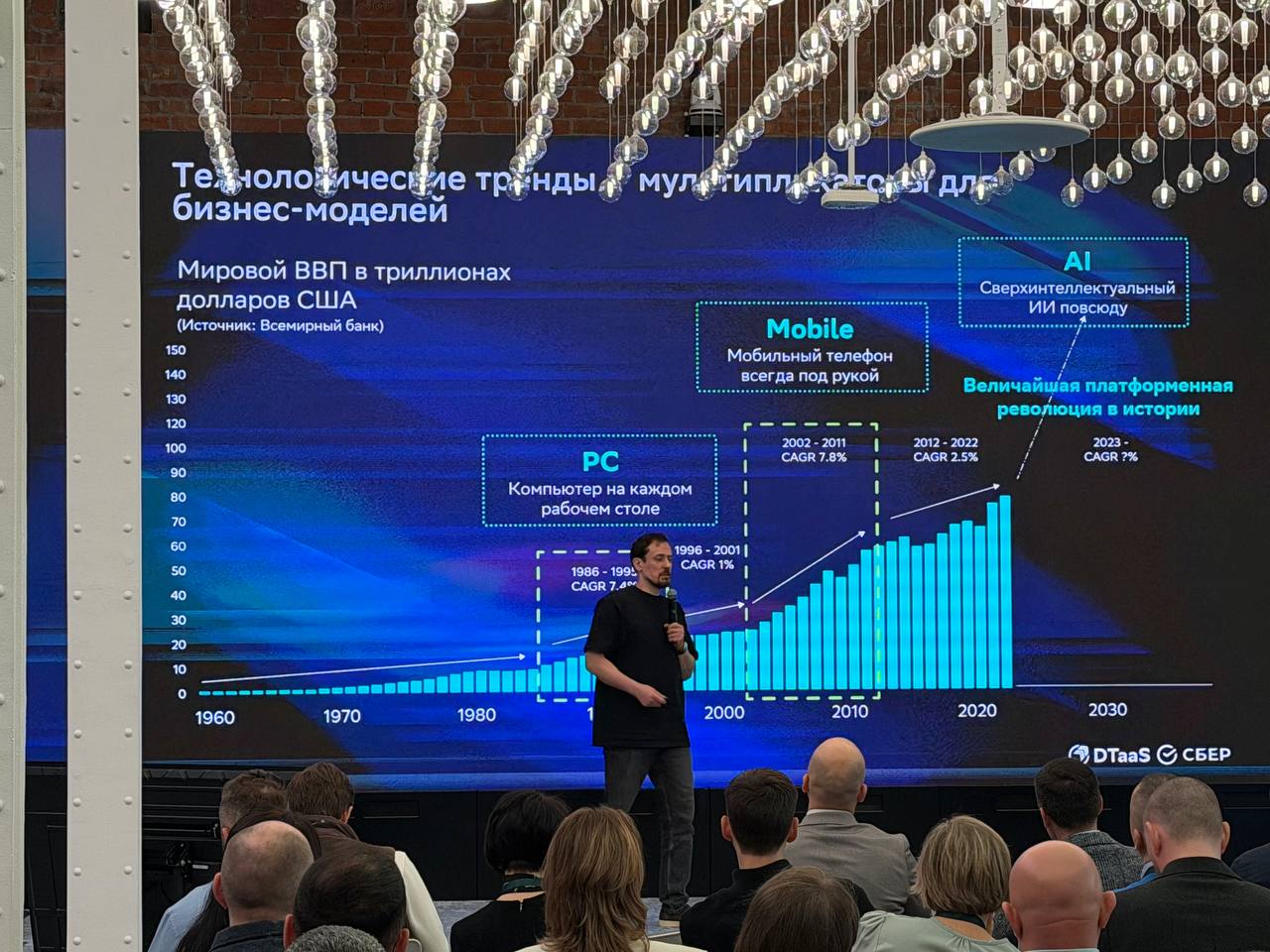
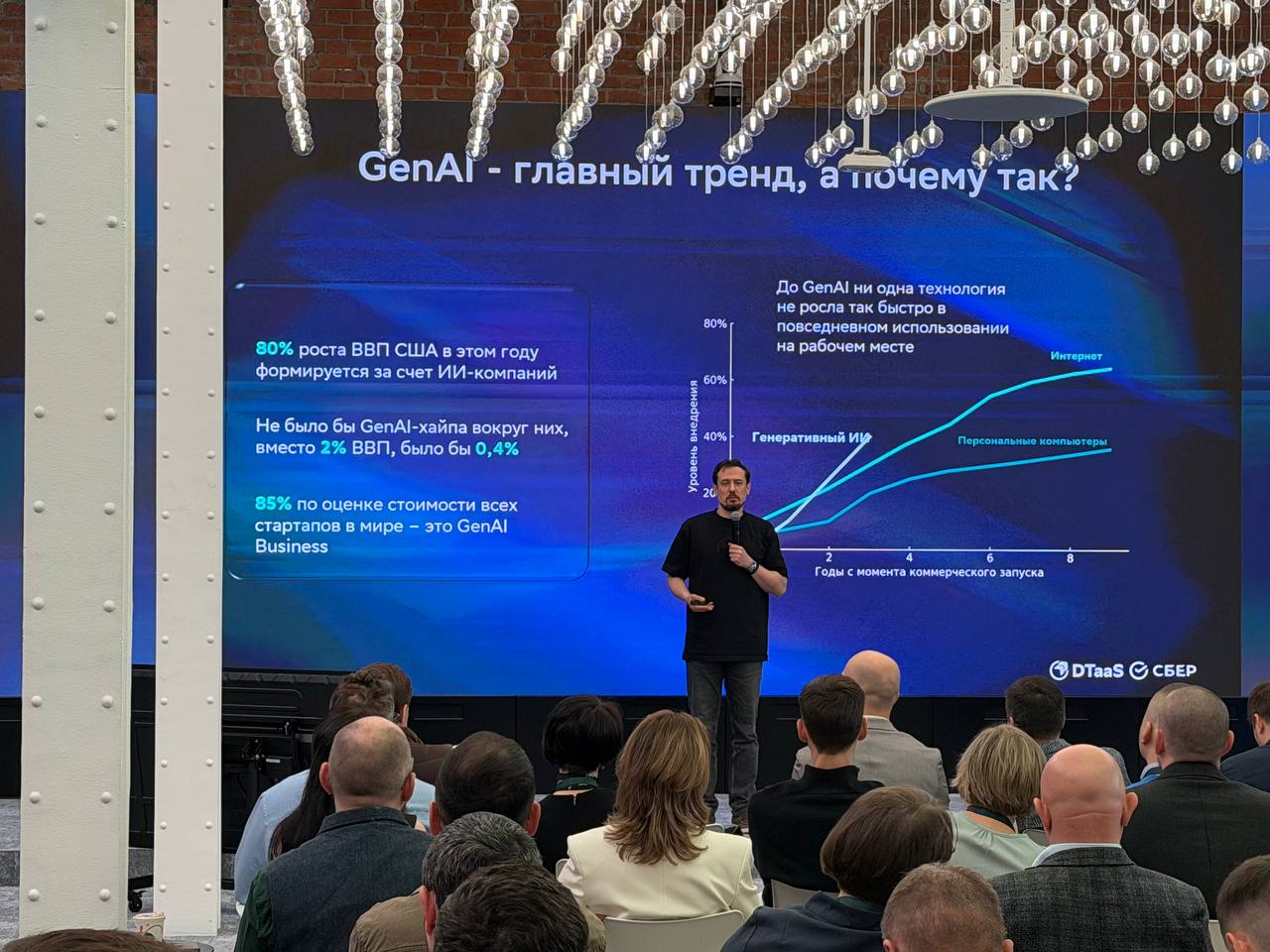
▪️GenAI is one of the main drivers of global GDP growth.
Key technologies have a multiplicative effect on global economic growth. In the 80s and 90s, it was the transition to personal computers and their explosive growth. In the 2010s, it was the transition to mobile devices that are always at hand. Today, GenAI is becoming such a technology. We are in the midst of a new industrial revolution.
▪️GenAI is primarily not about technology, but about change management
AI cannot be implemented like any other software. New processes, new roles, and new management logic are needed. A full-fledged GenAI transformation strategy is required.
▪️The goal of AI implementation is not to reduce people at any cost, but to strengthen the team and improve the quality of decisions
AI should eliminate routine, speed up analysis, help specialists work more effectively, and not simply replace them.
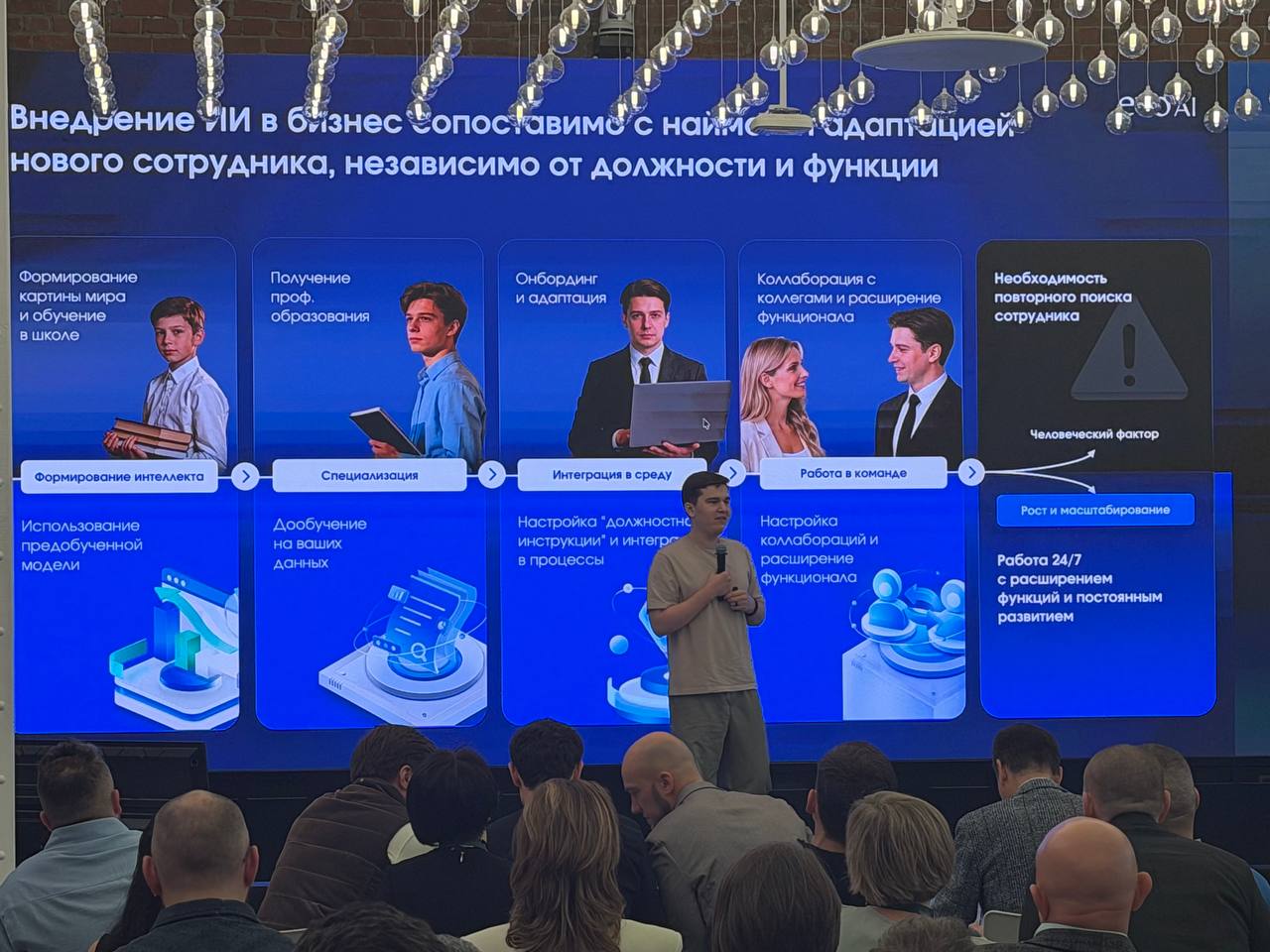
▪️AI implementation is similar to our process of growing and developing as a specialist
First, a person goes to school — this is the stage of forming general knowledge and intelligence. Similarly, a company first uses ready-made pre-trained AI models. Then a person receives professional education at a university or college, i.e., specialization. Likewise, AI is fine-tuned on company data to better understand its specifics. After that, a person starts working, receives tasks, job descriptions, and begins to bring value. AI also needs to be integrated into the company's processes and adapted to them. Then, after onboarding and adaptation, a person begins to work fully in a team and take on more and more tasks. AI, in turn, integrates with other systems and gradually expands its functionality.
▪️AI is moving towards everyday embeddedness
It's no longer just a "side AI chat." Gradually, AI is becoming an integral part of interfaces, services, products, and services, enhancing our personal automation. Very soon, AI agents in every device will book doctor appointments, reserve restaurant tables, and handle many routine tasks.
▪️The most interesting part is applied cases
The conference showcased real implementation examples: an AI analyst that finds growth points in data; an AI financier that creates an Excel estimate based on construction documentation; and even an AI that analyzes boxing matches. These are no longer toys or a futuristic tomorrow, but a quite everyday today.
▪️GigaChat is gradually becoming not just a product, but an infrastructure
Today, it's not enough to just make products. A large multidisciplinary service is being built around Giga: vendors of industry solutions, technology partners and integrators, consulting, educational programs, and much more. This lowers the barrier to entry into AI and makes it accessible to any business — from AI-native companies that we can help strengthen, to newcomers who need a turnkey solution with full support.
____
Perhaps the main takeaway from the conference is that AI has already ended as hype and is beginning as the infrastructure of the new economy.
Beautiful photos will come a little later. For now, only crooked and skewed ones that I managed to take on the run.
Comments
0No comments yet.