
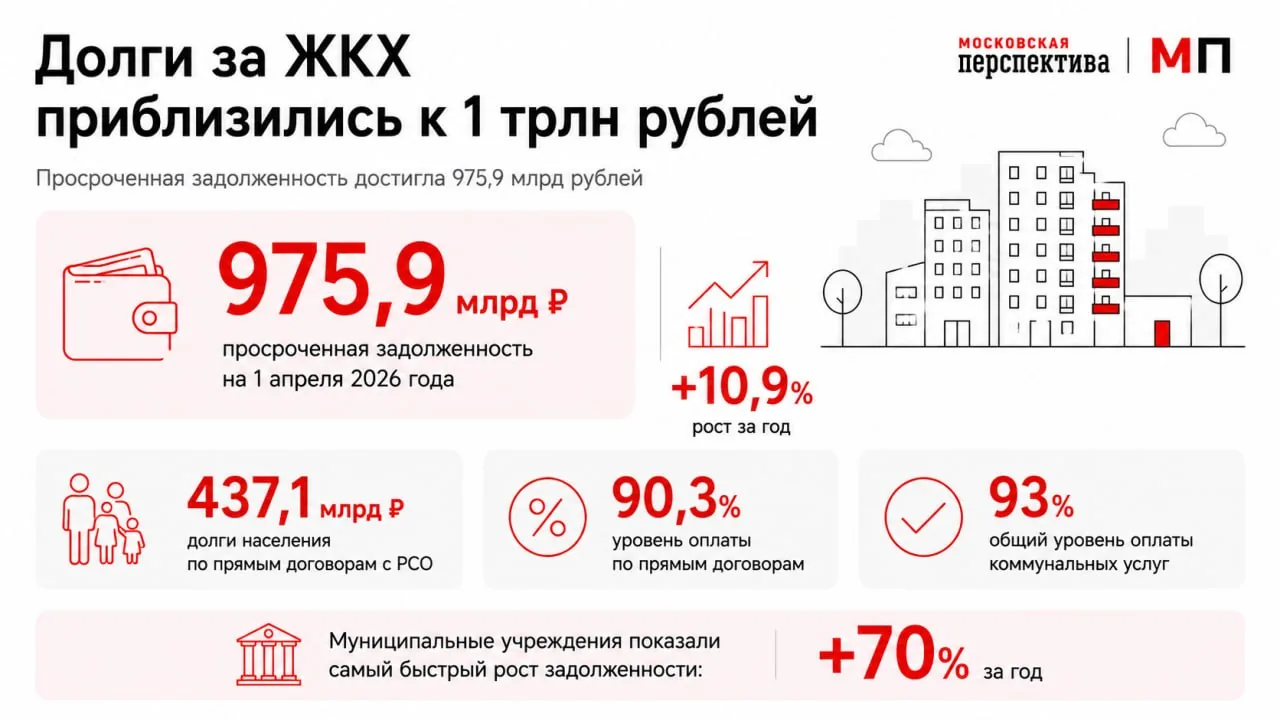
📉 Overdue housing and utility debts as of April 1 reached ₽975.9 billion, increasing by 10.9% over the year. At the same time, total charges amounted to ₽3.2 trillion, of which ₽2.99 trillion was paid (payment rate — 93%). The largest contribution to debts comes from citizens with direct contracts with resource supply organizations (RSOs): their debt reached ₽437.1 billion (+6.7%). A separate layer is "non-disconnectable consumers" (schools, hospitals, kindergartens), as well as municipal organizations, where debt growth is the fastest — up to ₽17.7 billion (+70%).
The systemic problem is explained not so much by non-payments per se, but by the structure of cash flows: management companies are obliged to settle with RSOs earlier than they collect money from the population, creating a constant cash gap. Additionally, the penalty logic is asymmetric — management companies pay penalties at the key rate until the principal debt is repaid, while the population pays later and less.
The problem is exacerbated by the impossibility of collection. RSOs do not have access to debtors' personal data (only the apartment number is visible), making judicial collection through court orders difficult. As a result, debts accumulate year after year, and the industry operates in a constant deficit of working capital, which impacts repairs and the stability of the entire housing and utility infrastructure.
Comments
0No comments yet.
Sign in to join the discussion.